Masks, Robes, and Ritual Objects of Cham Dance: Meditation, Purification, and Protection in Ritual Dance
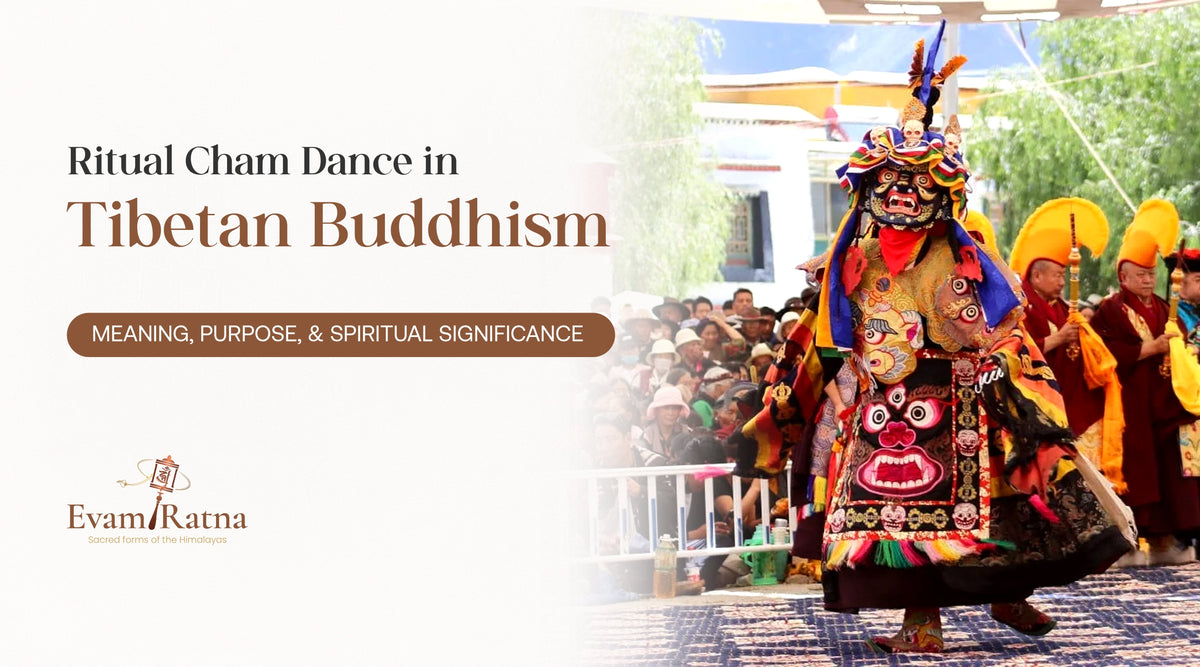
Ritual Cham dance, the sacred masked dance performed by monks, is a visually powerful tradition associated with Tibetan Buddhism. Cham is a living transmission of the Dharma, an elaborate performance filled with enormous masks, flowing brocade robes, fierce faces, drums, cymbals, horns, and symbolic ritual objects. To witness Cham is to witness centuries of unbroken lineage move through space, sound, and color.
What is Cham Dance?

Cham Dance is a sacred masked and costumed ritual dance practiced within Vajrayana Buddhism across Tibet and the wider Himalayan region, including Bhutan, Nepal, Ladakh, and other Buddhist communities. Traditionally performed by trained monks and lamas during monastery festivals and religious ceremonies, Cham is itself considered a sacred offering. As the dancers move through their prescribed steps, they are understood to embody wrathful protectors, peaceful bodhisattvas, and other enlightened beings, drawing the audience into direct contact with the divine. The dance is a form of tantric practice, and it is believed to have spiritual and ceremonial significance.
With symbolic masks, ritual costumes, and sacred movements, the dance represents the victory of wisdom over ignorance and is an important part of Tibetan Buddhist practice. Cham can be understood as all three: a ritual dance, a meditative practice, and a Buddhist ceremony. Within the ceremonial setting, Cham may also function as a sacred offering and a practice of purification and protection. For those who witness it with sincere devotion, it is said to carry real spiritual benefit, pacifying obstacles, easing illness, and planting seeds of merit in the minds of all who watch.
The Origins of Cham Dance

The roots of Tibetan Cham dance originate from ancient tantric rituals in India, where sacred movement, deity visualization, ritual attire, and symbolic gestures were utilized in ceremonies like fire offerings. These practices provided the groundwork for the ritual dances that later developed in Tibetan Vajrayana Buddhism.
Cham became firmly established in Tibet during the 8th century, when King Trisong Deutsen invited the Indian Buddhist master Shantarakshita and the tantric master Guru Padmasambhava to help establish Buddhism in Tibet. According to Tibetan tradition, the construction of Samye Monastery faced numerous challenges from local spirits and opposing forces. Guru Rinpoche overcame these disturbances using tantric rituals, mantras, visualization, and sacred movements prior to the monastery's consecration.
This event is traditionally associated with one of the earliest forms of ritual dance in Tibet and is frequently linked to the beginnings of Cham. For this reason, Guru Rinpoche holds a central place in the history of Cham dance, and many later performances depict episodes from his life, his encounters with obstructive forces, and his role in establishing the Buddhist teachings in Tibet.
How Did Cham Develop Across Tibetan Buddhist Traditions?
As Vajrayana Buddhism expanded throughout Tibet, Cham gradually developed into distinct ritual traditions within different monasteries and Buddhist schools. Each lineage preserved its own choreography, masks, costumes, musical patterns, deity practices, and ritual purposes. Different traditions developed dances associated with Buddhist protectors, tantric deities, bodhisattvas, lineage masters, and episodes from sacred history. Focusing on purification and the removal of obstacles, commemorating teachers, or symbolically destroying ignorance. Cham's movements are taught within a religious framework, emphasizing the preservation of gestures and sequences across generations.
From Tibet, the Cham tradition spread widely throughout the Himalayan Buddhist world, becoming an important feature of monastery festivals in Bhutan, Nepal, Ladakh, Sikkim, Arunachal Pradesh, and other regions influenced by Tibetan Buddhism. In Ladakh, Bhutan, Tibet, and Himalayan monasteries of Nepal, Cham is commonly performed during major religious festivals and annual monastic ceremonies. These occasions bring together monks, practitioners, pilgrims, and local communities to witness elaborate masked dances accompanied by ritual music, horns, drums, cymbals, and chanting.
The Spiritual Significance of Cham Dance
- A Meditation in Motion: Cham is a visible form of meditation, where monks prepare for weeks through visualization, mantra recitation, and prayer. This preparation allows them to let go of their ordinary self and embody the "divine pride" of the deity represented in their dance. Every aspect of their performance, including gestures and movements, is dictated by ritual texts, closely synchronized with liturgy and music.
- Teaching the Dharma Through Movement: Cham historically served as a vivid teaching tool in societies with limited literacy, enabling monks to convey key Buddhist teachings like karma and impermanence through performance. Through vibrant costumes and dramatic gestures, monks could narrate the life of Padmasambhava to audiences who might otherwise never encounter these teachings directly. This educational role continues today, providing lay Buddhists with a visual means to grasp complex doctrines.
- Purification and Protection: Cham dances aim to purify ritual spaces and protect communities, featuring fearsome deities like Mahakala, Yama, Hayagriva, and Palden Lhamo. Their wrath symbolizes compassion for eliminating ignorance and negative influences. Observing Cham with genuine faith is believed to alleviate illness and misfortune, promoting good health, longevity, and the achievement of virtuous goals.
- Victory Over the Four Inner Defects: Cham symbolizes the practitioner's inner journey, addressing the subjugation of negative emotions such as anger and pride on the path to enlightenment. The skeleton dancers, wrathful protectors, and peaceful deities represent aspects of this transformation, reflecting the audience's spiritual practice through the performance.
- Monastic Training and Discipline: Cham is a disciplined practice for monks, involving sustained physical training, precise memory of movements, and mental focus to maintain a meditative state while performing for audiences. It is as integral to the monastic path as scriptural study or meditation.
Masks, Robes, and Ritual Objects of Cham Dance
The sacred character of Cham dance is immediately visible in its masks, elaborate robes, headdresses, ornaments, and ritual implements. Within Vajrayana practice, they help establish the identity of the deity, protector, historical figure, or symbolic being represented by the dancer.
Why Are Masks Important in Cham?

Masks are among the most recognizable elements of Tibetan Cham dance. In Tibetan, zhal 'bag is for "mask," and 'cham 'bag is specifically for a dance or Cham mask. Cham 'bag is known as a "dancing mask." It represents various deities or figures during rituals. Wrathful figures often appear with glaring or bulging eyes, exposed fangs, skull ornaments, and fierce expressions. Within Vajrayana iconography, wrathful appearances can express the powerful activity of overcoming ignorance, harmful forces, and obstacles.
Other performances include animal masks, peaceful figures, and skeleton or charnel-ground dancers. The skeleton dancers (Lords of the Charnel Ground) in particular bring imagery of death and impermanence directly into the ritual. The divine masks undergo a consecration in which the "eyes" are ritually opened. Their construction differs from region to region: some are made from lightweight papier-mache or plaster molded over clay, while wooden masks are particularly common.
Meaning Behind Traditional Cham Costumes
Cham costumes extend the transformation created by the mask. Dancers may wear heavy brocade robes, wide sleeves, ornamental collars, aprons, boots, bone ornaments, crowns, scarves, and elaborate headdresses, depending on the character and ritual tradition being performed. Color can also carry symbolic meaning, but it is not important that every Cham costume follows one universal color code. In wider Tibetan tantric iconography, the four enlightened activities are traditionally associated with white for pacifying, yellow for increasing, red for powerful or magnetizing activity, and dark blue or black for wrathful activity.
One particularly distinctive costume belongs to the Zhanag, or Black Hat Dance. Black Hat dancers wear imposing ceremonial hats and voluminous robes with broad sleeves. According to the traditional story associated with the dance, the Buddhist monk Lhalung Pelgyi Dorje approached King Langdarma while disguised as a dancer and concealed a bow and arrow within the large sleeves of his costume before killing the king. The defeat of Langdarma and the use of black hats and ritual implements in these ceremonies symbolize the destruction of obstacles.
Sacred Objects Carried by Cham Dancers

The objects held by Cham dancers help identify the deity or ritual role of the performer and may also participate directly in the ritual action. The precise implements vary greatly between different Cham cycles. Tibetan Black Hat costumes, for example, carry bells, blades, and ritual stakes, while other dances employ hooks, lassos, chains, drums, or other prescribed objects.
Among the best-known Vajrayana implements are the vajra and bell. Used together, they express the union of method and wisdom central to tantric Buddhist practice. Cham dancers may carry them when required by the deity or ritual sequence being performed.
The phurba, or ritual peg/dagger, is especially important in Cham traditions connected with Vajrakilaya and rituals for overcoming obstacles. Other implements can include ritual swords or blades, bells, hooks, lassos, drums, and objects associated with the specific protector or deity being enacted.
The Musical Instruments That Accompany Cham Dance
Music is inseparable from the ritual movement of the Cham. Percussion and wind instruments help establish the rhythm, atmosphere, and progression of the ceremony. Monks accompany Cham with gyaling oboes, cymbals, and drums, whose powerful rhythms fill and define the ritual space.
Traditional ritual ensembles use cymbals, trumpets, large cylindrical drums, hand-held drums, and other drums played with curved beaters. The dance itself alternates between contemplative sections representing peaceful deities and faster, more athletic sections associated with wrathful deities. Instrumentation depends on the monastery and ritual cycle.
Different Types of Cham Dance

Cham is not a single dance but a broad family of ritual dances that developed differently across Tibetan Buddhist schools and monasteries. Some honor lineage masters, others embody Dharma protectors or deities, while certain dances teach about impermanence, karma, death, and rebirth. The names, costumes, sequences, and meanings can therefore vary considerably between regions and traditions.
Dharma Protector Cham
Dharma Protector Cham involves wrathful guardian deities who protect Buddhist teachings and overcome obstacles that obstruct spiritual practice. Dancers wear masks and costumes, embodying these protector figures through specific gestures and movements. Their fierce appearance represents a powerful response to ignorance and negativity. These dances are typically part of ceremonies intended to purify obstacles and safeguard the monastery and its community.
Guru Rinpoche Cham
Guru Rinpoche Cham, also known as Guru Tshengye or Lama Cham, honors Padmasambhava and showcases his Eight Manifestations. Each manifestation represents a different aspect of Guru Rinpoche's enlightened activity and his role in overcoming obstacles to the spread of Buddhism. In some Nyingma traditions, the Guru Cham is one of the central dances of the ritual cycle.
Skeleton Cham Dance

The Skeleton Dance, known as Durdak or Durdak Garcham, is performed by dancers wearing white skeletal costumes and skull-like masks. Linked to the Citipati and Vajrayana traditions associated with the charnel grounds and Vajrayana practice. Their skeletal appearance serves as a vivid reminder of death, impermanence, and the eventual dissolution of the physical body. In various customs, these figures act as protectors in rituals aimed at overcoming ego-clinging and negativity.
Black Hat Cham Dance
The Black Hat Dance, or Zhana/Zhanag Cham, is a prominent form of Cham characterized by black hats, flowing robes, and ritual movements. It is associated with tantric purification practices and the monk Lhalung Pelgyi Dorje, who is noted for dancing before killing the anti-Buddhist king Langdarma. Various lineages feature their own versions of the dance, often involving drums and protector rituals, symbolizing purification, obstacle overcoming, and Dharma protection.
Deity and Animal Cham
Many Cham traditions feature dancers who embody Buddhist deities, protective spirits, and various animals, each with symbolic significance. Cham masks represent these characters and historical figures, fulfilling specific roles in rituals. For example, the Deer Dance symbolizes a protector and is linked to Milarepa's tale of safeguarding a deer. Thus, animal figures in these performances hold deeper meanings, dependent on the Cham cycle in which they occur.
Bardo Cham
Bardo Cham delves into Buddhist views on death and the bardo, the intermediate state between death and rebirth. In Bhutan, the Raksha Mangcham, or "Dance of the Bardo," illustrates how karma affects what is encountered after death through dramatic portrayals. This performance acts as a visual lesson in Buddhism, prompting viewers to reflect on the impacts of their actions during their lifetime.
Judgment of the Dead / Lord of Death Cham
The Judgment of the Dead, or Raksha Mangcham in Bhutan, presents a deceased individual's karmic judgment by Shinje Chögyel, the Lord of Death. Characters embodying the White God and Black Demon unveil the individual's positive and negative deeds, represented by white and black pebbles, which determine their fate. This dance serves as a significant moral teaching on karma, emphasizing the enduring consequences of one's actions. Raksha Mangcham, also identified as a Bardo dance, significantly aligns with Bardo Cham.
It is often performed near the beginning of a festival to purify, bless, and establish the ritual ground. Thus, the Judgment of the Dead centers on karmic judgment, whereas Shinje Yab Yum is primarily a Yamantaka ritual dance.
Cham Dance During Losar and Gutor
Cham is closely associated with Losar, the Tibetan New Year, particularly through the purification ceremonies known as Gutor that take place near the end of the old Tibetan year. However, Cham is not limited to Losar; different ritual dances are performed throughout the year according to the calendars and traditions of individual monasteries. During Gutor, Cham forms part of a larger cycle of protector practices intended to remove obstacles before a new beginning.
Why is Cham performed before the Tibetan New Year?
In many Tibetan Buddhist monasteries, the days before Losar are devoted to Gutor rituals, during which accumulated obstacles and harmful influences of the outgoing year are symbolically cleared away. Cham may be performed as part of these ceremonies, with dancers embodying protectors and wrathful deities whose enlightened activity is directed toward overcoming negativity. At Tsurphu and within Karma Kagyu tradition, for example, Gutor includes extensive Mahakala practices followed by sacred Cham. The purpose is to close the old year ritually before welcoming the new one under more auspicious conditions.
Purification Before Losar
Purification before Losar involves much more than the masked dance itself. Depending on the lineage, monasteries may perform Mahakala, Vajrakilaya, or other protector practices, accompanied by mantra recitation, offerings, tormas, fire rituals, and Cham. Ritual objects or effigies can symbolically receive the obstacles and disturbances of the previous year before being carried away or burned. The Rubin Museum describes this destruction of a special zortor torma as a way of clearing past troubles and beginning the new year with a fresh karmic slate.
At Ka-Nying Shedrub Ling Monastery in Kathmandu, for instance, monks traditionally perform Vajrakilaya Gutor practices and Lama Dances during the final days of the Tibetan year. The monastery describes these rites as practices for mending damaged vows, purifying spiritual pollution, removing obstacles, and creating favorable conditions for the coming year. This illustrates how Cham becomes one element within a much larger Vajrayana process of renewal and purification.
Other Buddhist Festivals Where Cham Is Performed
Cham is also performed during important monastery festivals, Guru Rinpoche celebrations, drubchens, prayer gatherings such as Monlam Chenmo, and other lineage-specific ceremonies. Guru Rinpoche festivals provide some of the most prominent examples. Tsechu celebrations in Bhutan and Tibetan Buddhist communities often include dances depicting Padmasambhava and his manifestations, while monasteries associated with Karma Kagyu preserve their own Tsechu Lama Dance traditions. Nepal also has important festival cycles such as Mani Rimdu in the Khumbu region and Tiji in Upper Mustang, where sacred masked dances form a central part of the ceremonies.
Cham Dance in Nepal
 (Image from Xinhua)
Nepal preserves several important living traditions of Tibetan Buddhist Cham dance, particularly in communities with strong Nyingma, Kagyu, Sakya, and Himalayan Buddhist lineages. In Kathmandu, Ka-Nying Shedrub Ling Monastery performs Vajrakilaya Gutor practices and Lama Dances before Losar, continuing the use of Cham as a ritual for purification and the removal of obstacles.
In the Khumbu and Solu regions, Cham is a major part of Mani Rimdu, celebrated at monasteries including Tengboche, Thame, and Chiwong. The dances include protector figures, Guru Rinpoche-related characters, drums, ritual implements, and concluding ceremonies intended for the welfare of the community.
Conclusion: Cham as a Living Vajrayana Buddhist Tradition
Cham remains one of the most profound expressions of Vajrayana Buddhist practice, where meditation, ritual, art, music, and sacred movement come together as a single spiritual experience. More than a masked performance, Cham is a living transmission of Buddhist teachings, preserving centuries of monastic knowledge through carefully maintained gestures, costumes, masks, music, and ritual sequences.
Through the embodiment of deities, Dharma protectors, lineage masters, and symbolic figures, Cham transforms Buddhist philosophy into a visible form. The fierce expressions of wrathful beings, the presence of peaceful figures, and the movements of skeleton dancers all communicate deeper teachings on overcoming ignorance, understanding impermanence, purifying obstacles, and progressing toward enlightenment.