Shamanic Phurba: The Sacred Ritual Dagger and Its Spiritual Significance
The Phurba in shamanism, esoteric spiritual traditions, or Tantric Vajrayana Buddhism is a sacred ritual dagger symbolizing the ability to transform negative energy, to bind harmful spirits, and to ward off negative energy in the practitioner and sacred spaces. The Phurba is the ultimate weapon of spiritual warfare, psychological transmutation, and cosmic anchoring for the Himalayan shaman (Jhankri or Dhami), Tibetan practitioners, and energy healers. It is a physical channel through which one can enter the divine light, subdue the demons, and pierce the densest illusions of the Human Mind. The Phurba is believed to connect the material and spiritual worlds, and represents the power to pierce through ignorance, ego, and obstacles on the path to enlightenment.
Introduction of Phurba in Himalayan Shamanism

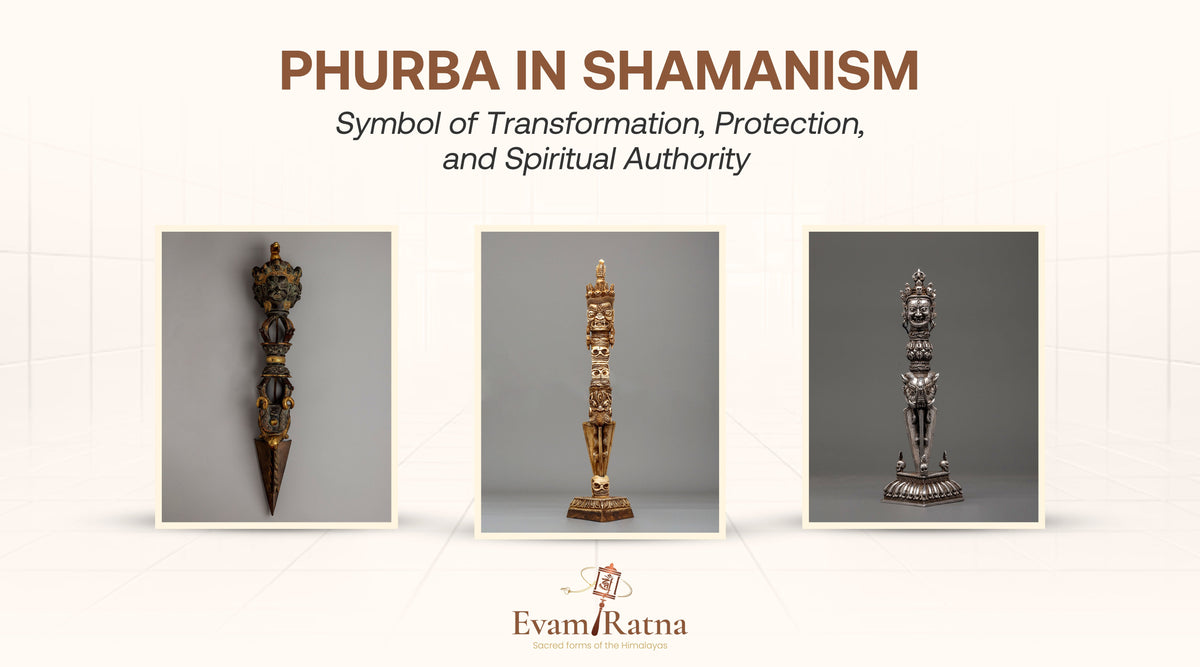
Phurba, also known as kila (nail), is a ritual dagger with a pointed three-edged blade, traditionally associated with Tantric Buddhism and Shamanism. It has different names, such as magical knife, demon dagger, thunder nail, and diamond spike, as the name itself describes it as a powerful ritual implement used by shamans, magicians, tantrikas (tantric practitioners), and lamas of different ethnic backgrounds and spiritual orientations.
The kila is associated with the meditational deity Vajrakila or Vajrakilaya, who embodies the swift and fearless destruction of obstacles, negative forces, and inner afflictions. During ritual use, the phurba is a channel for spiritual energy, allowing the practitioner to “pin down” harmful influences, harmonize spiritual space, and invoke protection for both the practitioner and their community. Its three-sided blade symbolizes the integration of the body, speech, and mind, and the intricate handle may feature symbolic figures, such as deities or sacred animals, connecting the physical tool with higher consciousness.
Through empowerment, visualization, and mantra recitation, the phurba transforms ordinary perception, helping practitioners confront fear, overcome inner obstacles, and cultivate clarity, balance, and spiritual strength. It is regarded as a practical as well as a symbolic instrument and, in accordance with the Tantric philosophy, it is believed to be directly capable of dissolving ignorance and restoring harmony in the world through enlightened wisdom.
The Origins of the Phurba: Padmasambhava's Mythic Transmission
By the time the phurba reaches Tibet, its story becomes inseparable from Padmasambhava, the tantric master credited with bringing Vajrayana Buddhism across the Himalayas. He requested that the Phurba Vitotama Tantras be brought from India specifically so he could counteract the obstructions caused by the many maras, or demonic forces, he encountered while subduing Tibet for the Dharma.
Nyingma tradition preserves a striking origin myth for this transmission: Padmasambhava is said to have received the phurba teachings at the Rajgriha charnel ground from an enormous nine-headed scorpion, an image that itself echoes shamanic initiation, where power is often received from a fearsome animal guardian at a threshold place between life and death.
Before this Buddhist framing took hold, the land Padmasambhava arrived in was already understood, through Bon and indigenous Himalayan shamanism, as inhabited by unseen forces, spirits such as the sen and the lu. The phurba's original function in this world was to pin down malevolent energies and stake out protected, sacred ground, exactly as it had done in the older Vedic rites. Padmasambhava did not invent this use; he inherited it, and gave it a new doctrinal home. The shamanic life of the phurba did not end when it entered Vajrayana practice; it continued in parallel, especially in Nepal, where Jhankri shamans have carried the implement forward as a living tool of healing and exorcism.
Anatomy of a Shamanic Phurba: Decoding the Symbolism

A phurba is a sacred ritual tool, a map of the body, cosmos, and mind. It is shaped on two axes: the vertical axis (head, shank, blade) and the horizontal axis (left, center, right), each of which has a layered spiritual meaning. It has been shaped by centuries of layered symbolism drawn from Himalayan shamanism, Vedic cosmology, and Vajrayana Buddhism.
- Head: The top of the phurba often depicts a deity or symbolic figure, signaling the lineage and the type of divine energy invoked. Wrathful expressions are meant to protect and ward off harmful forces, not merely to intimidate.
- Shank: The middle section connects the head to the blade and often takes the shape of a vajra in Buddhist phurbas, representing insight, spiritual power, and the bridge between worlds.
-
Blade: The three-sided tip transforms and pins negative energies, symbolizing the destruction of the three poisons: desire, attachment, and ignorance. Its reinforced structure reflects both its practical use and spiritual significance.
The unique three-sided blade of the phurba is depicted in the form of cosmology, either made of metal or wood. The three faces of the blade: heaven, earth, and the underworld, reflect the three dimensions of shamanic cosmology, and illustrate the shaman's capacity to traverse the different realms. This tripartite structure mirrors the shamanic universe found throughout Himalayan and broader Central Asian traditions, where the practitioner's role is defined precisely by this capacity to travel across otherwise separate worlds. The phurba, in its very form, is a map of that cosmos and a vehicle for crossing it.
Decorative elements such as Makara, Garuda, and Naga often wind around the shank and blade, marking the point where divine energy is transferred into action. The phurba symbolizes balance horizontally, between male and female, neutral and balance, past and present, desire and indifference, and repulsion. These are some of the opposing forces that Vajrayana practice aims to balance.
Each form, such as a Vajrakilaya Phurba or Hayagriva Phurba, defines the deity through whom the energy is channeled and the lineage it derives from, and is a personalized form of energy tool. The phurba is a tool of transformation, protection, and meditation, form, function, and deep symbolism all in one sacred tool.
Core Shamanic Functions: Exorcism, Healing, Embodiment
Across Jhankri and related Himalayan shamanic traditions, the phurba performs three closely related functions:
- Exorcism and protection: Shamans use the phurba to pin down and subdue harmful spirits understood to cause illness, acting as both a literal and energetic barrier against negative forces entering a person or a space.
- Energetic healing: The water-charging practice transforms the phurba from a ritual object into a medicine-making instrument, extending its protective power directly into the body of the afflicted.
- Embodiment of power: During ritual, the shaman chants mantras until the dagger is understood to come "alive," becoming a channel for wrathful, transformative energy, the same enlightened ferocity later absorbed into Vajrayana iconography.
The Phurba in Shamanic Practice: The Shaman's Inner Journey

The phurba is a tool of action, a bridge between the physical and spiritual, and a vehicle for inner transformation. In Himalayan shamanism, its power is realized through movement, touch, and visualization. A shaman may dance with it to locate and capture negative energies, then drive them into the earth, pinning obstructions like the dagger’s ancient Vedic ancestor pinned the subterranean serpent.
For healing, the phurba is stroked from head to toe, drawing illness or harmful forces from the body into the blade, which is then grounded or transmuted. In exorcism, it removes intrusive energies while replacing them with protective or healing forces, ensuring balance is restored.
In Buddhist ritual, monks use the phurba to direct mantra energy during ceremonies, emphasizing its role as a channel rather than a weapon. Meditators also employ it symbolically, enacting internal confrontations with obstacles of the mind, while some shamanic practitioners, such as Jhankri shamans, embody the phurba itself, using it as a second body to journey across the three worlds of the shamanic cosmos.
Mastery of the phurba requires commitment, spiritual connection, and lineage guidance. Only through dedicated practice does it transform from a physical object into a potent instrument of protection, healing, and enlightenment, capable of traversing both inner and outer realms.
Spiritual Uses of the Phurba in Shamanism
- Pinning and Neutralizing Negative Energies: The phurba is used to “pin down” harmful spirits, malevolent forces, or obstacles, preventing them from acting further.
- Healing Rituals: Shamans stroke the phurba along a patient’s body, drawing out sickness or harmful energies. The extracted energy is grounded into the earth or transmuted, restoring balance to the body and mind.
- Exorcism and Energy Replacement: It removes intrusive or harmful spiritual influences while simultaneously replacing them with protective, healing energy. Ensures the patient or space is not left spiritually empty after the ritual.
- Ritual Dance and Directional Gestures: During shamanic ceremonies, the phurba is waved or danced with to locate, disturb, and transfer spiritual obstacles. Its movement directs and focuses energy in specific directions or areas.
- Meditational Confrontation: Practitioners hold the phurba during meditation or mantra recitation to visualize and symbolically “pierce” inner obstacles. Acts as a tool for internal spiritual work, cutting through ego, fear, and mental afflictions.
- Embodiment by the Practitioner: Advanced shamans may visualize themselves as the phurba, using it as a spiritual extension of the body. This allows them to journey between the Upper, Middle, and Lower Worlds in shamanic cosmology.
- Channeling Deity Energy: The phurba is often associated with Vajrakilaya (Vajrakila), a meditational deity, channeling wrathful compassion for protection and purification. Serves as a conduit between the practitioner and divine or protective forces.
- Balancing the Cosmos and Mind: Horizontally, the phurba represents the balance of dualities (male/female, desire/repulsion, past/present/future). Vertically, it reflects the human body, shamanic universe, and spiritual planes, integrating microcosm and macrocosm.
- Integration with Sacred Objects: Used alongside ritual tools like the bumpa (sacred water vessel) to navigate and interact with spiritual realms. Helps maintain the structure of shamanic journeys and consistent ritual practice.
- Spiritual Discipline and Lineage Requirement: Only practitioners with proper training, lineage guidance, and dedication can safely use the phurba. Its spiritual potency depends on the practitioner’s connection, discipline, and intention.
Read More About Shamanism and Buddhism: The Spiritual Root Where Buddhism Meets the Spirit World
Conclusion:
The Phurba in Shamanism remains a sacred, transformative spiritual tool that acts as a bridge between the physical and spiritual realms and a channel for divine energy. It is used to pin down negative forces, heal ailments, perform exorcisms, and mediate inner obstacles, reflecting centuries of layered symbolism from shamanic, Vedic, and Vajrayana traditions. Through ritual movement, meditation, and visualization, practitioners can embody the phurba itself, allowing it to act as a vehicle for traversing the Upper, Middle, and Lower Worlds of shamanic cosmology. Its association with Vajrakilaya channels wrathful compassion, transforming destructive energies into protection, balance, and clarity. Only through dedicated spiritual practice, lineage guidance, and disciplined connection does the phurba reveal its full potency, serving as a sacred tool for protection, inner transformation, and the harmonization of body, mind, and cosmos.