Artisan Himalayan Jewelry Inspired by Tibetan Culture and Spirituality
Himalayan accessories are a living expression of culture, spirituality, and artistry, shaped over centuries in the sacred landscapes of Tibet and Nepal. Each curve, gemstone, engraving, and motif reflects a worldview in which beauty serves both aesthetic and sacred purposes.
Traditional Tibetan artisans don't simply make jewelry; they craft objects meant to bring balance between a wearer's inner and outer worlds. These accessories are often adorned with spiritual symbols, mantras of protection, and natural materials believed to carry their own energetic properties. Silver and gold form the foundation of many pieces, while turquoise, coral, lapis lazuli, and amber are chosen not only for their beauty but for the protective and healing qualities long attributed to them.
The Spiritual Symbolism Behind Himalayan Accessories
In Tibetan culture, art and spirituality are inseparable. Accessories are often created with ritual intention, blessed during ceremonies, or engraved with sacred syllables and protective deities, drawing inspiration from Buddhist philosophy, nature, and sacred geometry.
Common spiritual motifs include:
- Lotus Flower: purity and spiritual awakening
- Endless Knot: interconnectedness of life and karma
- Wheel of Dharma: path to enlightenment
- Vajra: indestructible wisdom
- Eight Auspicious Symbols: blessings, prosperity, and protection
Wearing these symbols is believed to bring balance, positive energy, and spiritual protection. Himalayan accessories, therefore, are personal jewelry as well as a spiritual companion.
Lockets: Portable Blessings and Sacred Keepsakes

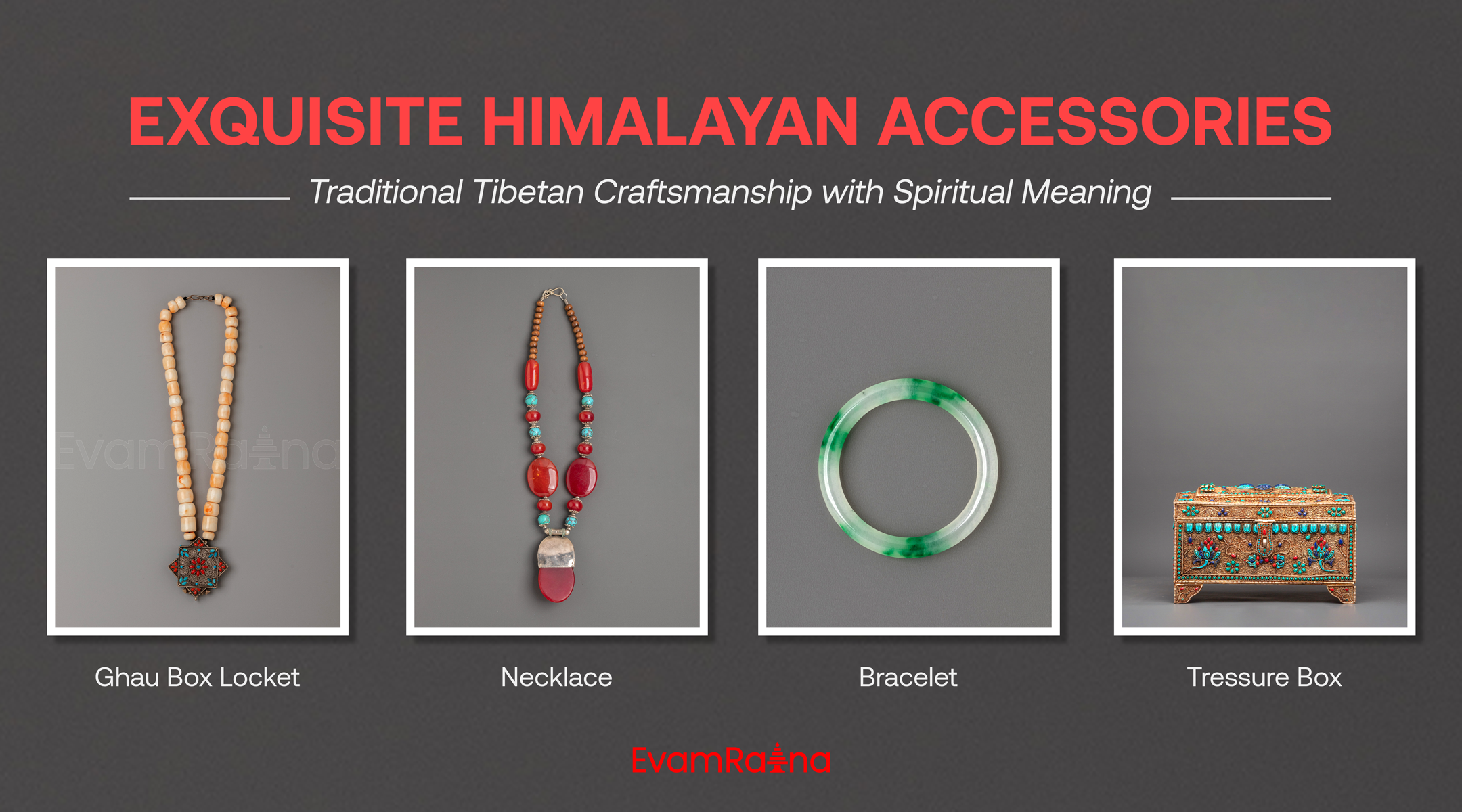
The lockets made by the Himalayas are highly symbolic and usually in the form of a shrine that can be carried around. These pendants are traditionally worn directly near the heart and can include miniature prayer scrolls, religious relics, mantras, or a portrait of a deity.
Craftsmanship & Design
Lockets are normally crafted of gold or silver and decorated with coral and turquoise. Artisans engrave their surfaces with delicate floral designs, mantras, and protective deities. Others are box-like amulets referred to as gau, which can be opened to contain sacred things.
Spiritual Meaning
These are religious boxes that are talismans of protection, which are said to keep away evil and draw blessings. Travelers, monks, and devotees often carry them for spiritual safeguarding.
Modern Appeal
Today, Himalayan lockets are a combination of tradition and modern fashion. They are treated as statement pendants, and the spiritual quality does not go to waste, so they are quite significant gifts and heirlooms.
Rings: Symbols of Power, Protection, and Devotion

Himalayan rings are assertive, highly expressive, and full of spirituality. These rings symbolize power and religious beliefs and are traditionally worn by spiritual practitioners, nobles, and monks.
Craftsmanship & Materials
These rings are usually made of a mix of sterling silver, and they are adorned with very large natural stones like turquoise, coral, and lapis lazuli. The bands are engraved with dragons, mantras, or sacred symbols.
Symbolic Significance
- Turquoise: protection, healing, and spiritual grounding
- Coral: vitality and life force
- Lapis Lazuli: wisdom and truth
Wearing such stones is believed to enhance mental clarity and emotional balance.
Contemporary Style
Himalayan rings are used in both day-to-day activities and on ceremonies, with the structure of the modern version being a combination of minimalist and traditional stones.
Necklaces: Expressions of Devotion and Identity

Click Here To View Our Collection of Handmade Necklaces from EvamRatna
One of the most striking and glamorous parts of accessories is the Himalayan necklaces. In most cases, they denote religious devotion, social position, and cultural identity.
Traditional Designs
Necklaces can be in the form of several strands of beads with spacers of silver and gemstone pendants. Necklaces could be used as a ritual with prayer beads or amulets which are protective in nature.
Symbolism
Stratified necklaces symbolize prosperity, spiritual prosperity, and connectedness. The pendants could represent
Modern Interpretations
Modern designers use traditional designs in beautiful minimalist chains so that those wearing them can relate to the past and adopt modernism.
Earrings: Sacred Adornments of Grace and Balance

Himalayan earrings are both classy and symbolic, and in many cases, have elaborate metalwork and bright stones.
Craft Techniques
Filigree detailing, repousse, and hand-stamped patterns are applied by the artisans. Dangling designs are some of the designs that represent the movement and flow of spiritual energies.
Cultural Meaning
Earrings are supposed to make one more aware and open. According to the traditional folklore, the ears symbolize being open to spiritual teachings.
Fashion Versatility
From ornate ceremonial earrings to subtle gemstone studs, Himalayan earrings complement both traditional attire and contemporary fashion.
Bracelets: Circles of Protection and Energy Flow

Tibetan bracelets are often fashioned with beads of turquoise, coral, or highly prized Dzi beads. Dzi beads are especially valued for their ability to absorb negative energy. Many bracelets feature engraved mantras intended to bring peace, harmony, and balance to the wearer. Silver is a common base, representing cleanliness and providing a steadying force
Himalayan bracelets are also associated with continuity, protection, and karmic cycles.
Types & Materials
- Silver cuffs with engraved mantras
- Beaded bracelets using turquoise, bodhi seeds, or sandalwood
- Charm bracelets featuring spiritual symbols
Spiritual Function
Circular shapes symbolize wholeness and timelessness. Certain bracelets are blessed by monks and are worn when meditating or pilgrimaging.
Modern Usage
These bracelets are used today as significant fashion icons, which also perform the role of meditation devices and reminders of spiritual purposes.
Belts: Ceremonial Elegance and Cultural Identity

Himalayan belts are accessories that are used during festivals, dances, and other religious events. Historically, highly decorated belts were part of the traditional attire used to display wealth and status.
Craftsmanship
These belts feature heavy silver plaques engraved with dragons, floral scrolls, and auspicious symbols. Turquoise and coral stones add vibrant contrast.
Cultural Role
Belts are an indicator of wealth, power, and security. They are commonly incorporated in old-fashioned clothes worn at weddings and religious celebrations.
Contemporary Adaptations
Modern versions are lighter, more flexible, and adapted for everyday styling while retaining their distinctive artistic heritage.
Hand Bags: Functional Art with Cultural Expression

Himalayan handbags are exquisite pieces of things useful and aesthetic at the same time. Based on nomadic cultures and monastic patterns, they have hand-woven fabrics and symbolic embroidery. Modern and traditional bags are categorized alongside spiritual accessories, often incorporating similar motifs and cultural patterns.
Materials & Craft
- Yak wool and cotton textiles
- Hand-embroidered spiritual symbols
- Leather accents and metal clasps
Spiritual Aesthetics
A lot of designs include mandalas, lotus patterns, and protective patterns that represent harmony and balance.
Modern Appeal
These bags are targeted at the conscious market, the ones that like to look at sustainable, handmade accessories, and at the same time, the ones that want to see cultural authenticity.
Jewelry Boxes: Sacred Storage with Artistic Heritage

Referred to as Treasure Boxes, these are used to house sacred ornaments and ritual items, serving as an extension of the home altar or sacred space. The Himalayan jewelry boxes are themselves decorative treasures as they are designed to hold sacred ornamentation and ritual objects.
Craftsmanship
Wood is also carved, and some of the surfaces are decorated with metal overlays, gemstone inlays, and even hand-stenciled patterns. The interiors are covered with silk or brocade.
Cultural Importance
Boxes are used to denote safeguarding of spiritual riches. Most of the families treat them as family heirlooms with ritual ornaments and blessings.
Modern Use
These beautiful boxes not only act as a source of decorative features but are also known to hold valuable jewelry, and at the same time, these boxes add cultural elements to the interiors.
The Role of Natural Materials in Himalayan Accessories
The Himalayan craftsmen respect nature with the help of organic materials that have symbolic meaning:
- Turquoise: sky and water energy
- Coral: life force and protection
- Amber: warmth and healing
- Silver: lunar purity and clarity
- Bodhi Seeds: enlightenment and spiritual growth
These materials are not selected randomly but because of their metaphysical connections as well as beauty.
Preserving Tradition Through Modern Design
The Tibetan ornaments have been simplified in terms of craftsmanship and materials in modern days. But the complexity of art and cultural strata that once occupied such decorations is being maintained by the devoted circles of artisans.
Although the art of traditional craftsmanship is sacred, contemporary designers are changing Himalayan accessories into the fitting modern lifestyles. Cultural preservation and empowerment of artisans are guaranteed through sustainable materials, fair trade, and ethical sourcing. Youthful craftsmen combine the traditional patterns with the bare minimalism, allowing people all over the world to enjoy the Himalayan culture in the form of wearable art.
- Ethical Craftsmanship: Contemporary projects, including those of Buddha Stones, are based on the ethical artisanship and assistance of the local craftsmen, who have devoted their lives to this kind of art. This involves:
- Empowering Artisans: Ensuring fair compensation and sustainable income for Himalayan craftsmen.
- Preservation of Heritage: Granting of workshops and training of the young artisans to have the passing of the knowledge between the generations.
- Sustainable Sourcing: Highly attentive to the materials that are used and eco-friendly and traceable, with deep respect for nature.
Why Himalayan Accessories Make Meaningful Gifts
Himalayan jewelry and accessories are ideal gifts because they:
- Carry spiritual symbolism and blessings.
- Are handcrafted and unique.
- Represent timeless cultural heritage.
- Offer both aesthetic and emotional value.
They are meaningful tokens for milestones, spiritual journeys, and expressions of love and protection.
Caring for Himalayan Jewelry
To preserve their beauty and spiritual value:
- Store in dry, fabric-lined boxes
- Avoid harsh chemicals and perfumes
- Clean silver gently with a soft cloth
- Protect gemstones from prolonged sunlight
- Proper care ensures longevity and preservation of sacred energy.
A Living Heritage of Art and Spirituality
The Himalayan accessories represent a unique combination of artistic perfection and religious fidelity. They remind people who wear them that beauty is not just visual but has a deep meaning. Each artisan's work has centuries of knowledge, cultural belonging and divine will.
Wearing or giving Himalayan jewelry means entering into a living tradition, a connection of past with present, art with spirituality, self-expression, and inner harmony.
Respect for Nature: The traditional Tibetan values have respect for the environment. The Tibetan religion teaches that precious substances are conferred by nature. This traditional view is consistent with the current ideas of sustainable development and environmental conservation.
Conclusion
The beautiful Himalayan accessories are not mere decorative luxuries, but they are religious symbols of Tibetan art with spiritual meanings. Since the lockets are blessed, since the gemstone rings are a sign of protection, since the ceremonial belts are a sign of protection, the handwoven bags, every product carries with it a legacy in which art is a service to the soul.
With the mass production, Himalayan jewelry provides authenticity, conscious stylishness, and physical connection with the old wisdom in a modern world that is pursuing meaning. These accessories call us to dress up our values, bring our intentions, and to embrace the culture in which we all celebrate beauty and enlightenment in every single detail.