How do Torma Rituals Connect Humans to Enlightened Beings?
For any practitioner of Vajrayana Buddhism, the torma on an altar is a familiar and evocative one. These are not just decorative cakes but sculptured offerings, frequently colored and adorned with elaborate butterwork. They are profound spiritual instruments, serving as bridges between our ordinary human life and the vast world of enlightened beings.
Regardless of how long you have been on the journey, you need to learn more about the profound spiritual meaning of the torma, its history, its architectural symbolism, and its ritual purpose to enhance your relationship with the divine energies that it embodies. Learn more about how torma ceremonies are a medium for spiritual change that helps us to cease our clinging and to associate with the wisdom of the Buddhas.
What is a Torma? The Physical and Historical Roots

Torma (Tibetan: gtor ma) are ritual sculptures traditionally prepared out of edible dough (mostly roasted barley flour (tsampa) and butter. Although these are common in the Himalayan diet, in a religious sense, they are offered as rituals, which are transformed into timeless offerings.
From Indian Bali to Tibetan Torma
The torma originates in the ancient Indian Buddhist conception of bali. Various food tributes to deities and spirits featured a large number of food offerings in Bali, India. These offerings also developed as Buddhism spread into the high and resource-poor areas of Tibet, where the most valuable substances were used: barley and yak butter. This adaptation is indicative of the tradition to lead the expression of universal devotion locally, making the torma a special manifestation of Tibetan cultural and religious identity.
The Story of Origin: Ananda and the Preta
To comprehend the reason why we present tormas, we take a step back in the life of Buddha Shakyamuni. His disciple, Ananda, was sitting in a forest when a scary, fire-spitting ghost (a preta) came and informed him that he had seven days left to live.n
Frightened, Ananda appealed to the Buddha. The Buddha instructed him to make a torma of infinite magnificence, bless it with a mantra, and offer it. This was a gesture of giving a beautiful sacrifice that not only freed Ananda from fearing death but made him to achieve endless spiritual attributes. This practice tradition has continued ever since, eventually reaching Tibet and Bhutan via great masters such as Atisha and Dromtonpa.
The Inner Meaning: The Etymology of Transformation
Even the word torma has within it a complete teaching regarding the Buddhist path. It consists of two syllables, which signify two fundamentals of our spiritual activity.
Tor: The Power of Destruction and Scattering.
The syllable tor (Tibetan: gtor) means to break up, scatter, or cast away.
-
Destroying Miserliness: Practically speaking, one of the ways that we can kill our own miserliness is to make a torma beautiful and rich. We stop attachment to material wealth by using time, effort, and resources to produce something of the best quality to the deity.
-
The Hurricane of Wisdom: Guru Lama Zopa Rinpoche famously compared tor to a hurricane that destroys a city in an hour, leaving only pieces behind. In the same way, the experience of transcendental wisdom and great bliss, which destroys the root of samsara, the ignorance that grasps upon the truthfulness of the I, is the so-called real torma.
-
Casting Away Negativity: During a ritual, tor signifies the throwing or casting away of everything that is obscuring, impurities, and evil power that hinders our practice.
Ma: The Heart of Compassion
The syllable ma (Tibetan: ma) refers to a mother. This is to remind the practitioner that the reason why the offering was made should be based on motherly affection towards the sentient beings.
Guru Rinpoche explained that while tor is giving without attachment, ma refers to the state where the gift is completely present to the perception of the guests, whether they can be the Three Jewels, glorious deities, or beings of the six realms. It signifies a presence that is stable, nourishing, and filled with compassion.
The Architecture of Devotion: Symbolism of the Torma’s Parts

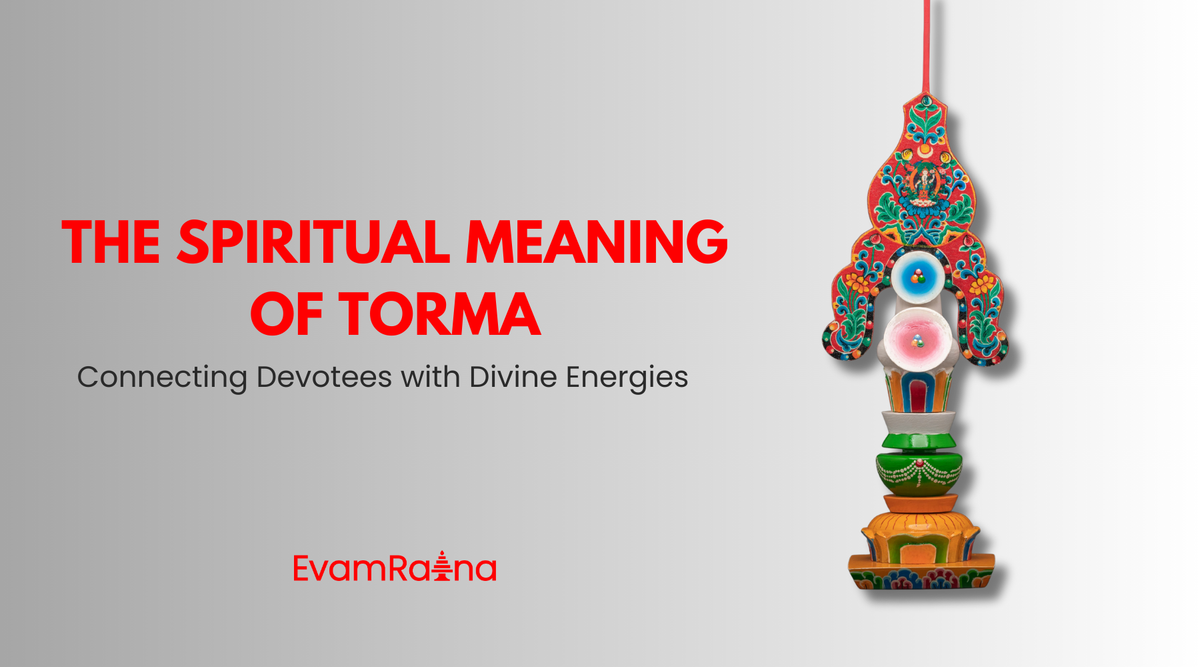
A torma is not a shape but a multidimensional object in which each element is a step on the tantric path. It is made of either dough or metal, but its design is based on a sacred geometry:
- The Base (gzhi): The broad stable base represents the spiritual base of the practitioner, the unshaken knowledge and teachings which make the basis of enlightenment.
- The Body (sku): The tapering central body is the bodily form of the invoking deity. It is the carrier of divine energy.
- The Crown or Top (thod): This is the awakened wisdom and the awakening mind (bodhicitta). It can be typically crowned with a symbol such as flame, jewel, or lotus bud as a symbol of spiritual attainments.
- Adornments: Tormas are commonly covered with butter ornaments- disks, balls, flowers, moons, suns, or even skulls. These will represent certain divine entities or cult necessities, according to the character of the practice (peaceful or wrathful).
- Color: The color informs you the nature of the ritual. Peaceful practices and outer tantra are mostly practiced with a white torma and the inner tantra is usually practiced with a red torma or wrathful protectors such as Mahakala.
How Torma Rituals Connect Humans to Enlightened Beings
The main purpose of a torma is to be a conduit. It is a medium of communication between the divinities and the human world, and as such, the boundary between the two is porous.

A Receptacle for Divine Presence
In many rituals, the torma serves as the temporary residence of the deity or even the entire mandala (the main figure and their retinue). When we create a torma according to strict standards and implementation, it is believed to be a functional device that forces the deity to take action in response to human demands.
A Tool for Visualization
For the practitioner, the torma is a mnemonic device. It reminds us of the complicated spiritual knowledge and the tantric process of visualization in which we convert the torma mentally and transform it into a divine palace or the deity itself. When we concentrate our minds on the torma when reciting the mantras, we maintain our minds and enhance our individual relationship with the attributes of the deity.
Building Community Bonds
Torma practices are not only personal, but shared. The collective belief in and worship of a huge iconic torma, like a dark blue torma of Vajradhara, can contribute to the identity and the spiritual dedication of a whole religious community.
The Diverse Paths: Types of Tormas
A torma may be of many different types, depending on what purpose a ceremony is meant to serve:
-
Shrine Torma (rten gtor): Visualized as the deity and kept on the altar for as long as offerings are rendered to it.
-
Perpetual Torma (rtag gtor): Maintained a certain amount of time, months or even years, as a consistent aid to practice.
-
Offering/Sadhana Torma (mchod gtor): A gift given to and received by the deities to delight them.
-
Mending Torma (skang gtor): It was used to mend broken pledges and symbolize sense pleasures and joys that were presented to the deities.
-
Captured Torma (gta' gtor): Kept until a specific activity is accomplished, intended to make sure that the work is completed quickly and promptly.
-
Daily/Session Torma (thun gtor): Used in occasional or daily rituals. Even a simple practitioner can make these by setting aside the best portions of their own food and drink.
-
Exorcism Torma (torgyak): Used in powerful rituals to absorb and eliminate negative forces. The rituals usually end with the burning of the torma, which means the destruction of negativity gathered throughout the year.
The Evolution of Form: Why Choose a Metal Torma?

Although the traditional dough tormas are conducted in the Buddhist principle of impermanence, which makes them biodegradable, a major change took place in the 14th century when the use of metal tormas was introduced.
Permanence and Eternal Devotion
Torma is a metal object that is made of copper, bronze, brass or even silver and gold, which represents eternal devotion. Unlike dough, metal versions are permanent, making them ideal for:
-
Long-term Shrines: This includes a stable altar element that does not deteriorate.
-
Tantric Retreats: They can be used as long-term aids to practitioners who are in isolation.
-
Protecting Sacred Energy: Metal substitutes are thought to build up spiritual energy with time. Whenever they are used during a ceremony or blessed by a high lama, they get increasingly stronger.
The Art of the Artisan
Crafting a metal torma is itself a tantric act. Artisans often use methods like hand-hammering, engraving, and repousse while chanting mantras and performing visualizations. This ensures that the object is not just a piece of art, but a religious tool filled with spiritual lineage and pure intentions.
Practical Guide: How to care about your Torma and your Practice
If you choose to bring a torma into your personal practice, it is vital to treat it with the same respect you would show a Buddha statue.
Placement and Maintenance
-
Elevated Spots: Place the torma on a clean, elevated spot like a shrine or altar, protected from unpleasant elements.
-
Cleanliness: Regularly dust the torma with a soft cloth. Between uses, keeping it under a protective cover preserves its state and significance.
-
Mindfulness: The procedure for cleaning and handling should be performed with devotion and mindfulness. Visualize the deity as you care for their physical support.
Generating Merit through Connection
The torma should be the focus of your meditation when you are sitting before your altar. You connect the practice of your inner world with the ritual of your outer world by focusing on its symbols the lotus as a symbol of purity, the vajra as a symbol of strength, or the seed syllables inscribed into its surface. By doing this conscious effort, the torma is a real spiritual agent that assists you in changing your selfish states of mind into transcendent wisdom.
Choosing an Authentic Support
When a practitioner wants to find torma in the form of metal, seek the authenticity and craftsmanship. Companies such as Evamratna also engage artisans who use their lineage to guarantee that these products are not only decorative, but they are genuinely working tools of tantric rituals, that meet the quality and religious potential criteria
Conclusion: From Material Form to Infinite Presence
The torma is an appealing paradox: a material thing (flour or metal) which takes us to the understanding of emptiness. It makes us remember that everything in existence is causally created and that the primary form of existence is its interconnectedness.
The next time you encounter a torma at an annual Puja or on your personal altar, keep in mind that it has two faces. It is a hurricane, which was meant to destroy your attachment, and a mother, which was meant to give endless sympathy. When you approach this sacred art in a proper state of mind, you are not doing some ritual, you are aligning your heart with the continuous chain of sacred visions that have been followed by practitioners over the centuries.