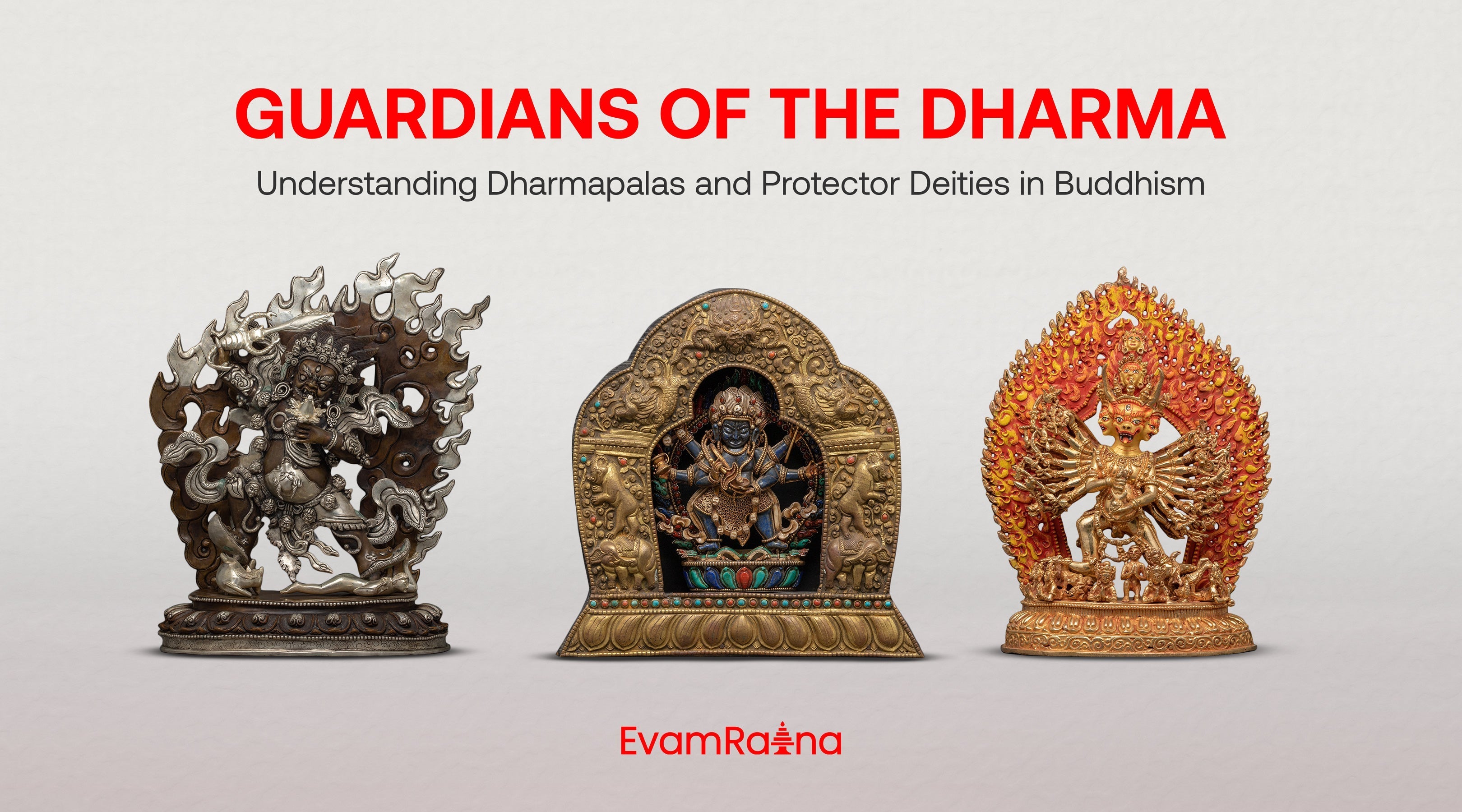
Who Are the Dharmapalas? Guardians of the Dharma and Buddhist Faith
In Buddhism, many people are familiar with serene and peaceful deities whose calm expressions symbolize compassion, wisdom, and inner harmony. However, Buddhism also includes powerful wrathful deities known as Dharmapalas, the fierce guardians of the Dharma. These protector deities are not meant to frighten practitioners; rather, their intense expressions and dynamic forms represent their unwavering commitment to removing obstacles, dispelling negative forces, and safeguarding spiritual teachings. Their wrath is a manifestation of enlightened compassion, acting swiftly and decisively to protect practitioners from inner defilements such as ignorance, fear, and harmful influences, while preserving the purity of the Buddhist path. These figures with their bulging eyes, crowns of skulls, and brandished weapons are known as Dharmapalas.
Dharmapalas: Guardians of the Dharma

The Sanskrit word Dharmapala literally translates to "guardian of the teachings" or "protector of the teachings". In the Tibetan language, they are referred to as chös-skyong. Their primary responsibility is to safeguard the Buddhist path, the teachings (Dharma), and the practitioners themselves from both external dangers and internal spiritual distractions.
Within the Mahayana and Vajrayana (Diamond Vehicle) traditions, these deities act as specialized spiritual agents. They are not merely historical figures but active forces that intervene when a practitioner veers off course, sometimes forcefully pulling them back from decisions that could jeopardize their spiritual development.
The Two Main Types of Protectors: Wisdom vs. Worldly
To understand how to relate to these deities, it is vital to distinguish between the two primary categories of Dharmapalas: Wisdom (Enlightened) Protectors and Worldly Protectors.
1. Wisdom Protectors (Supramundane)
Wisdom Protectors, also known as Enlightened Protectors, are fully enlightened beings who have transcended the cycle of samsara. They are often wrathful emanations of Buddhas or Bodhisattvas. Because they are enlightened, they can grant spiritual protection and lead a practitioner directly toward liberation from suffering.
Examples: Mahakala, Shri Devi, and Vajrabhairava.
2. Worldly Protectors (Mundane)
Worldly Protectors are powerful spirits or deities that still reside within the cycle of worldly existence (samsara). While they have been bound by oath to protect the Dharma, they are not yet fully enlightened. Practitioners often rely on them for help with material needs, success, and protection from localized negative energies.
Examples: The Four Guardian Kings, Vaishravana, and Tsangpa Karpo.
Why Do Dharmapalas Look Fierce? Understanding the Symbolism of Wrath
One of the most common questions practitioners ask is: If Buddhism is about peace and compassion, why do the protectors look so terrifying?
The powerful and intense appearance of Dharmapalas is not meant to frighten sincere practitioners. Instead, their wrathful form is a compassionate method used to protect the Dharma and help practitioners overcome obstacles on the spiritual path.
Their fierce expressions, flaming hair, strong bodies, and weapons all carry symbolic meaning:
-
To Frighten Negative Forces: Their frightening appearance is meant to scare away harmful energies, evil spirits, and negative influences that can disturb meditation and spiritual progress.
-
To Show Strong Compassion: Like a parent who speaks firmly to protect a child from danger, Dharmapalas use powerful energy to break through ignorance, ego, and stubborn habits that prevent spiritual growth.
-
To Represent Discipline in Practice: Their wrath symbolizes the strong determination and self-discipline needed for spiritual training. Just as a teacher may firmly correct a student to keep them focused, Dharmapalas help practitioners stay alert, mindful, and committed to the path.
In this way, their fierce form is not anger in the ordinary sense, but enlightened compassion acting with strength and clarity.
Mahakala: The Swift-Acting Lord

Mahakala is one of the most revered protector deities in Tibetan Vajrayana Buddhism and is widely known as the powerful guardian of the Dharma. He appears in many forms, such as Shadbhuja Mahakala (the six-armed form).
Nature: A wrathful manifestation of Avalokiteshvara, the Bodhisattva of Compassion.
Iconography: He is blue-black in color, symbolizing spiritual depth. He holds a curved knife (cutting through ignorance) and a skullcup (consuming delusions). He stands upon a sun disc and lotus, surrounded by the "orange flames of pristine awareness".
Practical Role: He is called upon for fast action to safeguard practitioners and the teachings from all immediate dangers.
Shri Devi (Magzor Gyalmo): The Queen Who Repels Armies

Shri Devi (also known as Palden Lhamo) is the primary female protector of the Tibetan Buddhist tradition. She is the only female of the Eight Great Dharmapalas. She has been the personal guardian of all 14 Dalai Lamas, ensuring the spiritual continuity and preservation of the Tibetan Buddhist tradition. She is revered in Tibetan monasteries as both a wrathful force and a caring mother, known for her swift actions and fierce protection.
Nature: An enlightened guardian goddess and a vengeful incarnation of the goddess Saraswati.
Iconography: She is depicted riding a mule across a sea of blood. She holds a vajra-tipped staff and a skullcup, with a peacock feather parasol above her head, signifying regal authority.
Practical Role: She is a powerful defender capable of defeating harmful forces and "turning back armies" of negativity that block spiritual progress.
Vajrabhairava (Yamantaka): The Destroyer of Death

Vajrabhairava is one of the most powerful meditational deities (Yidams) who also functions as a primary protector. Vajrabhairava is also known as Yamantaka, the Destroyer of Death. His name is a combination of two essential words: Yama (the Lord of Death) and Antaka (the Destroyer of Death), which precisely describe his role.
Nature: The wrathful side of Manjushri, the Bodhisattva of Wisdom.
Iconography: He has multiple faces, prominently a buffalo head representing his conquest over death and ignorance. He is surrounded by intense flames of wisdom that purify all delusions.
Practical Role: He represents the transformation of the ultimate force of death into the ultimate force of liberation.
Hayagriva: The Horse-Headed Deity

Hayagriva is a Tantric Buddhist meditational deity that appears in all four major classifications: Kriya, Charya, Yoga, and Anuttarayoga. He is affiliated with the Padma Buddha Family, which includes Amitabha as the Buddha, Avalokiteshvara as the Lord, and Hayagriva as the primary wrathful deity.
Nature: A wrathful incarnation of Amitabha or Avalokiteshvara.
Iconography: He is brilliant red, symbolizing transformative energy. His most distinctive feature is the small green horse head emerging from his hair, which symbolizes speed and alertness.
Practical Role: He is specifically invoked to remove spiritual barriers and obstacles standing in the way of enlightenment. He helps practitioners overcome inner fears and negative karma.
Begtse Chen: Great Coat of Mail

Begtse Chen (also known as Chamsing or the "Great Coat of Mail") is a key figure in Tibetan Buddhism's rich tapestry of knowledge protection. His name highlights his role as a fierce defender of the Buddhist teachings and practitioners. Often referred to as the Red Mahakala because of his fierce and vengeful disposition, he serves as a powerful defender of the Buddhist teachings and those who practice them.
Iconography: Begtse Chen is depicted with Tibetan warrior armor, a crown of skulls, and a necklace of severed heads while holding a scorpion-handled sword and a fresh heart. He stands upon a sun disc over the corpses of a horse and a man, all while enveloped by the purifying flames of pristine awareness.
Practical Role: As a Wisdom Protector, he provides the forceful energy necessary to overcome spiritual ignorance and external challenges, acting as a fierce defender for practitioners in the Sakya and Gelug traditions. He clears spiritual obstacles and ensures that practitioners stay committed to their path toward enlightenment without being distracted by harmful forces.
Yama Dharmaraja: The Protector of Truth

Click Here To View Our Wrathful Deity Yama Dharmaraja Statue from EvamRatna
Yama Dharmaraja is a wrathful and powerful knowledge deity who protects the Method Class (father) of Anuttarayoga Tantra. He is often confused with the "Lord of Death" in worldly mythology, but in Vajrayana, he is an enlightened guardian.
Nature: A wrathful emanation of Manjushri, specifically protecting the "Method Class" of tantric teachings.
Iconography: Like Vajrabhairava, he has a buffalo head and is dark blue. He holds a bone stick and a coiled lasso used to bind negative forces.
Practical Role: He helps practitioners govern earthly forces and ensures they stay on the track toward enlightenment.
Vaishravana: The Guardian of Wealth

Vaishravana (Namtoshe) is revered primarily as a guardian god in Tibetan Buddhism, particularly in the Gelug tradition. His role is not only to protect, but also to enrich those who worship him by securing their wealth and success. Vaishravana is the leader of the Yaksha race and the guardian of the North. He is one of the Four Directional Guardians, who took a vow to preserve Buddha Shakyamuni's teachings.
Iconography: He is depicted as a warrior king sitting on a snow lion. He wears full battle armor and holds a treasure-spitting mongoose or precious objects.
Practical Role: He protects the teachings while simultaneously providing wealth and success to practitioners. The belief is that material abundance can serve a spiritual purpose by supporting one's practice and the community.
Tsangpa Karpo: The White Brahma

Tsangpa Karpo is a unique worldly protector in the Gelug lineage. Tsangpa Karpo, whose name relates to the Hindu god Brahma, also has a separate identity as a worldly protector deity. He is revered as a protector of both spiritual practice and material well-being, safeguarding the safety and prosperity of those who follow him.
Iconography: He is white and gold, dressed in the garb of a warrior, and rides a dark brown horse. He holds a curved sword to cut through ignorance.
Practical Role: He guards both spiritual practice and material well-being, protecting practitioners from both external and internal difficulties.
Practical Application: How to Practice with Dharmapalas
For a Buddhist practitioner, the goal is not to "worship" these deities as external gods who grant favors, but to engage with them as aspects of one's own disciplined mind.
1. Daily Rituals and Sadhana
The Dharmapalas are frequently invoked by the practitioners in their daily ritual (sadhana) or meditation. In visualizing their forms of wrath and repeating their mantras, you are literally invoking the protective powers of your own Buddha-nature.
2. Overcoming Obstacles
When you face a significant spiritual obstacle, such as a loss of faith, intense anger, or persistent external bad luck, invoking the Dharmapalas can help clear the "spiritual darkness" that obstructs your path.
3. Maintaining the Path
Dharmapalas are described as mentors who keep you on track. If you find yourself making decisions that might harm your spiritual growth, meditating on the protector reminds you of the "ferocious force" needed to conquer your own ego and stay committed to your vows.
Conclusion: The Compassionate Heart of the Guardian
Though their forms may be frightening, the Dharmapalas represent the peak of compassionate activity. They remind us that the path to enlightenment is not always a gentle stroll; it often requires the fierce energy to confront our deepest fears and the most stubborn aspects of our ignorance.
Whether you are looking at a thangka of Mahakala or a statue of Vaishravana, remember that these guardians are here to ensure your spiritual growth continues uninterrupted. They echo the active harmony of fierce defense and transfigurative wisdom, demonstrating that the fiercest of forces could also bring spiritual liberation.
By understanding and respecting these Guardians of the Dharma, you invite a sense of that feeling of security and power, knowing that you are not alone in the path to enlightenment.