Everything You Need to Know About Tibetan Prayer Flags (Wind Horse): Spiritual Meaning, Colors, and Traditional Uses
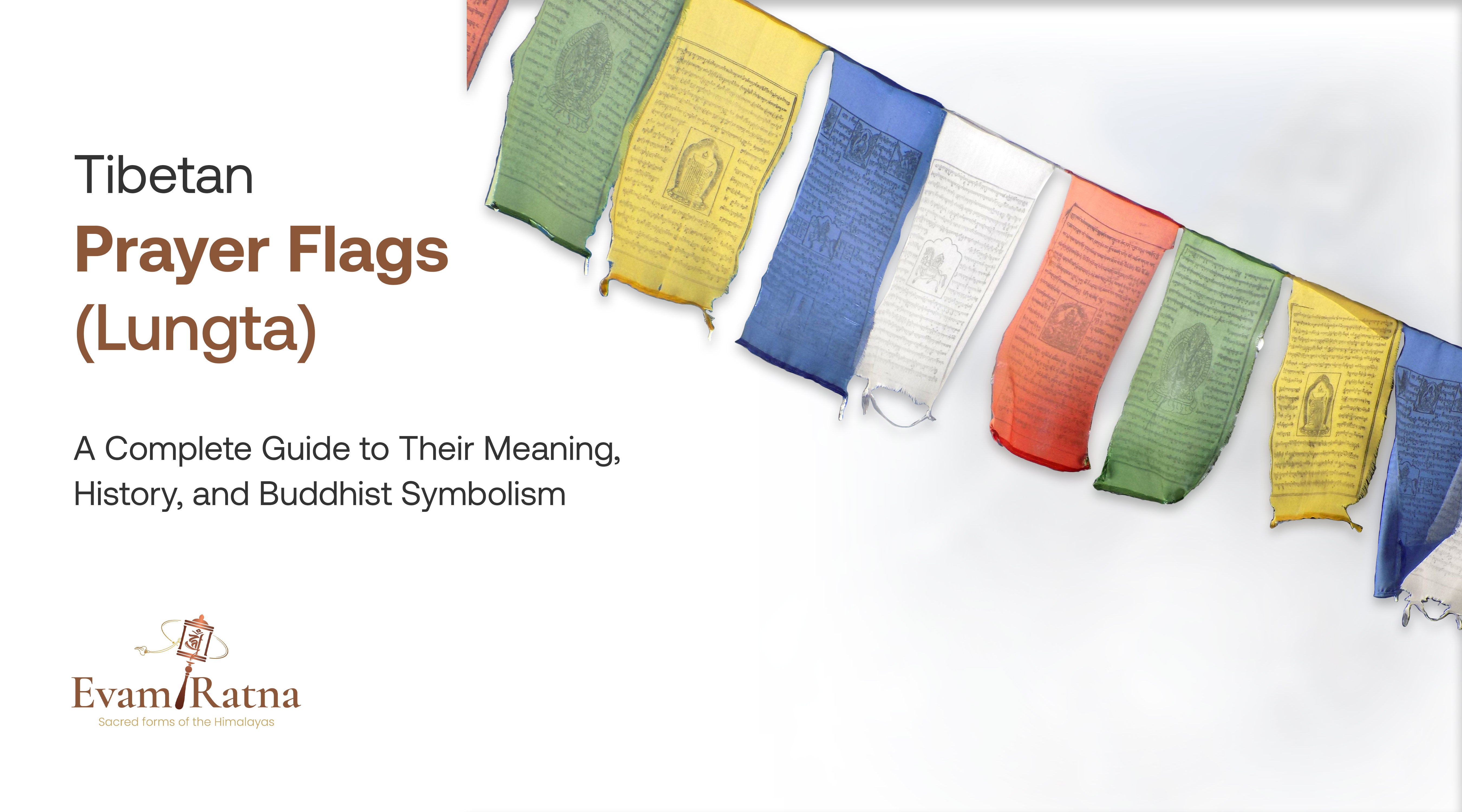
Tibetan prayer flags, known in Tibetan as rlung rta (lungta), meaning “Wind Horse,” are sacred, colorful flags that carry thousands of years of prayers, blessings, and spiritual aspirations into the wind. It represents compassion, harmony, protection, and the wish for peace among all beings. Printed with Buddhist mantras, auspicious symbols, sacred syllables, and images of enlightened beings, Tibetan prayer flags are traditionally believed to release their blessings whenever the wind touches them. As the breeze moves through the fabric, prayers are symbolically carried across the world, spreading positive energy, wisdom, and blessings. The fluttering of the flags resembles a galloping horse, representing the unstoppable flow of spiritual energy and the spread of enlightened intentions.
The Meaning of Tibetan Prayer Flags (Lungta)

The Tibetan word rlung rta is translated as “Wind Horse.” The term combines rlung, meaning wind or vital energy, and rta, meaning horse. In Tibetan Buddhist culture, the Wind Horse represents the movement of life energy, good fortune, personal strength, and spiritual vitality. In Tibet, the prayer flag is known as the windhorse, as the prayers are carried on the wind. It consists of auspicious mantras, designs, syllables, and prayers which are woodblock-printed onto squares of cotton cloth in each of the Five Buddha colours.
The deeper meaning of Tibetan prayer flags is rooted in the Buddhist practice of generating compassion for all sentient beings. The prayers printed on the flags are offered for every sentient being to be touched by the wind and receive their symbolic benefit. At the center of traditional Lungta prayer flags is the image of a powerful Wind Horse carrying a wish-fulfilling jewel (norbu) on its back. This jewel symbolizes prosperity, harmony, and the fulfillment of positive aspirations. Unlike an ordinary horse, the Wind Horse represents an enlightened force that carries prayers and blessings beyond physical limitations. It is frequently displayed at the centre with the four supernatural creatures at each corner, along with auspicious mantras.
Sacred Symbols, Deities, Mantras, and Prayers Found on Tibetan Prayer Flags
Tibetan prayer flags contain sacred mantras, images of deities and guardians, and symbols that express wishes for peace, protection, wisdom, health, and spiritual awakening. These designs are traditionally created through woodblock printing techniques, where carved wooden blocks are used to transfer sacred images and texts onto cotton fabric. These sacred elements are believed to be carried by the wind, allowing the blessings and intentions contained within them to spread throughout the surrounding environment.

Common elements found on Tibetan prayer flags include:
1. The Wind Horse (Lungta)
At the center of many Lungta (rlung rta) prayer flags is the powerful image of the Wind Horse, surrounded by sacred inscriptions and symbolic creatures. The arrangement of these elements follows traditional Buddhist iconography, where every detail carries a deeper spiritual meaning. The horse is often shown moving powerfully through the sky, symbolizing the speed and freedom with which prayers travel through the wind. The central image is of the Wind Horse carrying a precious jewel on its back. It represents:
- Good fortune
- Strength
- Positive energy
- Protection from obstacles
- The spreading of blessings
The four corners of traditional Lungta flags often feature four mythical creatures, each representing powerful qualities. Together, these creatures create a protective arrangement surrounding the Wind Horse, representing balance and harmony between different forces.
- Garuda: A divine bird symbolizing freedom from harmful forces and protection from obstacles.
- Dragon: Represents strength, wisdom, and the power of awakened speech.
- Snow Lion: Symbolizes fearlessness, joy, and confidence in the Dharma.
- Tiger: Represents courage, discipline, and inner strength.
Beyond the horse itself, other figures sometimes appear on flags, most notably Gesar of Ling, Tibet's great epic hero, shown riding his celestial white steed Kyango Karkar through billowing clouds, a warrior echo of the same wind-borne, unstoppable energy the windhorse represents.
2. Buddhist Mantras
Prayer flags commonly contain sacred mantras that invoke blessings and compassion. Some frequently used mantras include:
- Om Mani Padme Hum: The mantra of Avalokiteshvara (Chenrezig), representing compassion and the wish to relieve suffering.
- Guru Rinpoche Mantra: Associated with Padmasambhava, who played a central role in establishing Vajrayana Buddhism in Tibet.
- Kalachakra Mantra: A sacred mantra connected with the teachings of the Kalachakra tradition, it represents harmony between the universe, time, and human consciousness.
3. Images of Buddhist Deities
Within mantras, many Tibetan prayer flags display images of revered Buddhist masters and deities. These figures represent different aspects of enlightened qualities that practitioners aspire to develop. Many prayer flags include images of revered Buddhist figures, including:
Padmasambhava (Guru Rinpoche): The Second Buddha
Known as the “Precious Master,” Padmasambhava holds great importance in Tibetan Buddhism. His image on prayer flags represents:
- Protection from negative influences.
- Spiritual transformation.
- The spread of Buddhist teachings.
Manjushri: Embodiment of Wisdom
Manjushri represents enlightened wisdom and the ability to cut through ignorance. His presence symbolizes clarity, knowledge, and understanding. His image on prayer flags symbolizes:
- Clarity of mind and insight.
- The removal of ignorance and confusion.
- The development of knowledge and wisdom.
Avalokiteshvara (Chenrezig): Embodiment of Compassion
Avalokiteshvara represents limitless compassion and the aspiration to relieve the suffering of all beings. His mantra, Om Mani Padme Hum, is among the most widely printed prayers in Tibetan Buddhist traditions. His image on prayer flags symbolizes:
- Compassion and loving-kindness
- Protection from suffering
- The cultivation of a compassionate heart
Vajrasattva: Embodiment of Purification
Vajrasattva is revered as the embodiment of purification and spiritual renewal in Tibetan Buddhism. His presence on prayer flags represents:
- Purification of negative karma and obstacles
- Restoration of spiritual balance
- The cultivation of clarity and inner transformation
Longevity Deities
Some prayer flags feature the Tibetan Buddhist Three Long-Life Deities:
- Amitayus: Represents infinite life and wisdom.
- White Tara: Represents healing, protection, and long life.
- Ushnishavijaya: Represents purification and overcoming obstacles to life.
The Five Colors of Tibetan Prayer Flags and Their Symbolism

The five colors of Tibetan prayer flags hold profound symbolic meaning within Tibetan Buddhist traditions. They are arranged in five colors representing the five elements and the Five Wisdoms of Buddhism. They represent the Five Elements of nature, the Five Wisdoms of enlightened consciousness, and the harmonious balance between the outer environment and inner spiritual development. Traditionally arranged in a specific order: blue, white, red, green, and yellow, the five colors together represent the complete universe and the interconnected nature of all existence.
Each color is associated with a particular element, direction, enlightened quality, and aspect of transformation. When prayer flags move with the wind, these colors are believed to spread prayers, blessings, and positive intentions throughout the surrounding space.
Blue Tibetan Prayer Flags: Symbol of Sky, Space, and Infinite Wisdom
Blue is traditionally placed at the top of Tibetan prayer flags and represents the vastness of the sky and the element of space. It symbolizes the limitless nature of awareness and the openness required for spiritual awakening. In Tibetan Buddhist symbolism, blue is connected with the purification of anger and aggression, transforming these negative emotions into the wisdom of clarity and vast understanding.
The blue color reminds practitioners to cultivate a spacious mind that is free from emotional disturbances and limitations. Blue prayer flags represent:
- The infinite expanse of the sky and space.
- Peace, calmness, and stability.
- The purification of anger and hatred.
- Vast enlightened awareness.
- The wisdom of seeing reality clearly.
White Tibetan Prayer Flags: Symbol of Air, Purity, and Healing
White represents the element of air and wind, the very force that carries the prayers from the flags into the world. It symbolizes purity, peace, and the removal of obstacles that prevent spiritual growth. In Buddhist teachings, white is associated with the transformation of ignorance into wisdom. It reflects the qualities of compassion, healing, and the clarity that arises from understanding the true nature of existence.
The white color reflects the aspiration for a peaceful mind and a compassionate world. White prayer flags represent:
- Purification and spiritual cleansing
- Peace and harmony
- Healing energy and long life
- The purification of ignorance
- The movement of prayers through the wind
Red Tibetan Prayer Flags: Symbol of Fire, Transformation, and Spiritual Power
Red represents the element of fire, which can transform and purify. In Tibetan Buddhist symbolism, fire represents the powerful energy required to overcome obstacles and transform negative emotions into enlightened qualities. Red is connected with the transformation of attachment and desire into discriminating wisdom. It symbolizes the awakened energy and compassion that motivates spiritual practice.
The red color reminds practitioners that powerful emotions can be transformed into positive forces when guided by wisdom. Red prayer flags represent:
- Transformation and purification
- Vital energy and strength
- Spiritual power and determination
- The purification of attachment
- The warmth of compassion and devotion
Green Tibetan Prayer Flags: Symbol of Water, Balance, and Compassionate Action
Green represents the element of water and symbolizes balance, harmony, and active compassion. It is associated with movement, growth, and the ability to adapt like flowing water. Within Tibetan Buddhist symbolism, green is connected with the purification of jealousy and envy, transforming these emotions into the wisdom of accomplishing enlightened activities.
Green is often associated with dynamic compassionate activity, reflecting the ability to respond skillfully to the needs of others. Green prayer flags represent:
- Harmony and balance
- Growth and renewal
- Compassionate action
- The purification of jealousy
- Protection and freedom from obstacles
Yellow Tibetan Prayer Flags: Symbol of Earth, Stability, and Prosperity
Yellow represents the element of earth, symbolizing stability, grounding, and abundance. It reflects the qualities of patience, generosity, and spiritual richness. In Tibetan Buddhist teachings, yellow transforms pride and arrogance into the wisdom of equality, the understanding that all beings share an interconnected existence.
The yellow color reminds practitioners to develop humility, generosity, and a stable foundation for spiritual growth. Yellow prayer flags represent:
- Stability and strength
- Prosperity and abundance
- Generosity and patience
- The purification of pride
- Grounded spiritual awareness
Auspicious Symbols on Tibetan Prayer Flags
Along with mantras and deity images, Tibetan prayer flags often include important Buddhist symbols known as the Eight Auspicious Symbols (Tashi Targye). These symbols represent qualities of enlightenment and spiritual prosperity.
Common symbols include:
- Endless Knot: Represents interconnectedness, wisdom, and compassion.
- Lotus Flower: Symbolizes purity and spiritual awakening.
- Dharma Wheel: Represents Buddha’s teachings and the path toward liberation.
- Victory Banner: Represents victory over ignorance and obstacles.
- Treasure Vase: Symbolizes abundance, prosperity, and spiritual wealth.
- Golden Fish: Represents freedom, happiness, and liberation.
- Conch Shell: Represents the spreading of Dharma teachings.
- Parasol: Represents protection from harmful influences.
The Sacred Renewal of Tibetan Prayer Flags During Losar: Spiritual Significance

The most significant moment in a flag's yearly life cycle is Tibetan New Year (Losar). This period marks a new beginning, making it an ideal time to renew prayers and intentions. By the end of a full year, a set of flags has weathered sun, rain, and wind, its prayers considered fully "spent," dispersed across the land. Losar is traditionally the moment to take down the faded flags and string up new ones, refreshing the cycle for another year. The rhythmic snap and crack of flags in a strong wind is often compared, quite literally, to the clatter of hooves, the windhorse audibly at a gallop.
Traditionally, prayer flags are placed in locations where the wind naturally moves freely, such as:
- Mountain passes
- Temple entrances
- Monastery rooftops
- Stupas
- Bridges
- Sacred pilgrimage routes
These locations are considered powerful because the wind can carry the prayers over vast landscapes, symbolically benefiting all beings.
The Spiritual Meaning Behind Tibetan Prayer Flag Placement
Tibetan prayer flags are most commonly seen throughout Himalayan Buddhist regions, especially Tibet, Nepal, Bhutan, northern India, Ladakh, and parts of Mongolia.
Mountain Passes and High Himalayan Landscapes
One of the most iconic places to see Tibetan prayer flags is at mountain passes and high-altitude Himalayan routes. Travelers, pilgrims, and local communities often hang new flags in these locations because the strong mountain winds are believed to carry prayers over vast distances. The dramatic landscape of colorful flags moving against snowy peaks has become one of the most recognizable symbols of Himalayan Buddhist culture. These locations are considered especially auspicious because they represent a meeting point between earth and sky, allowing prayers to travel freely through the elements.
Buddhist Monasteries and Temple Entrances
Prayer flags are commonly displayed around Tibetan Buddhist monasteries, temples, and retreat centers. They may be found hanging above entrances, across courtyards, around prayer halls, and on monastery rooftops. Their presence creates a sacred atmosphere where practitioners gather for meditation, rituals, and prayers. The flags serve as constant reminders of Buddhist values such as compassion, wisdom, and the interconnectedness of all life.
Stupas and Sacred Buddhist Sites
Tibetan prayer flags are frequently placed around stupas (chortens), sacred monuments, and pilgrimage sites. Stupas represent the enlightened mind of the Buddha, making them powerful locations for offering prayers and generating positive intentions. Flags surrounding these sacred structures symbolize the spreading of Dharma teachings and the wish that peace and wisdom may reach all directions.
Bridges, Rivers, and Natural Sacred Places
In Himalayan regions, prayer flags are often seen near bridges, rivers, lakes, and other natural landscapes. Water and wind are both considered powerful elements capable of carrying blessings and prayers throughout the environment. Placing flags near these locations reflects the Tibetan Buddhist understanding that nature itself can participate in spiritual practice. The elements become carriers of prayers, connecting human aspirations with the greater world.
Homes and Personal Meditation Spaces
Many Tibetan Buddhist practitioners also hang prayer flags near their homes, gardens, meditation rooms, and personal shrines. This practice creates a peaceful environment while expressing wishes for protection, harmony, health, and well-being. At home, prayer flags serve as daily reminders to cultivate compassion, mindfulness, and positive intentions for family, neighbors, and all sentient beings.
Sacred Pilgrimage Routes
Along traditional Buddhist pilgrimage paths, prayer flags mark places of spiritual importance and devotion. Pilgrims often add new flags while traveling to sacred destinations as an offering of prayers and aspirations. The continuous presence of prayer flags along these routes reflects generations of devotion, with each new set of flags becoming part of an ongoing tradition of spreading blessings through the wind.
Types of Tibetan Prayer Flags and Their Placement
Lungta Prayer Flags (Horizontal Flags)

Lungta flags are the most common type of Tibetan prayer flags. They are rectangular pieces of cloth connected along a horizontal string and are traditionally hung across open spaces where the wind can naturally pass through them.
They usually feature:
- Wind Horse in the center
- Four protective animals in the corners
- Buddhist mantras
- Auspicious symbols
They are commonly hung between trees, poles, rooftops, and mountain areas.
Darchor Prayer Flags (Vertical Flags)

Darchor (dar chen) refers to vertical prayer flags that are attached to tall poles. The word represents the increase and spreading of positive qualities. It rises upward from the ground, creating a vertical connection between the earth and sky.
They are commonly placed:
- Near monasteries
- Beside stupas
- At entrances of sacred places
- Around important spiritual locations
Where Can You Find Authentic Tibetan Prayer Flags?
Authentic Tibetan prayer flags can be found in:
- Tibetan Buddhist monasteries
- Himalayan craft communities
- Buddhist art galleries
- Traditional markets in Nepal, Tibet, and Bhutan
- Online stores specializing in Tibetan handicrafts and Buddhist artifacts
Authentic prayer flags preserve traditional designs, accurate Tibetan inscriptions, and sacred imagery created according to Buddhist artistic traditions.
Conclusion: Tibetan Prayer Flags as Symbols of Compassion and Connection
Tibetan prayer flags, or rlung rta, represent one of the most beautiful expressions of Tibetan Buddhist culture, the transformation of simple cloth into a carrier of prayers, wisdom, and compassion. Through sacred mantras, symbolic colors, and the powerful image of the Wind Horse, these flags connect human intention with the natural movement of the universe. Tibetan prayer flags remind us that kindness and positive intentions are not limited to one person or place. Like the wind itself, compassion can travel freely, reaching all beings and creating harmony throughout the world.