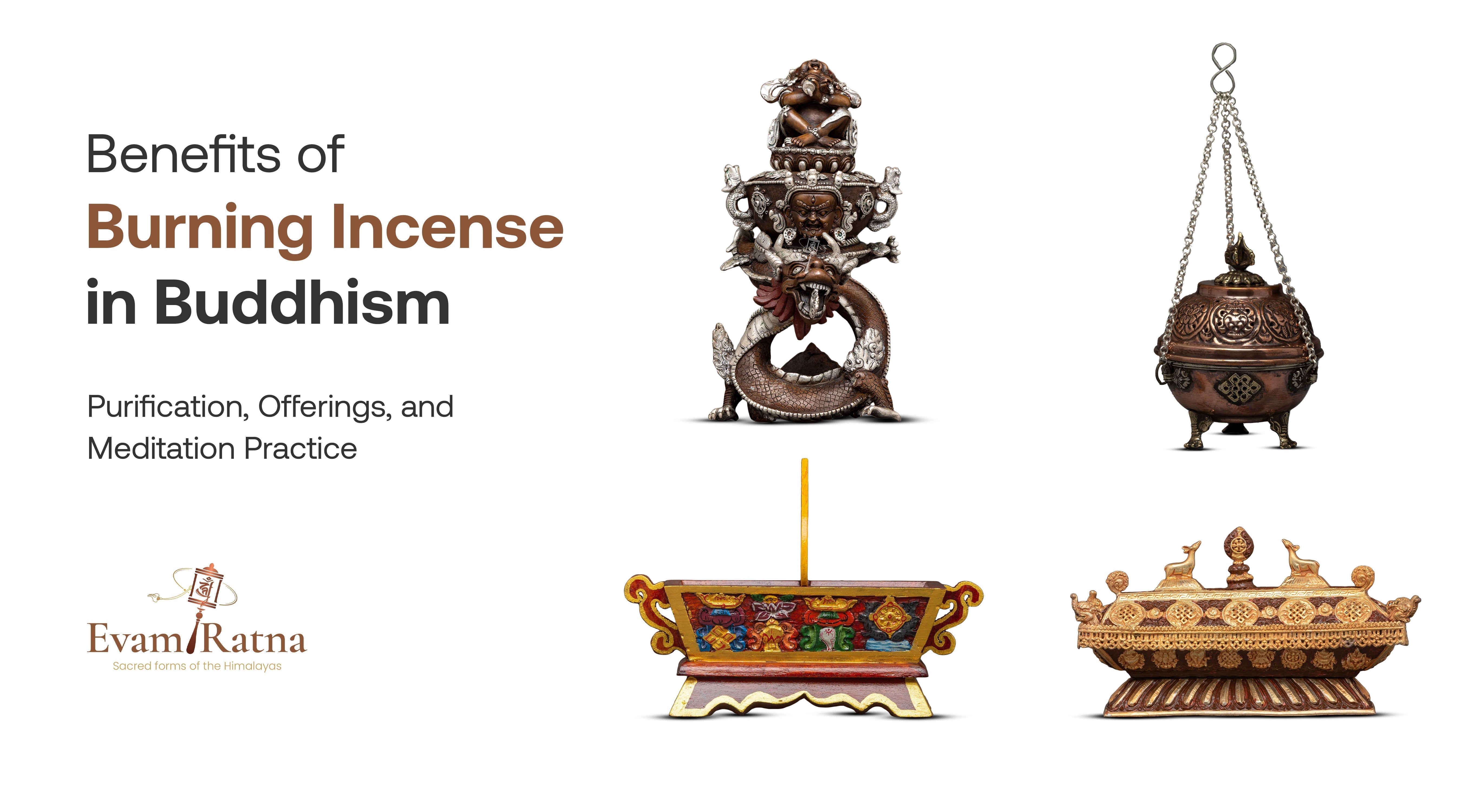
Incense Burner Meaning: Symbolism, Cultural Importance, and Spiritual Significance
The Benefits of Burning Incense have been recognized across spiritual traditions for thousands of years, with fragrance serving as a bridge between the physical world and the sacred realm. From ancient temples and monasteries to personal meditation spaces, incense has been used as an offering, a purification tool, and a support for mindfulness practices. In Buddhism, the act of burning incense carries a deeper meaning beyond pleasant fragrance. It represents generosity, devotion, ethical conduct, and the aspiration to cultivate a purified mind.
Introduction to Incense Burner:

In Tibetan Buddhism, the incense burner (bSang Khung) serves as a vessel to hold and burn incense, allowing fragrant smoke to spread through a space during religious ceremonies, meditation practices, and spiritual rituals. The Tibetan term for incense (bSang) refers to smoke made from natural aromas, including woods, herbs, flowers, and medicinal plants. Incense and incense burners play crucial roles in rituals, meditation, and offerings. Burning incense symbolizes an offering, purification, and mindfulness, as the smoke is seen as a means to present pure fragrance to enlightened beings and cultivate virtues like generosity and compassion. Traditional bSang Khung are designed to contain burning materials safely while diffusing the fragrant smoke. In Tibetan communities, large urn-shaped burners are typically used in bSang offering ceremonies, where selected aromatic substances are burned to enhance purification and merit-making efforts.
Origins and History of Incense Burners:
Incense has a long history that dates back thousands of years and has been used in religious, cultural, and daily practices across different civilizations. In ancient India, the use of incense was known from early times and is mentioned in texts such as the Rigveda (around 1500–1000 BCE), where fragrant substances were associated with rituals and offerings. In ancient China, incense burners also held an important place in spiritual and cultural life. Archaeological studies, including research by Susan N. Erickson on the Boshanlu (Mountain Censer) of the Western Han Period, show that hill-shaped incense burners were found in tombs from the reign of Emperor Han Wudi (140–87 BCE). However, the tradition of using incense burners in China may have developed even earlier, during the pre-Qin period (before 221 BCE). These incense burners were used in religious ceremonies, royal courts, and various aspects of everyday life.
As Buddhism spread eastward along the ancient trade routes of Asia, the tradition of incense use and incense burners became an important part of Buddhist practices across China, Korea, Japan, and other regions. Buddhist communities adopted incense offerings as a way to express devotion, create sacred spaces, and support meditation and ritual practices. The materials used for incense varied greatly depending on the region and availability of natural resources. Aromatic woods, resins, herbs, flowers, and spices were considered valuable commodities in ancient times. These fragrant materials were highly prized and were often used in religious ceremonies, royal gatherings, medicine, cosmetics, and perfumes. Because of their importance, incense ingredients became part of long-distance trade networks, connecting different cultures and civilizations through the exchange of precious aromatic substances.
The Ritual of Burning Incense Around the World
Incense is one of the few ritual practices that appears, almost without exception, in every major spiritual tradition on earth. That alone says something about the human relationship with smoke and scent.
Ancient Egypt burned resins such as frankincense and myrrh, along with the sixteen-ingredient blend known as kyphi, in temple liturgies honoring Amun-Ra and in mortuary rites intended to help the soul pass into the afterlife. Mesopotamian priests in Sumerian and Akkadian temples burned aromatics to honor their gods, carrying forward the idea, later echoed almost everywhere else, that rising smoke could physically carry a prayer upward. In the Hebrew and later Christian traditions, incense became a symbol of prayer itself; Psalm 141 asks that prayer "rise up before you like incense," an image still enacted in Catholic, Orthodox, and Anglican liturgies today. The Magi's gift of frankincense and myrrh to the infant Christ reflects the same association between fragrant smoke and the sacred.
In the Indian subcontinent, incense use may reach back to the Bronze Age, with archaeological finds of incense burners in the Indus Valley. The Vedic tradition describes aromatic substances burned during yajna fire rituals, and to this day, no Hindu puja feels complete without lit agarbatti before a deity. China developed some of the earliest and most sophisticated incense cultures in the world, bronze censers cast as early as the Zhou dynasty, elaborate Daoist and Buddhist temple incense used in both ancestor veneration and meditative practice, and incense so embedded in daily and ceremonial life that it shaped an entire decorative art form. From China, incense use spread into Korea, Japan, where it evolved into the refined art of kodo, or "the way of incense", and Vietnam. In Japanese Shinto shrines and Chinese folk religion alike, incense marks the boundary between ordinary and sacred space.
The Islamic world, particularly through Sufi practice, uses incense such as bakhour to purify the air of mosques and gathering spaces, a custom the Prophet Muhammad himself is said to have valued. Indigenous traditions across the Americas developed parallel practices, most visibly the smoke-cleansing ceremonies using bundled herbs, rooted in very different cosmologies but arriving at a strikingly similar conclusion: that smoke can clear a space of what does not belong there.
Ingredients Used in Tibetan Incense and Their Benefits

Traditional incense is created using a variety of natural ingredients, each selected for its fragrance, medicinal properties, availability, and cultural importance. Different regions have developed their own incense-making methods based on local plants, herbs, and traditional knowledge. In Tibetan incense-making traditions, ingredients are often carefully selected from Himalayan plants, medicinal herbs, flowers, and aromatic substances. Many traditional recipes are based on ancient Tibetan medical and spiritual knowledge.
- Juniper (Tib. shukpa) is the foundational ingredient of almost all Himalayan incense, particularly bsang. It grows across the high Himalayas of Nepal, Tibet, and Bhutan, and its smoke is considered strongly purifying, used to open a ritual, clear negative energy, and drive away obstacles before other offerings begin.
- Cedarwood, often burned alongside or used as kindling for powdered incense, offers a grounding, stabilizing fragrance associated with protective prayers and cleansing rites.
- Sandalwood, imported historically from India, particularly Mysore, is prized for calming the mind and deepening concentration, a natural companion to seated meditation and mantra recitation, and considered sacred across nearly every Buddhist school.
- Saffron, sourced from Kashmir and parts of the Tibetan plateau, adds richness and is associated with auspiciousness, abundance, and the invocation of blessings.
- Agarwood (aloeswood), one of the most precious incense materials in the world, is used sparingly in high tantric ritual contexts and is believed to deepen inner spiritual connection.
- Frankincense and myrrh, traded into Tibet from Arabia and North Africa along historic trade routes, bring a transcendent quality associated with offerings to higher beings, alongside a grounding, devotional quality tied to inner transformation.
- Snow lotus and rhodiola, both harvested from extreme high-altitude Himalayan environments, are rare and potent. Snow lotus is linked to purity and elevated consciousness, while rhodiola supports resilience and vitality, qualities especially valued during long retreats.
- Camphor is used to clear mental fog and awaken clarity of mind, while valerian is included for its calming effect on emotional turbulence, useful in evening practice or meditation aimed at settling the mind.
-
Medicinal Herbs are often included in combinations of incense making. Traditional Tibetan medicine recognizes many plants for their healing qualities, and some of these ingredients are incorporated into incense formulas. These ingredients contribute unique fragrances while reflecting centuries of botanical knowledge. Common herbal ingredients may include:
- Rhododendron
- Saffron
- Cardamom
- Clove
- Camphor
- Various Himalayan medicinal plants
- Flowers and spices have also played an important role in incense traditions. Their fragrances represent beauty, purity, and the richness of nature. Ingredients such as lotus, rose, saffron, and other aromatic plants may be included depending on the tradition and purpose of the incense.
Beyond their symbolic associations, many of these ingredients carry genuine aromatherapeutic and antimicrobial properties recognized in Tibetan medical literature, a reminder that in the Himalayan context, the line between "spiritual benefit" and "physical benefit" was never drawn as sharply as it is in the modern West. Burning incense was, and still is, understood as an act that purifies both the room and the practitioner's state of mind at once.
Types of Incense

Tibetan incense is produced and used in several distinct forms, and each form calls for a different kind of burner.
- Stick incense (coreless herbal sticks) are the thick, solid rolls of ground herbs and resin most commonly seen on Himalayan altars. Unlike Japanese or Indian incense, they contain no internal bamboo core, which allows them to burn slowly and release a fuller, denser fragrance. These are best suited to a horizontal tray, a box-style burner, or a shallow ash-filled bowl, and are typically used for daily practice and personal offerings.
- Rope incense, made by twisting ground herbs into handmade rice or lokta paper, is a more ceremonial format, traditionally laid flat across a bed of sand or ash in a bowl and lit at one end. It is closely associated with purification rites and temple ceremony.
- Powdered incense, primarily loose juniper for bsang offerings, but sometimes elaborate blends of resins and herbs, is sprinkled directly onto hot charcoal or an open hearth. This form produces the thickest, most intense smoke and is reserved for larger offerings, tantric ceremonies, and mountaintop or rooftop rituals. It requires a heat-resistant burner with good ventilation, such as a hanging censer or a deep charcoal bowl.
- Cone and dhoop forms are a more modern, convenient adaptation, well suited to smaller home altars or apartment shrines where a quick, self-contained burn is more practical than a full ritual setup.
Materials Used in Tibetan Incense Burner
Incense burners are crafted from a variety of materials, each offering unique qualities in terms of appearance, durability, heat resistance, and cultural significance. Throughout history, artisans have created incense burners using materials such as ceramic, metal, wood, stone, and precious metals, adapting their designs according to local traditions and ritual needs.
Ceramic Incense Burners:

Ceramic incense burners are among the most traditional and widely used types of incense holders. They are appreciated for their ability to withstand heat and distribute warmth evenly, making them suitable for burning incense sticks, cones, resin incense, and charcoal-based incense. The smooth surface of ceramic allows artisans to create beautiful artistic designs through glazing, painting, and carving. Many ceramic incense burners feature traditional patterns, cultural symbols, floral motifs, and religious imagery, making them both functional objects and decorative pieces.
Metal Incense Burners:

The metal incense burners are preferred for their high strength, durability, and heat resistance, and so are suitable for religious ceremonies and cultural practices. Brass, bronze, copper, silver, zinc alloy, and cast iron are common materials. Incense Burners are particularly notable in the Buddhist, Tibetan, Middle Eastern, and Asian traditions, as well as made of brass and bronze. Handcrafted metal burners are also popular in Tibetan Buddhism for smoke offerings and rituals due to their ability to withstand high temperatures and retain traditional craftsmanship, and they are often adorned with intricate designs made using engraving, casting, repoussé, or decorative carving techniques. The design of the metal incense burner is usually adorned with intricate patterns and symbols that hold deep spiritual and cultural meaning, such as lotus flowers, dragons, auspicious symbols, or religious symbols.
Wooden Incense Burners:

Incense burners made out of wood are valued for their organic qualities, their warmth, and their natural beauty. They are frequently selected by those who value handmade and environmentally friendly designs that impart a natural and serene ambiance to their meditation and living areas. Common types of wood used include sandalwood, walnut, acacia, and other durable hardwoods. Carved patterns, simple traditional designs, or minimalistic styles are common features found in wooden incense burners, evoking the beauty of nature. As Wood is sensitive to heat, many wooden incense burners are designed with heat-resistant metal inserts, ceramic holders, or protective liners to ensure safe use. With proper construction and care, wooden burners provide a beautiful balance between functionality, craftsmanship, and natural aesthetics.
Besides ceramic, metal, and wood, incense burners are also created using materials such as:
- Stone: Often used for outdoor incense burners due to its strength, stability, and natural appearance.
- Glass: Provides a modern and elegant look while allowing users to observe burning incense.
- Crystal and Gemstone Accents: Sometimes added to decorative or ceremonial incense burners to enhance their artistic and symbolic value.
- Silver and Gold-Plated Finishes: Used in high-quality ritual incense burners, especially those created for temples, collectors, and sacred spaces.
Tibetan Craftsmanship and Incense Burner Designs:
Tibetan incense burners reflect centuries of Himalayan craftsmanship, spiritual practice, and artistic tradition. Each design is created not only for practical use but also to support specific types of incense offerings and rituals. Tibetan artisans traditionally crafted incense burners from durable materials such as brass, bronze, copper, wood, and silver, often decorating them with sacred motifs that carry symbolic meanings.
Standing Incense Burners

The standing censer is one of the most recognizable Tibetan incense burner designs. These tall, free-standing burners are commonly made from brass, bronze, or copper and are often used in monasteries, temples, and large ceremonial spaces.
Artisans frequently decorate standing censers with traditional Himalayan motifs such as:
- Lotus petals, symbolizing purity and spiritual awakening
- Cloud patterns, representing the connection between the earthly and sacred realms
- Dragons, symbolizing protection, power, and guardianship
Because of their large size and stable structure, standing censers are suitable for extended incense offerings and purification ceremonies where a greater amount of fragrant smoke is required.
Box and Tube Incense Burners

Box and tube-style incense burners are designed specifically for Tibetan incense sticks, especially traditional coreless Tibetan incense that does not contain a bamboo stick.
These burners are usually made from wood, metal, or a combination of materials and are designed to hold incense securely while allowing the fragrance to spread evenly.
Many handcrafted Tibetan box burners feature beautiful decorative details, including:
- Turquoise and coral inlays
- Engraved Buddhist symbols
- Traditional Himalayan patterns
- Carved wooden designs
Their compact design makes them suitable for home altars, meditation spaces, and personal spiritual practice.
Hanging Censer Incense Burners

Click Here To View Our Silver-Plated Tibetan Incense Burner
Hanging censers are another important form of Tibetan incense burner, often used in ceremonial environments. These burners are suspended with chains and may include a decorative pierced lid that allows smoke to escape gracefully.
The hanging design helps distribute fragrance throughout a larger area and creates a visually meaningful ritual experience as the smoke rises and moves through the space.
They are commonly associated with:
- Monastery ceremonies
- Processions
- Large-scale purification rituals
- Outdoor religious gatherings
This design is closely connected with the Tibetan tradition of bsang (smoke offering), where fragrant substances are burned as offerings and for purification purposes.
Outdoor Tibetan Smoke Offering Burner (Bsang Khung)

A special type of Tibetan incense burner is the bsang khung, a larger incense hearth traditionally used for outdoor smoke offerings. These burners are often built in monasteries, on rooftops, in courtyards, and at sacred locations. Unlike small household incense holders, bsang khung are designed to burn larger quantities of aromatic substances such as:
- Juniper branches
- Medicinal herbs
- Fragrant woods
- Natural resins
The smoke produced during these offerings is traditionally used for purification and making offerings to enlightened beings, protectors, and all forms of life.
Travel Incense Burners

Historically, portable incense burners were created for monks, pilgrims, and travelers who wished to continue their spiritual practices while away from monasteries or homes.
These small and practical burners were designed to be:
- Lightweight
- Easy to carry
- Securely closable
- Safe for travel
Travel burners allowed practitioners to maintain daily incense offerings and meditation routines during long journeys.
Choosing the right burner is less about aesthetics than about matching the tool to the incense: a stick needs to be held horizontally and supported; loose powder needs heat, airflow, and a heat-safe vessel; rope needs a stable bed of ash or sand to burn evenly and safely.
Decorative Motifs Carved on Incense Burners
Lotus: Represents purity, spiritual awakening, and enlightenment. Like a lotus flower rising clean from muddy water, it symbolizes the journey from confusion and suffering toward wisdom and realization.
Flaming Jewel (Chintamani): Symbolizes the union of compassion and wisdom. It is traditionally regarded as a wish-fulfilling jewel that represents the removal of ignorance and the fulfillment of spiritual aspirations.
Eight Auspicious Symbols: Many incense burners feature one or more of the Eight Auspicious Symbols found throughout Himalayan Buddhist art:
- Parasol: Represents protection from spiritual harm and obstacles.
- Endless Knot: Symbolizes the interconnected nature of wisdom, compassion, and all phenomena.
- Golden Fish: Represents freedom, happiness, and liberation from suffering.
- Victory Banner: Symbolizes the triumph of wisdom over ignorance.
- Conch Shell: Represents the sound of the Dharma spreading in all directions.
- Lotus: Represents purity and spiritual awakening.
- Treasure Vase: Symbolizes abundance, prosperity, and the richness of spiritual qualities.
- Dharma Wheel: Represents the Buddha’s teachings and the path toward enlightenment.
- Dragons: Inspired by centuries of cultural exchange with Chinese artistic traditions, dragons are commonly featured on incense burners as powerful guardians. They symbolize protection, strength, and the safeguarding of sacred spaces.