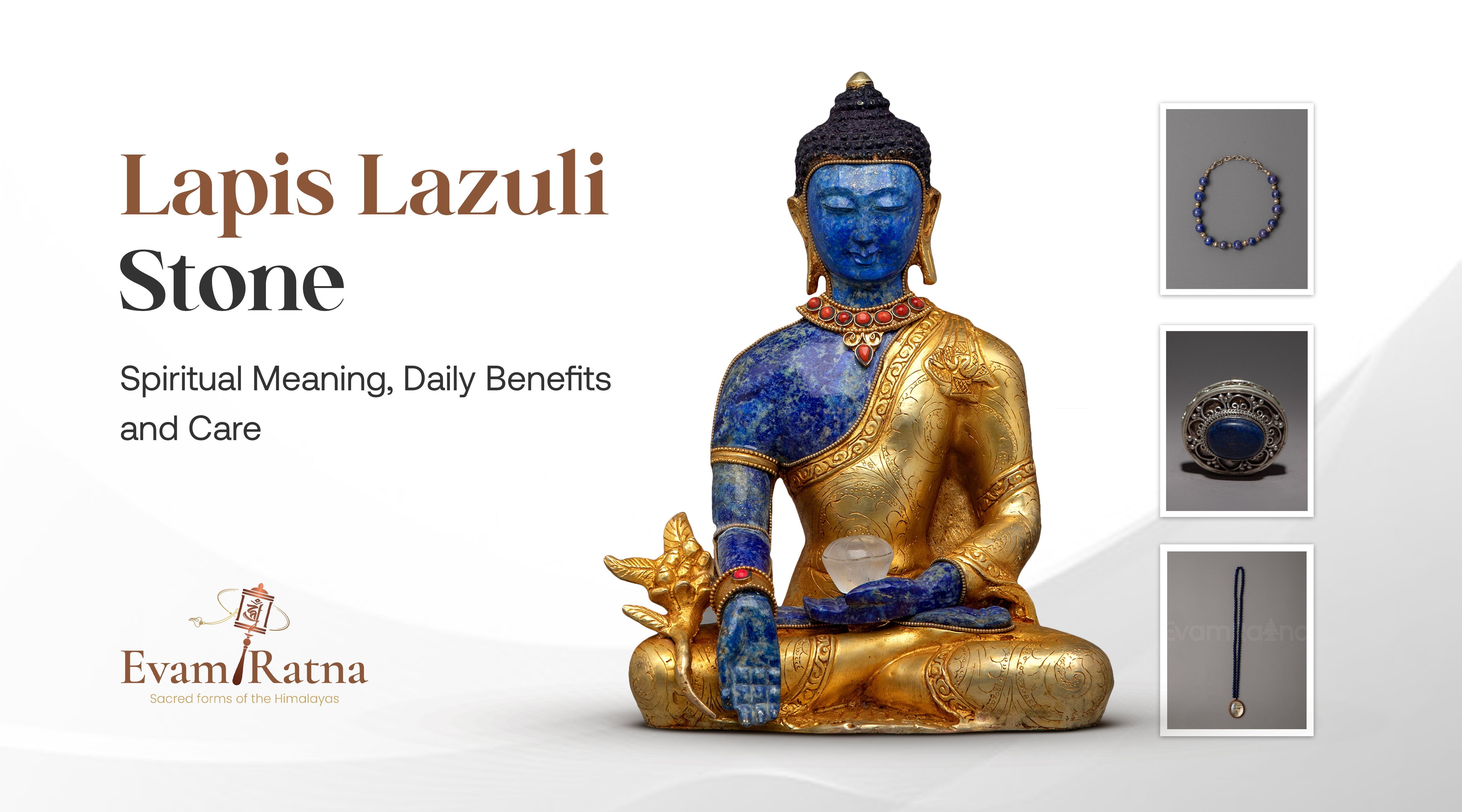
Lapis Lazuli: Sacred Blue Gemstone of Wisdom and Spiritual Insight
Lapis Lazuli is one of the most admired gemstones worldwide, with historical depth, artistic importance, and spiritual symbolism. This ancient stone has been treasured by civilizations for thousands of years and is known for its deep celestial blue color, often highlighted by flecks of golden pyrite. From royal ornaments and sacred objects to paintings, sculptures, and meditation tools, Lapis Lazuli has been associated with wisdom, beauty, and spiritual awareness.
What Is Lapis Lazuli Stone?

Lapis Lazuli Stone is a natural rock composed of several minerals, mainly lazurite, calcite, and pyrite. Lazurite gives the stone its characteristic blue color, while golden pyrite inclusions create the sparkling appearance often compared to stars in a night sky. Its name comes from two linguistic roots: “lapis,” meaning stone in Latin, and "lazuli," which comes from the Persian word lāžward, meaning "blue," "sky," or "heaven". Together, the name translates directly to "blue stone" or "stone of heaven." The stone is primarily known for its rich blue shades, ranging from deep indigo to violet-blue. The most valued varieties display a strong, even blue color with minimal white calcite markings and attractive golden pyrite details.
The three main components of Lapis Lazuli include:
- Lazurite: Lazurite is the mineral responsible for the famous blue color of Lapis Lazuli. A higher concentration of lazurite generally produces a deeper and more desirable blue appearance.
- Pyrite: Small golden flecks of pyrite are often found within Lapis Lazuli. These natural metallic inclusions add contrast and create the stone’s distinctive appearance.
- Calcite: Calcite appears as white streaks or patches within the stone. While excessive calcite may reduce the stone's value, some natural patterns are appreciated for their uniqueness.
The Ancient History of Lapis Lazuli
The history of Lapis Lazuli stretches back more than 6,000 years, making it one of the oldest decorative stones used by humans. Archaeological evidence shows that ancient civilizations valued this stone for ornaments, religious objects, and artistic purposes.
Lapis Lazuli in Ancient Egypt
Lapis Lazuli was highly valued in Ancient Egypt. The stone was used in jewelry, amulets, carvings, and decorative inlays. Egyptian artisans incorporated it into royal objects, including treasures discovered in ancient tombs. The Egyptian Museum notes that Lapis Lazuli was used from the Predynastic Period onward for beads, amulets, and jewelry decoration. Much of the ancient Egyptian supply came through trade routes from the Badakhshan region of present-day Afghanistan. Its intense blue color was associated with the heavens, making it a meaningful material for objects connected with royalty and spirituality.
Lapis Lazuli in Art
One of the most important historical uses of Lapis Lazuli was as a source for the famous blue pigment known as ultramarine. Artists throughout history valued this pigment for its brilliant and stable blue tone. During the Renaissance period, natural ultramarine made from Lapis Lazuli was considered one of the most precious artistic pigments and was often reserved for important commissions.
Lapis Lazuli Along Ancient Trade Routes
The famous Lapis Lazuli deposits of Badakhshan connected distant civilizations through trade networks. The movement of this stone across Asia, the Middle East, and Europe demonstrates how highly valued it was throughout history.
Spiritual Meaning of Lapis Lazuli Stone

For centuries, different cultures have associated Lapis Lazuli with wisdom, truth, and spiritual understanding. These meanings come from traditional beliefs, religious practices, and symbolic interpretations.
Symbol of Wisdom and Knowledge
The deep blue appearance of Lapis Lazuli has long been connected with knowledge and contemplation. Many traditions view the stone as representing the search for truth, deeper understanding, and inner awareness. Because of this association, Lapis Lazuli is often used in meditation spaces, spiritual artwork, and personal objects intended to encourage reflection.
Connection with Inner Awareness
The calm blue color of Lapis Lazuli is often linked with stillness and mindfulness. Many practitioners appreciate the stone as a visual reminder to cultivate awareness, patience, and thoughtful observation. In spiritual environments, Lapis Lazuli is commonly placed on altars, meditation areas, or sacred displays because of its association with clarity and contemplation.
Representation of Truth and Expression
Traditional interpretations often connect Lapis Lazuli with honest communication and expressing oneself with wisdom. Its symbolism encourages thoughtful speech and meaningful dialogue.
Lapis Lazuli in Buddhist Traditions
Blue stones have held an important place in Buddhist art and symbolism, especially in Himalayan traditions. Lapis Lazuli is particularly admired for its association with sacred imagery, artistic expression, and devotional objects. In Buddhist artwork, deep blue colors frequently represent vastness, wisdom, and the infinite nature of awareness. Lapis Lazuli pigments and stone details have historically contributed to sacred artistic traditions.
One of the most well-known connections between Lapis Lazuli and Buddhism is through depictions of the Medicine Buddha, whose body is traditionally described as having a deep blue color similar to lapis lazuli. This association has made the stone especially meaningful in Buddhist communities. Lapis Lazuli is also valued in Himalayan craftsmanship, where it may appear in decorative elements, jewelry, ritual objects, and sacred artworks.
Why Is Medicine Buddha’s Body Described as Lapis Lazuli?

Among the many symbolic elements found in Buddhist traditions, the connection between Lapis Lazuli and Medicine Buddha (Bhaisajyaguru) is one of the most profound. In Mahayana and Vajrayana Buddhism, Medicine Buddha is traditionally described as having a body that shines with the deep blue radiance of lapis lazuli, a precious stone historically associated with purity, wisdom, and healing.
This connection represents deeper Buddhist ideas of purification, transformation, wisdom, and the removal of suffering. The brilliant blue appearance of Medicine Buddha symbolizes the vast and clear nature of awakened consciousness, just as the deep blue surface of lapis lazuli reflects the limitless expanse of the sky. The Sanskrit term vaiḍūrya refers to a precious gemstone and is often translated as lapis lazuli or a jewel of brilliant blue color.
This description carries symbolic meaning:
1. The Purity of the Blue Light
The deep blue color of lapis lazuli represents clarity and purity. Similar to how a clear blue sky appears limitless and unobstructed, Medicine Buddha’s blue form symbolizes a mind free from ignorance, confusion, and suffering. The radiant blue body of Medicine Buddha represents enlightened wisdom that penetrates all forms of darkness.
2. Healing Beyond Physical Illness
Medicine Buddha is often associated with healing, but Buddhist teachings understand suffering in a broader sense. The deepest form of healing is the removal of the mental afflictions that create suffering, and they are:
- Ignorance
- Attachment
- Anger
- Fear
- Confusion
The lapis lazuli-like appearance of Medicine Buddha symbolizes the healing power of awakened wisdom that transforms these inner poisons.
3. The Vastness of Enlightened Wisdom
The color blue has long been associated with vastness in Buddhist symbolism. The sky and oceans represent openness, depth, and infinite space. Similarly, Medicine Buddha’s lapis lazuli color represents limitless compassion and wisdom extending to all sentient beings.
Daily Benefits and Traditional Uses of Lapis Lazuli
Lapis Lazuli has been appreciated for both its visual beauty and symbolic qualities. While scientific studies do not confirm gemstone-based healing effects, many people value the stone as a meaningful object for personal reflection and spiritual practice.
A Reminder for Meditation Practice
Many meditation practitioners keep Lapis Lazuli nearby because its color and presence serve as a reminder of calmness and awareness. A Lapis Lazuli Stone placed near a meditation area can become part of a personal practice environment, helping create a peaceful atmosphere.
Supporting Mindful Living
The symbolic meanings associated with Lapis Lazuli encourage qualities such as:
- Reflection
- Wisdom
- Patience
- Self-awareness
- Thoughtful communication
Many people use meaningful objects like gemstones as reminders of personal intentions and spiritual goals.
Enhancing Sacred Spaces
Because of its rich blue appearance, Lapis Lazuli is often used in home décor, meditation corners, and spiritual spaces. Its deep color adds a sense of serenity and connection to traditional craftsmanship.
Lapis Lazuli and Meditation
For centuries, humans have used natural materials such as stones, metals, and wood as objects of contemplation. Lapis Lazuli continues this tradition through its association with mindfulness and spiritual reflection. During meditation, some practitioners use Lapis Lazuli as a focal object. The stone’s unique patterns, blue surface, and golden details encourage observation and present-moment awareness.
A Lapis Lazuli meditation object may be appreciated for:
- Its natural beauty.
- Its historical importance.
- Its symbolic connection with wisdom.
- Its ability to inspire contemplation.
The value of the stone in meditation comes from personal connection and intention.
How to Identify Quality Lapis Lazuli
When choosing a Lapis Lazuli Stone, several characteristics influence its appearance and value.
- Color: Color is the most important factor. The finest examples generally display a rich, saturated blue color ranging from deep blue to violet-blue.
- Pyrite Inclusions: Golden pyrite flecks can add beauty and character. Small, evenly distributed flecks are often appreciated because they create a natural contrast.
- Calcite Presence: White calcite patterns are naturally occurring. Stones with excessive white calcite may be considered less valuable, while balanced patterns can create unique visual appeal.
- Craftsmanship: For carved objects, jewelry, or decorative pieces, the quality of craftsmanship also plays an important role. Skilled carving and polishing allow the natural beauty of the stone to be fully displayed.
How to Care for Lapis Lazuli Stone
Although Lapis Lazuli is a beautiful material, it requires proper care to maintain its appearance.
- Avoid Harsh Chemicals: Lapis Lazuli should be protected from strong chemicals, perfumes, and cleaning agents, as these may affect its surface.
- Clean Gently: Use a soft cloth and mild water for cleaning. Avoid ultrasonic cleaners and harsh cleaning methods.
- Dry wiping: Use a soft cloth to remove everyday oils and dust.
- Protect from Scratches: Store Lapis Lazuli separately from harder gemstones to prevent surface scratches.
- Avoid Excessive Heat: Sudden temperature changes may affect certain natural stones, so it is best to keep Lapis Lazuli away from extreme heat.
Lapis Lazuli Jewelry and Decorative Uses
Because of its captivating deep blue appearance and rich cultural history, Lapis Lazuli Stone has been used for thousands of years in jewelry, sacred objects, and decorative artworks. Beyond its visual beauty, the stone carries symbolic associations with wisdom, clarity, and spiritual reflection, making it valued in both traditional and contemporary craftsmanship.
- Beads
- Pendants
- Rings
- Sculptures
-
Decorative objects


Its combination of deep blue tones and golden accents makes it suitable for both traditional and contemporary designs. In interior spaces, Lapis Lazuli objects can create a striking visual element while also carrying historical and symbolic meaning.
Why Lapis Lazuli Remains Special Today
Thousands of years after its first use, Lapis Lazuli continues to fascinate artists, collectors, spiritual practitioners, and gemstone enthusiasts. Unlike ordinary decorative materials, Lapis Lazuli carries a story that connects modern appreciation with ancient traditions.
Its importance comes from the combination of:
- Ancient history
- Natural beauty
- Artistic significance
- Cultural symbolism
- Spiritual associations
Conclusion:
The Lapis Lazuli Stone represents one of humanity’s oldest relationships with the natural world. From ancient Egyptian treasures to Himalayan spiritual traditions and historical artwork, this sacred blue gemstone has inspired generations through its extraordinary color and symbolic meaning. Whether appreciated as a gemstone, a meditation object, or a piece of artistic craftsmanship, Lapis Lazuli continues to represent wisdom, beauty, and spiritual reflection. Its deep blue surface reminds us of the vastness of the sky, while its golden details reflect the unique artistry of nature itself. For those drawn to meaningful stones, Lapis Lazuli remains a timeless connection between history, creativity, and inner awareness.