Vajrayogini in Nepal: History and Meaning of the Valley's Hidden Dakini Temples
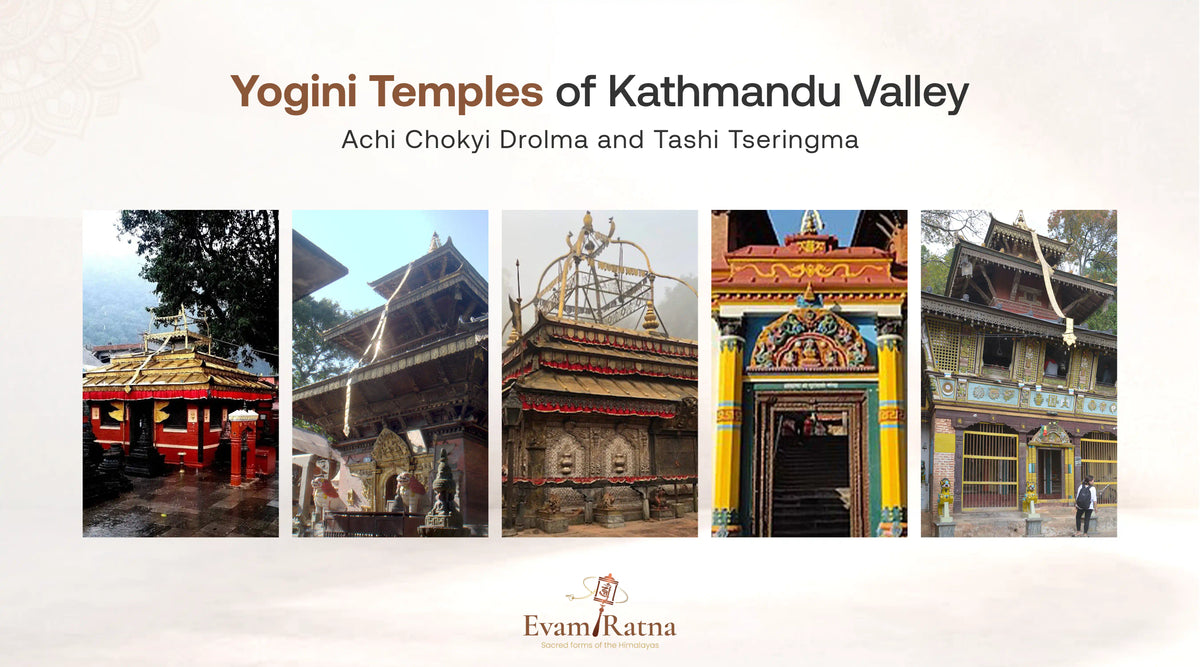
Discover the ultimate roadmap to the mystical Yogini Temples of Kathmandu Valley and unlock the profound history and spiritual meaning behind these sacred spaces. Deep within the ancient heart of Nepal, a hidden mandala of seven sacred Vajrayogini shrines honors the supreme Tantric Buddhist female Buddha and Dakini. From the mist-shrouded hills of Sankhu to the sacred caves of Pharping, this definitive Vajrayogini pilgrim’s guide takes you on a transformative journey through the historical architecture, ancient meditation caves, and powerful rituals that keep this living tradition alive.
The most profound sacred places are often the ones hidden in plain sight. These Yogini temples are easy to miss. Some stand beside busy roads, some in forest groves, some on riverbanks that were once cremation grounds. For more than a thousand years, yogis, translators, kings and ordinary villagers have climbed the same stone steps to sit before her image and ask for a direct path to awakening.
Vajrayogini: The Goddess of Tantric Wisdom and Enlightenment
Vajrayogini is the principal female deity of the Chakrasamvara cycle of Tantras and is classified within Anuttarayoga Tantra, the highest class of Buddhist tantra. She is a meditational deity (ishtadevata), and she is understood as a representation of complete buddhahood in female form. Her practice is held by all the Sarma schools of Tibetan Buddhism, including Sakya, Kagyu and Gelug, and is especially treasured in the Sakya tradition.
In sacred art she is usually red, her appearance semi-peaceful and semi-wrathful ringed by flames of pristine awareness. She carries a curved knife and a skullcup, and flames of pristine awareness encircle her. Her many forms include the Naropa form (Naro Khechari), Vajravarahi (marked by a sow's face at the side of her own), a dancing form and a black wrathful form. Vajrayogini is practised across the Sarma schools of Tibetan Buddhism, including Sakya, Kagyu and Gelug, so her blessing is not confined to one lineage. The red colour and bone ornaments speak to a central tantric idea: ordinary passion, rightly understood, can be transformed into wisdom and bliss rather than suppressed. Her teachings are also bound up with advanced practices such as the Six Yogas of Naropa, which work with the transformative moments of death and rebirth. She is often called a dakini, a "sky dancer," a being who embodies wisdom in motion.
Her teachings are also bound up with advanced practices such as the Six Yogas of Naropa, which work with the transformative moments of death and rebirth. She is often called a dakini, a "sky dancer," a being who embodies wisdom in motion. In the Kathmandu Valley the picture becomes even richer. Newar tradition has long honoured the goddess under local names such as Guhyeshwari, Khadga Yogini and Bidhyeshwari, and many of her shrines are sacred to Hindus and Buddhists alike. This shared devotion is a defining feature of the valley's religious life. To visit these temples is to witness a living tradition in which the lines between Shaivite Shakti worship and Vajrayana dakini practice are wonderfully blurred.
How Vajrayogini Came to Nepal?
The story of her arrival runs through the Indian Mahasiddha Naropa. Two Newar brothers from Pharping, Dharmamati and Vagishvara (known in Tibetan as the Phamthingpa), became his disciples and accomplished practitioners of Chakrasamvara and Hevajra. Through them the Vajrayogini teachings took root in Nepal and then travelled from India to Tibet.
The great translator Marpa Lotsawa (1012-1097) received teachings from these brothers on his journeys to and from India and is said to have visited the Pharping temple at least three times. The Phamthingpa also appear in the Sakya guru lineage of the Naropa tradition, which explains why Pharping holds such weight for practitioners today. Yet the goddess was honoured in the valley long before: some of her shrines, such as Sankhu, predate the towns that grew around them, and Newar devotion has always blended Buddhist and Hindu strands of the goddess.
The Seven Yogini Temples at a Glance
The seven principal shrines are:
- Balaju Purano Guhyeshwari, north of Swayambhu beneath Mount Nagarjuna
- Pashupatinath Guhyeshwari, beside the Bagmati River near Pashupatinath
- Sankhu Vajrayogini (Khadga Yogini), on forested Manichuda hill in the northeast
- Pharping Vajrayogini, at the foot of the stairs to the Asura Cave
- Bidhyeshwari, on the banks of the Bisnumati River between Thamel and Swayambhu
- Chapagaon Vajravarahi, in a forest at the southern edge of the valley
- Godawari, a spring-fed sacred site in the southeast of the valley
Each has its own character, and together they form a map of feminine sacred power spread across the whole valley.
Balaju Purano Guhyeshwari: The Ancient Yogini Shrine of Kathmandu

Balaju Purano Guhyeshwari also known as Adi guhyeshwari or Old Guhyeshwari is a sacred Yogini temple located in the Phulbari area, north of Balaju, within Tarkeshwar Municipality, Kathmandu. Situated near the foothills of Nagarjuna Hill, the shrine holds religious significance in both Hindu Shakta and Newar Vajrayana Buddhist traditions. According to the Swayambhu Purana, this is the region where the Buddha Vipashyin once cast a lotus seed into the primeval lake that filled the Kathmandu Valley. The word purano means "old," and it signals the shrine's claim to being the original site where the lotus emerged from the lakebed, the seed from which Swayambhu's light would later grow.
Also, the name Guhyeshwari is derived from two Sanskrit words:
- Guhya: Secret, hidden, intimate, or esoteric.
- Ishwari: Goddess, supreme female ruler, or divine feminine power.
Together, Guhyeshwari means "Goddess of the Hidden Mysteries" or "Mistress of the Secret."
According to local Hindu tradition, Purano Guhyeshwari is associated with the legend of Sati Devi, whose sacred body parts are believed to have fallen at various Shakti Peethas after her death. Some devotees identify this shrine as the original location where Sati's guhya anga (intimate body part) fell, believing that the principal place of worship was later established in the Pashupatinath area. Another local legend recounts that Lord Shiva and Parvati stopped here while travelling toward Gosainkunda, and Parvati remained at the site for four days. These accounts form part of the temple's religious heritage rather than independently established historical events.
The sanctuary is a small Newar temple open to the public. Inside the grounds is a well covered by a lotus-shaped brass plate with a distinctive hole at its centre, a quiet reminder of the lotus that rose from these waters. Pilgrims circumambulate the shrine, light butter lamps and make traditional offerings, and the shops along the approach sell everything needed for a simple puja. For visitors, Balaju is among the gentlest introductions to the Yogini circuit. It is easy to reach, welcoming to all, and rich with the mythology of the valley's creation. The shrine attracts worshippers particularly during the lunar observances of Ashtami and Navami and the Navaratri festival. As one of the sacred Yogini sites of the Kathmandu Valley, it preserves a distinctive intersection of Hindu goddess worship, Newar Buddhist traditions, and local religious history.
Pashupatinath Guhyeshwari: The Sacred Shakti Peeth of Kathmandu

(Image from WhatTheNepal)
Pashupatinath Guhyeshwari Temple, also known as Guhyeshwari Shakti Peeth or Guhjeshwari, is one of the most revered goddess shrines in Kathmandu, Nepal. Located on the banks of the Bagmati River, approximately one kilometre east of Pashupatinath Temple, it is an important pilgrimage site associated with Hindu Shakta worship and Newar Vajrayana Buddhist traditions. The temple is dedicated to Goddess Guhyeshwari, a manifestation of the Divine Mother, and is particularly significant to devotees who follow tantric traditions. The shrine forms part of the sacred Pashupati area, where the worship of Shiva and Shakti holds deep religious importance.
Traditions differ on precisely which part, which is itself a sign of how many centuries of devotion have shaped the story. According to the Hindu legend preserved in the Swasthani Brata Katha, Goddess Sati sacrificed herself in the sacrificial fire of her father, Daksha, following his disrespect toward Lord Shiva. Overcome with grief, Shiva carried her lifeless body across the universe, and different parts of her body fell at sacred locations that later became known as Shakti Peethas. In the local tradition documented by the Nepal Tourism Board, Guhyeshwari marks the place where Sati's guhya anga, or intimate body part, fell. However, other Shakti Peetha traditions associate this location with her knees. These differing accounts reflect the diversity of sacred narratives surrounding the temple rather than established historical events
The temple also holds significance in Newar Vajrayana Buddhism, where Guhyeshwari is associated with Vajravarahi and the sacred origins of Swayambhu. According to Buddhist sacred geography, the self-arisen light of Swayambhu appeared upon a lotus connected with Vajravarahi, while the Guhyeshwari site represents the lotus's root or source. This relationship symbolically connects the shrine with the spiritual origins of the Kathmandu Valley. The goddess is therefore revered within different religious traditions, reflecting the long-standing interaction between Hindu Shakta worship and Buddhist tantric practice in Nepal.
In 1654 King Pratapamalla built a temple here to enshrine the site. Inside the sanctum, a naturally formed stone support resembling a yoni sits at the centre of a concealed chamber. From it, saline water flows continually and gathers into a pool. In recent years a small eight-petalled lotus lid of copper and gold, crowned with a sacred vase, has been installed over the spring. Devotees come to drink and carry home this water, believing it carries the goddess's blessing.
Many pilgrims follow the tradition of honouring Shakti at Guhyeshwari before paying homage to Shiva at Pashupatinath, a sequence that expresses the union of divine feminine and divine masculine. Non-Hindu foreigners are generally not permitted inside the temple. Even so, the journey is rewarding. Pashupatinath itself is open to all, and the raw, unbound energy of the yogini is palpable throughout the complex.
Sankhu Vajrayogini Temple (Khadga Yogini): The Sacred Sword Goddess of Kathmandu

Sankhu Vajrayogini, also known as Khadga Yogini, Bajrayogini, or Ugratara Vajrayogini, is a revered tantric goddess worshipped at the Vajrayogini Temple in the northeast corner of the valley lies Sankhu, an old Newar town whose prosperity grew from the trade route to Tibet established around the seventh century. The town's spiritual heart is the Vajrayogini shrine on the forested slopes of Manichuda hill, a sanctuary that actually predates the town itself. Its older name is Gum Vihara, "the forest monastery," and it played an important part in the spread of Buddhism from Nepal to Tibet. Because of its heritage value, the temple and the early settlement of Sankhu have been proposed for World Heritage recognition.
The name Khadga Yogini is derived from two Sanskrit terms:
- Khadga: Sword, representing the wisdom that cuts through ignorance, delusion, and obstacles.
- Yogini: A female practitioner or tantric spiritual figure associated with wisdom, spiritual accomplishment, and transformative power.
Together, Khadga Yogini means "Sword-Wielding Yogini," referring to the goddess's distinctive sword and its symbolism of penetrating wisdom. The shrine's goddess is also traditionally identified as Ugra Tara, a powerful form of Tara, although her precise iconographic classification differs among historical and religious sources. The main temple enshrines an image of Ugra Tara, or Ekajati, said to have been brought from Bengal in the fourteenth century. She holds a sword, khadga in Sanskrit, and is therefore known as Khadga Yogini. The upper temple holds an identical image cast in bell metal. In both shrines the central goddess is flanked by Baghini and Singhini, the tiger-headed and lion-headed yoginis. The upper temple also houses a standing bronze Buddha and a Lokeshvara, and in a small chamber below lies a self-arisen stone Swayambhu stupa.
Sankhu has a long history of retreat and practice. Several caves surround the site, and tradition holds that some of the eighty-four Mahasiddhas of India meditated here, hosting ganachakra feast offerings. Near the summit lies the sacred Manichunda lake, whose waters are said to flow in two directions: east into the Manishaila and west into the Manilohini. Behind the temple a courtyard basin holds the "Water of the Kalpa," said never to run dry, while a nearby building keeps the "Fire of the Kalpa," an eternal flame. Few places in the valley feel so ancient or so alive.
Pharping Vajrayogini (Phamthing Yogini): The Sacred Goddess of Tantric Wisdom

Pharping Vajrayogini, also known as Phamthing Vajrayogini, Uddhapada Yogini, or Phamthing Dorje Naljorma, is a revered tantric Buddhist goddess worshipped at the Vajrayogini Temple in Pharping. Pharping is already beloved by practitioners as the home of the Asura Cave and Yangleshö, where Guru Padmasambhava is said to have attained realization. In the eleventh century it also became the home of two Newar masters and brothers, Dharmamati and Vagishvara, known in Tibetan as the Phamthingpa. Both were disciples of the Mahasiddha Naropa and accomplished practitioners of Chakrasamvara and Hevajra. They were instrumental in spreading the Vajrayogini teachings in Nepal and transmitting them from India to Tibet.
The great Tibetan translator Marpa Lotsawa (1012–1097) received teachings from them on his journeys to and from India, and he is said to have visited the Pharping temple at least three times. The Phamthingpa also appear in the Sakya lineage of the Naropa form of Vajrayogini, which is one reason the shrine matters so much to practitioners: it is a living monument to the transmission of the dakini teachings.
Finding the temple is straightforward. Near the beginning of Pharping's main street, a small road on the right climbs uphill to a second set of steps leading to the Asura Cave, and the Vajrayogini temple stands at the foot of those steps. After entering the main gate, take the small staircase on your left to the first floor, where the statue is housed. The shrine is often closed, but if a caretaker is present they will gladly open it. Photography of the image is prohibited. Many visitors leave a small donation, which supports offerings and maintenance.
Bidhyeshwari Temple (Akash Yogini): The Sacred Flying Yogini of Kathmandu

Bidhyeshwari Temple, also known as Bijeshwori Vajrayogini Temple, Vidhyeshwari, or Akash Yogini Temple, is a sacred Newar Vajrayana Buddhist shrine located on the western bank of the Bishnumati River, near Swayambhunath in Kathmandu, Nepal. Dedicated to Vidyadhari Vajrayogini, the goddess known as the Flying Yogini, the temple is one of the important Vajrayogini sites of the Kathmandu Valley. It stands near the ancient Ramadoli cremation ground, also called Karnadip, a location associated with tantric Buddhist practices and the worship of Vajravarahi. In earlier times this was the centre of the great cremation ground of Ramadoli, frequented by siddhas such as Thangthong Gyalpo, Marpa Lotsawa and Vanaratna. Today the charnel ground has shrunk to a small area where the Kusumavati and Kesavati rivers meet, but the atmosphere of austere practice lingers. The temple holds particular significance in Newar Vajrayana Buddhism, while also receiving reverence from Hindu devotees who associate the goddess with divine feminine power.
The temple's Newar name comes from Vidhyeshvari, "the Wisdom Goddess." It is dedicated to a specific aspect of Vajrayogini called Akashayogini, "the Flying Yogini," the form through which the Indian Mahasiddha Maitripa is said to have attained realization. For practitioners, Bidhyeshwari is a place to reflect on impermanence and swift, liberating wisdom. For travellers, it is a convenient stop, since it sits just below Swayambhu and fits naturally into a day around the hilltop stupa.
According to a local Newar legend, a young woman was once seen flying through the sky near the banks of the Bishnumati River. An accomplished Vajracharya priest recognized her extraordinary spiritual nature and, through the power of his mantra, caused her to pause in midair. The woman then revealed her divine form as Akash Yogini and blessed the priest. This story explains her local association with the Flying Yogini and forms part of the area's oral religious traditions rather than documented historical events. The shrine is also associated with the Indian Buddhist mahasiddha Maitripa, who, according to tantric tradition, attained realization through the practice of this particular form of Vajrayogini. For this reason, she is sometimes called Maitri Dakini or Maitri Khechari.
Today, Bidhyeshwari Temple remains an active place of worship where Newar Buddhist devotees and Vajrayana practitioners offer prayers, lamps, and traditional ritual offerings to the goddess. The shrine is particularly important to practitioners of Vajrayogini and Chakrasamvara traditions, whose practices are connected with enlightened wisdom, the transformation of attachment, and liberation from ignorance.
Chapagaon Vajravarahi Temple (Bajrabarahi): The Sacred Tantric Goddess of Lalitpur

Chapagaon Vajravarahi Temple, also known as Bajrabarahi Temple or Shree Mai Vajrabarahi, is a sacred tantric goddess shrine located at the southern extremity of the valley, near the village of Chapagaon. This shrine honours Vajravarahi, the fiercer aspect of Vajrayogini whose name means "the Vajra Sow." Local tradition says that countless eons ago the wrathful goddess emerged from a sacred pond that still lies beside the present temple.
In Buddhist tantric traditions, Vajravarahi is a form of Vajrayogini associated with enlightened wisdom and the transformation of ignorance. In Hindu Shakta traditions, Varahi is worshipped as one of the Matrikas, or Mother Goddesses, and is associated with protective power. The Chapagaon shrine reflects the historical interaction between these religious traditions, although their respective theological interpretations are not identical.
According to local Newar tradition, the goddess manifested at a sacred pond within the forest where the temple now stands. Another local legend recounts that a buffalo appeared mysteriously in a pond and revealed its divine identity, leading the surrounding community to establish a place of worship. The pond is remembered as part of the goddess's sacred manifestation, and its association with the original shrine remains important in local religious narratives. The forest itself is surrounded by traditional beliefs, including the story that leaves falling from its trees do not travel beyond its boundaries. These accounts express the sacred character of the landscape and belong to the temple's oral traditions rather than independently verified historical events.
The shrine sits inside a luxuriant forest alive with birds and other wildlife. Local lore holds that the leaves of its trees never drift beyond the forest's boundaries, as though a protective sphere seals the yogini's blessings within. Whether or not one takes the story literally, the stillness here is striking, and it offers a welcome contrast to the traffic of the city.
Godawari Kunda: Where the Siddha's Jar Rose with the Sacred Water

Godawari Kunda, also known as Godavari Kunda, is a sacred natural spring and pilgrimage site located in the southeast of the valley, in Lalitpur district. Beneath the hill in the eastern corner of Godawari is the Godavari Kunda, a small pond fed by a perennial spring that flows throughout the year. Nearby stand the large Ösal Chöling Godavari Tibetan Buddhist monastery and a retreat centre founded by Kyapjé Chatral Rinpoche.
A local legend explains the sanctity of the place. A siddha with miraculous powers once meditated in Nepal, and every day for twelve years he travelled to the Godavari River in India to collect water for his worship. Pleased by such dedication, the goddess Sarasvati appeared and told him the journey was unnecessary, since she could provide the river's water at his hermitage. The siddha doubted her. She instructed him to leave his bag and jar behind and test her word. When he returned to the Godavari in India, he found water flowing from the very spot where his belongings had been left, and his bag and jar emerged together with the water.
The story is a reminder that in the Yogini tradition, grace and realization arise from sincere, sustained practice, and that the sacred waters of distant lands can be present in a single spring at home. Godawari Kunda is primarily documented as a sacred water pilgrimage site rather than a principal Vajrayogini temple. Its association with the Siddha and Goddess Saraswati should therefore be distinguished from the specific Yogini traditions of Sankhu, Pharping, Bidhyeshwari, and Chapagaon.
Visiting Etiquette and Practical Tips
A little preparation makes a Yogini pilgrimage smoother and more respectful.
- Dress modestly: Cover shoulders and knees, and remove shoes and hats where required.
- Carry small offerings: Butter lamps, incense, flowers and simple puja items are usually available from shops near the approach, as at Balaju.
- Circumambulate clockwise: Walk around shrines with the structure on your right, as is customary for both Hindu and Buddhist: devotees.
- Respect restrictions: Guhyeshwari at Pashupatinath is reserved for Hindus, and photography of the Pharping image is forbidden. Ask before taking photographs anywhere.
- Be patient with closed shrines: At Pharping the door is often locked. A caretaker may be nearby, so inquire politely and consider leaving a donation.
- Plan around traffic: Allow generous time between sites, and start early.
- Keep the atmosphere quiet: These are working shrines and, for many, places of private practice.
Conclusion: Carrying the Yogini's Blessing Home
The Vajrayogini temples of Kathmandu Valley offer a remarkable journey into Nepal's sacred Buddhist heritage, where tantric wisdom, ancient mythology, and Newar religious traditions continue to thrive. From the sword-wielding Khadga Yogini of Sankhu and the Flying Yogini of Bidhyeshwari to the sacred Vajrayogini shrine of Pharping, each destination reveals a different expression of enlightened feminine wisdom. The Guhyeshwari temples of Balaju and Pashupatinath, the forest sanctuary of Chapagaon Vajravarahi, and the sacred waters of Godawari further illustrate the deep connections between Vajrayana Buddhism, Hindu Shakta traditions, and the spiritual landscape of Nepal.
For pilgrims, Buddhist practitioners, and cultural explorers, visiting these sacred sites offers more than an opportunity to admire ancient temples and traditional Newar architecture. It provides a deeper understanding of Vajrayogini's symbolism, the history of tantric Buddhist practices, and the living traditions preserved by local communities. Whether exploring the historic shrines of Sankhu, meditating near the sacred caves of Pharping, or witnessing devotional rituals, a Vajrayogini pilgrimage through Kathmandu Valley is an invitation to discover the enduring heritage of the Himalayan spiritual tradition. For many practitioners, the visit does not end at the temple gate. A sacred image on the home altar can carry the memory of the pilgrimage and support daily practice. At Evamratna, statues and ritual art are crafted by Newar artisans in Patan, who work within the same living tradition that has sustained these temples for centuries. May your journey to the yogini shrines bring clarity, courage and blessings.