Practice of Nine Stages of Samatha Meditation: A Path to Inner Peace, Focus, and Spiritual Clarity
In a world that moves quickly and is full of distractions, it can seem impossible to discover times of real mental peace. You might also have tried to calm your mind, but instead, you were attacked with constant thoughts and things that kept distracting you, making it difficult to achieve the mental peace that meditation aims to provide. For thousands of years, meditation has been a main practice that helps people reach deeper levels of mental clarity, insight, and spiritual awakening. Samatha, or calm abiding, is one of the most important parts of Buddhist meditation. It is the basis for deeper meditative states and insight practices like Vipashyana. This practice helps you learn how to focus your mind perfectly, going from being easily distracted to being in a state of perfect concentration. Think about being able to fully focus your mind for long periods of time. How would you feel? Curious to unlock this path to mental calm and clarity? Keep reading as we break down how Samatha meditation is a path to inner peace, focus, and spiritual clarity.
Introduction to Samatha Meditation

The Tibetan word for Samatha meditation, zhi gnas, means "calm abiding" or "living in peace." This practice is all about relaxing and pushing yourself to calm your mind so you can focus in a meditative way. Many people start this journey by using the "seven-point meditation posture of Vairochana." This means sitting in the reverse full lotus position (vajrasana), keeping your back straight, and putting your hands in the dhyana mudra of meditative absorption. You can start to calm your mind by focusing your eyes along the line of your nose and pressing your tongue against the roof of your mouth.
In Samatha, you'll learn how to slowly get rid of the distractions and scattered thoughts that are always trying to get your attention, ultimately allowing you to achieve a focused and tranquil state of mind that enhances your meditation practice. You can reach a deep and life-changing state of mental peace through regular practice. This meditation helps you find inner peace, which leads to spiritual awakening, whether you do it in a private retreat or in your daily life.
Symbolism of the Monk, Elephant, and Monkey
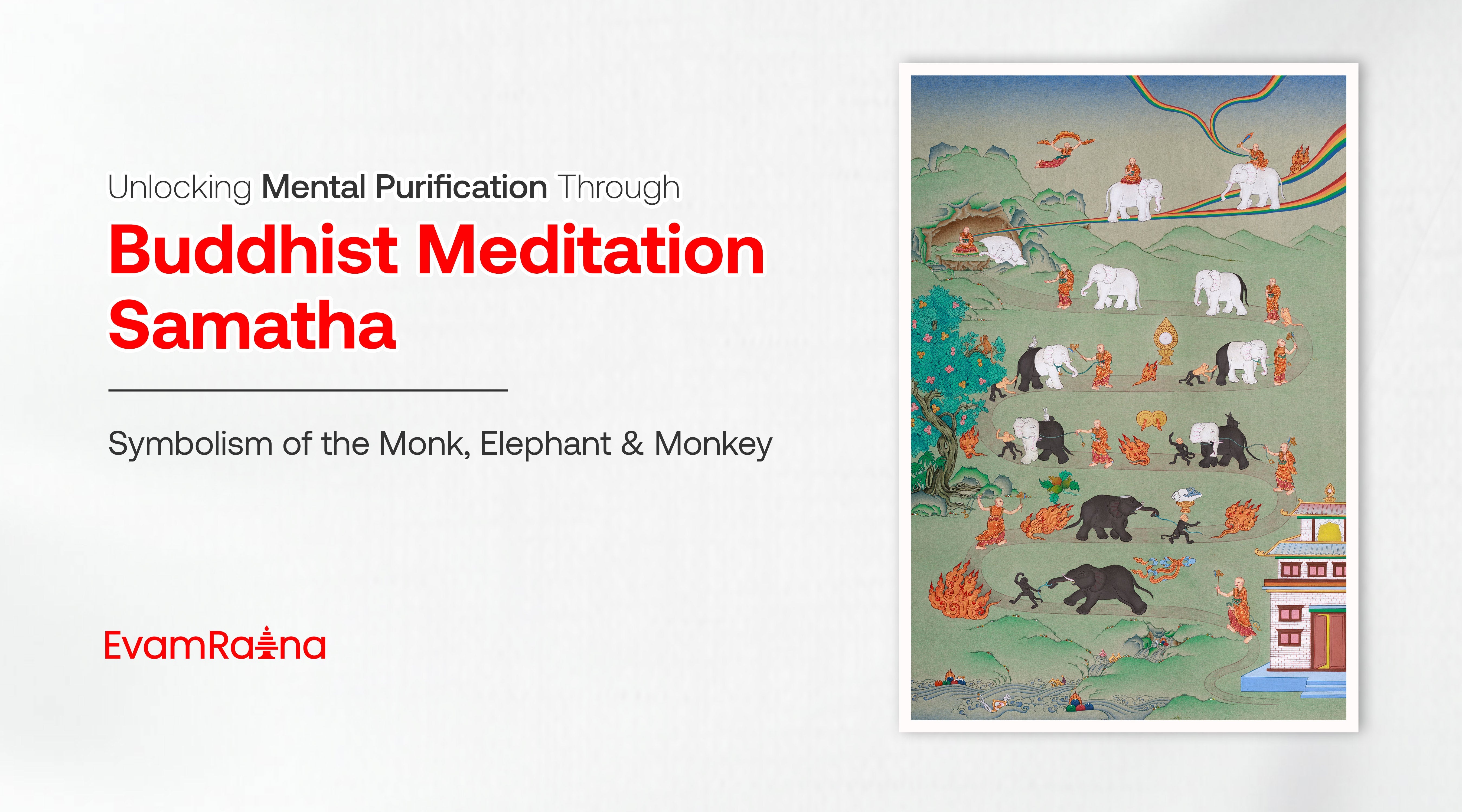
In the Buddhist tradition, the monk, elephant, and monkey are beautiful symbols of the path to mental purification through Samatha meditation. Each figure stands for an important part of the meditation process:
The Monk: The monk represents the meditator, or the person who wants to gain control over their mind and move toward spiritual clarity. The monk's role during the stages of meditation is to guide the mind through a series of challenges that stand for the effort it takes to get rid of mental distractions. The tools of a monk, which is lasso represents mindful recollection, and the hooked goad represents a symbol for understanding things clearly.
The Elephant: The elephant symbolizes the mind, which initially wanders around in a state of mental dullness or distraction. The color changes from black to white, which means that the mind is moving from a state of mental dullness or sinking to a state of mental clarity and purity. The elephant's submission at the end of the path shows that the mind can eventually control its wandering thoughts.
The Monkey: The monkey symbolizes being mentally upset or distracted. This figure represents how the mind is always moving from one thought to the next and can't settle down. As the practitioner progresses in meditation, the monkey's erratic movements decelerate and eventually settle down, symbolizing the control of the mind's scattered thoughts.
The Nine Stages of Samatha Meditation: A Progressive Path to Inner Peace
Samatha meditation has nine steps that help the mind move from its natural state of distraction to a state of deep focus and calmness.
Stages 1 & 2: Fixing the Mind and Finding Focus

The first stage is reached by studying or listening, when the monk starts to focus on a single thing, like an image of the Buddha or his breath. In the second stage, which is reached through concentration, the meditator works on making the periods of focus longer. At this point, the mind is still largely black and chaotic, with the monkey of agitation having led the elephant.
Stages 3 & 4: Catching the Wandering Mind

The monk starts to lasso the elephant with the help of memory, bringing the wandering mind back to its thing. This is a turning point: the heads of the elephant and monkey start to turn white, which shows that they are making progress in "fixing and holding" their focus. This is also where the hare shows up on the elephant's back, which means that the person meditating is now aware enough to tell the difference between intensities of dullness and lack of alertness.
Stages 5 & 6: Mastering Comprehension

When you get to the fifth and sixth stages, the monkey starts to follow the elephant. This is a big change that happens because you understand things clearly. Distractions go down a lot. At this point, the meditator must even see good thoughts as a distraction if they take their mind off of what they are trying to focus on. The mind is finally controlled and calmed by using the hooked goad of clear understanding.
Stages 7 & 8: The Power of Energetic Perseverance

At the seventh and eighth stages, the monkey leaves the elephant and sits down behind the monk, fully surrendering. There may still be some "black" marks left, which show the smallest chances of sinking or scattering, but they can now be removed with very little effort. The elephant eventually turns completely white, and the mind can stay in a state of absorption all the time.
Stage 9: Attaining Perfect Equanimity

The last step on the path is reached through the power of being perfect. At this point, the meditator's mind is completely calm and focused. The elephant is resting, and the training is completed.
The Result: Bliss and the Flaming Sword of Wisdom

The completion of the nine stages leads to the tenth and eleventh stages of transcendental absorption. This is symbolized by the flying monk, representing bodily bliss, and the monk riding the elephant, representing mental bliss.
This symbolism shows how hard it is for the meditator and how their mind gets cleaner as they move along the path of Samatha. A meditator must use the six powers of study, contemplation, memory, comprehension, diligence, and perfection to move through the stages of development. These powers give you the energy and skills you need to turn the "black elephant" of a distracted mind into the "white elephant" of pure concentration.
However, Shamatha is only half the journey. The monk is shown wielding a flaming sword of perfect insight while riding back across a rainbow. This sword symbolizes the meeting point of Shamatha and Vipashyana, used to eradicate the fundamental causes of Samsara (cyclic existence). The meditator uses emptiness (shunyata) as the focus of their thoughts to break through the "dark rainbows" of karmic obstacles and mental illusions (kleshavarana) and reach the ultimate reality of all things.
From Samatha to Vipashyana: How Peace Leads to Understanding
The basis for Vipashyana is set once the mind is clear through Samatha meditation. Vipashyana is the practice of insight meditation, which helps the meditator see things more clearly and understand what reality really is. Samatha meditation gives the meditator a sense of calm that lets them look deeper into their experiences and see things in a way that shows their impermanence, suffering, and emptiness. This understanding ultimately helps in destroying samsara and the cycles of worldly suffering.
Zen vs. Samatha: Exploring Similar Stages of Mental Development
Zen and Samatha meditation both have stages of mental growth that are similar. In Zen Buddhism, the Ten Oxherding Images show the different stages of a meditator's journey, from the first search for the ox (mind) to the final forgetting of the ox and the self, which represents spiritual freedom. The ox (or elephant) represents the mind in both Zen and Samatha, and its transformation shows the gentle path to mental clarity and inner peace.
Conclusion: Embracing the Path to Spiritual Clarity and Focus
Samatha meditation is a powerful way to turn a busy mind into one that is clear and at peace with itself. By following the monk, elephant, and monkey on their symbolic journey and going through the nine stages, practitioners can slowly improve their mental focus and learn to ignore distractions. This practice not only helps the meditator get ready for deeper insight through Vipashyana, but it also sets the foundation for lasting spiritual clarity and inner peace. Anyone can start to feel the life-changing effects of Samatha by using mindfulness, concentration, and the six powers. This will help them feel more at ease and gain more insight into their daily lives.