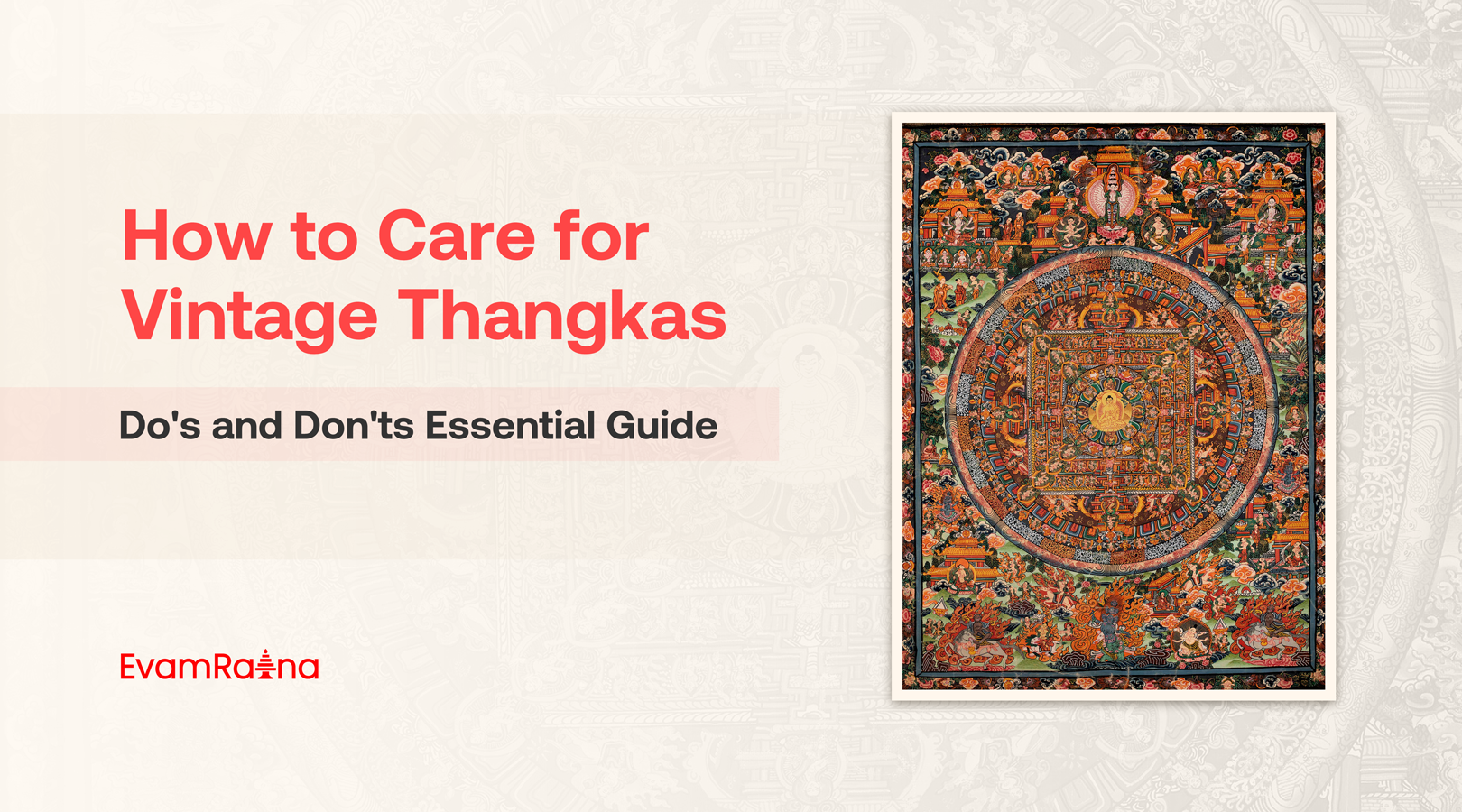
Thangka Display Tips: Balancing Tradition and Durability
When stepping into a serene Buddhist tradition, you can find Tibetan scroll paintings known as thangkas. The old art piece, also known as a vintage thangka, can grab your attention right away. At first, you might think of it as just a beautiful historical piece of art for decoration. But in reality, vintage thangkas are sacred Tibetan Buddhist scroll paintings that carry a significant amount of spiritual meaning. These paintings, which have been around for a long time, are beautiful to look at but also hold a strong significance, such as being great for meditation, learning, and worship. In particular, old thangkas are special because they are full of centuries of history, sacred meaning, and artistic tradition. However, preserving their delicate beauty requires more than just care; it demands a profound understanding of both practical preservation and spiritual respect.
Introduction: The Delicate Legacy of Vintage Thangkas

Vintage thangkas are beautiful art and sacred pieces of the rich spiritual and cultural heritage of the Tibetan Buddhism tradition. For centuries, people have used these hand-painted scrolls, crafted from special materials like mineral pigments, animal-based glues, and textiles, for meditation, teaching, and spiritual devotion. Each thangka tells a story, carrying the wisdom and history of Tibetan Buddhism. As they are so old and delicate, they need careful handling to protect both their beauty and their spiritual significance.
Defining the Vintage Thangka: Why Age Matters

In Tibetan Buddhist art, the word "vintage" is used to describe a thangka based on its age and the physical and cultural characteristics it acquires over time. It is essential for both collectors and practitioners to know about these thangkas. A vintage thangka is usually a hand-painted scroll that is at least 40 to 100 years old. The "vintage" label means that the piece has gained a lot of historical, cultural, or artistic value because of its age, craftsmanship, and history.
Age is a key sign of authenticity. Over the years, a thangka gets visual signs of age that are hard to copy, like fading pigments, wear on the delicate brocade, and small cracks in the paint layers. While these might seem like flaws, they are often viewed as beautiful evidence of the object's history. Vintage thangkas are also influenced by the artistic schools and regional styles of their time, such as Newari, Menri, Karmagadri, and others. Each has its own iconographic conventions and symbols. Vintage Tibetan art is often rare and culturally significant. Age is a major factor in how collectors, historians, and practitioners value thangkas. Older pieces show how artists worked in the past, what materials they used, and how they were used for meditation or ceremonies. This makes decorative items with cultural treasures and spiritual artifacts.
The Environmental Factors: Light, Humidity, and Temperature
Environment is the most important factor in the ultimate survival of a vintage thangka when it comes to the preservation of a thangka. These sacred scroll paintings are made with layers of organic substances, such as cotton or silk canvas, animal-based glue, natural mineral colors, etc and this is what makes them very sensitive to their environment. Even small changes in light, humidity, or temperature can cause damage that is often irreversible.
Light: Protect the Colors and Materials
Thangkas are particularly sensitive to photochemical degradation (i.e., the colors become lighter and weaker with each exposure to a lot of light). Both the natural sunlight and high-intensity artificial light generate energy which breaks down organic materials on the molecular level. It is due to this reason that museums and conservators recommend:
- Storing thangkas in shady areas or not in front of windows.
- Making use of low-intensity LED lighting, rather than hard bulbs.
- If possible, apply UV‑filtering glass when framing.
Temperature: Aim for Stability
The constant change in temperature is particularly not friendly to the traditional thangka materials since they swell and shrink with the change in temperature. Stability is essential; fast changes can cause stress on the canvas and layers of paint, and over time, it may crack, distort, or lose paint.
Conservation guidelines suggest maintaining a stable environment around 18–22°C (about 64–72°F) for display or storage. This range slows chemical reactions that contribute to deterioration while keeping the materials flexible rather than brittle.
Humidity: Not Too Wet, Not Too Dry
Of all factors, humidity fluctuations cause the most physical damage to thangkas because the textile canvas absorbs and releases moisture with the air around it. If the air is too humid, moisture can seep into the fibers and foster mold and fungal growth. If it’s too dry, the canvas can shrink and pull away, causing paint to flake off.
The ideal relative humidity range for thangkas is generally about 40-55%, with minimal sudden swings from day to day. In many museum environments, professionals aim for 45-55% humidity to strike this balance and maintain long‑term structural integrity.
Keeping thangkas within these safe limits helps preserve the physical materials, the spiritual energy, and sacred history each piece carries.
Thangka Display Tips: Balancing Tradition and Durability

- The Traditional Unframed Display: Traditional displays have a textile brocade to spread stress throughout the canvas. In case you are hanging your thangka this manner, there should be a distance of 2-3 cm between the painting and the wall in order to avoid the accumulation of moisture.
- The Modern Protected Frame: Framing is excellent for protection against dust and smoke. But, you must use UV-filtering glass and ensure there is a spacer so the art does not touch the glass. Never stick the thangka directly to a backing board, as it needs to expand and contract naturally.
- The Importance of Rotation: Following the tradition of monasteries, thangkas should not be displayed permanently. Rotating your display every few months allows the pigments and textiles to "rest" in a dark, controlled environment, significantly slowing the degradation process.
Do’s and Don’ts for Ensuring Thangka Longevity
To make these sacred artworks last long, the following are specific Do's and Don'ts :
Essential Handling and Physical Care
Vintage thangkas are fragile; even the oils and salts from your skin can cause irreversible damage over time.
- DO Wash your hands and dry them before handling any section of the thangka, but better would be if you use clean cotton gloves and a mask to avoid perspiration and moisture of the breath coming to touch the delicate thangka.
- DO use both hands when moving a thangka, supporting the weight across the entire object rather than lifting it by the wooden rods.
- DO take the piece with the corners of the brocade; never touch or seize the middle of the picture.
- DON'T ever touch the painted surface directly, as this can smudge pigments or cause flaking.
- DON'T use nails, pushpins, or thumbnails through the canvas itself to hang it, as this creates permanent holes and stress points that lead to tears.
Display and Storage Strategies
- DO rotate your displays: Following the tradition of monasteries, rotate artworks every few months to allow the pigments and textiles to "rest" in dark, climate-controlled storage.
- DO roll correctly for storage: If you have to roll a thangka, make sure that it is dry, roll downwards to upwards with the painted side inside, and interlace with acid-free tissue or with silk.
- DO store horizontally: Once rolled, place the thangka in an archival-grade box and store it horizontally; never store it upright, as the weight can cause the structure to collapse.
- DON'T use harmful fasteners: Never secure a rolled thangka with rubber bands (which degrade and stain) or masking tape (which leaves permanent adhesive residue). Use cotton twill tape or unbleached ribbons instead.
- DON'T use plastic wrapping: Plastic traps moisture, which promotes mold and fungal growth.
Cleaning and Maintenance
- DO dust gently: Use a very soft, natural-hair conservation brush held horizontally to remove loose dust from the brocade and margins. For contemporary oil-varnished thangkas, you may lightly wipe the surface with a soft, clean cotton cloth.
- DO conduct regular inspections: Check your thangka every 6–12 months for signs of mold, insects, or flaking paint.
- DON'T use liquids: Never use water, household cleaners, or solvents on the painted areas. Washing a thangka can dissolve the animal glue binders and destroy the painting.
- DON'T attempt home repairs: Avoid sewing tears yourself or using fabric glue on old silk.
Read More About How to Take Care of a Vintage Thangka: Preservation & Restoration Tips
Vintage vs. Modern "Oil Varnished" Thangkas

The preservation method also depends on the age. Most vintage thangkas have a natural, matte finish and are very sensitive to the environment. Some modern artists, on the other hand, use oil varnish, a modern technique, to give their work a shiny finish that makes it last longer and easier to clean. A vintage thangka doesn't have these modern protective coatings, so it is a more fragile "living heritage" that requires special care for its long lifespan.
Read More About Oil Varnished Thangka: A Guide To Identifying Unique Artworks
Conclusion: Preserving the Sacred Legacy of Vintage Thangkas
Vintage thangkas are beautiful and sacred treasures that carry centuries of Tibetan Buddhist tradition, spirituality, and artistic craftsmanship. Preserving these delicate pieces requires basic care, understanding the unique materials, environmental conditions, and handling techniques that protect both the artwork and the spiritual energy embedded in each painting.
By displaying your thangka in a controlled environment, keeping it away from direct sunlight, maintaining stable temperature and humidity levels, and rotating its display, you help ensure its longevity. Proper handling, such as using cotton gloves and avoiding direct contact with the painted surface, along with correct storage techniques, can protect the piece from wear and tear over time.
Caring for a vintage thangka is an ongoing process of spiritual respect and practical preservation. By following these essential guidelines, you can protect the physical artwork and also honor the spiritual teachings and cultural heritage it represents. Whether you display your thangka on an altar, in a sacred space, or store it safely, remember that each act of care contributes to maintaining a timeless piece of history for future generations, too.
Read More About Thangka: A Timeless Blend of Spiritual and Artistic Brilliance