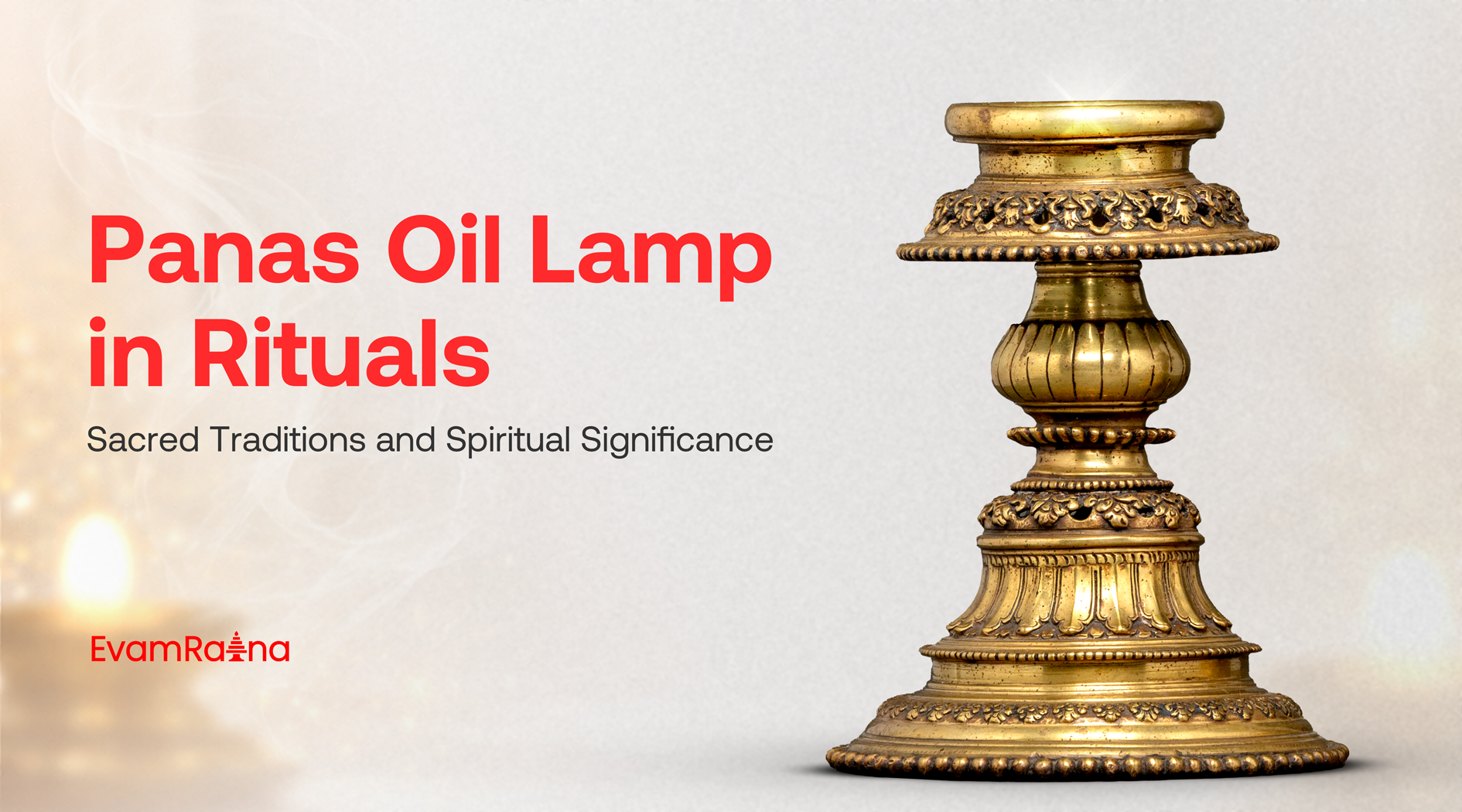
Panas Sacred Oil Lamp: Ancient Practices, Meanings & Modern Devotion
Across the temples, courtyards, and household shrines of Nepal, a small metal vessel-like item, which is known as a Panas oil lamp, has been lit up for thousands of years, its flame unwavering through seasons, centuries, and civilizations. The Panas oil lamp is one of the oldest and most enduring sacred objects in Hindu, Buddhist, and Newari ritual traditions.
The Panas lamp is not just a source of light; it is a life symbol, a symbol of the relationship between the mortal and the divine, the earthly and the eternal. To light a Panas is to share in a continuous line of devotion, which goes back to the Vedic period up to the present day.
The Traditional Oil Lamp Panas: Where Light Meets the Divine

Panas are traditional oil lamps deeply rooted in the Hindu, Buddhist, and Newari cultures of Nepal and the broader South Asian region. A Panas is a small vessel, historically made from clay, copper, bronze, brass, etc., filled with oil (usually mustard oil or ghee) and a cotton wick, which is lit as an act of worship, devotion, starting ceremonies, and auspicious occasions to symbolize wisdom, prosperity, and the removal of negative energy.
Panas comes from Sanskrit. In the Newari tradition of the Kathmandu Valley, it specifically refers to the lamp used in communal and household rituals, distinguishing it from other types of lamps.
History and Origin of the Panas Oil Lamp
The use of oil lamps in ritual worship dates back to the Rigveda, one of the oldest sacred texts in human history. Fire and consequently the lamp were believed to be a manifestation of Agni, the Vedic god of fire and the divine messenger who carries offerings to the gods. Lighting a lamp was, quite literally, an act of invocation.
Archaeological evidence from the Indus Valley Civilization reveals terracotta lamps dating to 2500 BCE, suggesting that lamp rituals predate even the formalization of Vedic religion. The Panas, in its earliest form, was a pinched clay dish filled with oil and a cotton wick, humble in material yet deep in symbolism.
Evolution Across South Asia and Nepal
Over millennia, the Panas oil lamp evolved in form and function across different regional and religious traditions. In Nepal's Kathmandu Valley, the Newari community gave the lamp particularly rich ceremonial roles, integrating it into the sophisticated ritual systems of both Hindu temples and Buddhist stupas. Crafted in bronze, copper, and stone as well as clay, the Panas became a sacred art object as much as a devotional tool.
Bronze Panas lamps from the Licchavi period (400–750 CE) are among Nepal's most prized archaeological treasures.
Symbolism and Spiritual Meaning

Light Over Darkness
At its core, the Panas oil lamp embodies the universal human aspiration to transcend the inner darkness of ignorance, ego, and suffering. In Hindu philosophy, this is the journey from tamas (darkness, inertia) toward sattva (clarity, wisdom, light).
The Panas flame not only lights a room, but it also lights the self. Each lighting is a small act of consciousness, a reminder that the divine spark is within.
"As the lamp burns oil to give light, so the devotee offers the self to the divine consuming the ego to radiate grace."
The Five Elements
The Panas lamp is also understood as a convergence of the Pancha Bhutas, the five sacred elements of Hindu cosmology. The clay body represents earth; the oil, water; the flame, fire; the smoke that rises, air; and the space in which the lamp burns, sky (akasha). To offer a Panas lamp is to offer the entire cosmos back to its creator.
Panas Lamp in Key Rituals and Ceremonies
Puja and Daily Worship
In Hindu and Newari households, the day begins and ends with the lighting of the Panas lamp in the home shrine (puja kotha). This daily act of deepa puja (lamp worship) is considered one of the sixteen upacharas, offerings to the deity. It signals that the household is awake, mindful, and in communion with the divine.
Festivals: Tihar and Beyond

During Tihar, Nepal's own Festival of Lights, the Panas lamp achieves its most spectacular expression. Thousands of clay lamps line the edges of windows, courtyards, rooftops, and temple steps, transforming entire cities into rivers of golden light. The lamp here serves both spiritual and communal functions: welcoming Laxmi, the goddess of prosperity, into the home, and affirming the shared identity of the community.
Life-Cycle Ceremonies
From birth to death, the Panas lamp accompanies the major transitions of human life. It burns through the night at a newborn's naming ceremony, stands at the sacred fire of a wedding, marks the completion of a young man's Bratabandha (sacred thread ceremony), and burns without interruption beside the body of the deceased to illuminate the soul's passage.
Before Starting Ceremonies or Programmes

Panas lamp is used extensively to inaugurate and start ceremonies, programmes, and special events in Nepal. It is considered auspicious and essential to commence any auspicious event. Typically, the chief guest or dignitaries light the wick of the Panas to formally inaugurate a conference, workshop, or function. It is rooted in Nepalese culture and serves to connect events with cultural heritage, often used along with the offering of flowers to the lamp.
Materials Used
Copper (Tamaa)
Considered the purest metal for ritual use. Copper Panas lamps are used in formal puja, temple aarti, and ancestral offerings. The reddish warmth of copper mirrors the sacred flame itself.
Brass (Kaansa)
An alloy of copper and zinc, brass is widely used for ornate Panas with intricate carvings. Durable, resistant to corrosion, and capable of holding fine detail, ideal for heirloom lamps.
Combined alloys
Some master craftsmen use Panchaloha, a five-metal alloy of gold, silver, copper, iron, and zinc, reserved for the most sacred ceremonial lamps and temple commissions.
"In Newari tradition, copper is believed to purify whatever it touches — the lamp vessel itself is considered a sacred offering before the flame is even lit."
How a Panas lamp is made: Step-by-Step

Metal Casting
Hammering and Shaping
Engraving and Carving
Handle and Spout Assembly
Polishing and Finishing
How to Light a Panas Lamp: Step-by-Step

Lighting a Panas lamp is a mindful ritual in itself. Here is the traditional method as practiced in Nepali Hindu households:
- Purify yourself. Wash hands and, ideally, bathe before performing puja. Enter the ritual space with a clean body and a calm, focused mind.
- Choose the right oil. Mustard oil is traditional and most commonly used in Nepali rituals. Sesame oil (til tel) is preferred for ancestral rites. Cow's ghee is considered the most sacred and is used on special occasions.
- Prepare the wick. Roll a piece of clean cotton into a thin wick (batti). In some traditions, specific plants or fibers are used. The wick should be long enough to sit upright in the oil without touching the bottom of the lamp.
- Fill the lamp. Pour oil into the clay dish enough to keep the wick submerged and sustain the flame through the duration of the ritual.
- Light with intention. Light the wick using a match or existing flame. As you do, offer a silent or spoken prayer, invoking the deity and setting your intention for the ritual.
- Place with care. Set the lamp before the deity image or shrine, on a clean cloth or metal plate. Never place a lamp directly on bare earth in a ritual context.
"Do not blow out a sacred lamp with the breath, use a hand fan or let it burn out naturally. The breath is considered impure in the presence of the divine flame."
The Panas Lamp in Modern Devotion
The Panas oil lamp has never faded out in an era of electric lights; in fact, it has found renewed relevance as a counterpoint to the noise of modern life. For many practitioners, the deliberate, slow act of filling, wicking, and lighting a clay lamp is itself a form of meditation, a rest in embodied, sensory spirituality.
Urban diaspora communities across the world, in the UK, USA, Australia, and the Gulf, maintain the tradition of lighting Panas lamps in their homes, particularly during Dashain and Tihar, as an anchor to cultural and spiritual identity. Online communities share images of their puja setups, and artisanal makers are reviving traditional bronze Panas designs for contemporary devotional use.
In the meantime, there has been a revival of interest in the clay Panas in particular, biodegradable, locally-made, and without the plastic waste of mass-produced electric lighting. The ancient is softly assuming the sustainable future.
Conclusion: The Flame That Never Goes Out
The Panas oil lamp is a ritual object and a philosophy made visible. In its simple form, oil, wick, flame, it holds the entire architecture of devotional thought: the offering of the self, the aspiration toward light and knowledge, the connection to community and cosmos.
From the Vedic altars of ancient India to the festival-lit windows of modern Kathmandu, from ancestral shrines in rural villages to diaspora puja rooms in London and New York, the Panas burns on. It asks nothing sophisticated of its devotee, only the willingness to pause, to fill, to light, and to offer.
In that small act of lighting, the ancient practices of thousands of years are remembered and performed. And that is what makes the Panas oil lamp a living tradition.