Biska Jatra: The Ultimate Guide to Nepal's Nine-Day New Year Festival
Nepal, a country rich in culture and tradition, celebrates festivals almost every month, infusing life with vibrancy and spiritual significance. The first major festival in the annual calendar is Biska Jatra, which is marked on the Nepali New Year in the month of Baisakh (April - May). This lively festival, especially famous in Bhaktapur, marks the beginning of the festive cycle in Nepal. It is celebrated with chariot processions, traditional music, and community gatherings, symbolizing renewal, unity, and the welcoming of a new year.
After Biska Jatra, there are numerous other festivals celebrated in Nepal, including Buddha Jayanti, Dashain, Tihar, Holi, Indra Jatra, and so on. Each has its own religious, cultural, and historical importance, and unites people of all backgrounds.
Introduction to Biska Jatra:

Biska Jatra, also known as Bisket Jatra, is one of Nepal’s oldest, largest, and most colourful festivals. It is an eight-night and nine-day-long grand annual festival of the Newar people, particularly in Bhaktapur of the Kathmandu Valley. The festival marks the end of the month of Chaitra and the beginning of Baisakh, welcoming the Nepali New Year. At its heart, Biska Jatra symbolizes the victory of good over evil, the strengthening of community bonds, and the joyful arrival of spring (Basanta). The name “Biska” is believed to come from a Newar phrase meaning “the serpent is killed,” referring to an ancient legend, while “Jatra” simply means festival or procession. Also, Chyacha Gunhuya Jatra, meaning "eight-night and nine-day festival".
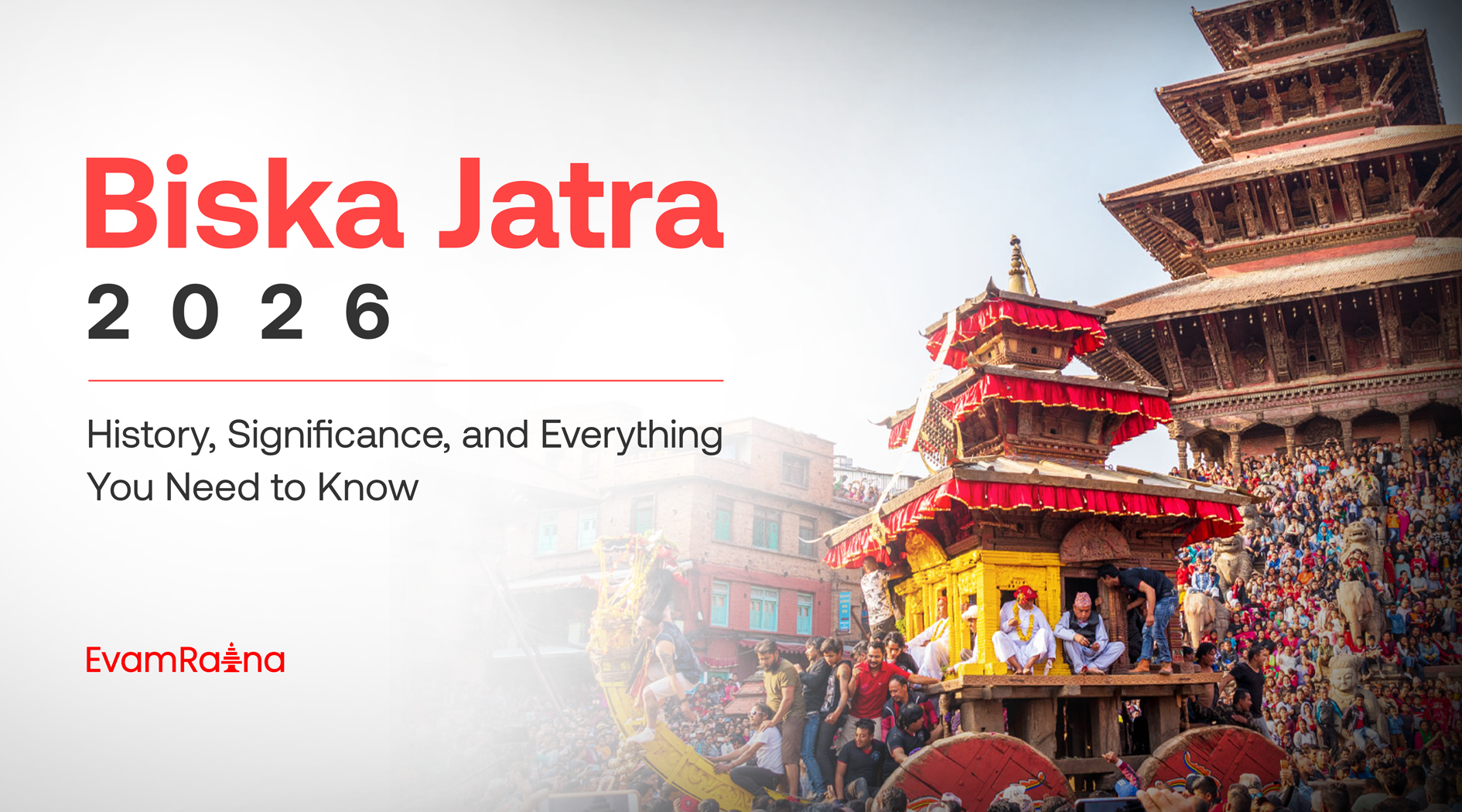
During Biska Jatra, the streets of Bhaktapur come alive with energy and excitement. The powerful rhythm of dhime drums echoes through the city as massive wooden chariots are pulled by crowds using thick ropes. Devotees throw bright orange sindoor powder into the air, creating a vibrant and festive atmosphere. One of the most iconic moments is the raising of a tall 25-metre pole, known as the lingo, which draws cheers from the crowd. The entire event is a fascinating mix of tradition, history, and faith, and is one of the most memorable experiences in Nepal.
The Serpent Legend: The Mythology at the Heart of Biska Jatra
Every great festival has a powerful story behind it, and Biska Jatra is no exception. According to legend, long ago, the king of Bhaktapur had a beautiful daughter, and he announced that whoever married her would become the next king. Many young men came forward, but then a series of unfortunate events occurred; every groom was found dead the very next morning, without any visible cause. The kingdom was filled with fear, and it was thought that the princess was cursed. No one dared to marry her anymore.
One day, a brave prince arrived who was skilled in tantric knowledge. Despite hearing the rumors, he agreed to marry the princess. On their wedding night, instead of sleeping, he stayed awake and watched carefully. Later that night, he saw two serpents emerging from her nostrils. Realizing they were the cause of the deaths, he quickly drew his sword and killed them before they could harm him.
With the serpents destroyed, the curse was finally broken, and the princess was freed. The people of Bhaktapur celebrated this victory of courage and wisdom over evil by starting Biska Jatra. Even today, this festival is a reminder of the story, two pieces of sacred bark wrapped around the long ceremonial pole (Lingo) symbolise the killed serpents. Its erection represents victory and its collapse evil's defeat.
The Achaju Legend: A Hidden Story Behind Biska Jatra
While the serpent-and-princess story is the most well-known, another lesser-known legend tells the story of the Achaju couple. During the time of Licchavi King Shivdev, Bhaktapur faced repeated attacks from the Kirat people. Seeking protection, the king turned to Goddess Vajrayogini, who guided him to a powerful tantric practitioner named Shekhar Achaju. Using his mystical powers, Achaju transformed himself into a tiger and led an army of a thousand tigers to attack the enemy at night. The plan succeeded, and after the battle, he returned to human form using sacred mantra-blessed rice (akshata).
Later, Achaju’s wife Nararupa asked to witness his transformation into a serpent. When he agreed and transformed, she became frightened and tried to run away. In the process, the sacred rice touched her as well, turning her into a serpent too. The couple, now unable to return to human form, went to the king for help, but he refused. Heartbroken, they took their own lives near the Bhadrakali temple. Realizing his mistake, the king later honored them with royal funeral rites. It is believed that the tradition of raising the lingo (ceremonial pole) in Biska Jatra comes from this story, where their memory was preserved by placing a serpent image on the pole as a symbol of remembrance.
The Living Legacy of Biska Jatra: From the Licchavi Era to Today
Biska Jatra is an ancient festival with roots going back over a thousand years, originating during the Licchavi period when Bhaktapur was an independent and thriving kingdom in the Kathmandu Valley. It is believed to have begun during the reign of King Manadeva as a celebration of Vaisakhi, the solar new year. One of the earliest traditions was the raising of a tall wooden pole, known as the lingo or ketu, symbolizing renewal and marking the transition into the new year, a ritual that remains central to the festival even today.
As time passed, the festival grew in scale and grandeur, especially during the Malla dynasty (12th–18th century), when Bhaktapur flourished culturally and politically. King Jagat Jyoti Malla is often credited with expanding Biska Jatra by introducing the grand chariot processions of Bhairavnath and Bhadrakali. Many of the rituals, myths, and vibrant public celebrations that define the festival today were shaped during this golden era of art, architecture, and tradition.
Despite political changes and the fall of kingdoms, Biska Jatra has continued almost uninterrupted through the centuries, reflecting its deep cultural importance. The only recorded pause occurred in 1855 during the devastating Third Plague. However, the festival resumed immediately afterward, showing how strongly it is woven into the identity and spirit of the people of Bhaktapur.
Religious Significance of Biska Jatra: Bhairav, Bhadrakali, and the Newar Community

At its spiritual core, Biska Jatra is a devotional festival honouring two powerful deities of the Newar Hindu-tantric tradition:
Bhairavnath (Bhairab): A fierce manifestation of Lord Shiva, revered as the protector of Bhaktapur. His image, placed inside the towering three-storey wooden chariot, presides over the entire festival. Devotees believe that receiving darshan (a sacred viewing) of Bhairavnath during the procession brings blessings and protection for the year ahead.
Bhadrakali: A fierce form of Goddess Kali, Bhairavnath's consort. She rides in her own chariot alongside Bhairav. Together, the two chariots being pulled through the city represent the divine couple's annual procession through their kingdom, blessing every lane, square, and home they pass.
During the festival, devotees also honour Ashta Matrika (the eight mother goddesses), Mahalaxmi, Mahakali, Bramayani, Maheshwari, and local deities through processions, offerings, and devotional songs.
What makes the religious dimension of Biska Jatra distinctive is the deities involved and the living, participatory nature of worship. Devotees pull the chariot. They erect the pole. They carry the palanquins. The sacred and the communal are inseparable here.
Day-by-Day Events: What Happens During Biska Jatra?
Biska Jatra is a nine-day cascade of rituals, processions, and community gatherings, with each day carrying its own meaning and energy.
- Day 1: The festival opens at Taumadhi Square. The idol of Bhairavnath is brought out from the temple in a ceremony called dya koha bijyaigu "the god is brought outside". The massive wooden chariot begins its journey. The legendary tug of war between the Thane (upper city) and Kone (lower city) communities erupts for the first time.
- Days 2-3: The chariot of Bhairavnath moves through different quarters of the city. Whichever community wins the tug of war earns the honour of hosting the chariot's darshan in their neighbourhood, a matter of immense communal pride. The chariot rests at the Gahiti area.
- Day 4: The freshly cut Sal or Simal wood Lingo, roughly 25 metres tall, begins to be prepared at Pottery Square. Sindoor Jatra preparations begin in Thimi.
- Day 5 (New Year's Eve): The most charged night of the festival. The Lingo is ceremonially raised at Lyo Sin Khel in Pottery Square using only ropes, pulleys, and coordinated human strength. Families from specific Newar castes and guthi groups carry out this role, a responsibility passed down through generations under guthi law.
- Day 6 (New Year's Day): The Lingo falls in the Satruhanta Jatra ritual. Crowds gather to witness it. Local belief holds that whoever sees the Lingo fall will also see the downfall of their enemies. Devotees take ritual baths at Baghdwar, the source of the Bagmati River. The chariot makes its way to Lyasinkhel.
- Day 7: Sindoor Jatra peaks in Madhyapur Thimi. The tongue-piercing ceremony (Mye Pwa Khanegu) takes place in Bode.
- Days 8-9: The chariot of Bhairavnath begins its return journey. The final day sees one last tug of war as the chariot is ceremonially pulled back, and the festival concludes with Bhairavnath being returned to his temple in the ritual called dya thaha bijyaigu.
Where Else is Biska Jatra Celebrated Beyond Bhaktapur?
Bhaktapur is the grand stage, Biska Jatra is truly a valley-wide celebration, each town adding its own ritual, deity, and colour to the larger tapestry.
Madhyapur Thimi: Sindoor Jatra

Thousands of locals gather for Suthesyaa Jatra (also called the Morning Sindoor Festival), carrying sacred palanquins bearing neighbourhood deities, while people drench each other in bright red vermillion powder. Musicians play traditional Dhime and Musya drums as children, youth, and elders all join in. A cherished custom is the sprinkling of sindoor and fragrant flowers from windows and rooftops onto the passing chariots as they move through chowks and intersections.
Bode: Tongue-piercing ceremony

Bode witnesses a tongue-piercing ceremony where one resident spends the whole day with an iron spike through his tongue, roaming the city while carrying multiple fiery torches on his shoulders. It is believed this act of devotion brings divine blessings, protection from drought, famine, and illness, to the entire community. The deity Mahalaxmi from Bode also participates in the Sindoor Jatra procession.
Nagadesh: Part of the Sindoor Jatra Procession

Nagadesh participates as part of the broader Madhyapur Thimi celebrations. The deity Siddhi Ganesh from Nagadesh is among those whose palanquin leads the festivities, and Nagadesh contributes one khat (palanquin) to the joint procession that gathers at Layeku Thimi.
Tigani: Deity Procession
Tigani joins the collective celebrations centred around Madhyapur Thimi. The deity Nil Barahi of Tigani leads the festivities in its area, and Tigani contributes one khat to the Sindoor Jatra procession. The celebration follows the same pattern of palanquin processions, sindoor play, and traditional music.
Pakadole, Lokanthali & Khadpu: Palanquin Processions
In several towns across the valley, palanquins carrying local deities are lifted high and carried through streets in vibrant processions Bhaktapur accompanied by drumming, devotional songs, and offerings. These settlements maintain their own guthi responsibilities and deity-specific traditions that connect them to the larger Biska Jatra spirit.
Dhulikhel, Tokha, Sunakothi & Chaukot: Smaller Community Celebrations
These towns celebrate Biska Jatra with local significance, carrying on their own versions of processions, deity worship, and new year rituals. All of these places were once part of the Kingdom of Bhaktapur, which is why they share the same festival calendar and core traditions, even if the scale is more intimate.
Sangha, Shrikhandpur, Banepa & Chokote (Kavre): Local Biska Traditions
In addition to Bhaktapur, Biska Jatra is also celebrated in places like Sangha, Shrikhandpur, Banepa, and Chokote in Kavre, Nepal, reflecting how far the old Bhaktapur kingdom's cultural influence stretched. These communities observe their own local forms of the festival, connecting them to Bhaktapur's mythology while honouring their own neighbourhood deities and traditions.
Cultural and Heritage Significance of Biska Jatra

(Image from Bhaktapur)
Biska Jatra is a living tradition of Nepali history, mythology, art, music, and identity.
Set against the backdrop of Bhaktapur's UNESCO World Heritage-listed Durbar Square, Taumadhi Square, and Pottery Square, the festival takes place in the same medieval courtyards, on the same ancient stone pavements, beneath the same pagoda temples that have witnessed this spectacle for centuries.
The festival preserves traditions that exist nowhere else on earth:
- Music compositions written specifically for Biska Jatra are performed on dhime drums and traditional instruments.
- Chariot architecture was handed down through generations of Newar craftspeople.
- Ritual roles embedded in the Guthi system have been faithfully carried out for hundreds of years.
- Devotional practices that blend Hindu and tantric traditions are unique to the Newar community.
For scholars, cultural researchers, documentary photographers, and heritage enthusiasts, Biska Jatra offers an unparalleled window into a living civilisation, one that has preserved its identity through kingdoms, invasions, earthquakes, plagues, and centuries of change.
Biska Jatra vs. Nepali New Year: Are They the Same?
Biska Jatra and the Nepali New Year are not the same thing, but they overlap and are deeply connected.
Biska Jatra was an established festival that existed and was observed before the Nepali New Year was recognised nationally. The festival has always been associated with the solar new year, Vaisakhi or Mesha Sankranti, which marks the sun's entry into Aries. This is a cosmic event observed by the Newar community long before "Nepali New Year" became a nationally recognised holiday.
The Lingo's fall at Lyo Sin Khel on Baisakh 1 happens to coincide with the Nepali New Year, and over time, the two have become popularly associated. Many Nepalis across the country now associate Bhaktapur's Biska Jatra with New Year celebrations.
However, for the Newar community of Bhaktapur, the festival carries meanings far older and deeper than a new year marker. It is a remembrance of the serpent's defeat, a devotional offering to Bhairavnath and Bhadrakali, a community rite sustained by the Guthi system, and a celebration of spring all at once.
Conclusion:
In a world where ancient traditions often survive only in museums or tourist reconstructions, Biska Jatra is rare and precious: a living tradition, not performed for tourists or cameras, but because it is important, to the families who inherited the skills to build the chariots, to the communities who inherited their guthis to pass on each ritual, and to the city of Bhaktapur, whose character is bound up with this nine-day festival.
The powerful pull of the chariot, the towering rise of the Lingo, the vibrant burst of Sindoor Jatra, and the quiet devotion seen in the tongue-piercing ceremony are the living expressions of a deeply rooted culture. Over thousands of years, Biska Jatra has been handed down from generation to generation, and is the soul of Bhaktapur, freely shared but carefully guarded by the people who live there.
Whether you are a traveler, a culture lover, a photographer, or someone seeking something genuine beyond ordinary experiences, Biska Jatra offers something unforgettable. It is a sacred festival, a feeling, an energy, and a story that stays with you long after it ends, leaving an impression that no photo can truly capture.