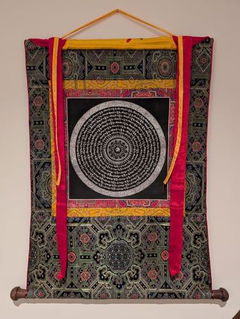
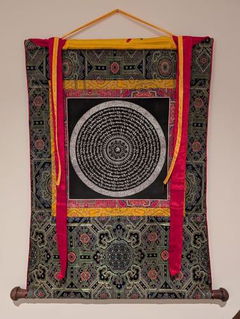
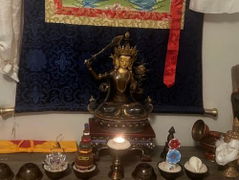
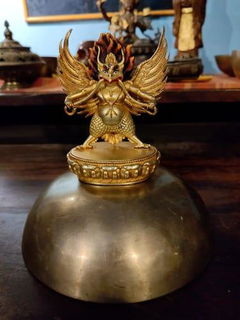
Vintage Heruka Mahakala Mandala | Religious Thangka Art | Wall Decors
Choose your option


Traditional Mandala Thangka | Tibetan Handpainted Art | Religious Wall Decors
Choose your option


Manjushree Mandala Thangka | Traditional Tibetan Art | Wall Decors
Choose your option


Amitayus Buddha Mandala | Traditional Tibetan Thangka | Wall Decors
Choose your option


White Tara Mandala | Traditional Tibetan Thangka | Religious Wall Decors
Choose your option


Amoghasiddhi Mandala | Religious Buddhist Thangka | Wall Decors
Choose your option


Shakyamuni Buddha Mandala Thangka | Traditional Tibetan Thangka
Choose your option


Religious Mandala Thangka | Tibetan Artwork | Traditional Wall Decors
Choose your option


Buddhist Mandala Thangka | Traditional Tibetan Art
Choose your option


Shakyamuni Buddha Mandala | Wall Decoration Painting
Choose your option


Vajrasattva Mandala Thangka | Buddhist Gift Ideas
Choose your option


Chenresig Mandala | Traditional Tibetan Thangka | Wall Decors
Choose your option


Buddha Mandala | Tibetan Traditional Thangka | Wall Hanging Decors
Choose your option


Wall Hanging Mandala Thangka | Traditional Buddhist Art | Home Decoration
Choose your option


Shakyamuni Buddha Thangka | Mandala Wall Hanging
Choose your option


Mandala1000 Armed Lokeshvara | Buddhist Wall Hanging Mandala
Choose your option


Vintage Shakyamuni Buddha Thangka | Hand-painted Thangka
Choose your option


Buddha Mandala Thangka with Boddhisattavas | Himalayan Religious Painting
Choose your option


Traditional Mandala Art | Manjushri Thangka | Bodhisattva of Wisdom & Compassion
Choose your option


Vintage Mandala with Guhyasamaja , Chakrasamvara and Mahakalas
Choose your option
Mandala Thangka: Sacred Artistry and Spiritual Symbolism
An Overview
Mandala Thangkas, a unique form of artistic expression originating from Tibetan Buddhism, hold great spiritual and cultural significance. These intricate and harmonious paintings offer a tranquil and meditative experience, serving as visual representations of the universe.
Mandalas have a long history in various religious and cultural traditions, including Buddhism, Hinduism, and Native American mysticism. In Tibetan Buddhism, mandalas are employed to aid in the visualization of deities and their realms, as well as to facilitate meditation and spiritual practice. Mandala thangkas are distinguished for their exquisitely rendered and intricately detailed depictions of these sacred geometric patterns.
Artistic Symbolism:
Mandala Thangkas are characterized by elaborate geometric patterns, often featuring a central point surrounded by squares, concentric circles, and other geometric shapes. Each element of the Mandala carries symbolic significance.
- Center: The central point, often occupied by a deity, represents ultimate truth, enlightenment, and purity. It serves as the focal point of the Mandala, symbolizing the practitioner's path toward enlightenment.
- Concentric Circles: These circles represent different states of awareness and layers of existence, guiding the journey from the ordinary external world to the enlightened inner realm.
- Squares: Squares within the Mandala represent the four cardinal directions and the material universe. They symbolize stability, hierarchy, and the foundation that supports the spiritual path.
- Colors: The colors used in Thangka Mandalas carry symbolic meanings. Red signifies passion and transformation, while white represents purity and the enlightened mind. Green symbolizes harmony and balance, and blue represents wisdom.
- Ornate Patterns: Mandala Thangkas are often adorned with intricate patterns and motifs, each with symbolic significance. These patterns direct the practitioner's focus and contemplation.
Spiritual Importance:
Mandala Thangkas serve a dual purpose in Tibetan Buddhism:
- Meditation and Visualization: Practitioners use Mandala Thangkas as tools for meditation and visualization. By focusing on the center of the Mandala and gradually expanding their awareness outward, individuals embark on a journey from the mundane world to a higher state of consciousness. This allows them to connect with deities or gain spiritual insights.
- Spiritual Lessons: Mandalas convey profound spiritual lessons. They visually represent that even the most complex and chaotic aspects of existence can be transformed into tranquility and enlightenment. They also illustrate the interconnectedness of all aspects of reality.
Mandala Thangkas represent a harmonious fusion of artistic mastery and esoteric mysticism. They serve as instruments for meditation, introspection, and spiritual growth, providing a window into the intricate realm of Tibetan Buddhism. These sacred works of art invite practitioners on a transformative journey towards enlightenment, as they are more than mere images—they are gateways to the profound and interconnected essence of the cosmos and the human soul.