Amitabha Buddha Spiritual Art | Represents Infinite Light And Boundless Compassion
Choose your option

Enlightened Shakyamuni Buddha Art | Historical Buddha | Founder of Buddhism
Choose your option

Shakyamuni Buddha Thanka | A Sacred Representation of the Buddha’s Enlightenment
Choose your option

Samantabhadra Painting | Primordial Buddha | Buddhist Altar
Choose your option

Enlightenment Shakyamuni Buddha Painting | A Sacred Depiction of the Buddha’s Awakening
Choose your option

Maha Parinirvana Thangka | A Sacred Representation of the Buddha’s Final Nirvana
Choose your option

Medicine Buddha Tibetan Art | Sangye Menla
Choose your option

Religious Thangka Of Shakyamuni Buddha | Siddhartha Gautama | Spiritual Art
Choose your option

The Buddha Life Story Thangka | Teaching and Parinirvana
Choose your option

Himalayan Buddha Life Story Thangka | Chronicle of Shakyamuni's Enlightenment
Choose your option

Buddha Life Story Sacred Artwork | The Spiritual Legacy of Shakyamuni Buddha
Choose your option

Buddha Life Story Thangka Art | The Path from Prince Siddhartha to Enlightenment
Choose your option

Gautama Buddha Life Story | Sacred Himalayan Buddhist Thangka Painting
Choose your option

Bhaisajyaguru Buddha Artwork | Buddhist Healing Thangka
Choose your option

Shakyamuni Buddha Life Story Thangka Painting | Sacred Journey of the Enlightened One
Choose your option

Shakyamuni Buddha Life History Artwork | The Sacred Journey of Enlightenment
Choose your option

Buddha Life Story Sacred Art | The Enlightened Journey of Shakyamuni Buddha
Choose your option

Shakyamuni Buddha Tibetan Artwork | Supreme Awakening
Choose your option
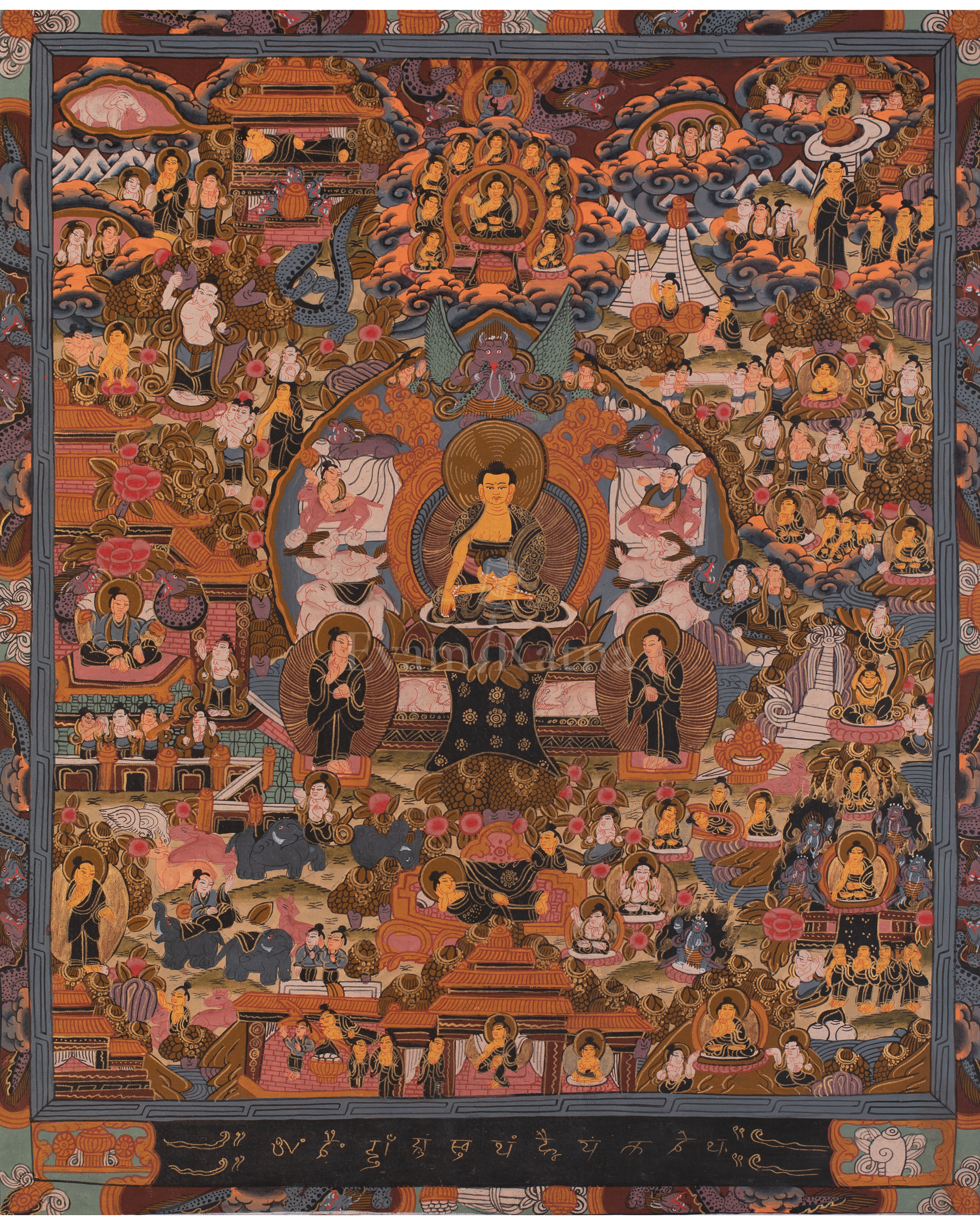
Buddha Life Story Himalayan Art | Sacred Thangka of Enlightenment and Wisdom
Choose your option
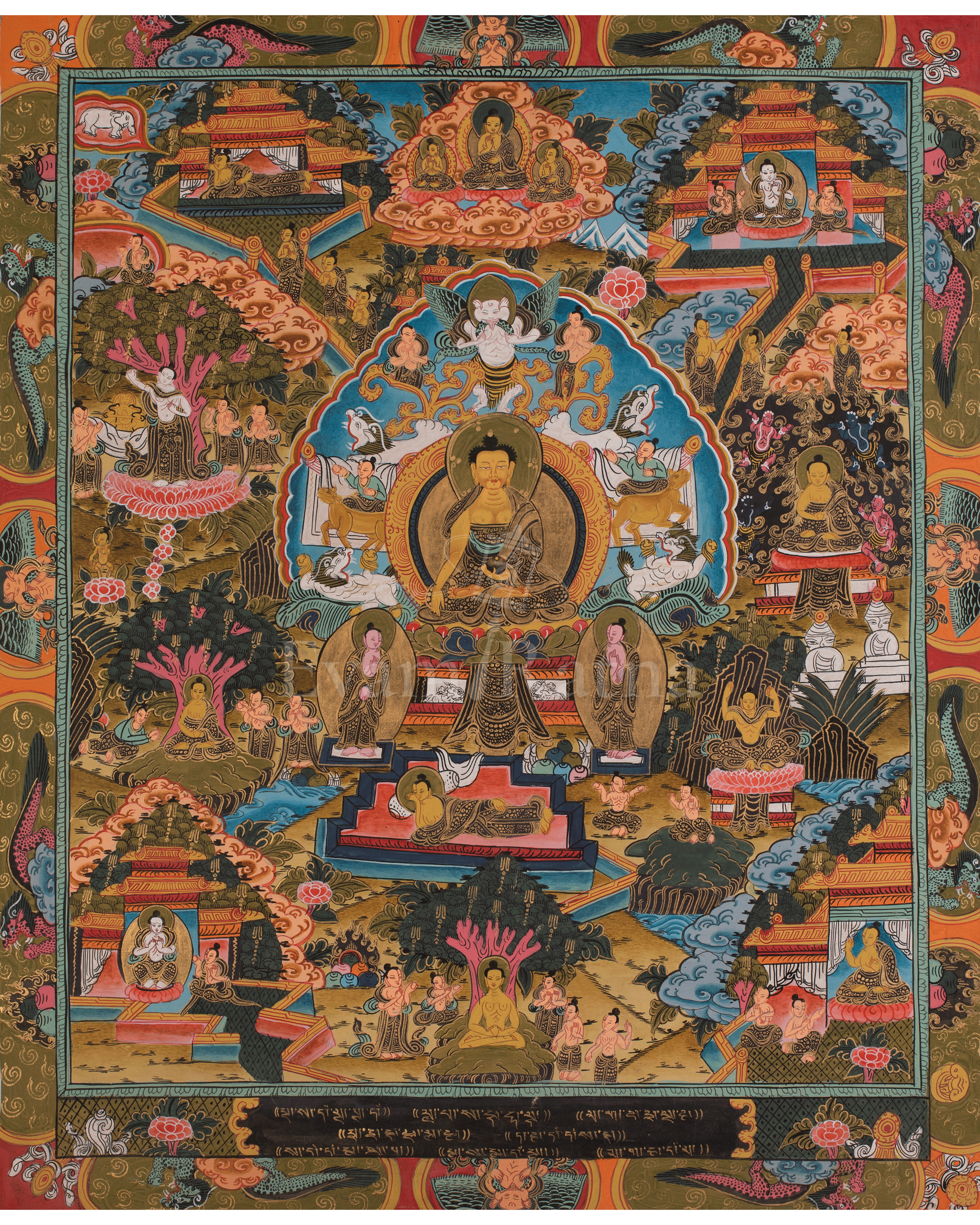
Buddha Life Story Enlightenment Thangka | Journey of Awakening
Choose your option
Buddha: The Illuminated One and the Journey to Freedom Historical Significance
The term "Buddha" signifies "The Enlightened One" or "The Awakened One." Among several Buddhas, Siddhartha Gautama, the founder of Buddhism, stands out as the most renowned. Born into royalty in Lumbini during the 5th century BCE, Siddhartha's destiny was initially predicted to be a great ruler or spiritual leader.
Sheltered from the world's hardships by his father, Siddhartha's encounter with the "Four Sights" – a deceased body, an elderly man, a sick man, and an ascetic – profoundly impacted him. In pursuing solutions to alleviate human suffering, he renounced his princely life. After years of rigorous training and meditation beneath the Bodhi tree in Bodh Gaya, he evolved into the Buddha.
Characteristics and Teachings
The Buddha is often portrayed with specific physical attributes known as the "32 Marks of a Great Man." These include the ushnisha, a protrusion on his head symbolizing wisdom, and long earlobes, representing his royal heritage and profound understanding. His teachings, encapsulated in the Four Noble Truths, identify attachment and desire as the fundamental causes of human suffering (dukkha). They propose the Eightfold Path to attain Nirvana and end suffering.
This path underscores the significance of right understanding, intention, speech, conduct, livelihood, effort, mindfulness, and concentration. The Buddha's teachings, the Dharma, underscore the impermanence of existence, the interconnectedness of all beings, and the potential for enlightenment within each individual.
Relevant Stories and Legacy
Numerous stories from the Buddha's life illustrate his teachings. One such story features Angulimala, who used his victims' fingers as a gruesome necklace. The Buddha fearlessly confronted Angulimala despite his heinous crimes, leading to Angulimala's transformation and eventual ordination as a monk.
This narrative highlights the Buddha's belief in the potential for growth and redemption in every person. After forty-five years of teaching, the Buddha achieved Parinirvana, or ultimate Nirvana, in Kushinagar, leaving behind a legacy that endures for millennia. His teachings spread throughout Asia, giving rise to various Buddhist schools and lineages, each with its interpretation and application of the Dharma.
The Buddha's journey from a secluded prince to an enlightened teacher has inspired countless individuals to pursue a path of introspection, compassion, and wisdom. His teachings, with a strong emphasis on attaining inner peace and alleviating suffering, remain highly relevant in today's complex world. This elevates him from being a historical figure to a timeless source of wisdom and hope.