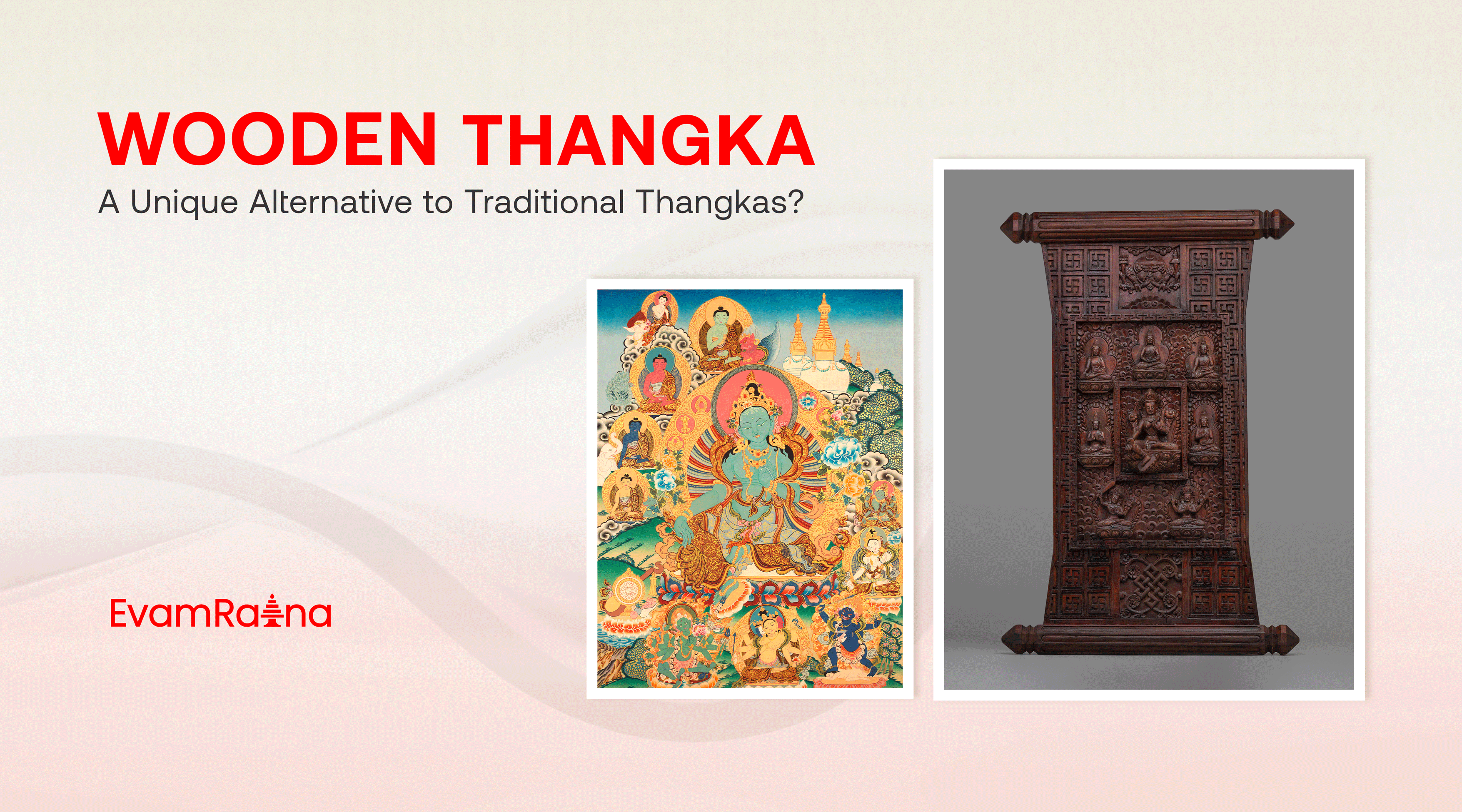
The Enchanting World of Wooden Thangkas: A Sacred Craft Elevated
Imagine sitting in front of your sacred Thangka, the vibrant colors and intricate details glowing softly in the dim light. But something is different this time. The sacredness that typically resides within the boundaries of tradition and texture now stretches beyond what you’ve known. As you gaze upon the piece, you realize it is no longer just an image painted on fabric. It seems to shift before your eyes, coming alive in a way you never expected. It's as though the deity depicted within the Thangka is no longer confined to the canvas, but has stepped into your world. The figure before you feels tangible, real — not just a painting or a representation, but an embodiment of the divine itself. It’s as if the deity has just manifested right in front of you, alive and breathing.
This is the magic of Wooden Thangkas.
Unlike the flatness of silk or cloth, the wood’s grain pulses with life, its intricate patterns adding depth that makes the deity feel as if it could step off the canvas at any moment. The tree’s life force infuses the artwork with vitality, transforming what was once lifeless into something sacred.
In a wooden Thangka, you don’t just see the deity; you feel its presence, as though it’s walking beside you. The craftsmanship behind these carvings is not just skill but a spiritual practice — each stroke breathes life into the wood, creating a living, breathing extension of the divine.
The deity no longer feels distant; it steps out of the traditional Thangka's flat dimensions, bridging time and material, bringing you closer to the essence of Tibetan Buddhism itself.
Crafting the Sacred: The Mastery Behind Wooden Thangkas

Wooden Thangkas, also known as the “carved Qingming Scroll of Tibet,” represent the pinnacle of artistic devotion. These sculptures combine the precision of Chinese Dongyang-style woodcarving with the rich symbolism of Tibetan Buddhist iconography. Crafted from fine hardwoods such as ebony, sandalwood, and teak, they invite a new dimension to the ancient art of Thangka-making. The result? A three-dimensional, tactile masterpiece that blends traditional flat-painting aesthetics with the profound depth of sculpture.
Fine Hardwoods: Ebony, boxwood, sandalwood, and teak are the favored materials for these intricate creations, offering both durability and beauty.
Carving Mastery: The artists employ the revered Dongyang-style techniques, along with methods such as ivory and bamboo carving, to bring each deity to life with exceptional detail.
Blending of Styles: The marriage of traditional flat painting with sculptural techniques gives Wooden Thangkas a dynamic, lifelike quality that transcends the limitations of flat artwork.
These are the crafting aspects that add multiple layers of complexity to the Wooden thangkas crafting, reflecting the talent and devotion of artisans.
Wooden Thangkas vs. Traditional Thangkas: A Comparative Insight

While traditional Thangkas, painted on cloth or silk, have long been revered for their sacred representations of Tibetan Buddhism, Wooden Thangkas are a modern, innovative take on this art form. This shift toward wooden carvings reflects a broader demand for artistic expression and individuality, while still maintaining deep spiritual roots.
Why the Shift?
-
Innovation in Art: In today’s creative world, there is a desire to blend tradition with new techniques. Wooden Thangkas offer a fresh interpretation of ancient themes, blending both spiritual significance and modern aesthetics.
-
Visual and Tactile Appeal: Unlike the flat, two-dimensional nature of traditional Thangkas, wooden carvings add layers of depth, texture, and dimension, creating a more immersive, three-dimensional experience.
Aspects that highlight the aesthetics of Wooden Thangkas:
Visuals:

Traditional Thangkas are flat, two-dimensional works on cloth or silk, offering a static perspective. Wooden Thangkas, however, break these boundaries with intricate carvings and three-dimensional depth, creating a dynamic, lifelike experience that can be viewed from multiple angles.
Aesthetic Appeal:
Traditional Thangkas are known for their vibrant, detailed designs, rooted in tradition. Wooden Thangkas offer a modern, earthy aesthetic with natural textures and depth, blending spiritual themes with contemporary appeal.
Sustainability & Eco-friendliness:

(Photo from Forest Plywood)
Traditional Thangkas often use synthetic materials and dyes, which can harm the environment. Wooden Thangkas, however, are made from sustainably sourced wood, offering a more eco-friendly option with less environmental impact.
Durability:
Traditional Thangkas, made from fabric, are prone to wear and tear over time, especially in humid conditions. Wooden Thangkas are more durable, with the natural strength of wood allowing them to withstand the test of time and environmental factors.
Devotion & Hard Work:
While traditional Thangkas require meticulous painting and embroidery, wooden Thangkas involve intricate carving, demanding great skill, patience, and spiritual dedication to transform wood into a spiritual masterpiece.
To summarize the differences:
| Aspect | Traditional Thangka | Wooden Thangka |
| Visuals | Flat, two-dimensional, painted on cloth or silk. | Three-dimensional, carved with textured wood grain. |
| Durability | It can wear and tear, especially in humid conditions. | More durable, lasts longer due to the wood's sturdiness. |
| Sustainability & Eco-friendliness | Often uses synthetic materials and dyes. | Eco-friendly, wood is a renewable resource. |
| Devotion & Hard Work | Requires detailed painting and embroidery. | Involves skillful carving, deeply meditative work. |
| Aesthetic Appeal | Traditional beauty with vibrant colors and details. | Unique, earthy look with depth and warmth. |
Preserving the Sacred: How to Care for Wooden Thangkas

Wooden Thangkas are delicate masterpieces that require special care to preserve their beauty and sacredness and ensure their longevity. Here are some essential maintenance tips:
Avoid Direct Sunlight:
Prolonged exposure to direct sunlight can cause the wood to fade or dry out, leading to cracking. Display your wooden Thangka in a shaded area, away from harsh light.
Keep Away from Humidity:
Wood is sensitive to moisture, which can cause it to warp or swell. Keep your wooden Thangka in a dry, well-ventilated space to prevent damage. Avoid placing it in areas with fluctuating temperatures or high humidity, such as near windows, bathrooms, or kitchens.
Regular Dusting:
Gently dust your wooden Thangka using a soft, dry cloth or a feather duster. Avoid using cleaning products, as chemicals can damage the wood or paint. If needed, use a wood-safe cleaner specifically designed for fine art.
Temperature Control:
Wooden Thangkas should be kept in a room with a consistent, moderate temperature. Extreme heat or cold can affect the integrity of the wood and the fine details of the carving.
Use Protective Coating:
Consider using a clear protective finish specifically designed for wood carvings. This will help preserve the wood's texture and color while offering a layer of protection against dust, dirt, and moisture.
Check for Cracks:
Periodically inspect your wooden Thangka for any signs of cracks or damage. If any issues arise, consult a professional for restoration to prevent potential damage.
The Future of Wooden Thangkas: Where Tradition Meets Innovation
In a world where innovation is key, wooden Thangkas beautifully merge ancient Tibetan art with modern creativity. These intricate carvings bring timeless spiritual symbols to life, offering a fresh, tactile connection to the divine that resonates in today’s aesthetic-driven world. Here's why:
Bridging Tradition and Innovation:
In a world where creativity and aesthetics are valued in every aspect of life, wooden Thangkas emerge as a perfect fusion of ancient Tibetan spiritual art and modern craftsmanship. They offer a fresh, innovative approach to a centuries-old tradition, providing a unique connection to the divine that feels alive and tangible.
Meeting Global Demand:
Today’s world craves tangible beauty and meaningful, handmade items. Wooden Thangkas fulfill this desire by offering art that’s not only visually stunning but also deeply spiritual. Their intricate carvings and rich textures create a dynamic presence, making them stand out in a fast-paced, aesthetically driven world.
Eco-Friendly and Creative:
With sustainability becoming more critical, wooden Thangkas present an eco-friendly alternative to traditional materials. Carved from natural wood, they offer a creative expression that respects both nature and the art's spiritual significance.
Unique and Meaningful:
Wooden Thangkas meet the modern demand for unique, meaningful pieces that bring both beauty and depth into homes and temples. They are a perfect blend of timeless spirituality and contemporary design, satisfying the global need for art that resonates on both a visual and spiritual level.
As we move forward into a future where tradition and innovation continue to intertwine, wooden Thangkas stand as a testament to the enduring power of art to adapt and inspire. They bridge the ancient and the contemporary, offering not just a piece of spiritual art but a meaningful connection to the sacred. With their intricate craftsmanship, sustainable materials, and unique presence, wooden Thangkas are destined to remain a cherished expression of creativity and devotion for generations to come, fulfilling the global demand for beauty, spirituality, and innovation all in one.
Conclusion: The Timeless Magic of Wooden Thangkas
Wooden Thangkas are not just a new trend in Tibetan art; they are a vibrant fusion of creativity. By blending ancient craftsmanship with modern techniques, they create a unique, tactile connection to the divine. As both sacred and contemporary, they are poised to remain a cherished expression of both devotion and art for generations to come.
These masterpieces continue to reflect the power of art to evolve and inspire — bridging cultures, traditions, and time itself. With their enduring beauty and sacred significance, Wooden Thangkas will remain at the forefront of spiritual art, reminding us that art can not only express devotion but also bring us closer to the divine, in both the sacred and the modern world.