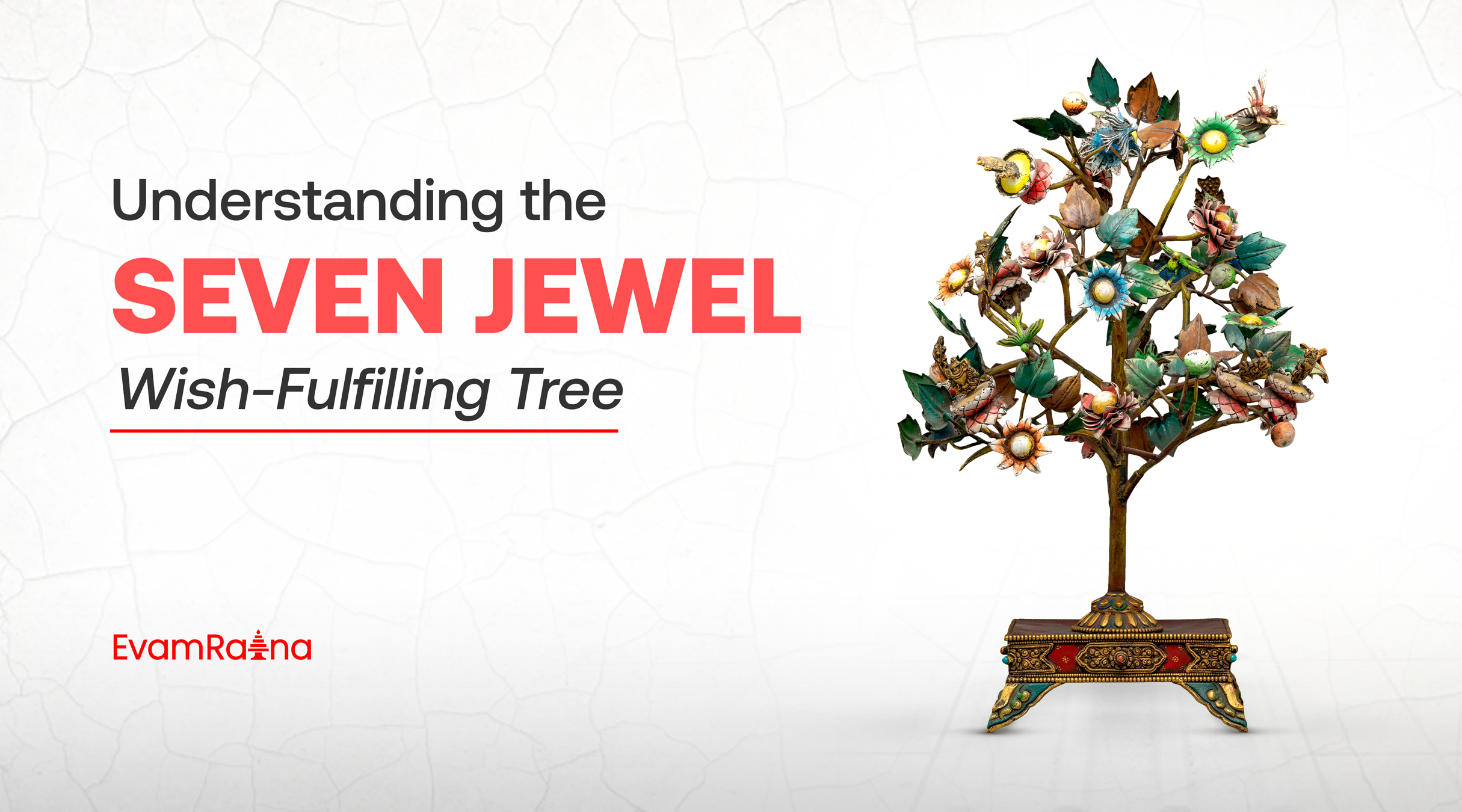
The Wish-Fulfilling Jewels Tree: An icon of Stability and Enlightenment in Buddhism
The Wish-Fulfilling Jewels Tree is a bright metaphor of the realization of spiritual desires and material needs in the world of Buddhism, which is rich and symbolic. This is a tree that is decorated with seven valuable jewels, signifying a combination of spiritual prosperity and the loving kindness of the generosity of Bodhisattvas who aim at reducing the sufferings of every being. The Seven-Jewel Wish-Fulfilling Tree is a symbolic representation of the major teachings of the Buddhist religion: wisdom, compassion, and the enlightenment promise.
In this blog, we shall discuss the Seven-Jewels Wish-Fulfilling Tree, its symbolism, its relation to the Buddhist ideals, and how it helps practitioners on their spiritual path. Through the interpretation of this symbolic tree, we can learn more about the Buddhist way and how it brings satisfaction to all beings through wisdom, compassion, and quality living.
What is the Seven Jewel Wish-Fulfilling Tree?

Wish-Fulfilling Jewel Tree is a powerful Buddhist symbol, particularly in Mahayana and Vajrayana Buddhism. This is not a literal tree, but a figurative one that can be taken to symbolize the realization of spiritual and temporal wants in search of enlightenment. The vision of the tree with the precious jewels illustrates the same idea that the doctrines of the Buddha (Dharma) serve as a help to achieve the utmost dreams of every reasonable being.
Most of the images depict the tree with seven jewels on its branches, which symbolize various qualities or virtues that a person must possess to be spiritually awakened. The seven-jewel structure has a special meaning since all jewels represent not only a particular element of spiritual growth but also mirror the inseparability of material wealth and spiritual prosperity. The tree is a token of the idea that the worldly benefits and the liberation of all creatures to the sufferings can be reached by caring and practice.
In fact, in some variations of the tree created by artists, the eight auspicious symbols are also incorporated, as you can see in the image above.
The Seven Jewels in the Wish-Fulfilling Tree

7 Jewels in Wish-Fulfilling Tree
The major part of the Wish-Fulfilling Jewel Tree is the seven jewels that it contains. These gems are the symbols of virtues that bring spiritual awakening and liberation. The jewels are associated with each quality or teaching, which, when developed, will assist an individual to overcome suffering and be enlightened. These seven jewels and their meanings have been discussed below:
| Sanskrit | English/Common Name | Traditional Symbolism |
| Suvarṇa | Gold |
Purity, value, and the unchanging Dharma serve as the foundation for the roots or the base of Mandala trees. |
| Rājata | Silver | Clarity and reflectivity are often used for the trunk or supportive structures of the tree. |
| Muktā | Pearl | Transformation and luminosity; evokes the radiance of the moon in sacred offerings. |
| Aśmaka |
Agate/Carnelian |
Stability and grounding are used in sacred architecture for durability and longevity. |
| Pravāla | Coral | Vitality and connection to the ocean depths; symbolizes life force and spiritual merit. |
| Vaidūrya | Lapis Lazuli | Heavenly blue clarity, symbolizing the expanse of wisdom; often used for branches or the sky in visual depictions. |
| Sphaṭika | Crystal | Perfect transparency and insight; used to represent fruits or the peaks of abundance in tree depictions. |
These gemstones really enhance the essence of this tree, both spiritually and materially.
Wish-Fulfilling Jewel Tree: Hindu mythology of the Parijata Tree

AI-Generated Image
A mythical tree called the Parijata, a sacred wish-granting tree in the Hindu mythology, came up as a result of the churning of the cosmic ocean, which is synonymous with divine abundance.
It is said to emerge at the top of Mt. Meru (The center of the universe in the Buddhist and Hindu philosophies) in the heart of the five paradises of Indra, each of which possesses its own heavenly wish-giving tree, including Harichandra and Kalpa.
The flowers and fruits of the Parijat are the cause of a never-ending feud between the gods and the asuras, and the gods are reaping the benefits of the divine actively, whereas the jealous demigods are subjected to inferior benefits.
The Parijata is frequently associated with the terrestrial Indian coral tree and is described as having roots that are golden, a trunk that is silver, branches that are made of lapis lazuli, leaves that are made of coral, flowers that are made of pearls, buds that are made of gemstones, and fruit that is made of diamonds. One of the most important characteristics of iconography is its celestial beauty, depicted as surrounded by bright flowers, jewelry, and symbols of divinity, the ultimate source of desires being made true.
Symbolism of the Wish-fulfilling Tree

Although what is contained within the jewels is considered important, the tree itself carries with it deep meaning. The tree is symbolic of the inter-relationship between the material world and the spiritual world. The Wish-Fulfilling Jewel Tree is an image of how all beings are interconnected and how spiritual growth can be attained as the tree's roots reach the earth and its branches stretch to the sky.
In Buddhism, trees are commonly referred to as symbols of life and development. A symbol that is common to the Buddhism religion is the Bodhi tree, under which the Buddha achieved his enlightenment; a growth of wisdom and awakening to what one really is. Equally, the Wish-Fulfilling Jewel Tree is an image of the development of positive virtues, namely, wisdom, compassion, ethical behavior, and clarity, that make people enlightened.
Things, such as right view and right intention, are the roots of the spiritual practice, whereas the trunk of the tree symbolizes the core of the practice, such as meditation and mindfulness. The branches are straight, which represents the dispensation of compassion and wisdom to every creature. This analogy emphasizes the point that, in the same way a tree is sheltering and food to everyone that comes close to it, so is the practice of Buddhism to every being a source of spiritual food.
The Roles of Wish-Fulfilling Jewel Tree in Buddhist Practice:
The Wish-Fulfilling Jewel Tree is not only a visual image to the Buddhist practitioners, but it serves as a spiritual development guide. It is a reminder of the spiritual riches that can be possessed by people who walk on the path of the Buddha. Through nurturing the virtues associated with the jewels, the practitioners will be able to change their lives and achieve their utmost hopes.
Meditation and Visualization
The Wish-Fulfilling Jewel Tree can be seen as an object of concentration in meditation. The practitioners can picture themselves seated under the tree and are blessed with the jewels, or they can see the jewels themselves and consider them as representations of the virtues they need to develop. The practice may serve to strengthen the journey on the path and attitude towards clarity of the mind.
Inspiration for Compassion:
The tree, via its identification with the Bodhisattva and the blessings of the same, is also a source of inspiration to the development of compassion. It also makes practitioners remember that enlightenment is not only what is beneficial to the self, but also beneficial to all creatures. The wish-fulfilling tree, therefore, promotes self-sacrifice and generosity.
Metaphor of Spiritual Development:
A tree starts with a seed and is nurtured with water and sunlight; a practitioner likewise starts with seeds and is groomed with the help of virtues. The tree is a symbol of this growth, which reminds the practitioners of the fact that trees grow with time, and so do spiritual knowledge and love.
Conclusion: The Transformative Power of the Wish-Fulfilling Jewel Tree
The Wish-Fulfilling Jewel Tree symbolizes the harmonious balance between spiritual growth and material prosperity in Buddhism. Its seven jewels represent virtues like wisdom, compassion, and clarity, guiding practitioners on the path to enlightenment. Just as a tree nourishes life, the teachings of Buddhism offer spiritual sustenance for all beings. Meditating on this tree reminds us of the importance of cultivating virtues to overcome suffering and reach our highest potential, while also promoting the well-being of others. Ultimately, it embodies the interconnectedness of life and the transformative journey toward enlightenment.