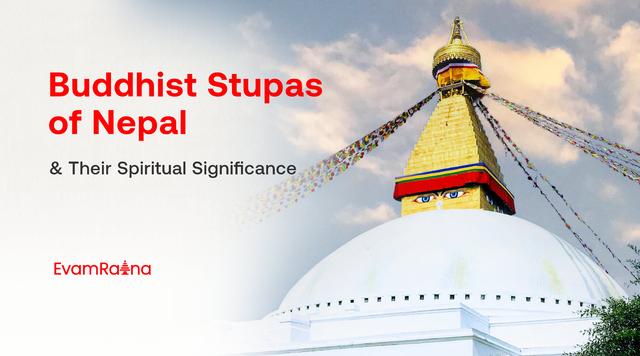
Introduction: The Sacred Landscape of Buddhist Stupas in Nepal
As someone who has had the privilege of walking through the sacred grounds of stupas, I can personally attest to the profound sense of peace that fills the air—the fragrance of burning incense, the watchful gaze of the Buddha's eyes, the hum of mantras, and the devotion of people rotating the prayer wheels. The serenity that embraces you in these spaces is truly unique and transformative, as you witness the bliss amidst the chaos. It’s an experience that brings a deep sense of connection to both the spiritual and cultural heritage of Nepal.
In this blog, we will first explore the most iconic Buddhist Stupas of Nepal and their spiritual significance. Then, we’ll delve into the various spiritual practices associated with the Stupas, offering a deeper understanding of their role in the lives of many.
Famous Buddhist Stupas of Nepal
Nepal, the birthplace of Gautama Buddha (Shakyamuni), has not just a rich geographical landscape but also a testament to the eternal and indestructible power of Buddha's profound teachings. Stupas, built by the devoted people with the intention to immortalize buddhist teaching, reflect the wisdom of Buddha in every aspect. They are historical landmarks and sacred beacons that connect the past with the present, reminding us of the Buddha's wisdom and his prolific influence in this world.
Swayambhunath Stupa

Photo from iStock
Location: Kathmandu Valley, Nepal
Date of Construction: Around the 5th century CE
Swayambhunath is an ancient religious complex situated atop a hill in the Kathmandu Valley, to the west of Kathmandu city. The Sanskrit names for the site signify 'self-arising' or 'self-sprung'. The hill upon which the stupa is situated has historically been a site of pilgrimage, regarded as the dwelling place of the primordial Buddha, known as the Adi-Buddha. For Buddhists worldwide, the stupa is esteemed as one of the most ancient and significant structures, having served as a dwelling place for numerous past Buddhas: Koṭāgamana Buddha, Kakusandha Buddha, and Kassapa Buddha. It’s no wonder that, due to its immense spiritual and historical significance, Swayambhunath was inscribed as a UNESCO World Heritage Site in Nepal in 1979.
It is also known as the Monkey Temple because Swayambhunath is home to a playful population of monkeys that roam the area, adding a unique charm to this sacred site. These mischievous creatures bring a lively, almost whimsical atmosphere to the spiritual surroundings, making it an experience unlike any other. Having personally visited, I can tell you that the journey to Swayambhunath from the highway is equally enchanting. As you approach the hill, the lush greenery and breathtaking scenery offer a serene and peaceful prelude to the sacred site awaiting at the top.
Boudhanath Stupa – The Heart of Tibetan Buddhism in Nepal
Location: Boudha, Kathmandu
Date of Construction: Licchavi Era (5th - 7th Century

Boudhanath Stupa, located in Kathmandu, Nepal, is one of the largest Stupas in the world and is viewed as an important symbol of Tibetan Buddhism in Nepal. The centre of Boudhanath features a Mandala that symbolizes the cosmic representation of the universe, which is a way to attain enlightenment. When I was a child, I remember visiting Boudhanath and being unsure about Mandalas. Then, I had the chance to talk to a Buddhist monk who, by having me observe the Mandala's four equal sides, demonstrated how the four sides show the balance and harmony between heaven and earth. That single moment greatly contributed to my understanding of the symbolic aspect of Boudhanath as a Stupa.
According to a legend, it is believed that Boudhanath was first erected during the fifth century and has been an important place of pilgrimage for the local Buddhist community as well as the Tibetan population residing within Nepal for centuries. The significance of Boudhanath is not only from its size but also from the presence of the remains of the original Buddha in the Stupa, representing the continuous existence and influence of his teachings. In consideration of the long history of religious and associated importance of Boudhanath, it was authorized as a UNESCO World Heritage Site in 1979.
Charumati Stupa
Location: Chabahil, Kathmandu
Date of Construction: 3rd or 4th century AD (or BCE)

If you are visiting Boudhanath Stupa, I recommend visiting Charumati Stupa (Only about 5km from Boudhanath). Located in Chabahil, Kathmandu, the Charumati Stupa is one of the oldest Buddhist temples in Nepal and was constructed by Princess Charumati, daughter of Emperor Ashoka, to promote the Dharma in the area. It is also known as Chabahil Stupa or Dhan Dhoj Stupa and is an important landmark in Nepal’s history.
There are inscriptions on the walls of this stupa indicating that Princess Charumati built this temple for the benefit of Nepalese Buddhists. In addition to providing a beautiful place where people can go to pray, the Charumati Stupa also has many prayer wheels, flags, and small stupas around it, which provide additional decoration and beauty to the stupa. The Charumati Stupa is located between Pashupatinath and Boudhanath.
This is an excellent spot to escape the bustling town and breathe in some nature. This stupa is a living reminder of how Nepal's spiritual identity is shaped by its history, culture, and faith.
The Four Ashoka Stupas of Lalitpur
Location: Lalitpur
Date of Construction: 249 BCE

Picture from Wonders of Nepal
The Four Ashoka Stupas of Lalitpur (Patan), Nepal, lie near the most distant points of the ancient town created around 500 B.C. by Emperor Ashoka as part of his mission to promote Buddhism.
Each mound represents a different age/direction based on its construction/location; thus, Lagan Thura is in the South, Teta Thura in the East, Pucho Thura in the West (Pulchowk), and Ibahi Thura in the North, near Durbar Square. All four have been constructed using large quantities of clay, brick, and stone and contain many relics of the Buddha; as such, they serve both as places of pilgrimage and as symbols of Patan's ancient Buddhist culture.
There are many religious sites to explore near Patan for both Hindus and Buddhist visitors. I recommend visiting Lalitpur if you want to experience Nepal's history, especially its Newari culture and traditions.
Shanti Stupa (Peace Pagoda)
Location: Anadu Hill, Pokhara
Date of Construction: October 1999 (officially opened)

The World Peace Stupa (Shanti Stupa) was built as a symbol of peace. Situated at an altitude of 1100 meters on the Anadu Hill, Nichidatsu Fujii laid the foundation stone, along with relics of the Buddha, on 12 September 1973.
We can have a panoramic view of Fewa Lake, the mountain range, and Pokhara Valley (one of the best tourist destinations in Nepal). We can have a thrilling cycling and trekking experience on the way to the stupa.
To Summarize:
| Name | Location | Why You Should Visit |
| Swayambhunath Stupa | Rupandehi District, Southern Nepal | Perfect for scenery, tranquility, and immersing yourself in the cultural history of Nepal. Whether you’re hiking up for panoramic views or seeking peaceful meditation, this stupa offers a unique connection to Nepal’s spiritual past. |
| Boudhanath Stupa | Kavrepalanchok District, 40-50 km southeast of Kathmandu | Boudhanath Stupa is a spiritual landmark, filled with Buddhist artifacts such as singing bowls, statues, and thangkas. Experience amazing culture and vibrant nightlife while enjoying the stunning view of the stupa. |
| Charumati Stupa | Chabahil, Kathmandu ( Near Boudhanath ) |
Visiting this stupa provides insight into Nepal's early Buddhist heritage and offers a peaceful atmosphere for meditation. |
| The Four Ashoka Stupas of Lalitpur | Lalitpur, Nepal, 8.9 km from Kathmandu | Each stupa is a symbol of his commitment to spreading Buddhism and offers a glimpse into the region's rich history. Visiting them gives travelers a chance to reflect on the Buddhist teachings and the historical spread of Buddhism in South Asia. |
| Shanti Stupa (Peace Pagoda) | Anadu Hill, Pokhara | The Shanti Stupa in Pokhara offers a serene spiritual experience alongside stunning panoramic views of the Himalayas, Phewa Lake, and lush greenery. It's a must-visit spot, loved by travelers for its peaceful atmosphere and breathtaking natural beauty. |
The Significance of Stupas in Nepal

Click here to view our Traditional Tibetan Golden Stupa
Pilgrimage Relics
Stupas are often sites of pilgrimage, drawing individuals from around the globe. These sacred structures are believed to house relics of the Buddha, such as parts of his body or sacred items associated with his teachings. The act of circumambulation (Kora), or walking around a stupa, is a significant practice for many Buddhists, symbolizing the journey toward enlightenment. The presence of sacred relics further deepens the spiritual importance of stupas, making them essential destinations for those seeking spiritual merit, inner peace, and connection with the Buddha’s teachings.
Buddhist Core
Buddhist stupas are more than just architectural marvels; they are sacred symbols of the Buddha’s mind and the path to enlightenment. Every stupa serves as a profound reflection of Buddhist teachings, representing key aspects such as the Buddha's wisdom, compassion, and the cycle of life, death, and rebirth. Stupas act as spiritual guides, inviting pilgrims and visitors to connect deeply with these teachings through acts of reflection, prayer, and meditation.
The Universal Message of Peace
Many stupas, such as the World Peace Pagoda, emphasize their role in spreading messages of global peace and unity. These stupas are not only sacred spaces for Buddhists but also powerful symbols of harmony for people from all backgrounds. The idea of peace, transcending religious boundaries, is at the core of the stupa's existence, offering a place for all to reflect, connect, and promote global harmony.
Buddhist Teachings
Every aspect of a stupa embodies Buddhist teachings, from the circular shape that symbolizes the cycle of life, to the Buddha’s eyes that represent his omniscient wisdom. The design of stupas encapsulates essential Buddhist concepts such as impermanence, the nature of suffering, and the path to enlightenment. Walking around or meditating near a stupa allows individuals to engage with these profound teachings on a deeper level, helping to reinforce the practice of mindfulness and the pursuit of spiritual clarity.
A Shared Reverence Across Faiths
Regardless of one’s religion, stupas, such as Swayambhunath, are places of universal respect and reverence. Hindus, Buddhists, and people from various faiths visit these sacred sites, drawn by their messages of peace, enlightenment, and compassion. The teachings embodied in stupas transcend religious boundaries, making them a unifying symbol of shared spiritual values. These sacred sites offer a space where all visitors, regardless of faith, can find meaning, solace, and a deeper connection to the universal messages of love and wisdom.
Stupas as Places of Merit
In Buddhist belief, visiting and venerating stupas generates merit—positive spiritual energy. Pilgrims and visitors engage in acts like making offerings, spinning prayer wheels, and meditating. These actions accumulate merit, which is said to contribute to one's spiritual well-being and future enlightenment. The significance of stupas as places of merit highlights their importance in a devotee’s spiritual journey, offering tangible ways for individuals to connect with the divine and grow spiritually.
Spiritual Practices:
Inspired by Kyabje Lama Zopa Rinpoche's teachings

When visiting a stupa, there are several powerful spiritual practices that can help you connect deeply with the Buddha’s teachings and accumulate merit. These practices, inspired by the wisdom of Kyabje Lama Zopa Rinpoche, are designed to purify negative karma, cultivate virtuous qualities, and strengthen your commitment to the path of enlightenment. Below are the essential practices that one should engage in when circumambulating a stupa, each representing a holistic approach that involves the body, speech, and mind.
Physical Circumambulation:
Walking around the stupa is a symbolic act that reflects the journey toward enlightenment. It's essential to keep a devotional mindset while physically engaging with the stupa.
Verbal Circumambulation:
As you walk, recite mantras, prayers, or Buddha's names. This is a way to purify your speech and deepen your connection to the teachings.
Mental Circumambulation:
The most important aspect. Cultivate a mind of devotion, bodhicitta, and mindfulness. This inner focus purifies negative karma and strengthens spiritual growth.
Generate Bodhicitta:
Before starting, set a strong intention to achieve enlightenment for the sake of all sentient beings. This motivation is the foundation of your practice.
Recite Mantras:
While circumambulating, recite powerful mantras such as Om Mani Padme Hum or the Buddha’s names to accumulate merit and purify the mind.
Dedicate the Merit:
After each round, dedicate the merit to all sentient beings, wishing them freedom from suffering and the attainment of enlightenment.
These practices help purify the mind, accumulate merit, and reinforce your connection to the Buddha’s teachings. Through devotion and mindful engagement, the act of circumambulating the stupa becomes a transformative spiritual practice.
Thank you so much for reading! I hope this exploration of Nepal’s stupas and their spiritual significance has inspired you to reflect on your own journey of peace and mindfulness. Whether you're planning a visit or simply deepening your understanding from afar, may these sacred spaces and practices bring you closer to the Buddha's wisdom and compassion.
Don't Forget to Explore our Evamratna Stupa Collection.