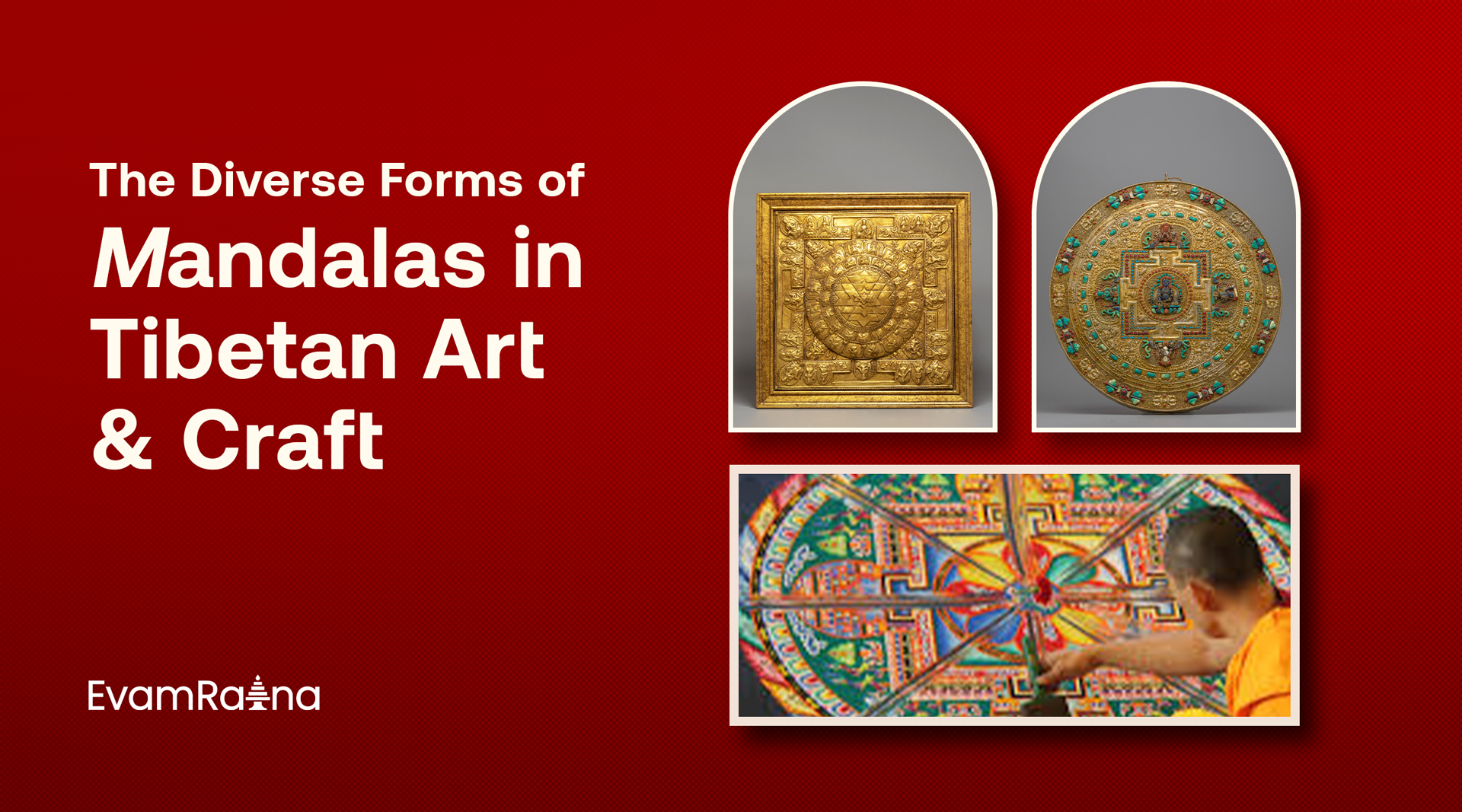
Introduction to Mandalas: Sacred Artworks of Enlightenment
A thangka Mandala is a sacred work of Tibetan Buddhist art painted on canvas, generally used in conjunction with meditation, as well as in other rituals and during various spiritual activities. Typically composed of delicate geometric shapes and multiple deities, such mandalas depict the universe, spiritual balance, and the path to enlightenment. Historically, thangka mandalas have been created using only natural paints and gold leaf; however, they may be both visual and meditative, encouraging practitioners to make a deep connection with the divine and to contemplate the nexus of all things.
The Evolution and Global Impact of Mandalas

Throughout the years, Mandalas have taken on greater importance worldwide since their inception within Tibetan spiritual practices. Initially used for meditative purposes, Mandalas have evolved into symbols for inner peace, equilibrium, and creativity that appeal to a broad spectrum of cultural backgrounds. Today, the rising prominence of the Mandala transcends spiritual organizations, inspiring multiple forms of art, design, and Therapy. Mandalas’ complex compositions and Meditative Characteristics can now be seen across a wide variety of areas of contemporary society, including yoga studios, home décor, and digital artwork.
The impact of Mandalas extends beyond the spiritual realm and into art and Psychology in the West, most notably through Carl Jung. He utilized Mandalas as tools for self-analysis and personal integration; United in his view that Mandalas represent the unconscious and serve as pathways to self-realization.
As interest in mandalas as a means of connecting to the spiritual and artistic worlds grows, artists are now experimenting with creating mandalas in a variety of materials, such as painting (on tapestries), metal, wood, sand, etc.
Exploring the Art of Mandala Craftsmanship: Painting, Metal, Wooden, and Sand Mandalas
Since ancient times, the Mandala has been a symbol of spirituality and creativity. The geometric complexity of the Mandala illustrates relatedness, oneness, and the connectedness among all things to each other through God (or the ultimate source of all creation). Mandalas were created within Hinduism and Buddhism, but the Mandala's design continues to exist in many artistic media. In this blog, we will look at four primary categories of Mandala: those painted, those made of metal, those made of wood, and those made of sand. All four types of Mandalas can be made using various techniques, and each has a distinct symbolic meaning that endures its importance in both the spiritual and art worlds today.
Mandala Painting: A Canvas for Spiritual Expression

Click here to view our Traditional Bodhisattvas and Buddhist Masters Thangka
Mandalas are beautiful interpretations of the Mandala, with intricate patterns and designs that also carry spiritual meaning. Mandalas in painting differ from mandalas made from materials such as Metal and Sand, since the medium for Mandala Paintings is Paint (on canvas or paper).
The ability to paint provides an artist with greater flexibility by enabling them to heighten their artistic practice through experimentation with different techniques, colours, and textures across various media. In addition, Mandala Paintings would allow artists to paint from their creativity and inner feelings, and, like all Mandalas, They Would continue to maintain the strong and unique spiritual importance of all Mandalas!
Different materials used in Mandala Paintings have different aesthetic and symbolic qualities:
Cotton Canvas:
A good, reliable material that is both strong and textured, it provides a solid basis for detailed, intricate designs when creating Mandalas.
Acrylic Paints:
Acrylic Paint offers a wide colour palette and quick-drying properties, making it one of the most popular mediums for painting mandalas.
Oil-based Colours:
Oil-based paint results in vibrant, intense pigmentation and provides high gloss, making it best suited for fine detail/precision in designing Mandalas.
Natural Pigments :
Made from minerals and stones, these natural pigments provide an earthy, natural appeal to the painting.
Gold and silver:
They serve not only as adornments in select elements of a painting but also as symbols of spiritual wealth and purity. The colour gold reflects divine energy, while the colour silver reflects enlightened mindsets. When combined, gold and silver allow artists to blend traditional techniques with new ideas, resulting in impressive, striking works of art that convey artistic expression while also imparting spiritual meaning.
Thus, a mandala painting made from all these elements is not only visually appealing but also a continuing source of inner peace, balance, and enlightenment throughout time.
Metal Mandalas: Symbolic Craftsmanship in Durable Form
 Click here to view our Shri Yantra Metal Mandala
The Mandala Tradition is continued uniquely and specially through the endurance of Metal Mandalas, as they merge the timeless symbols of the Mandala with the strength and beauty of Metal. Often used in Tibetan Buddhism for ritualistic purposes in Altars and Sacred Spaces, Metal Mandalas are viewed as both objects of meditation and a representation of the spiritual endurance and transformation of the practitioner. Unlike traditional Mandalas created on canvas or made from Sand, Metal Mandalas have been crafted to make them available to many future generations to enjoy the Mandala's spiritual teachings in a more durable, tangible medium.
Metal Mandalas are created using a combination of skill and precision. The process of creating Metal Mandalas includes:
Design:
Planning out the geometric shapes and spiritual symbols to use in your Mandala will determine which materials you will use for the Mandala, such as Brass, Copper, or Silver, based on their symbolic meanings.
Engraving:
The designer uses high-quality tools to engrave a Mandala pattern into metal, ensuring an accurate, precise, and clean engraving that reflects the Mandala's Spiritual Balance.
Embossing:
The designer uses a process that raises areas of the Mandala metal surface to create a 3D effect. This raises areas of metal and adds texture and depth to the design.
Casting: If the Mandala design is very intricate, the designer uses a casting technique. Using molten metal, the designer pours it into molds shaped by the Mandala's design to create a unique design.
Polishing and Gold Leaf:
The Mandala metal must be polished to appear shiny. Additionally, gold leaf or silver plating is often applied to the Mandala to make it even more visually stunning and to give it more spiritual significance.
Gemstones:
Some Mandalas may also include gemstones, such as turquoise and jade, to help enhance their spiritual energy.
The final result of a Metal Mandala is a strong, balanced Mandala that is visually appealing and can be used in Meditation and Spiritual Practices.
Wooden Mandalas: Organic Beauty and Symbolism

Click here to view our Mandala Wall Hanging
Wood and Mandala art come together in the form of wooden mandalas – a type of Mandala art that uses wood as a medium and the intricate patterns of a Mandala to create something rustic yet deeply spiritual. Wood has been used for thousands of years to create items of all types and is often combined with other materials.
In the case of wooden mandalas, however, the carvings or painted surfaces created on the wood are made to be both visually appealing and to represent ideas such as unity, balance, and harmony. As such, when you look at a wooden Mandala, the first thing you might notice is that it represents nature and its connection to the universe through the use of the organic nature of wood. And whether carved by hand and/or painted in bright and bold colors, both methods represent what we would call "a beautiful and reflective representation of creation" by showing how everything relates to one another (the cyclical aspect of life) and how all of creation is connected. Because of the significant skill required to create wooden mandalas, this craft naturally combines traditional woodworking techniques with ideas from the mystical arts.
The process of creating Wooden Mandalas includes:
Selecting Wood: Choosing the wood for the Mandala is an essential step. The type of wood selected carries its own symbolism and thus provides the Mandala with additional meaning. Most commonly chosen woods include: Oak – strength, Pine – growth, Sandalwood – spiritual connection.
Designing and Transferring: The wooden Mandala's design is created on paper before being transferred onto the wooden surface. The artist can then accurately transfer the design to the wooden surface using carbon paper and stencils, or freehand. The artist must be sure that his/her final transfer is symmetrically accurate with an evenly spaced out geometric pattern of the Mandala and any spiritual symbols that may be present in the Mandala.
Carving: Using specialized tools (chisels), the artist will carve the Mandala design into the wooden surface. Carving must be performed with severe care. To accurately represent the Mandala's spiritual meanings, the artist must carve with very fine detail and precision, ensuring all intricate details and fine lines are present.
Sanding and Smoothing: Once the carving of the Mandala is complete, the wooden surface must be sanded to smooth it and improve the visibility of the Mandala's details. Sanding helps bring out the Mandala's details and provides the finished piece with a polished look
Coloring and Painting: Wooden Mandalas are often painted, in some cases using natural pigments and acrylic paint, to highlight the design and add colour to the mandala. The colour selections are done with thoughtfulness for the energies they represent, e.g., red for vitality, blue for tranquillity, green for healing.
Finishing: A final coating is typically applied to the mandalas to protect the wood from the elements and to enhance the natural grain, providing warmth and depth to the finish.
Symbolism and Final Touches:
Wooden Mandalas often include additional elements that represent the mandala's spiritual aspects, such as gemstone inlays, painted enhancements, and symbols. The final finish of the piece captures its energy and its connection with nature, balance, and the cycle of life.
Sand Mandalas: The Impermanence of Life

Photo from asiasociety.org
Sand mandalas are among the most distinctive and symbolic forms of Mandala craftsmanship, traditionally created in Tibetan Buddhism as a form of meditation and ritual. These intricate, detailed mandalas are made by carefully placing colored sand onto a surface, often in a geometric or circular pattern. The process is highly meditative, requiring patience, focus, and precision, as the artist adds each grain of sand one by one.
Design and Preparation:
The process starts with drawing the central point, symbolizing the universe or soul, and then gradually expanding outward in a precise, geometric pattern. Artists plan the layout to ensure symmetry and spiritual alignment.
Use of Tools:
Artists use small funnels, tubes, and other specialized tools to pour sand carefully. These tools allow for controlled application of sand, ensuring fine lines and intricate patterns are created.
Color Symbolism:
Vibrantly colored sands represent different energies and elements. Each color has a spiritual meaning, such as red for life energy, blue for wisdom, and yellow for abundance.
Building Layers:
The design is constructed slowly, often over days, with each grain of sand placed meticulously. The outer layers may include symbols like lotus petals, deities, or geometric patterns, adding depth and meaning.
Patience and Meditation:
The entire process requires deep focus, patience, and a meditative mindset. The artist is often in a state of mindfulness throughout, making the act of creating the mandala itself a spiritual practice.
Completion and Ritual:
Once finished, the Mandala is carefully observed and appreciated before the ritual destruction. This symbolizes the impermanence of life and the Buddhist concept of non-attachment.
The beauty of a sand Mandala lies in its impermanence. Created with great care and devotion, it is deliberately erased, symbolizing detachment. It reminds us that what we build with effort is temporary, and true peace comes from accepting the fleeting nature of all things.
Why are different crafting techniques being introduced on mandalas?
Creativity and Innovation.
As more and more artists develop and innovate through new methods and material combinations, the traditional Mandala structure has an opportunity to evolve creatively by being reinterpreted through creative approaches. With these new design combinations, the Mandala can be presented to and experienced by an expanded demographic representing a broader audience to enjoy and appreciate Mandala artistry through a personal lens.
Devoted Representation of Deities.
Most Mandala artists portray their deities and spiritual symbols as realistically and respectfully as possible. Their dedication to their craft drives them to create artwork that embodies the spiritual nature and importance of their subjects through complex, detailed craftsmanship.
Culturally Inclusive.
Craftsmanship is a fundamental component of the Mandala ingredients that has enabled this art form to gain more and broader acceptance across cultures. With artists being encouraged to use their own creative ideas to create Mandala artworks, the artwork itself can be viewed through the lens of the culture it is made for, as well as through the lens of other cultures.
Spiritual Connection to the Mandala Artworks
The Mandala Art form's Craftsmanship as part of its Ingredients has made it easier to install the Mandala in many cultures across the globe. Because the Mandala Art form invites artists to express their creativity by creating Mandalas in their own styles, all Mandala Artworks may be seen through the perspectives of the culture for which they were made and of other cultures.
Preservation and Evolution of the Mandala Tradition.
Although mandalas derive from ancient Tibetan culture, new methods of Mandala crafting have emerged and continue to preserve their relevance in our modern world.
The Mandala Tradition: Relevance and Evolution Moving Forward
Mandalas represent unity, balance, and enlightenment through their sophisticated patterning and spiritual messages. With roots in Tibetan Buddhism, mandalas have evolved into a wide variety of expressions (i.e., artistic, therapeutic, psychological) across many cultures. Even within the Tibetan tradition alone, there are multiple ways of creating and using mandalas – thangka (painted), metal, wood – whereas sand mandalas exemplify impermanence. Each type of Mandala holds its own unique craftsmanship, beauty, and spiritual significance.
As contemporary artists create new, innovative ideas about mandalas through experimentation with materials and processes, mandalas continue to serve as an outlet for art and a means of connecting to the Divine. As new techniques develop, continued use of mandalas as a medium will continue to reflect personal experience and artistic creativity. From their rich cultural heritage and their global appeal, mandalas will continue to have significance well into the future as a bridge between the arts and the spiritual.