



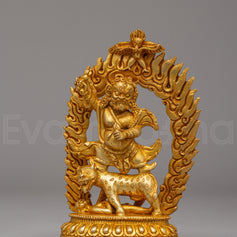
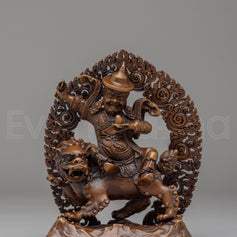
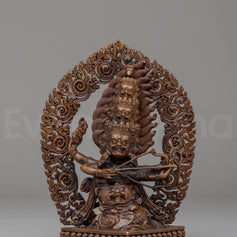
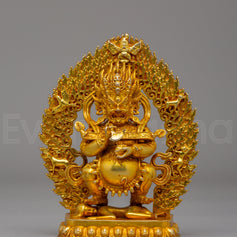
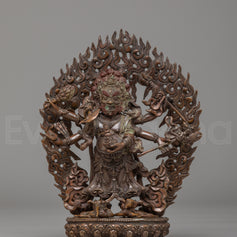
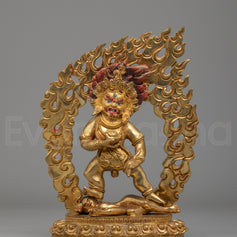






Six-Armed Mahakala Iconography: Understanding the Symbolism of the Revered Vajrayana Buddhist Protector
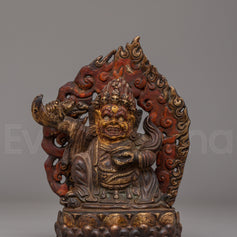
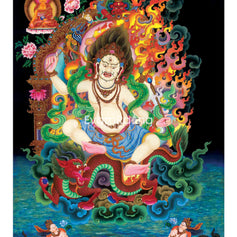
Among the most powerful and mysterious figures in Himalayan Buddhist art, Mahakala stands as one of the most recognizable protectors of the Dharma in Hinduism and Buddhism. His dark body, flaming hair, fierce expression, crown of skulls, and powerful stance often create an impression of a terrifying deity. However, beneath this intense appearance lies a profound spiritual meaning: Mahakala’s wrath is a form of enlightened compassion and the determination to overcome ignorance, obstacles, and negative forces.
Who is Mahakala? An Overview of the Great Black Protector

Mahakala is a Sanskrit word with the meaning maha (great) and kala (time, death, or black). He is known as "The Great Black One" or "The Great Lord of Time," and both meanings matter. Kala refers simultaneously to the color black, associated with the state before the arising of form, and to time itself, understood in Indian philosophy as the force that devours all created things. A deity named for time is, by definition, a deity of both destruction and inevitability.
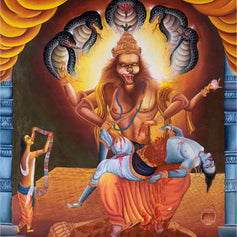
Mahakala holds an important place in both Hindu and Buddhist traditions. In Hinduism, Mahakala is regarded as a fierce manifestation of Lord Shiva, representing the destructive and transformative power of time. In Vajrayana Buddhism, Mahakala evolved into one of the most revered Dharma protectors (Dharmapalas), embodying enlightened activity that protects practitioners and preserves the teachings of the Buddha.
Mahakala's Roots in Hinduism: A Fierce Manifestation of Shiva
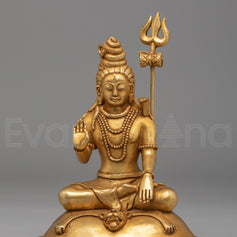
In Hindu traditions, Mahakala is closely associated with Lord Shiva, one of Hinduism's principal deities. In this context, he is not a separate deity but a name for Shiva in his aspect as the one who exists beyond time and consumes it. Mahakala represents Shiva’s connection with Kala, the force of time that eventually consumes all forms of existence. Time is one of the most powerful forces in the universe. Everything conditioned by existence changes, ages, and eventually transforms. Mahakala symbolizes mastery over this unstoppable process.
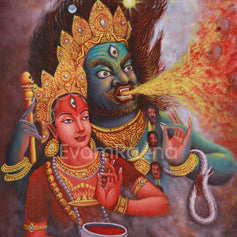
The Kalika Purana and related Shakta and Shaiva texts also pair Mahakala with Kali or Mahakali, positioning the two as complementary expressions of kala: Kali as the feminine, active principle of time and change, and Mahakala as the masculine ground against which that change occurs. In much of this material, Mahakala is functionally identical to Kala Bhairava, Shiva's fiercest form, associated with the destruction of ego, time, and illusion in preparation for the next cycle of creation.
The Journey Into Buddhism: From Fierce Divine Energy to Dharma Protector
Mahakala's absorption into Buddhism took place during the period of tantric exchange between Shaiva and Buddhist traditions in early medieval India, roughly the seventh to tenth centuries CE, when Vajrayana Buddhism was actively formalizing its pantheon of protectors, or Dharmapalas. This was not passive borrowing. Buddhist tantric literature frequently narrates the incorporation of a fierce non-Buddhist deity through a subjugation myth, in which a wrathful emanation of a Buddha or bodhisattva, most often Avalokiteshvara or Vajrapani, tames the deity and binds him by oath, or samaya, to protect the dharma rather than obstruct it.
Mahakala became especially important within Vajrayana Buddhism, where powerful symbolic imagery is used to represent different aspects of enlightened consciousness. Within Buddhism, he is considered an enlightened protector who manifests powerful compassion to defend the Dharma and remove obstacles on the path toward awakening. Mahasiddhas associated with early tantric transmission, including figures linked to the monastic university of Nalanda, are credited in Tibetan histories with formalizing Mahakala's practice lineages, which were then carried into Tibet and, from there, into the broader Himalayan world, including the Kathmandu Valley's Newar Buddhist tradition.
Mahakala in Vajrayana Buddhism: A Protector Across Lineages

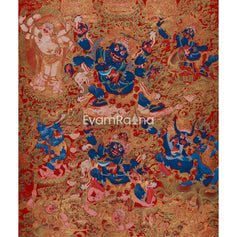
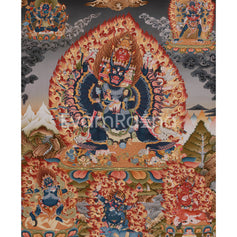
Within Vajrayana Buddhism, Mahakala is not a single fixed form but a family of related emanations, each associated with particular lineages, practices, and protective functions. The Nyingma, Kagyu, and Gelug schools all maintain Mahakala practice, though the specific form invoked and the liturgical context in which he appears differ by lineage. The Karma Kagyu tradition's association with a two-armed Mahakala form is closely tied to the Karmapas. In contrast, the Gelug tradition places particular emphasis on the six-armed Panjarnata Mahakala as a principal protector of the Ganden teachings.
In the Kathmandu Valley, Newar Buddhist communities maintain their own distinct Mahakala worship, visible in shrines such as the one at Hanuman Dhoka, reflecting centuries of localized transmission alongside, and sometimes blended with, Newar Hindu practice. Across all of these contexts, Mahakala functions as a yidam or protector invoked at the threshold of ritual space: before a tantric practice begins, before a mandala is consecrated, before a monastery's gates are guarded for the year ahead.
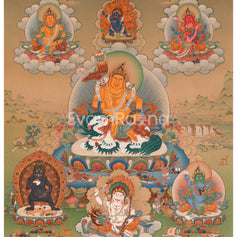
In Tibetan Buddhism, Mahakala is one of the most respected Dharmapalas, or protectors of Buddhist teachings. Different Buddhist traditions recognize various forms of Mahakala, including:
- Six-Armed Mahakala (Shadbhuja Mahakala)
- Four-Armed Mahakala (Chaturbhuja)
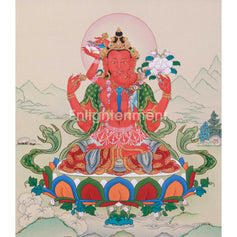
- Two-Armed Mahakala (Dorje Bernagchen)
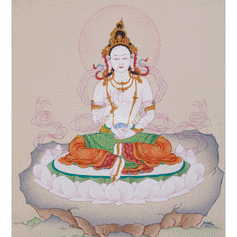
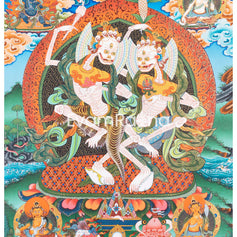
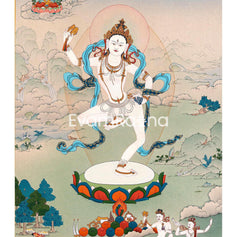
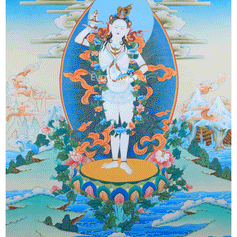
- White Mahakala (Shadbhuja Sita Mahakala)
- Bernagchen Mahakala (The Black Cloaked One)
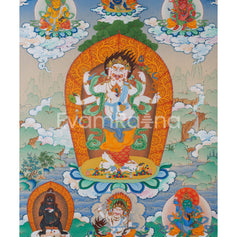
Each form carries unique symbolism and represents different aspects of enlightened activity. Among these forms, Six-Armed Mahakala (Shadbhuja Mahakala) is one of the most widely practiced forms, especially within the Kagyu and other Tibetan Buddhist traditions.
Why is Mahakala Depicted as Wrathful? Wrath Directed at Obstacles, Not Beings
This is the question almost every newcomer to Himalayan sacred art asks, often with genuine unease: if Mahakala protects, why does he look like something to fear? The answer lies in a concept central to tantric Buddhism, krodha, or wrathful compassion, which holds that fierce appearance and compassionate intention are not contradictions but two expressions of the same underlying motivation.
In Vajrayana iconography, wrathful deities are never understood as angry at sentient beings. Their ferocity is directed entirely at ignorance, ego-clinging, and the internal and external obstacles that prevent a practitioner from progressing on the path. A parent who shouts to pull a child back from a moving vehicle is not being cruel; the urgency of the gesture is the compassion. Mahakala's wrath operates on the same logic, scaled to the register of cutting through deeply entrenched delusion.
The Iconography of the Revered Six-Armed Mahakala

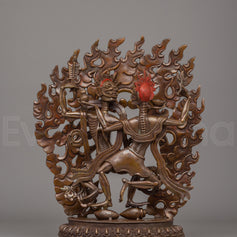
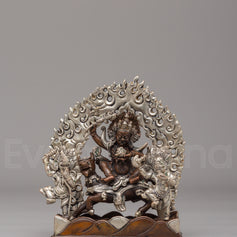
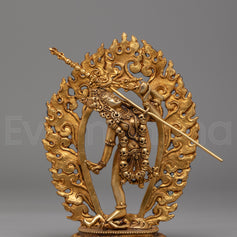
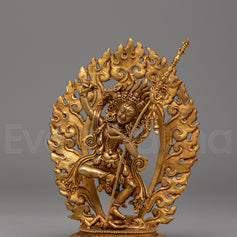
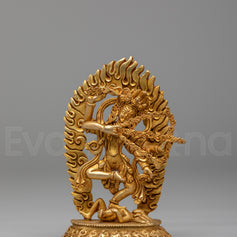
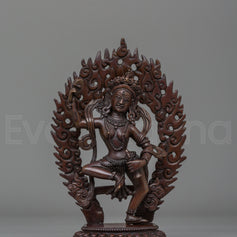
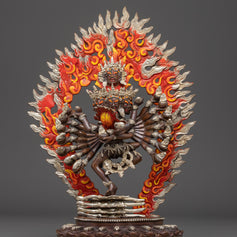
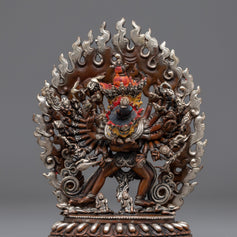
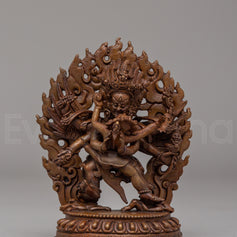
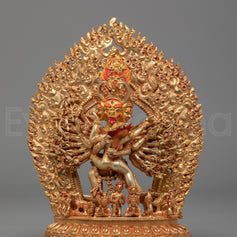
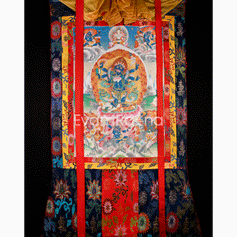
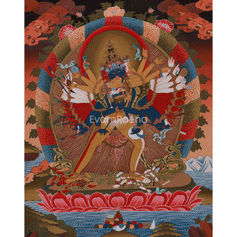
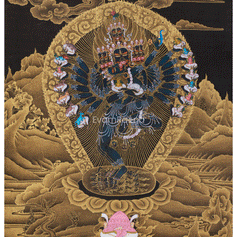
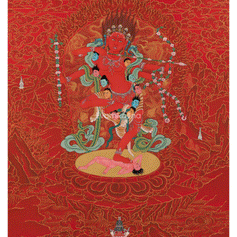
Among the many manifestations of Mahakala in Vajrayana Buddhism, the Six-Armed Mahakala (Shadbhuja Mahakala) is one of the most revered and widely practiced forms. Known as a powerful Dharma Protector, Six-Armed Mahakala embodies the fierce compassion of enlightened wisdom, protecting Buddhist teachings and practitioners from obstacles, negativity, and spiritual hindrances.
Every element of his appearance carries profound symbolic meaning. His dark body, wrathful expression, six arms, ritual implements, ornaments, and dynamic posture are not merely artistic features but represent deeper teachings on transforming ignorance, overcoming inner afflictions, and realizing awakened consciousness. The iconography of Six-Armed Mahakala follows precise Vajrayana Buddhist traditions, where each attribute represents a specific aspect of enlightened activity.
The Appearance and Symbolism of Six-Armed Mahakala
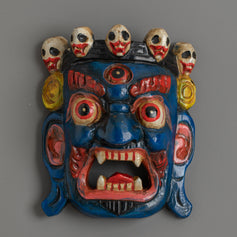
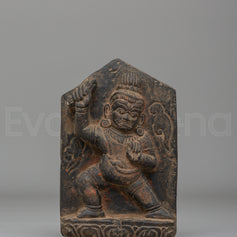
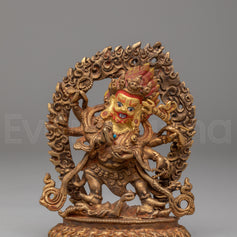
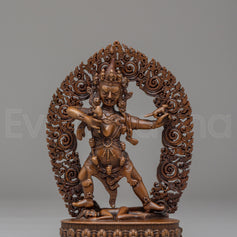
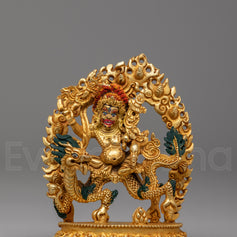
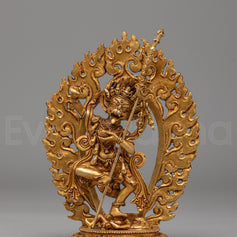
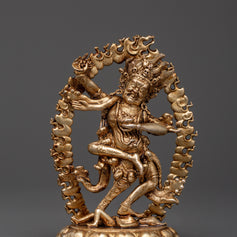
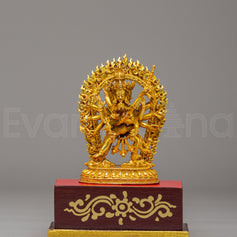
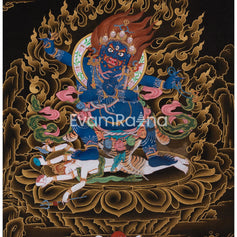
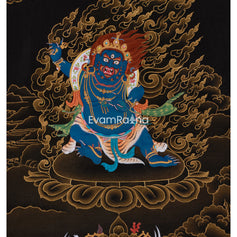
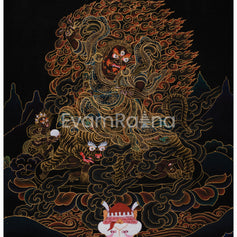
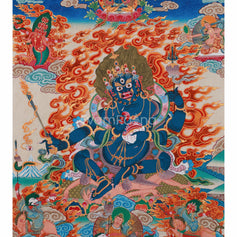
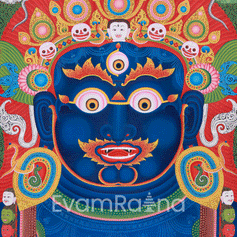
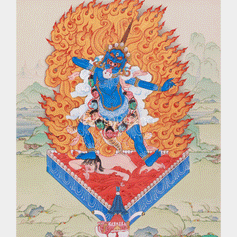
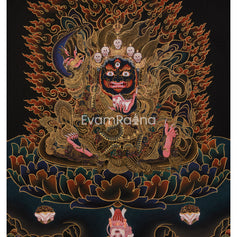
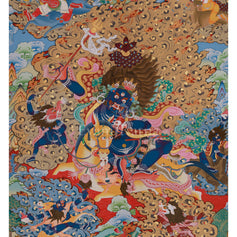
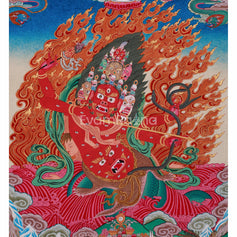
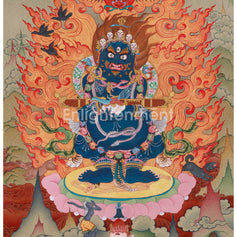
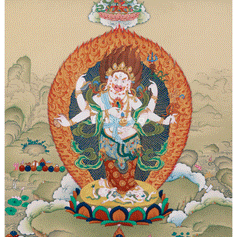
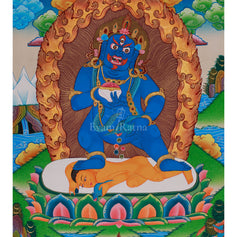
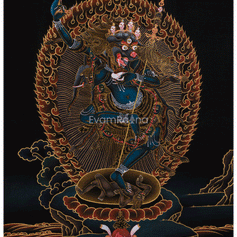
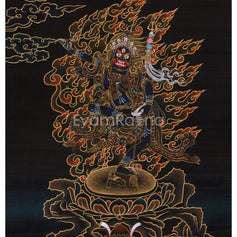
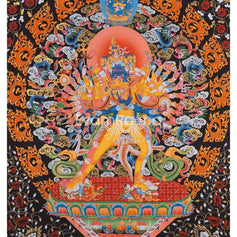
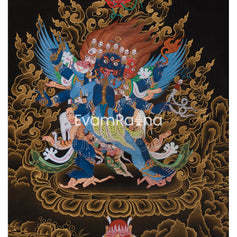
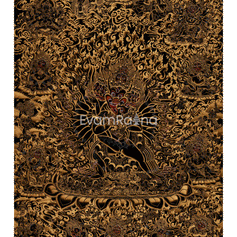
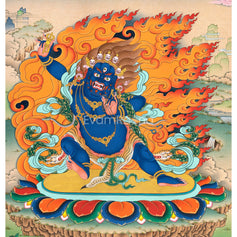
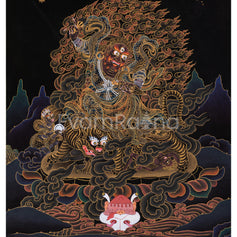
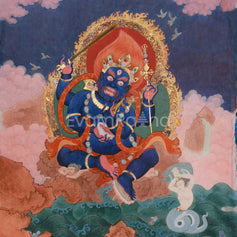
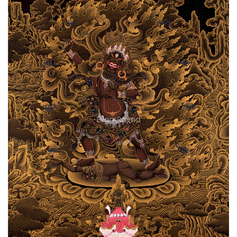
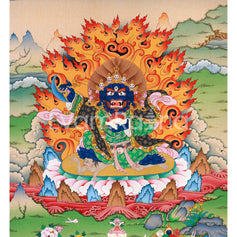
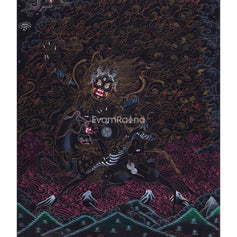
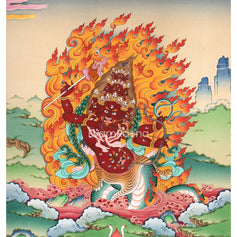
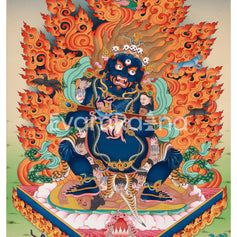
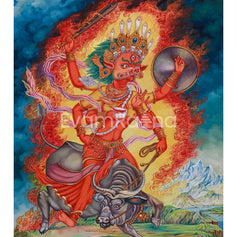
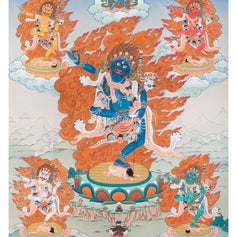
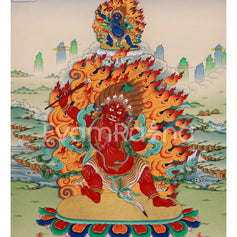
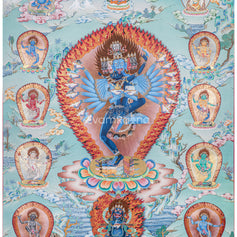
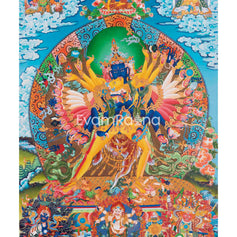
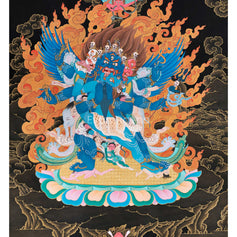
The Six-Armed Mahakala is traditionally depicted with a powerful blue-black body, three eyes, a crown of five skulls, flaming hair, and a wrathful expression. Although his appearance may seem fierce, his form represents compassionate power that destroys obstacles to spiritual awakening. Unlike ordinary anger, Mahakala’s wrath symbolizes the force of wisdom that eliminates ignorance, attachment, pride, jealousy, and other mental afflictions. His entire form represents the transformation of negative emotions into enlightened qualities.
The Dark Blue and Black Body: The Nature of Dharmakaya Wisdom
One of the most recognizable features of Six-Armed Mahakala is his dark blue or black complexion. The color black represents the immutable nature of Dharmakaya, the ultimate reality beyond dualistic concepts. Just as darkness absorbs all colors, Mahakala’s black form symbolizes the wisdom that embraces and transcends all experiences.
His dark appearance represents:
- The vastness of ultimate reality
- Freedom from conceptual limitations
- The destruction of ignorance
- The unchanging nature of enlightened awareness
In Vajrayana Buddhism, dark-colored wrathful deities are not symbols of negativity. Instead, they represent the powerful energy required to overcome obstacles that peaceful forms cannot remove.
The Three Eyes: Mastery Over Past, Present, and Future
Six-Armed Mahakala is depicted with three eyes, including a third eye on his forehead. The three eyes symbolize his complete awareness of:
- The past
- The present
- The future
This represents transcendent wisdom that goes beyond ordinary human perception of time. The third eye especially symbolizes awakened insight, the ability to perceive the true nature of reality beyond appearances and illusions. Through this symbolism, Mahakala represents the wisdom that understands the causes, conditions, and consequences of all phenomena.
The Five Skull Crown: Transformation of the Five Poisons into Wisdom
One of the most important features of Mahakala’s iconography is the crown formed by five human skulls. These skulls represent the transformation of the five poisonous emotions into the wisdom of the Five Buddha Families. The five negative emotions and their transformed wisdom are:
- Ignorance: Wisdom of the Dharmadhatu (reality)
- Attachment or Desire: Discriminating Wisdom
- Anger: Mirror-like Wisdom
- Pride: Wisdom of Equality
- Jealousy: All-Accomplishing Wisdom
The Six Arms of Mahakala: Symbolism of Enlightened Activity
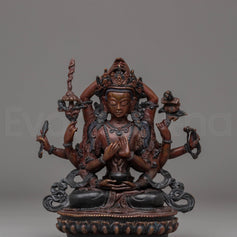
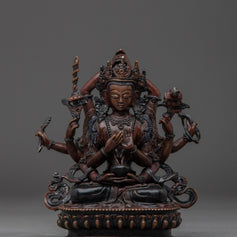
The six arms of Mahakala represent his ability to perform vast compassionate activities throughout the six realms of existence. Each hand carries sacred ritual objects that symbolize different aspects of wisdom and protection. The arrangement of his arms and attributes reflects the complete nature of enlightened action.
The Ritual Attributes Held by Six-Armed Mahakala
The Curved Knife (Kartika): Cutting Through Ego and Attachment
In his right hand, Mahakala holds the curved ritual knife (kartika). The curved knife symbolizes the sharp wisdom that cuts through:
- Ego attachment
- Ignorance
- Delusion
- False perceptions
It represents the ability of enlightened awareness to separate truth from illusion. The blade is often paired with the skull cup, creating a powerful tantric symbol of the union between:
- Wisdom and method
- Emptiness and bliss
- Compassion and realization
The Skull Cup (Kapala): Transformation of Negativity
In one of his left hands, Mahakala holds the kapala, or skull cup. The skull cup symbolizes the transformation of negative experiences into wisdom and spiritual realization. The kapala represents the ability to transform:
- Poison into medicine
- Suffering into wisdom
- Obstacles into opportunities for awakening
In tantric symbolism, the skull cup represents the realization of emptiness and the transformation of ordinary perception.
The Damaru Drum: Awakening Beings from Ignorance
One of Mahakala’s hands holds the damaru, a small ritual drum. The sound of the damaru represents the vibration of enlightened wisdom awakening beings from ignorance. It symbolizes:
- The spread of Dharma teachings
- The awakening of consciousness
- The continuous activity of compassion
The rhythmic sound reminds practitioners to awaken from spiritual confusion and recognize the nature of mind.
The Skull Garland: Mastery Over Negative Forces
Mahakala wears a garland of skulls around his body. The skull garland represents the purification and transformation of negative thoughts and emotions. It also symbolizes his mastery over:
- Inner obstacles
- External harmful forces
- Ego-based perceptions
The skulls remind practitioners of impermanence and the importance of spiritual awareness.
The Trident (Trishula): Destroying the Three Root Poisons
Another important attribute of Six-Armed Mahakala is the trident.
The three points of the trident represent the destruction of the three fundamental poisons:
- Ignorance
- Attachment
- Aversion
Through this symbolism, Mahakala demonstrates the power of enlightened wisdom over all forms of confusion.
The Lasso: Binding Negative Forces and Broken Commitments
Mahakala also holds a lasso, which represents the ability to restrain harmful forces and overcome destructive tendencies.
The lasso symbolizes:
- Controlling the restless mind
- Binding negative influences
- Protecting sacred commitments
Within Vajrayana Buddhism, it is also associated with restraining those who violate spiritual vows and disturb the harmony of Dharma practice.
Conclusion:
The evolution of Mahakala from a fierce aspect of Shiva in Hinduism to a revered Dharma protector in Vajrayana Buddhism illustrates a significant shift in spiritual perception. In Hinduism, Mahakala embodies the power of time and destruction, while in Buddhism, this fierce energy represents enlightened compassion, aimed at removing ignorance and guiding practitioners toward awakening. The Six-Armed Mahakala form in Tibetan Buddhism symbolizes the transformation of negative emotions into wisdom, highlighting that true compassion can appear in fierce forms to combat obstacles to spiritual growth. Today, Mahakala is central in Tibetan Buddhism and serves as a reminder that spiritual protection derives from wisdom and courage, rather than the absence of challenges. His transformation across traditions underscores the universal theme of inner transformation toward enlightenment.


