Buddhism encompasses an infinite number of symbols, lessons, and religious items that embody profound spiritual knowledge and serve as reminders of how to achieve enlightenment. One such significant and potent symbol in Tibetan Buddhism is the Vase of Immortal Nectar, orTsegum Vase. This sacred vase is central to Buddhist rituals and iconography, symbolizing the permanence of enlightenment, the nectar of life, and the transmission of wisdom between generations. On the blog, we will delve into the symbolism and its integration into Tibetan Buddhist art of the Long Life vase.
What is that Vase of Immortal Nectar (Tsegum Vase)?

The Tsegum Vase is a religious vessel which is evident in Buddhist art, Buddhist doctrines and rituals, especially in Tibetan Buddhism. It is called Tsegum, a name formed out of the Tibetan terms "tse", which means life or essence, and "gum", which means container or vessel. Thus, the vase is considered to be the vessel of the life force or a nectar that will support and feed the practitioner in his/her spiritual process.
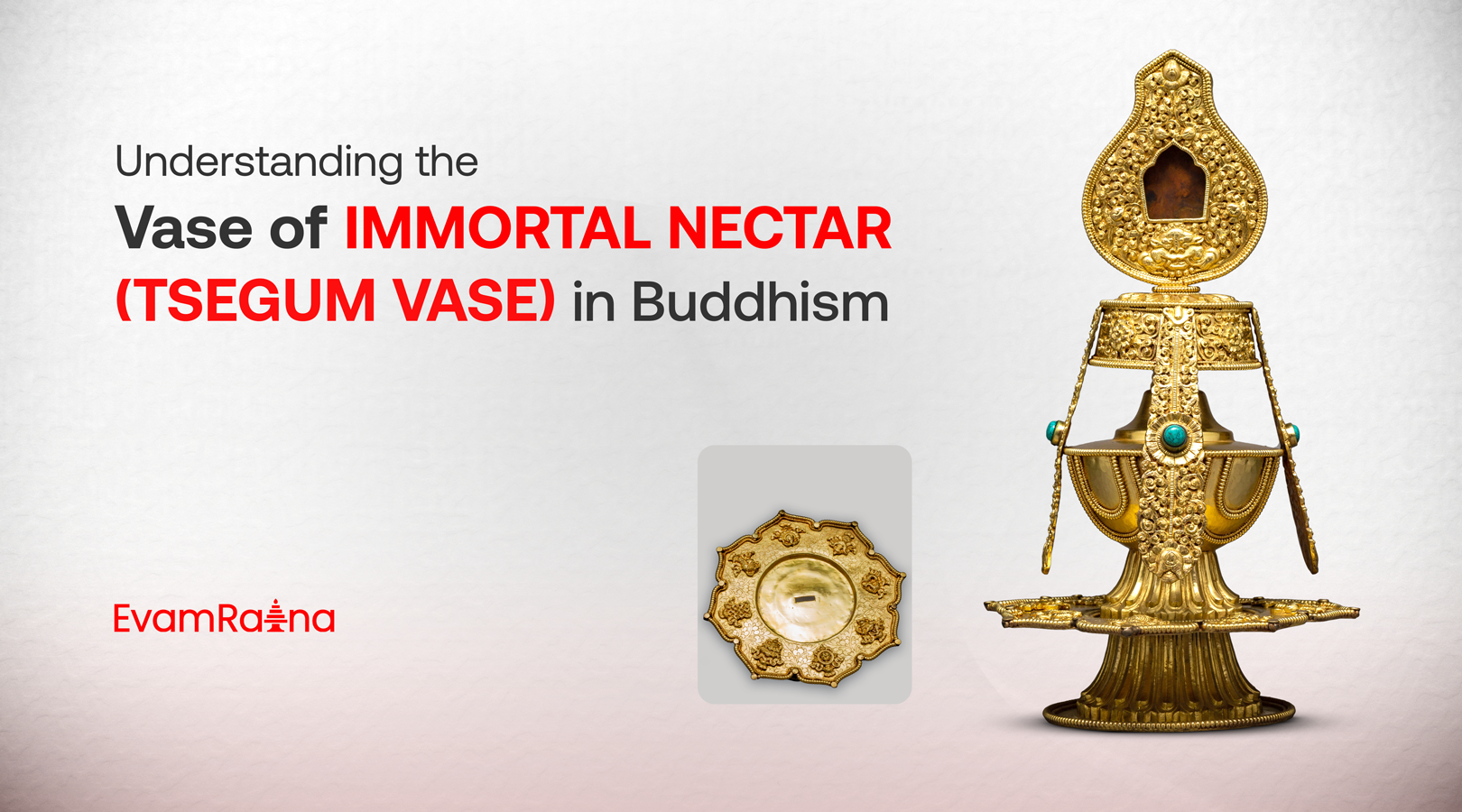
The vase commonly appears as a gold or jeweled object, occasionally decorated with a complex pattern and symbolic imagery. The vase is depicted in some of the images as holding the elixir of immortality, and this is directly linked with the idea of Dharma, the teachings, and the way to be enlightened. The immortal nectar represents the wisdom, mercy, and blessings of the Buddha that keep the practitioners alive during their quest to attain enlightenment and would lead them on the path of suffering and ignorance.
Iconography and Symbolism of the Vase of Immortal Nectar
Tsegum Vase is a highly detailed work of design, and every detail has a symbolism and spiritual significance. The nature of life, wisdom, and the life-giving power of Buddha's teachings are expressed in its shape and decorations. The main characteristics of its iconography, with the symbolism they bear, are as follows:

1. The Lotus Base Design
The vase is frequently placed on a lotus base, which is a symbol of purity and enlightenment. The lotus, as an emergence of the muddy waters, symbolizes the possibility of enlightenment to come out of the flaws of the world. The vase, which lies on this base, marks the existence of spiritual teachings, which assist those practicing it to come out of ignorance and suffering, to wisdom. Its design is rich in auspicious symbols, some of which reflect the fusion of Buddhist and Newari art influences, particularly in the incorporation of Kirimukha symbols in the body as depicted in the above picture.
2. Jewel Strings and Pearls on the Bulbous Body
The vase is usually decorated with jewel strings and pearls, and they are strung in intertwined designs into the bulbous part of the vase.
These strands of heavenly jewels are typically portrayed to extend downwards from the summit of the vase in the four cardinal directions. The jewels symbolize the four cardinal Buddhas- the main Buddhas who encircle Amitabha Buddha, who is at the centre of the Long Life Mandala. This description confirms that the vase is related to both long life and spiritual nourishment, as well as the blessings of the Buddha. The dangling downside pendants and the four leaves are symbolic of these Buddhas and are one of the additions to the spiritual provisions symbolized by the vase.
3. Fresh Leaves and Fruits Crowning the Vase
In most of the variations, the design is topped by a bunch of fresh fruits and leaves. They are commonly symbolized by the Ashoka and Mango leaves, which are the symbols of fertility, prosperity, and growth. The inclusion of these fruits and leaves is a testament to how the vase is a vessel of life-giving nectar, which keeps the practitioner going on his or her way to enlightenment and spiritual development.
4. The Wish-Fulfilling Tree
The vase sometimes also has a wish-fulfilling tree as its top, based on the legend that draws upon the myth of a wish-fulfilling tree that is linked with Amitabha Buddha. This legend tells about the divine tree that always has leaves, flowers, and fruits and is owned by Amitabha. The tree represents the achievement of spiritual desires and spiritual realization of hopes on the way to freedom. This association shows that the vase will help sustain the spiritual path of the practitioner, providing the knowledge and encouragement to enlightenment.
5. Aumlet box at the apex of the throne

A small amulet box, a sacred compartment into which miniature statues or images of the deities Amitayus, White Tara, or Ushnishavijaya can be put, is found at the apex of the Long Life Vase (Tsegum Vase). This box represents blessings and spiritual fortification. Some common deities that are inserted in the Ghau Box, which is above the lifelong vase, are:
- Amitayus is the Buddha of Infinite Life, who is a symbol of longevity and wisdom.
- White Tara is the one who is known to be a giver of protection and health.
- Ushnishavijaya is a god of long life and taking away obstacles.
The vase has a spiritual meaning, as the outer part of the amulet box is decorated with Buddhist floral carvings and artwork of deities. These engravings usually have the lotus patterns, as the symbol of innocence and the blossom of wisdom. The depicted deities provide protection and blessings, as well as spiritual guidance, and the relevance of the vase as the container of divine food and life.
The Significance of Life-long Vase in Buddhist Iconography:
Buddhist iconography The Long Life Vase (Tsegum Vase) is a potent icon in Buddhism, denoting long life, wisdom, and spiritual nourishment. It is linked to major gods and sacred natures that represent these attributes.
1. Amitayus - the Buddha of Infinite Life

The Long Life Vase is closely connected with Amitayus, who is the Buddha of Infinite Life. He is a representation of everlasting life, good health, and eternity. The vase can be regarded as holding the nectar of Amitayus, which is a source of long life and spiritual energy and indicates the timeless character of the Buddha's teachings.
2. Ushnishavijaya - The goddess of Long Life

The goddess of longevity, Ushnishavijaya, is often shown holding the vase, which signifies that she helps to heal, eliminate barriers, and lead a long and healthy life. The fact that she is related to the vase emphasizes the fact that the vase is a vessel of Godly blessings and long life.
3. Vasudhara - The Deity of Fortune

Vasudhara is the goddess of prosperity and wealth, and this goddess is associated with the vase, as well, associated with material and spiritual prosperity. The fact that she is there lends credence to the fact that the nectar in the vase is not just the sustenance of life but also enhances the abundance of wisdom and blessings.
4. Khatvanga Staff

The long-life vase is often incorporated in the Khatvanga Trident just above the vajra to highlight its significance. The Khatvanga (placed within tantric rituals) focuses on the importance of the role of the vase in uniting adherents with divine protection and spiritual power.
How the Long Life Vase is used in Rituals

This Content is AI-generated
Even though there are certain liturgies of the rituals that may differ depending on the lineage and the tradition, the following are the common authentic usages that have been backed by scholarly and ritual sources:
1. Filled with Sacred Substances
In religious practice, the Long Life Vase occasionally contains symbolically charged nectar (amrita), usually clean water with an auspicious substance added, such as saffron or a blessed material, to symbolize the nectar of immortality.
2. Installation on the Altar
The vase is placed on a shrine or altar with pictures or thangkas of longevity gods (e.g., Amitayus, White Tara). It is not only a ritual object but activities used in long-life pujas (tshe gtor) and empowerments intended to add years of life and well-being.
3. Visualization Rituals
The entry of the essence of the deity in the vase is a common visualization among the practitioners and ritual specialists (lamas/teachers) to represent the combination of divine blessing and the life force of the practitioner. Via chanting of mantras and imagery, the vase is transformed into a vessel of the energy of blessing and long life.
4. Use During Long Life Ceremonies
The vase is included in the ritual paraphernalia with which the lama calls the longevity deity into the room, places blessed materials on it, and sprinkles the water or touches the vase with those that are being blessed with the vase to give them protection and long life (and long life during formal long-life pujas). Although the elaborate liturgical procedures are recorded in tantric ritual texts, the central role of the vase is always mentioned in scholarly and museum accounts of ritual objects.
5. Iconographic and Mandalic Role
Some traditions make the vase part of the visualization of the Mandala - the vase may be the centre of a celestial Mandala, and the vase is thought to act as a sacred vessel, the whole of the ritual being focused on the grace of the longevity god. This mandalic role is emphasized by artifact studies, which observe that longevity vases lack a spout and that they are the focal points in longevity and prosperity ceremonies.
If you are planning to incorporate long life vase into your altar or in any sacred space, then please explore our evamratna Tsegum Vase Collection
Conclusion: The Symbol of Spiritual Nourishment
To sum up, the Vase of Immortal Nectar, or the Tsegum Vase, is a potent and significant icon in Tibetan Buddhism. It represents the spirit of life, spiritual sustenance, and the knowledge that has been handed over through generations. Its multi-layered iconography of the lotus base, jewel strings, fresh leaves, and amulet box is all aimed at portraying the purity, life span, and godlike blessings that direct the followers in their ways to enlightenment. The association of the vase with gods such as Amitayus, Ushnishavijaya, and Vasudhara also helps to stress the fact that it facilitated the process of spiritual development, prosperity, and health.