Introducing Serkyem: The Call of the Dharma Protectors
As the first light of dawn touches the stone walls of a monastery, a serene calm fills the air. The scent of juniper incense mixes with the soft murmur of monks chanting prayers. In the center of the sacred space rests a golden vessel, its polished surface glinting in the early morning sun. This vessel, known as Serkyem, is more than just a ceremonial object—it is a gateway to profound spiritual protection and wisdom.
But what is Serkyem? This sacred offering, often called "The Golden Drink," derives its name from "ser", meaning golden, and "kym", meaning beverage or drink, which carries immense significance in Tibetan Buddhism. It is a ritual offering designed to invoke the blessings of the Dharmapalas, bodhisattvas, and yidams to clear obstacles that may hinder our spiritual progress. As we delve deeper into the story behind this golden nectar, we uncover the rich layers of its purpose, meaning, and the power it holds within Tibetan Buddhist practice.
The Anatomy of the Serkyem Set:

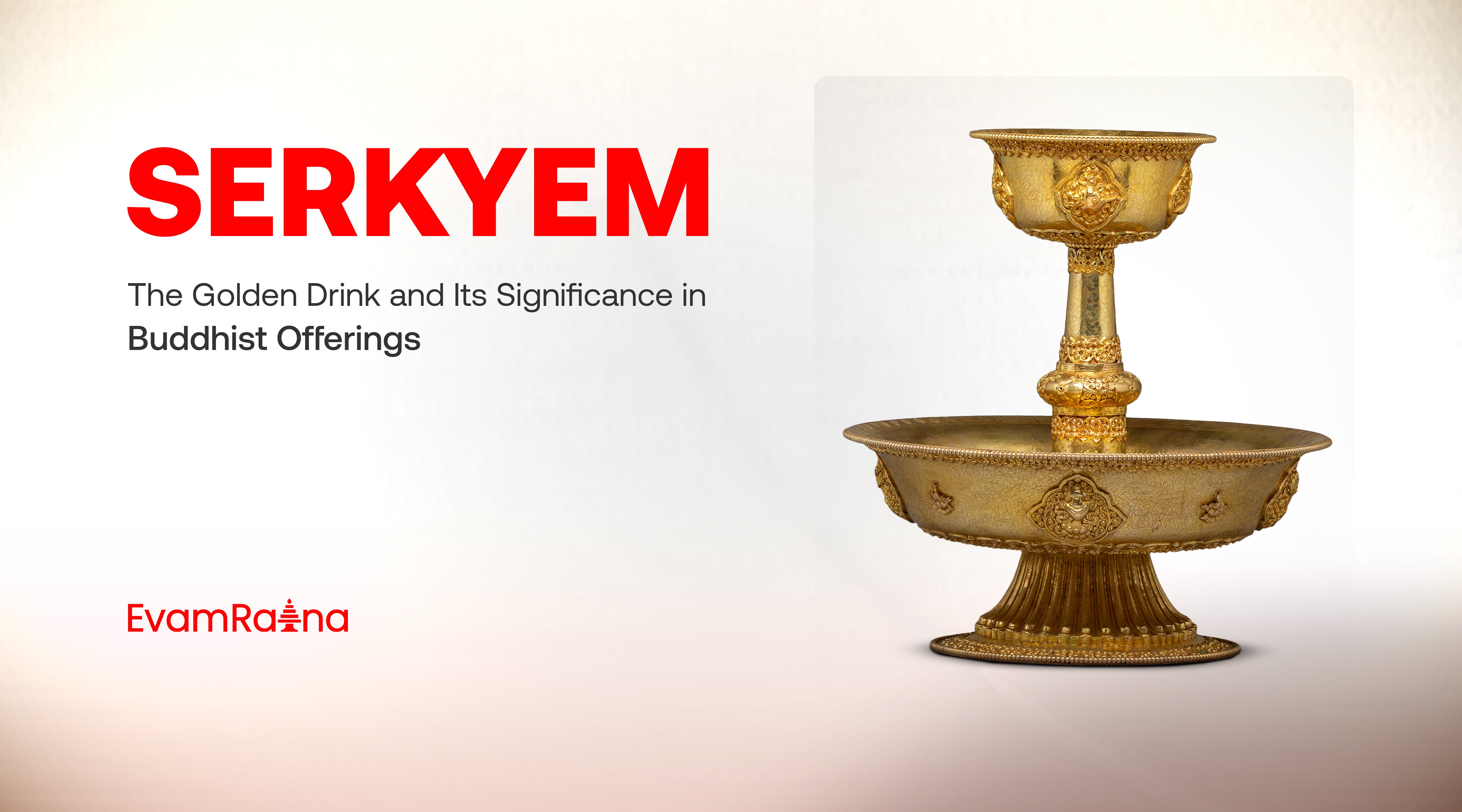
To understand the importance of the offering of Serkyem, one has to appreciate the vessel itself. The Serkyem consists of two components: the chalice (the cup) and the basin (the lower dish). These components play both practical and symbolic functions in the offering ritual.

The Chalice
The Chalice: This is the traditional vessel in which the Golden Drink is held. It is the place where tea is offered, and when it fills to the brim, it starts to overflow and spoil in the lower vessel. It is the combination of wisdom and compassion that are crucial attributes that help a practitioner to go through his/her journey to enlightenment.

The Basin
The Basin: The basin is placed under the chalice, and it collects the overflow from the chalice as a symbol of spreading blessings upon all beings, not only the practitioner.
The substance of which the Serkyem is composed is also highly meaningful. Made of copper, brass, or gold-plated, these materials have symbolic meaning. Gold symbolizes purity and abundance, copper is associated with warmth of devotion and compassion, and brass is associated with strength and resilience.
If you are interested in purchasing high-quality, handcrafted Serkyem Set Vessels, we offer a range of artful, spiritual pieces. Explore our collection here
The "Golden Drink": What’s Inside?

By: Buddha Weekly
The Serkyem offering is known for its sacred contents, commonly called the Golden Drink. But what exactly is a contained vessel?
The offering uses traditional ingredients in the form of tea, wine, and grains, which serve as the base liquids of the offering. Traditionally, tea has been the primary offering of content. In their own, these ingredients might not sound impressive, but in Tibetan Buddhist rituals, they undergo a significant transformation.
Through visualization and the chanting of mantras, these ordinary liquids are transformed into what is called the Wisdom Nectar. The visualization itself imparts the liquid with the attributes of wisdom, compassion, and protection. This transformation represents the practitioner's commitment of their purest intentions to the Dharma Protectors, so that they can bless them and eliminate any hindrances on their spiritual journey.
Why did Tibetan People Offer Tea to Dharmapalas and Bodhisattvas?
In ancient Tibet, tea was a rare and precious treasure, often imported from China, and considered almost as valuable as gold. Tibetan people had little to offer the Dharmapalas and Bodhisattvas except this cherished tea. Yet, they offered it with hearts full of compassion, free from attachment. This simple act, fueled by bodhicitta, was a pure expression of selfless love, given without expectation of return.
Why We Offer Serkyem: The Role of the Dharmapalas

Offering Serkyem is not merely a ritual, a request for the intervention of the Dharmapalas- the mighty deities and guardians of the Dharma. These deities served as protectors of the spiritual way, such as Mahakala and Palden Lhamo, who help keep practitioners safe and resist life's effects. In fact, serkyem is also offered to the Tri-Ratna (the Three Jewels of Buddhism), bodhisattvas, and yidams, depending on the practitioner's intention and purpose.
Serkyem is offered to eliminate any physical, emotional, or spiritual separation that can hinder one's practice. The Serkyem invokes these guardians so they clear the practitioners' path to enlightenment, free from distractions.
How to offer Tea in a Serkyem Set?

Traditional Serkyem Offering Set
In our modern, fast-paced world, the Serkyem ritual can be performed at home not only to respect tradition but also to cultivate a calm and focused mind. The following is a simple instructional guide to assist you in integrating Serkyem offerings into your practice:
Preparation of Your Altar:
Place your Serkyem vessel in a clean, respectful place. It is typically placed close to other offerings, but over and above the floor. It should be surrounded with flowers, incense, and a little statue/image of a Dharma Protector, Bodhisattvas, or Yidam who resonates with you.
Preparation of the Offering:
Begin by preparing hot tea without worrying about the quantity; make as much as you can afford under your circumstances. Put it in a pot (a teapot or any other clean vessel you wish to use to offer). If you do not have a pot, consider exploring our Evamratna tea pot collection.
The Serkyem offering ritual beings by pouring a small quantity of tea into the vessel, but it must not be emptied (unless the vessel is already full). Put a little grain of rice in the tea. The Serkyem is consecrated three times with the mantra Om Ah Hum and purified with incense. Then the Serkyem liturgy is recited, and every stanza is an offering to some divine being, which has a particular objective in our spiritual lives.
During the offering, the tea is poured into the chalice (Upper vessel) continuously while reciting the mantra. This is a steady, gradual pouring process that overflows into the lower vessel, signifying abundance.
Even if you cannot pour much tea, it is necessary to keep the flow and repeat the mantra while pouring. Alternatively, the visualization and recitation can be completed once the offering is complete if continuous pouring is not possible. And as you pour, imagine the Serkyem as divine nectar spread out into a vast ocean. This ocean not only represents the tea being offered but also encompasses all the desirable things in the world that excite and please the five senses.
After the visualization of the ocean, it is offered to the Protector and other special beings that were cited in the liturgy. In this way, the practitioner envisions their requests or wishes coming to fruition with the help of the Protector.
Maintaining Your Sacred Space:
Regularly clean and care for your Serkyem vessel as a sign of respect. The act of caring for the vessel itself is considered an extension of your dedication to the Dharma.
Choosing the Right Serkyem for your Practice

There are many important factors to consider when selecting the ideal Serkyem for your practice. Its design, material, and craftsmanship all play vital roles in enhancing your spiritual journey.
Evamratna offers a wide range of meticulously handcrafted Serkyem sets tailored to different preferences. Whether you prefer an intricate etched design or a minimalist style, and whether you need a small set for your altar or a larger one, our extensive collection has options to meet your needs.
Each piece in our collection is handcrafted by talented Newari artisans from Nepal, renowned worldwide for their exceptional craftsmanship. We also offer personalized guidance to help you find the perfect match for your preferences.
Conclusion: The Ripple Effect of Generosity
Incorporating the Serkyem offering can make a significant difference in your life. What begins as a mere act of offering turns out to be an act of generosity, a mighty wave that transforms mind and life. The act of offering, whether through the offering of tea, wine, or grains, promotes the development of compassion, mindfulness, and protection.
As you engage in the practice, remember that whatever you offer in your daily life, even the smallest, can have a lasting impact on your transformative journey. By this process of offering and manifesting to the Dharma Protectors for assistance, you are not only clearing the obstacles for yourself but also contributing to the welfare of all beings.