Introduction to the Blooming Lotus Chakrasamvara Mandala Sculpture:
Art has always been a way to merge beauty with meaning. As artisans craft their pieces, they aim not only to capture the eye but also to evoke deep thought and spiritual reflection. Among these creations, the Chakrasamvara Lotus Mandala stands out as a unique work of art that symbolizes both spiritual significance and artistic mastery. This Mandala serves as a bridge between ancient wisdom and modern craftsmanship, connecting timeless teachings to contemporary spiritual practices.
Imagine, if you will, a lotus. At first glance, it appears simple, its petals folding inward in perfect symmetry. But as you observe closely, you begin to see that beneath its calm, delicate exterior lies an extraordinary meaning. This is the essence of the Chakrasamvara Lotus Mandala Sculpture, which is a symbol of profound transformation, spiritual awakening, and enlightenment. What starts as a captivating design reveals itself as a visual representation of the path to self-realization, drawing you into a deeper journey of personal and spiritual growth.
Let’s explore how this Mandala Sculpture, with its intricate symbolism, transcends the ordinary to guide those who connect with it toward enlightenment.
Introduction to Chakrasamvara's Lotus Blooming Mandala:

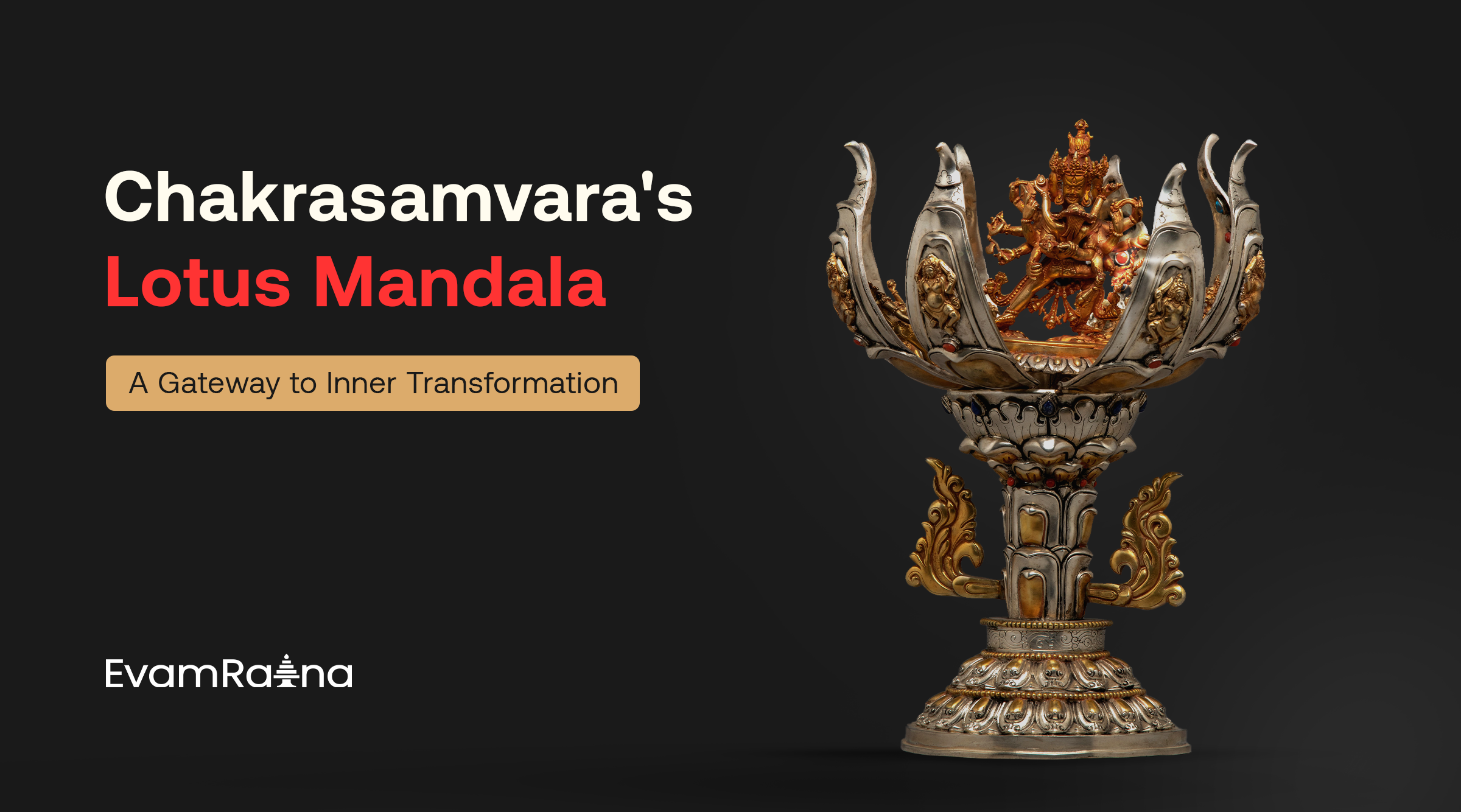
The Chakrasamvara Lotus Blooming Mandala is a magnificent combination of symbolism, spirituality, and artistic workmanship. A Mandala reveals itself, at first sight, as a closed lotus bud- tender and modest, and enclosed in it, the seeds of great transformation. The architectural version of the Chakrasamvara Mandala offers a visual experience that mirrors the spiritual experience itself: one of open possibilities and realization.
When the lotus blossoms, the central figure is the sacred Chakrasamvara and Vajrayogini, where eight dakinis surround him on each petal. Each character in this Mandala embodies a distinct aspect of wisdom, energy, and divine power, guiding the practitioner toward spiritual realization.
The blooming of the lotus has been used as a metaphor for spiritual development, from the seed of potential to the full realization of enlightenment. This contemporary approach to an ancient icon connects the divine to the contemporary, offering a powerful visual image of the path to enlightenment.
Source: Himalayanart.com
Tracing the Origins of Chakrasamvara's Lotus Mandala Sculptures:

Image from Wikipedia
Chakrasamvara Mandala lotus sculpture has a deep connection to the art of Indian, Nepalese, and Tibetan Buddhism. Chakrasamvara originated in India in the 8th century. By the 11th century, it had spread further east to Tibet, where it was among the most eminent figures in Vajrayana Buddhism. Indian and Nepalese iconography was adopted by Tibetan artisans, who created elaborate mandalas and deities' sculptures, such as the one in this lotus pattern.
In the 17th century, one of the most famous religious leaders and artists of Mongolia, Zanabazar, amalgamated them all, forming his atelier and producing unique sculptures in Buddhist style, the intertwining of Tibetan and Mongolian styles. His innovative approach was incorporated into Zanabazar's works, which not only included Chakrasamvara Mandala lotus sculptures but also other deity lotus Mandala sculptures and figures such as Hevajra. The wide, leafy petals with scalloped edges at the base of the lotus globe and the tiny beading along the foot of the circular base are characteristic features of Mongolian works from Zanabazar’s time.
Zanabazar was also a gifted engineer, and perhaps he himself contributed to the design of these precision-manufactured pieces, which reflect the artistic standards of 17th-century Khalkha Mongolia. These statues are a pinnacle of Mongolian Buddhist art that incorporates a profound religious allegory, as well as outstanding craftsmanship, and present Zanabazar in his rich skill to combine Tibetan and Mongolian aesthetics.
Source: rossirossi
The Architecture & Symbolism of the Lotus: From Petals to Center

The Chakrasamvara Lotus Blooming Mandala is an outstanding example of spiritual architecture that integrates spiritual symbolism with the art of design. The Mandala itself represents the union of Chakrasamvara and Vajravarahi, who stand on a lotus base made of sun discs, symbolizing the unification of wisdom and compassion.
These two figures, which lie at the center of the Mandala, are not just artistic images, but they are the spirit of spiritual transformation. Chakrasamvara is the embodiment of wisdom, mercy, and the transformative energy of spiritual unity. Being fierce and protective, vajravarahi represents the union of feminine wisdom beyond duality.

Both deities are stepping on Bhairava and Kalaratri
In this Krishnacharya tradition form, Chakrasamvara and Vajrayogini are placed atop Bhairava and Kalaratri, both of whom symbolize overcoming ignorance and the destruction of internal and external barriers on the spiritual path. This metaphor underscores the need to overcome ignorance, fear, and any impediment to enlightenment. Their position reminds practitioners of the transformative voice of wisdom and compassion, which, when combined, guides their journey.

Chakrasamvara with Vajrayogini and the Eight Dakinis on the Lotus Mandala
The eight dakinis are surrounding them, and they are located on the inner petals of the Mandala. These dakinis are forms of spiritual energy and serve as guides in the process of spiritual awakening. The dakinis, the personifications of the divine feminine power, assist in clearing the way to wisdom and provide guidance and protection.
The entire structure is based on lotus petals, which are considered holy and symbolize purity, beauty, and spiritual awakening. The lotus is a pure motif in Buddhist art, symbolizing the emergence of wisdom and enlightenment from the murky waters of ignorance.
The Mandala is typically made of gold or silver-plated metal, underscoring the object's sacred character. These precious materials signify purity, refinement, and perfection of spiritual energy, which gives the Mandala a sense of beauty and significance.
Ideally, this architectural construction reflects the process of change into light, ignorance to knowledge, and is aided by heavenly union and divine energies of the dakinis.
Variations of Chakrasamvara's Lotus Mandala Sculpture

In other versions of the Chakrasamvara Lotus Blooming Mandala, the lotus sculpture is enriched with abundant iconography, which enhances the symbolism of the lotus. A lotus stem branch is also frequently adorned with sacred images, including Vairocana, White Tara, and Amitayus, symbolizing wisdom, compassion, and long life. The presence of these religious figures helps to reinforce the Mandala's message of spiritual growth and prosperity.
Floral carvings are also very common on the branch, and they underline the concept of growth and spiritual flourishing. Two Naga Kanyas (mythical serpent figures) are placed at the feet of the lotus with the aim of protection and offering wisdom to the spiritual practitioner so as to keep him or her safe. On the very top of the lotus, a parasol of divine protection and a kalasha (symbolizing abundance and purity) are placed, further increasing the protective power of the Mandala.
These transformations contribute to the essence of the message of spiritual awakening and provide additional layers of divine symbolism and protective features to assist the practitioner in entering the realm of deeper knowledge and inner transformation.
A Gateway to Inner Transformation

This is an AI Generated Image
The Chakrasamvara Lotus Mandala is not only a visual artwork but also a strong visualization and meditation tool. Being a spiritual image, the Mandala gives the practitioners something to engage with in detail and depth regarding its design and symbolism. The successive lotis--that is, the successive veil of ignorance--being at first a closed bud, and then opening out into the full flower of enlightenment, is the spiritual journey of all practitioners.
Everything in the Mandala, starting with Chakrasamvara up to the eight dakinis, is a symbol of inner qualities. The practitioner can initiate the process of spiritual awakening by simply imagining the lotus flower growing in their mind, reaching into their inner wisdom and compassion. The Mandala is designed in such a way that it makes the practitioner change his or her darkness, which is ignorance, into the light of understanding.
Why This Unique Piece Belongs in Your Sacred Space?
The Chakrasamvara Lotus Mandala is a unique and exceptional artistic masterpiece, featuring a folding lotus design. This particular characteristic symbolizes the unfolding of wisdom and spiritual development and constitutes a significant contribution to any sanctuary. When the lotus is made to bloom, it becomes a visual sign of what happens to a person during inner transformation, imparting a dynamic, living energy to the space it occupies.
In addition to its symbolic value, the Mandala sculpture is a powerful ritual instrument and a representation of Newar (or Himalayan) art. It was created in a detailed and cultural way, and it represents the rich culture of the Himalayan region, where cultures and crafts are combined in the most perfect manner. Having this Mandala Sculpture in your sacred space will invite spiritual energy and commemorate the ancient artistry of the Himalayas, thereby increasing the sanctity and transformative quality of your space.
Conclusion:
The Chakrasamvara's lotus Mandala sculpture is not merely a fusion of cultural and modern art, but also a means of personal transformation and spiritual illumination. It is a crucial means of meditation and an instrument that combines artistic beauty and spirituality, which is why it is deeply admired by people and practitioners who value both art and spirituality. Its deep symbolism, rooted in ancient Buddhist traditions and rendered in a modern design, serves as a reminder of the potential for growth and enlightenment in all of us.