Buddha of Infinite Light in Pure Land Buddhism: A Guide to His Role and Practice
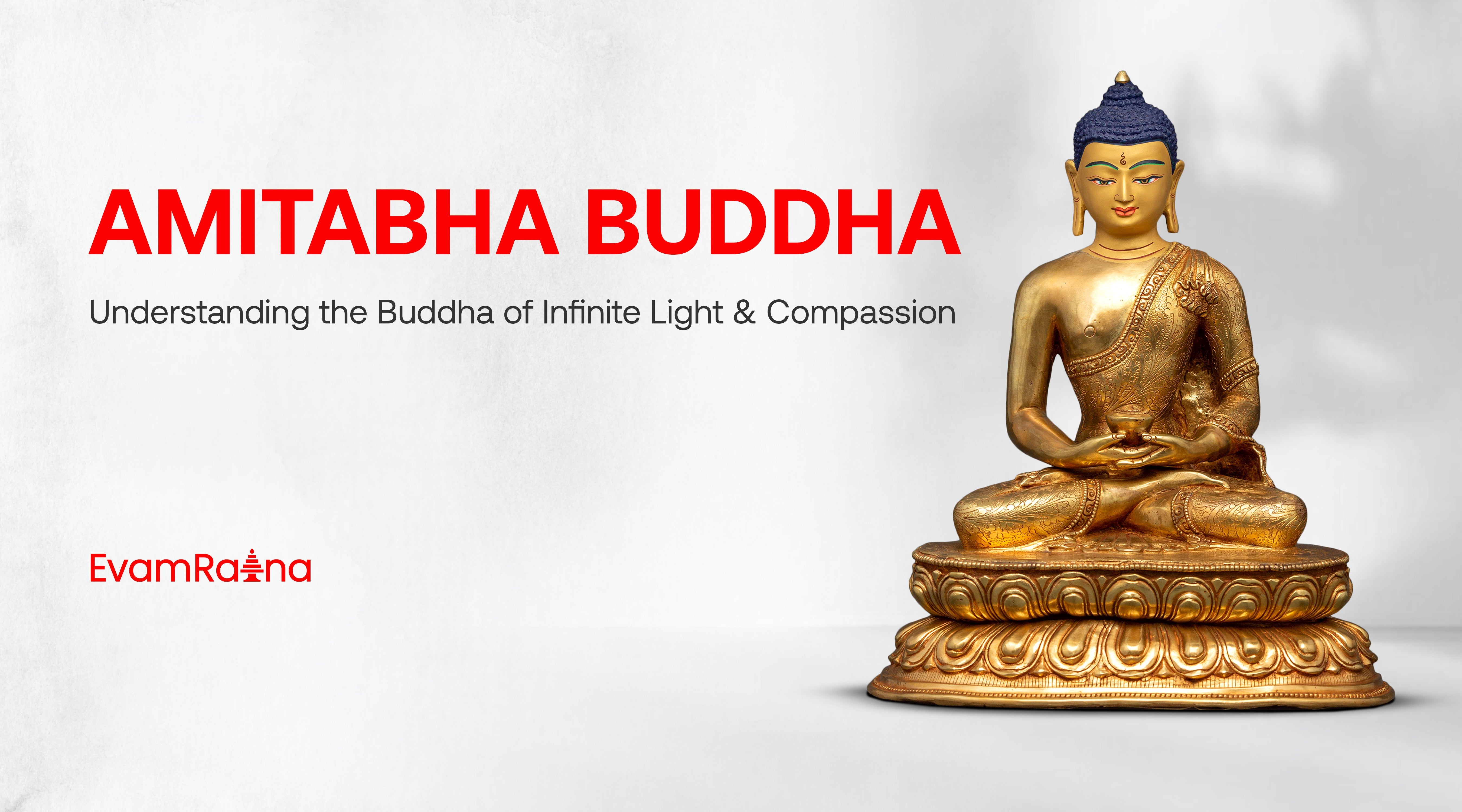
Amitabha Buddha, also known as the Buddha of Infinite Light, is one of the most important figures in Mahayana Buddhism. He is a deep source of infinite light and compassion. His name, which originates from the Sanskrit words for "infinite" and "light," represents the illuminating wisdom that eliminates ignorance. He is the main figure in Pure Land Buddhism. He created the Western Pure Land of Sukhavati, a place of perfect happiness, through his famous 48 vows. Anyone who calls on him with sincere faith can be reborn there and reach enlightenment without suffering. This blog is a complete guide to Amitabha's role, his sacred iconography, and the simple but powerful practices that make his path to spiritual awakening accessible to everyone.
Amitabha Buddha: Meaning and Essence

The name Amitabha originates from the Sanskrit words "Amita" (infinite) and "Abha" (light), which means "Buddha of Limitless Light." In Mahayana Buddhism, he represents illuminating and dispelling the darkness of ignorance. He is a figure of deep compassion, and his teachings are centered around the promise of liberation for all sentient beings. He is particularly important in Pure Land Buddhism, where he is the central figure guiding followers to the Western Pure Land, also known as Sukhavati, a place free from suffering and full of enlightenment.
The Origin Story: From Bodhisattva Dharmakara to Enlightenment
According to the Mahayana sutras, Amitabha’s journey began as Dharmakara, a king who, deeply moved by the suffering in the world, renounced his throne and became a monk. After extensive spiritual practice, he made 48 vows, pledging that any being who sincerely called upon his name would be welcomed into his Pure Land. His most significant vow, the 18th vow, or Primal Vow, promises that anyone who calls upon his name, even ten times with sincere devotion, will be reborn in Sukhavati, a land free from suffering.
The Pure Land of Sukhavati: A Paradise for Spiritual Growth
Sukhavati, the Western Pure Land of Amitabha Buddha, is described as a paradise where suffering does not exist. The ground is said to be made of soft gold, and the trees are adorned with jewels, ringing with the teachings of Dharma. The inhabitants of this land are born from lotus flowers and are free from the distractions and pain of the human world. In Sukhavati, beings are provided with all the conditions necessary for spiritual development, including the direct guidance of Amitabha Buddha. This environment ensures that those who are reborn there will eventually achieve Buddhahood.
Sukhavati is the perfect spiritual practice environment where no suffering exists, and there are no distractions. To those who believe in Amitabha, the Pure Land is a beacon of hope, where they can develop their spiritual potential to the utmost. It is a land that is purposely designed to lead beings into enlightenment with ease, and it provides a special path to those who cannot use and practice rigorous methods of meditation or have past karma problems.
Iconography of Amitabha Buddha

- Color: Amitabha is depicted with a ruby red body, symbolizing his nature as the Buddha of Infinite Light. The red or golden hue reflects his qualities of illumination and boundless compassion.
- Seated Posture: Amitabha is shown seated in the lotus position (Padmasana), representing his deep meditative state, inner peace, and stability. The lotus position shows that he is ready to teach and that he is connected to spiritual wisdom.
- Mudra: His hands are in the Dhyana mudra (meditative gesture), resting on his lap. In both hands, he holds a monk's bowl, signifying his role as a spiritual guide who provides sustenance (both physical and spiritual) to beings on their path to enlightenment.
- Marks of Enlightenment: He often displays the 32 principal and 80 secondary marks of an enlightened being, including the ushnisha (a crown-like bump on the head) and elongated earlobes, which symbolize supreme wisdom and renunciation.
- Eyes: Amitabha’s eyes are half-closed, indicating a deep meditative concentration and an internal connection to wisdom and enlightenment.
- Hair and Crown: His hair is styled in an elaborate topknot, a traditional symbol of enlightenment. Amitabha is often shown with a gem-crowned top on his head, representing his connection to the divine and profound wisdom.
- Robe: Amitabha wears the traditional monk’s robe (Dharma robe), which signifies his role as a teacher of the Dharma. In his sambhogakaya form, he may also wear jewels and celestial attire, signifying his heavenly and transcendent nature.
- Lotus Throne: He is seated on a lotus throne, a symbol of purity, enlightenment, and the blossoming of wisdom. The lotus also represents his untainted nature, rising above the mud of worldly attachments.
- Moon Disc: Amitabha is often depicted seated on a moon disc, representing the illumination of wisdom and his role in dispelling ignorance, symbolizing purity and enlightenment.
- Monk's Bowl: The gold-patterned bowl he holds signifies his role in offering the Dharma, providing nourishment for the soul, and guiding practitioners on their spiritual journey.
- Aura and Light: Amitabha is depicted radiating infinite light, symbolizing boundless compassion and wisdom that he extends to all beings, guiding them toward the path of enlightenment.
The Role of Amitabha Buddha in Daily Practice

In Pure Land Buddhism, the daily practice of devotion to Amitabha Buddha revolves around three key practices: chanting his name, reciting his mantra, and visualization.
Chanting Amitabha's Name: One of the simplest and most accessible practices in Pure Land Buddhism is the chanting of Amitabha Buddha’s name. This practice, known as Nembutsu (in Japan) or Nianfo (in China), involves repeating the phrase “Namo Amitabha Buddha” with deep sincerity. The repetition of this phrase, whether spoken aloud or silently, connects the practitioner with the infinite light and compassion of Amitabha.
Reciting Mantras: In Tibetan traditions, the mantra Om Ami Dewa Hrih is used to invoke the blessings of Amitabha and purify negative karma. This mantra is believed to resonate with the Buddha’s energy and help purify the mind and spirit of the practitioner.
Visualization: Practitioners also engage in visualization meditation, where they visualize Amitabha Buddha radiating red light from the western direction. This visualization helps the practitioner to relate to the compassionate energy of the Buddha, and the state of mind is ready to be born into the Pure Land. The image can be seen as a very strong reminder of the existence of Amitabha and the potential for transformation.
The 48 Vows: A Path to Rebirth in the Pure Land
The practice of the Pure Land is based on 48 vows of Amitabha. The vows, especially the 18th one, guarantee that all those who address the name of Amitabha with a pure heart will enter the Pure Land. The main lesson behind such vows is the awareness that enlightenment is not reserved for the most accomplished practitioners, but everyone is included as long as they have the right spiritual background and meditation ability.
The compassion of Amitabha is echoed in the vows, and it surpasses human restrictions and gives hope to those who want to be liberated. The practitioners do not have to be enlightened or highly meditative to gain entry into this path; faith, sincerity, and devotion are the keys to gaining the blessings of Amitabha.
Amitabha Buddha: One of the Five Dhyani Buddhas of Wisdom
In Vajrayana Buddhism, Amitabha is one of the Five Dhyani Buddhas, also known as the Five Wisdom Buddhas, who represent distinct aspects of the enlightened mind. As a Dhyani Buddha, he occupies a specific place in the Buddhist cosmos and is defined by the following characteristics:
-
Direction and Color: Amitabha is associated with the West and is represented by the color red. This ruby hue symbolizes the setting sun and the transformative power of compassion.
- Element: His associated element is fire, which is said to purify karmic defilements and burn away desire and ignorance. This distinguishes him from other Dhyani Buddhas like Vairochana (associated with space) and Akshobhya (associated with water).
- Buddha Family: He serves as the head of the Padma (Lotus) Family, which governs the qualities of love, compassion, and devotion. Other prominent figures in this family include the bodhisattva Avalokiteshvara and Guru Padmasambhava.
- Wisdom and Transmutation: Amitabha embodies discerning wisdom (discriminating awareness). His spiritual role is to transform the delusion of attachment and desire into the wisdom of discernment and unconditional love.
- Iconography: He is typically depicted in the Dhyana Mudra (meditation gesture) with his hands resting in his lap, signifying deep concentration and the attainment of spiritual balance.
While Dhyani Buddhas are often viewed as celestial principles rather than historical figures, Amitabha remains a central focus of devotion for those seeking rebirth in his Western Pure Land of Sukhavati.
Why Amitabha's Teachings Are Accessible to All

One of the most remarkable aspects of Pure Land Buddhism is its inclusivity. Unlike other Buddhist traditions that may require complex rituals or advanced meditation techniques, the path to Amitabha’s Pure Land is open to all. Whether a person is a lay practitioner or a monk, whether they are young or old, rich or poor, anyone who sincerely recites Amitabha’s name can be reborn in the Pure Land.
The teachings of Amitabha are especially appealing because of this accessibility. It is a hope of a comeback in the land of tranquility and spiritual overseeing in a world that is full of difficulties, sufferings, and unpredictability. The ease of the practice, which involves repeating the name of Amitabha, serves as a reminder to the practitioners that liberation is not too far away, no matter their conditions.
Conclusion: Amitabha Buddha's Boundless Compassion and Guidance
Amitabha Buddha stands as a symbol of infinite light and compassion, offering a path to enlightenment that is open to all beings. His vows and the creation of the Pure Land offer hope to those struggling with the complexities of life and spiritual practice. Practitioners connect with Amitabha's endless compassion by calling on his name, saying mantras, and visualizing. This brings them closer to freedom from the cycle of birth and rebirth.
In a world that often seems chaotic and uncertain, Amitabha’s teachings offer a simple yet profound way forward. His infinite light guides all sentient beings toward spiritual awakening, showing that no one is beyond the reach of liberation. Pure Land Buddhism gives its followers a clear and easy way to reach enlightenment, which is full of the light of Amitabha Buddha.