Introduction: The Meaning Behind the 37 Heaps of Mandala Offering
The giving of the offering is an act that signifies the renunciation of attachment and cessation of suffering in Buddhism. The material world tends to seduce us with its fleeting pleasures, and we fall into the trap of material possessions, believing that they will bring us joy. This attachment is the cause of suffering, as nothing that belongs to the material world is permanent. The Mandala offering of 37 heaps serves to overcome this attachment by symbolizing the renunciation of worldly possessions and desires. We do not possess them; we offer them as an act of self-denial and spiritual sacrifice, recognizing that everything is impermanent and that true happiness is internal.
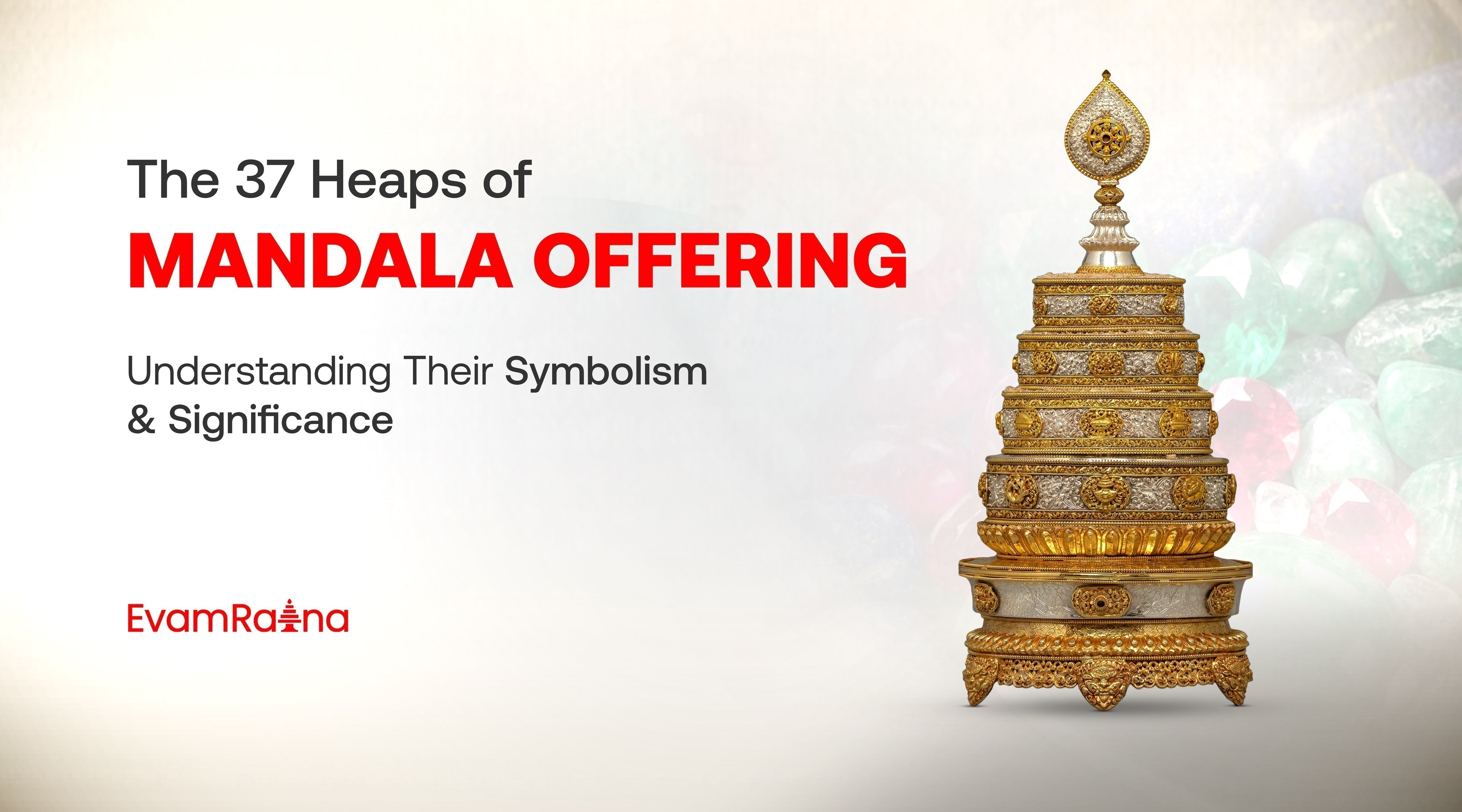
The Mandala offering, with its 37 heaps of grains or jewels, is a religious manifestation of devotion that extends across the entire Buddhist universe. Every pile symbolizes something of the universe: physical, spiritual, or celestial. The order of these piles is not merely an arbitrary arrangement but an intentional and symbolic sacrifice that distinguishes the way between ignorance and wisdom, attachment and freedom. In offering, we align with the attributes required for spiritual development and to move closer to the realization of enlightenment.
Explore our Mandala Offering Set Collection
Let us now delve into the significance and sequence of offering the 37 heaps in a Mandala offering set.
Sequence for Offering the 37 Heaps of Mandala

This offering is performed in a very structured manner, where you initialize this offering from the center (Mount Meru) to the top. Each ring on the Mandala represents a layer of the universe and the elements that inhabit it, progressing from the physical to the celestial. So here is the proper order of offering heaps on a Mandala set:
But How to Place all the Heaps in a Correct Manner?
To assist in this process, here's a helpful diagram and a table that will guide you in placing the heaps on the four rings accurately during the offering ceremony:

The First Ring
1 center mount meru
2 - 5 - the four continents
6 - 13 are the subcontinents
14 - 17 are the four wealth of these continents (East mountain of jewels, south wish-granting tree, west wish-granting cow, north abundant harvest)
The Second Ring
18 - 25 The Seven Possessions of Chakravartin and the Great Treasure Vase
The Third Ring
26 - 33 The Eight Offering Goddess
The Fourth Ring
34 - 37 are Sun, Moon, Precious Parasol, and the Victory Banner
|
Ring |
Elements |
Symbolic Purpose |
|
First Ring |
Mount Meru, 4 Continents, 8 Sub-continents, 4 Wealths of the continents |
The physical and material foundation of the universe. |
|
Second Ring |
7 Royal Possessions & the Treasure Vase |
The peak of worldly power and inexhaustible resources. |
|
Third Ring |
The 8 Offering Goddesses |
The sensory delights and aesthetic beauty of the world. |
|
Fourth Ring |
Sun, Moon, Parasol, & Victory Banner |
The celestial order and the triumph of the Dharma. |
What do the 37 Heaps in the Mandala Offering Symbolize?
The First Ring of the Mandala Set:

1. Mount Meru (Center Heap)
In the Buddhist cosmos, the axis of the universe is Mount Meru. It symbolizes the foundation of existence and the spiritual centre of all the realms. The four continents are located around the mountain Meru, which is the place where the offering begins, the way from ignorance to wisdom. The four faces of the crystal, lapis lazuli, ruby, and gold, correspond with the four cardinal directions and the qualities required to become enlightened: purity, clarity, wisdom, and compassion.
The Four Continents: Heaps 2-5
The four continents are offered to help align oneself with the energy and wisdom each realm symbolizes.
2. East (Videha)
The white, semi-circular eastern realm of Videha is shaped like a half-moon. Our world is full of material wealth and long, prosperous lives, but it does not practice spirituality. Videha inhabitants are religious, representing a materialistic world full of pleasures but lacking spiritual knowledge. When offering Videha, it is the knowledge of the impermanence of material possessions, and that genuine peace and wisdom lie in spiritual practice.
3. South (Jambudvipa)
The world we are living in is called Jambudvipa; it is blue and trapezoidal. This world represents the human world, where misery and opportunity coexist. Although beings on earth suffer but are capable of enlightenment, and the world is a realm of high spiritual opportunities. The offering of Jambudvipa represents the human condition and the opportunity to practice the Dharma, turning suffering into wisdom, and finding liberation.
4. West (Godaniya)
Godaniya is a red, circular world in which beings live for five centuries and have infinite pleasures. But nevertheless, they are bound to the material world, which prevents their spiritual development. Godaniya is an allegory representing the realms of the gods, the place of joy and bliss that is confined due to attachment to worldly delights. Offering Godaniya reminds us that pleasure is temporary and that our wisdom must be cultivated to overcome attachment and suffering.
5. North (Kuru)
Kuru is a world of yellow and squares; it is often described as a paradise where beings live for thousands of years, in peace, unaware of suffering or death. Although it appears like paradise, it symbolizes the dangers of complacency and spiritual stagnation because the beings in Kuru lack awareness of impermanence. The act of offering Kuru reminds us of the urgency of practicing Dharma, recognizing the impermanence of everything, and being vigilant in our spiritual growth.
The Subcontinents: Heaps 6-13
6-7. Eastern Subcontinents Deha and Videha
Deha and videha are purity and possibilities of spiritual realization in the East. These subcontinents are peaceful and quietly await the realization of higher teachings. They are symbols of the clarity of mind required to move along the journey towards enlightenment.
8-9. Southern Subcontinents: Camara and Aparacamara
These subcontinents represent continued spiritual growth and harmony. They are ideal places for those progressing along the path, offering an environment conducive to deepening one's practice and realizing higher truths.
10-11. Western Subcontinents: Shatha and Uttaramantrina
The Western subcontinents represent the culmination of spiritual development. They reflect purity and realization, where beings cultivate wisdom and virtue as they journey toward enlightenment.
12-13. Northern Subcontinents: Kurava and Kaurava
These subcontinents symbolize wisdom, strength, and guidance, helping beings navigate their way toward enlightenment. They reflect the qualities of perseverance and clarity needed to transcend the obstacles on the path.
The Four Precious Things: Heaps 14-17
The Four Precious Things represent valuable spiritual treasures that fulfill both material and spiritual desires. They symbolize profound blessings that are granted through the Buddha's teachings and the aspirant’s devotion.
14. The Precious Mountain
The Precious Mountain, made of seven precious gems, symbolizes spiritual wealth and the merit accumulated through diligent practice. It represents the abundant rewards of spiritual effort, offering both material and spiritual richness as we progress on our journey toward enlightenment.
15. The Wish-Fulfilling Tree

The Wish-Granting Tree, composed of valuable jewels, is the symbol of the bountiful blessings and the strength of the Dharma to fulfill both spiritual and material desires. It is a reminder that Dharma offers all that is required in spiritually developing and satisfaction.
16. The Wish-Fulfilling Cow

The cow, with jewels on it, is a reminder of the consistent giving and feeding. It offers everything necessary for spiritual evolution, the power of the Dharma to both nourish and provide for practitioners as they strive on the path to enlightenment.
17. The Uncultivated Harvest
The Uncultivated Harvest symbolizes crops that grow effortlessly, bearing perfect fruits. It represents the effortless fruition of spiritual merit when practiced with sincerity and pure motivation. Offering this heap encourages us to practice with a pure heart, without attachment to the results.
The Second Ring of the Mandala Set:
The Seven Possessions of the Universal Monarch: Heaps 18-25

The Seven Possessions of Chakravartin Set
These heaps symbolize the qualities of a Universal Monarch, the ruler who leads others toward enlightenment. Each object represents virtues needed to govern wisely and compassionately.
18. The Precious Wheel

The Precious Wheel, with a thousand spokes, represents mastery over the Dharma and the ability to guide others on the path to enlightenment. It symbolizes the universal power of wisdom and the guidance of the Dharma.
19. The Precious Jewel

The Precious Jewel
The Precious Jewel, an eight-sided gem, radiates light and symbolizes the fulfillment of Dharma wishes. It represents the wisdom that dispels suffering and illuminates the path to enlightenment, guiding beings out of the darkness of ignorance.
20. The Precious Queen

The Precious Queen
The Precious Queen represents compassion, beauty, and harmony. Offering this heap symbolizes the cultivation of perfect moral qualities and the embodiment of love, kindness, and compassion on the path.
21. The Precious Minister

The Precious Minister is a wise and selfless servant. It symbolizes the wisdom to serve others with humility and compassion. Offering this heap represents the ability to guide others on their spiritual journeys with wisdom and selflessness.
22. The Precious Elephant

The Precious Elephant represents strength and wisdom. It symbolizes the ability to overcome obstacles on the spiritual path with clarity and determination. Offering this heap encourages practitioners to be steadfast in their journey and to transcend ignorance.
23. The Precious Horse

The Precious Horse, swift and powerful, symbolizes the energy and speed needed for spiritual progress. Offering this heap encourages us to advance quickly on the spiritual path with vigor and determination.
24. The Precious General

The Precious General symbolizes leadership, wisdom, and strength. Offering this heap demonstrates our ability to overcome obstacles with skill and compassion, and to lead ourselves and others with courage and wisdom.
25. The Great Treasure Vase

Treasure Vase from Eight Auspicious Symbols
The Great Treasure Vase, adorned with jewels, symbolizes the granting of all wishes. It represents the abundant treasures of wisdom, virtue, and compassion that we accumulate through practice.
Third Ring of the Mandala Offering:
The Eight Offering Goddesses: Heaps 26-33
The eight goddesses symbolize divine emanations of wisdom and compassion. They transform worldly desires into spiritual qualities and represent the dynamic expressions of the Dharma.
26. The Goddess of Beauty
The Goddess of Beauty represents the transformation of worldly desire into spiritual wisdom. She embodies wisdom through beauty and grace, reminding us to cultivate beauty in our hearts through wisdom.
27. The Goddess of Garlands
The Goddess of Garlands holds a rosary and symbolizes spiritual empowerment. She grants initiations and reminds us of the importance of continuous practice and the deepening of our spiritual path.
28. The Goddess of Song
The Goddess of Song spreads joy and wisdom through sound. She represents the harmonious expression of the Dharma, inviting us to share our wisdom and compassion with others through our speech and actions.
29. The Goddess of Dance
The Goddess of Dance represents the dynamic expression of wisdom through movement. She embodies the energetic flow of wisdom, reminding us that spiritual practice is not static but ever-evolving.
30. The Goddess of Flowers
The Goddess of Flowers symbolizes the cultivation of wisdom and virtue. Just as flowers bloom, so does wisdom grow in the heart of the practitioner through sincere effort and compassion.
31. The Goddess of Incense
The Goddess of Incense represents purification. She holds an incense burner that removes obstacles and purifies negative karma. Offering this heap symbolizes the importance of purification on the path to enlightenment.
32. The Goddess of Light
The Goddess of Light holds a lamp, symbolizing the radiance of wisdom. Offering this heap symbolizes the dispelling of ignorance and the illumination of the mind with wisdom.
33. The Goddess of Perfume
The Goddess of Perfume holds sandalwood perfume, symbolizing the spreading of blessings and virtue. She represents the fragrance of wisdom and the blessings of the Dharma.
The Top (Fourth) Ring: Ultimate Wisdom and Protection: Heaps 34-37
The final heaps represent ultimate wisdom and protection, marking the culmination of the Mandala offering and the path to full enlightenment.
34. The Sun

The Sun represents clear, light wisdom that dispels ignorance. It is the ultimate source of spiritual illumination, symbolizing the wisdom that guides all beings toward enlightenment.
35. The Moon

The Moon symbolizes compassion and bodhicitta, the awakened mind. It extinguishes self-centeredness and illuminates the path to liberation, representing the perfect union of wisdom and compassion.
36. The Precious Parasol

The Precious Parasol
The Precious Parasol offers protection from suffering. It symbolizes the refuge provided by the Buddha’s teachings, sheltering beings from the heat of suffering and guiding them to peace.
37. The Victory Banner

The Victory Banner
The Victory Banner represents the triumph of wisdom over ignorance. It symbolizes the victory of the Dharma and the ultimate realization of enlightenment, marking the end of the journey and the realization of true liberation.
What are the other forms of Mandala offering?
While the 37 heaps of the Mandala offering are considered the most detailed, there are other variations as well, each with its own symbolic significance.
The Seven-Heaped Mandala Offering
- Mount Meru (1st heap)
- The four main continents (2 - 5 heaps)
- Sun in the Northeast (Fifth Heap)
- Moon in the southeast (Sixth Heap)
The Six-Heaped Mandala Offering
- The Guru (1st heap)
- The Yidam Deities (2nd Heap)
- The Protective Deities or Dharmapalas (3rd Heap)
- The Three Jewels or Buddha, Dharma, Sangha (4 - 6 Heaps)
Conclusion:
The 37 heaps of the Mandala offering symbolize the path from ignorance to enlightenment, with each heap representing essential spiritual qualities. This structured offering serves to renounce attachment to material possessions and cultivate virtues such as wisdom, compassion, and purity. Whether through the detailed 37-heaps or simpler variations such as the Seven-Heaped or Six-Heaped Mandala, these offerings guide practitioners toward spiritual growth and liberation. Ultimately, the Mandala offering is a transformative practice that aligns the mind with the Dharma, bringing practitioners closer to enlightenment and the cessation of suffering for all beings.