Tsongkhapa on an Elephant: Understanding the Iconography and Meaning
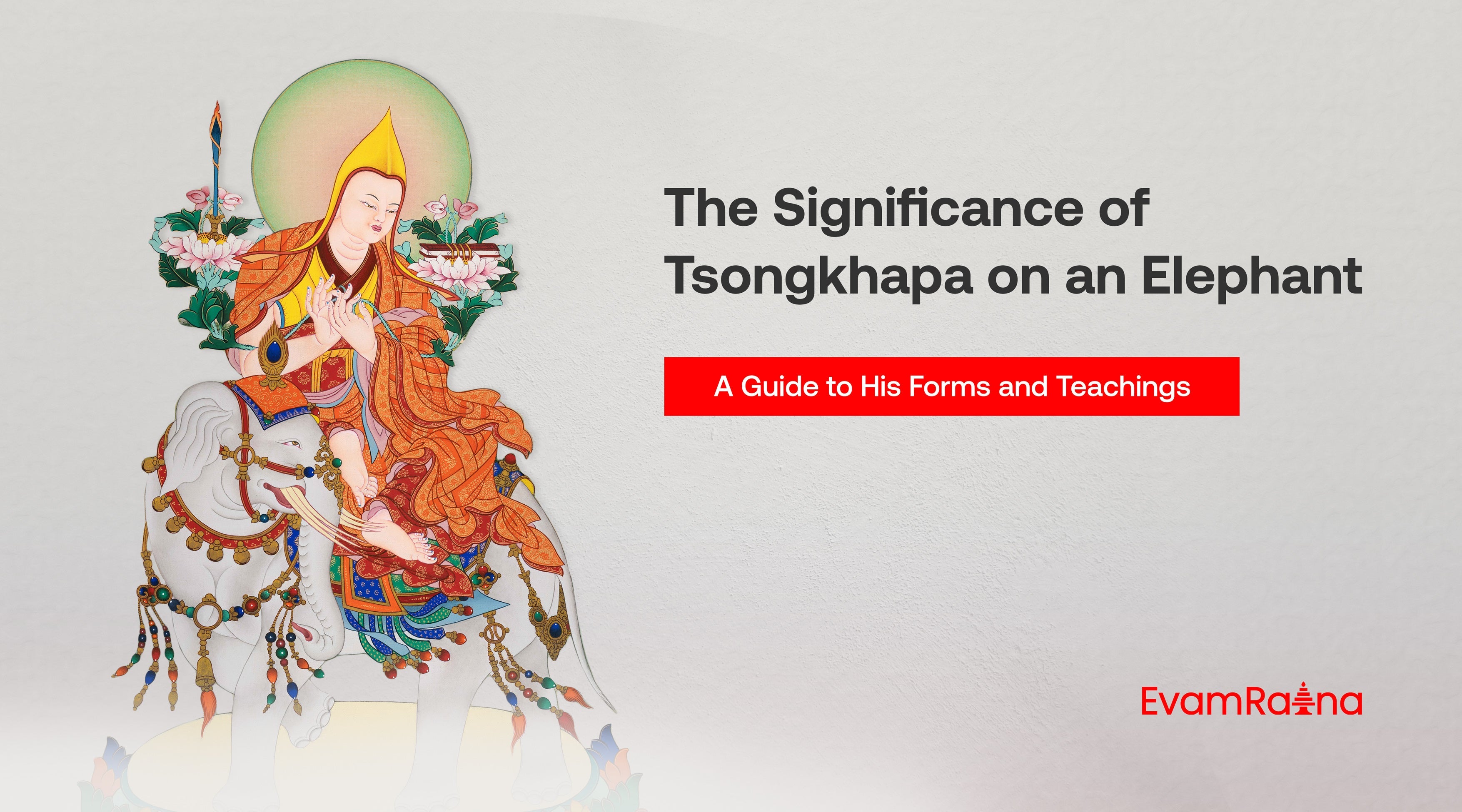
The image of a serene monk seated atop a majestic white elephant is one of the most striking and spiritually resonant icons in Tibetan Buddhism. This specific depiction of Je Tsongkhapa, the founder of the Gelug school, is an artistic choice with a profound representation of visionary experience, lineage authority, and the indomitable strength of the Dharma. Often depicted in thangka and statue, Tsongkhapa's form is portrayed in various symbolic configurations; one of the most visually striking forms is Tsongkhapa riding an elephant. To understand the significance of Tsongkhapa on an elephant, one must delve into the life of the master himself, the visions of his closest disciple, and the deep symbolic language of Himalayan iconography.
Who Was Je Tsongkhapa? A Brief Introduction
Je Tsongkhapa Lobsang Drakpa (1357–1419), also popularly referred to as 'Je Rinpoche' or the Sanskrit name Sumati Kirti, was born in the Tsongkha region of Amdo, East Tibet. While often characterized in Western intellectual circles as a "professor" or a purely academic figure due to his voluminous writings on logic and philosophy, his disciples see him as a great yogi and Mahasiddha.
Tsongkhapa was a child prodigy who began his meditational journey as a teenager, reportedly possessing the power to cure his own illnesses and control the elements through prayer. The essence of his life was the ideal renunciation; although he was very famous and received the offer of thousands of gifts, he did not have a bank account or property, did not even have a permanent residence, and spent his time in solitary retreat huts in the snow mountains.
His greatest contribution was the synthesis of the entire Buddhist path, from the foundational Hinayana to the complex Tantric systems of the Anuttarayoga Tantra. He was particularly renowned for his "clean-clear" meditation instructions on the Six Yogas of Naropa and the illusory body. Before his death, he established the Great Prayer Festival (Monlam) in Lhasa and founded Ganden Monastery, where he eventually entered the "clear light" state in a perfect demonstration of a realized being’s control over death.
Iconography: Why Depictions Matter in Tibetan Buddhism
In any tradition, iconography is a religious artistic representation that demonstrates a complex system of symbols, hand gestures (mudras), and postures. Depictions of masters and deities serve as visual liturgies, tools for meditation, objects of devotion, and repositories of spiritual energy. The sources emphasize that merely looking at a holy image can place "strong imprints" in the mind of the viewer, bringing extensive spiritual benefit.
To the practitioners, these representations are applied in meditation visualization where the practitioner visualizes the guru or the deity in his or her presence to get blessings and revelations. The Tsongkhapa in different forms are also commonly depicted in small figures at the top of thangkas, in elaborate trees of refuge, or as main statues in temples such as the 12ft Lama Tsongkhapa statue at Kechara. These icons are in remembrance of the infinite wisdom and compassion that the master embodied.
The Five Forms of Tsongkhapa: Iconographic Overview
The various representations of Je Tsongkhapa are mostly premised on the Five Visions of Khedrub Je (1385-1438). One of Tsongkhapa's spiritual sons and his future successor was Khedrub Je. After the death of Tsongkhapa, Khedrub Je frequently experienced grief, and the teachings seemed to him to be getting corrupt and he missed the direct instructions of his master.
In response to Khedrub Je’s intense prayers and mandala offerings, Tsongkhapa appeared to him on five separate occasions in five distinct forms, known in Tibetan as Je Zigpa Ngaden:
1. The Monk on a White Elephant: A form emphasizing the steady, powerful transmission of the Kadam Dharma.
2. The Lama on a Radiant Throne: Seated on a throne supported by youthful gods and goddesses.
3. The Bodhisattva Manjushri on a Snow Lion: Representing Tsongkhapa as the embodiment of enlightened wisdom.
4. The Yogi on a Tiger: Appearing as a Mahasiddha with a reddish complexion, holding a sword and skullcup.
5. The Monk on a Lotus: The "standard" form, seated in a traditional monastic posture with a pandita hat.
These forms are often depicted together in a single painting or as a set of five individual thangkas.
Tsongkhapa on an Elephant: Symbolism and Spiritual Meaning
The vision of Tsongkhapa on a white elephant holds a unique place in this visionary quintet. In this form, Tsongkhapa appears as a monk riding a majestic elephant to meet his heart disciple.
Guidance and Encouragement
The primary purpose of this vision was to provide guidance and inspiration. Tsongkhapa appeared to answer Khedrub Je's technical questions on Tantra and to offer "strong encouragement" for him to continue spreading the Kadam Dharma. This vision served as a divine confirmation of Khedrub Je’s role as the successor of the lineage, ensuring that the master’s legacy would remain "clean-clear" for future generations.
The Strength of Knowledge
The elephant represents spiritual stability and the weight of wisdom. Just as an elephant moves through the forest with unstoppable momentum, Tsongkhapa’s teachings provide a path that is both grounded and powerful. For Khedrub Je, seeing his master in this form was a reminder that although the teacher had entered the "clear light," his presence and protection were as solid and reliable as an elephant.
Elephant Symbolism in Buddhist Art and Practice
The elephant is a recurring and potent symbol across all of Buddhist art. Its presence in Tsongkhapa’s iconography draws on centuries of tradition.
- The White Elephant: Traditionally, a white elephant is associated with the birth of the Buddha, symbolizing purity and the "white" or virtuous side of the mind. In Tsongkhapa’s vision, the white elephant signifies the purity of the Kadam lineage and the stainless nature of the master’s tantric realizations.
- Fearlessness and Power: Animals in Tibetan iconography often represent the "vehicle" or the energy upon which the enlightened mind travels. While the snow lion (associated with Manjushri) represents fearlessness, the elephant represents unshakable power and the ability to overcome obstacles of the body, speech, and mind.
-
Stability in Practice: In Samatha (calm abiding) meditation charts, the elephant is used to represent the practitioner's mind. As the mind becomes more stable and disciplined, the elephant changes from black to white. Tsongkhapa, on a white elephant, thus symbolizes a mind that has reached the pinnacle of stability and realization.
Historical and Devotional Context of Tsongkhapa’s Depictions
The historical context of these depictions is rooted in the deep guru-disciple bond between Tsongkhapa and Khedrub Je. The visions were not random occurrences but were triggered by Khedrub Je’s intense devotion and his "breaking heart" over the state of the world.
The Succession of the Lineage
Along with Gyaltsab Je, Khedrub had been an adherent of the Gelug tradition. The visions, such as the one of the elephant, were fundamental to the leadership change. They gave the power requirements and special orders that enabled Khedrub Je to maintain the legacy of the teachings.
Prevalence in Art
Since these visions were so fundamental to the Gelugpa identity, they were a common subject of thangka painters. Such forms often occur at the summit of compositions that are meant to represent Wutaishan (the Five-Peaked Mountain in China), the earthly dwelling of Manjushri, with whom Tsongkhapa is inseparably associated.
Meditational Visualization and Practice
For a practitioner, the image of Tsongkhapa on an elephant is not just a historical curiosity but a living meditational support.
Guru Yoga and Migtsema
The essence of Gelug is Lama Tsongkhapa Guru Yoga that focuses on recitation of the Migtsema prayer. This is claimed to be the good one which is recommendable to all the people who desire simplicity but effective blessings. Through meditation of Tsongkhapa, and if reciting of the mantra, the practitioners believe that they can:
Develop Wisdom: This is great, clear, or quick wisdom.
Purify Karma: Cleaning the "mirror" of the mind to allow realizations to arise.
Attain Protection: Tsongkhapa is often depicted alongside protectors like Dorje Shugden, an emanation of Manjushri who rides a snow lion and safeguards the Middle Way teachings.
The Promise of Tushita
One such purpose of meditating over these forms is the desire to be reborn in Tushita (the Joyful Pure Land) where Tsongkhapa is claimed to live until he comes back as the next Buddha. It is the opinion of the practitioners that with regular visualization and prayer they can fulfill the teachings of the Tsongkhapa in all their lives until enlightenment is achieved.
Conclusion
The iconography of Tsongkhapa on an elephant is a profound testament to the enduring power of the guru-disciple relationship and the visionary depth of the Tibetan tradition. It summarizes the power, the purity and the unchanging stasis of the doctrines left behind by Je Tsongkhapa. Regardless of whether it is described as a historical vision of Khedrub Je or as a key ingredient in a contemporary meditation practice, the form is nonetheless a wish-granting jewel to those wanting to turn their minds and make the road to enlightenment a reality. It is the study and worship of these forms that makes the clean-clean message of Tsongkhapa continue smiling upon the world.