

































Heartbeat of Enlightened Consciousness: Damaru's Role in Tantric Transformation
The damaru is the most spiritually important of the many sacred instruments found in Himalayan monasteries and charnel grounds. In Tibetan Vajrayana Buddhism, this little drum with two heads, along with an hourglass shape, is a powerful tool for rituals. It represents the sound of the Dharma, the beat of awakening to the fact that everything is temporary, and the coming together of wisdom and compassion. The damaru is often used during sadhanas, offerings, and the Chod ritual to help practitioners break free from their ego and attachments and find their way to liberation.
Introduction to Damaru:

The damaru (Tib. da ma ru or rnga chung) is a small, double-sided hand drum played by gently twisting your wrist, with two suspended beaters that hit its drumheads in turn. It is a powerful ritual tool, a voice of enlightened consciousness, and a symbol of the universe. The damaru's rhythmic pulse has been heard for thousands of years, from the ancient seals of the Indus Valley to the midnight Chod ceremonies held in Himalayan charnel grounds. The damaru's sound is the very essence of Dharma when used by meditators, siddhas, and even angry gods. It is a vibration that cuts through illusions, wakes the mind from sleep, and brings Buddhas, Dakinis, and other enlightened beings into the sacred space of practice.
The damaru, which is often called the "heartbeat of enlightened consciousness," is a bridge between the physical and spiritual worlds. It helps to wake up the mind and dissolve the ego, cutting through the fears and illusions that keep us from moving forward. Tradition says that the damaru is the instrument of great happiness (mahasukha), and its sound proclaims this bliss as the fundamental nature of reality.
Ancient Origins: From the Indus Valley to the Himalayas

Click Here To View Our Collection of Nataraja Statues
The damaru has been around since the beginning of civilization. The first examples of it have been discovered in the artifacts and clay seals of the ancient Harappan civilization in the Indus Valley. It was profoundly associated with the worship of Lord Shiva, who is one of the most revered deities in Hinduism.
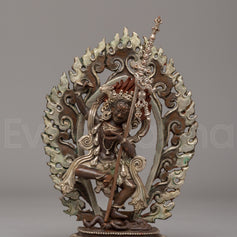
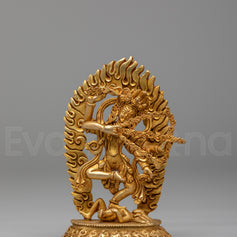
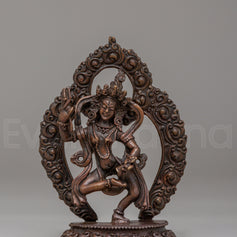
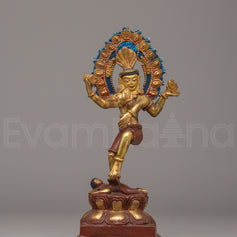
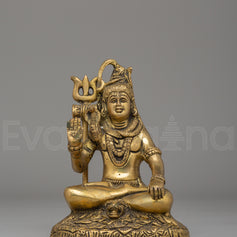
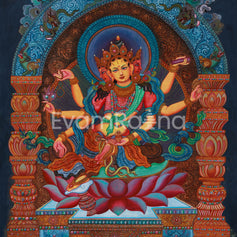
In Hindu art, Shiva is often shown holding the damaru, which stands for the balance between stillness and energy. When Shiva is shown as Nataraja, the "King of the Dance," the damaru in his hand is said to be the first sound of creation, the divine vibration that starts the universe moving. The hourglass shape stands for the union of Shiva and his consort, Shakti, which stands for the balance of male and female forces that make up the universe. The damaru also represents the interpenetration of the male (lingam) and female (yoni) triangles, representing the fabric of the universe, where male rhythm (tala) underlies female melody (raga).
As in Tantric Buddhism, or Vajrayana, spread across India and into the Himalayas, the damaru was adopted into Buddhist practice. In this context, it became a symbol of wisdom and skill, used to dispel illusions and awaken a deeper understanding of existence. It became a symbol of the marriage of knowledge (prajna) and technique (upaya).
The damaru has had a deep spiritual meaning for thousands of years, changing as it moved through different cultures, from the ancient Harappans to the spiritual practices of the Himalayas. Its resonance remains a symbol of creation, balance, and transformation.
Anatomy and Construction: The Sacred Materials of the "Hand Drum"

The Buddhist damaru, often called the "little drum" (Tib. rnga-chung), differs slightly from its Indian prototype. While the Indian version often uses a lattice of tension strings, the Buddhist drum typically features skins that are bonded or glued directly to the drumheads. The physical construction of a traditional damaru is an exercise in precise craftsmanship guided by centuries of accumulated knowledge. Each element, from the drumheads to the beaters to the handle and valance tail, carries symbolic weight as well as functional purpose.
Woods and Exotic Materials
Traditionally, damarus are made from acacia wood, ivory, or sandalwood, with wooden versions being the most common. Ivory was preferred by the wealthy and nobility. The drum features two hollow hemispheres joined at their domed centers, symbolizing duality's unity. Wooden damarus are crafted from dense hardwood, either turned into a round shape or hand-carved into an oval or trapezoid form, reminiscent of the Kapalika damaru. They vary in size from four inches to twelve inches in diameter for the large Chod drum.
The Drumheads and Symbolism
The drumheads are typically made from goatskin, though in rare cases, snake or fish skin is used to enhance the tone and spiritual power. Both skins are cut from the same piece of vellum and water-soaked before being stretched so that they dry to the same pitch. These skins are often painted green or inscribed with mantras on their interior surfaces before being sealed according to tradition.
The Strikers (Beaters)
The two beaters, small oval weights typically of silk-embroidered or crocheted fabric, are attached by twisted red or black silk threads to the central band. Their free swing ensures they strike the drumheads with the natural rhythmic alternation produced by the wrist's rotation.
The Handle and Valance Tail
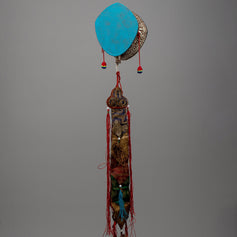
The handle descending from the central band may be constructed of padded cloth, jewels, or, in deity depictions, a jewel chain terminating in ornamental pendants. From the handle hangs the silk valance "tail", a cascading arrangement of five-color silk panels and tassels whose symbolism connects to the Five Dhyani Buddhas and the purification of the five aggregates.
How the Damaru Facilitates Tantric Transformation
The damaru is a signal for prayer and a technology of the subtle body used in Highest Yoga Tantra to achieve enlightenment.
Summoning the Dakinis
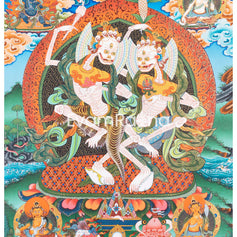
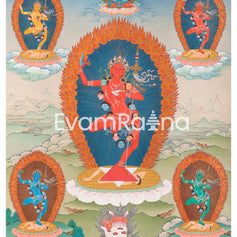
In the Anuttarayoga Tantra (Highest Tantra), the primary function of the damaru is to invoke the dakinis. Dakinis are female embodiments of enlightened energy who exist at various levels: those with realizations of the generation stage, those with realizations of clear light, and those who have achieved full awakening/enlightenment. The practitioner invokes these beings by the sound of the drum to receive their blessings and inspiration.
Awakening the Tum-mo Fire
The damaru plays a vital role in the Six Yogas of Naropa and in other completion stage practices. During these rituals, the drum is placed against the navel to persuade the tum-mo fire (inner heat) to rise.
- This bliss-fire, known in Sanskrit as "candali," rises through the central channel of the subtle body.
- The goal of this practice is to stop the gross mind and all its superstitions.
- Once the gross mind is stilled, the extremely subtle mind, also known as the "clear light," becomes visible.
The Sound of Great Bliss and Emptiness
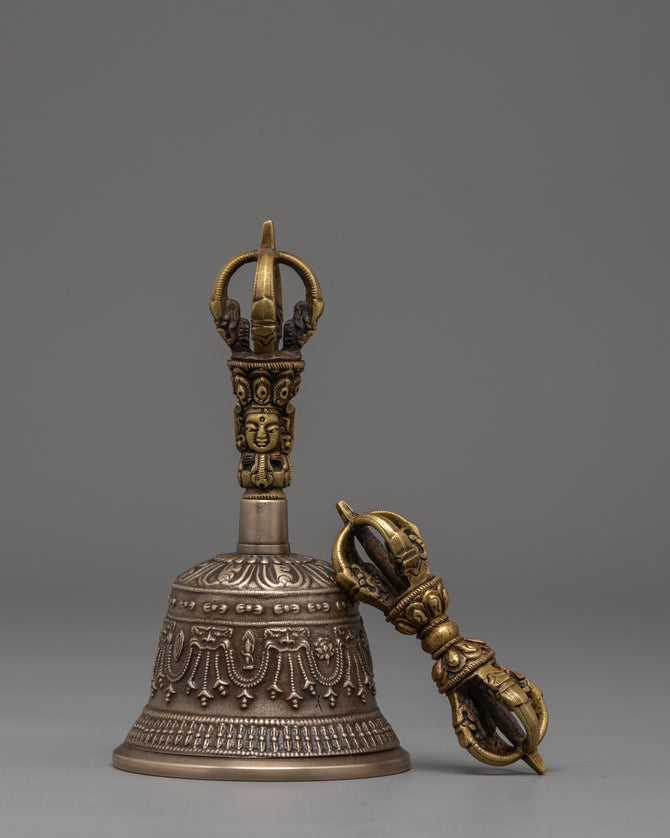
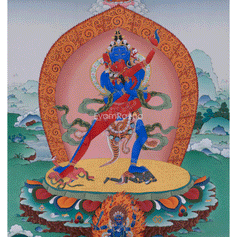
In Vajrayana, the damaru is held in the right hand, which represents the masculine principle of method (upaya). It is often paired with the bell (ghanta) held in the left hand, representing the feminine principle of wisdom (prajna).
- The bell proclaims the "sound of emptiness," while the damaru proclaims the "sound of great bliss".
- Together, they symbolize the union of method and wisdom, the core realization necessary for awakening.
- The fading resonance of the drum reflects sunyata (emptiness), reminding the practitioner of the dissolving nature of all phenomena.
The Damaru in Chod Ritual: Cutting Through the Ego
One of the most famous uses of the damaru is in the Chod practice (Tib. gcod), which literally means "to cut through". This lineage, established in the 11th century by the great female teacher Machig Labdron, focuses on cutting through attachment to the ego and self-cherishing.
The Chod Drum (gcod-rnga)
- The damaru used in this ritual is larger than standard versions, sometimes measuring up to twelve inches in diameter. Its sound is known as the "sound of impermanence."
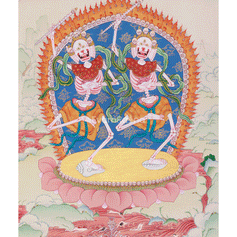
- The sound calls dakas and dakinis to the "dance of ego-annihilation".
- The practitioner visualizes offering their own body as a symbolic feast to spirits and hungry ghosts to fulfill karmic debts.
- Performing this rite at night in desolate or haunted places, such as charnel grounds, helps the practitioner confront and sever deep-seated fears and attachments.
Sound as Dharma: Why to Choose Damaru and What It Proclaims

(Image from Kagyu Office)
In Vajrayana understanding, sound occupies a special place in the fabric of reality. Sound is inherently relational; it arises through vibration, travels through a medium, and dissolves back into silence. It is, in this sense, a perfect metaphor for the nature of all phenomena: arising dependently, lacking inherent existence, and returning to emptiness.
The damaru's sound is understood to operate on multiple levels simultaneously. At the most literal level, its sharp, penetrating rhythm functions to summon and invite calling the Buddhas, Bodhisattvas, and Dakinis into the ritual space, inspiring them with what the tradition describes as "supreme joy." The damaru, tradition holds, is the instrument of great bliss (mahasukha), and its sound proclaims this state of bliss as the fundamental nature of reality.
At a subtle level, the damaru corresponds to what the tradition calls anahata nada, the "unstruck sound," the internal vibration that meditators may perceive in deep states of silence. This includes the subtle sound of the nervous system and the deeper pulse of blood circulation that is heard when the body and mind enter complete stillness. In this sense, the damaru is not merely an external instrument but a map of interior sonic experience.
The large Chod drum carries a specific sonic quality that its tradition describes as the "sound of impermanence", a rhythm that breaks through complacency about the nature of existence and confronts practitioners directly with the truth of change, dissolution, and death as teachers.
Technique and Instruction: How to Play the Damaru
Playing the damaru is a precise skill that requires both physical coordination and spiritual focus.
The Grip and Finger Placement
As taught by lineage masters like Tsem Rinpoche, the drum is held using specific finger placements to maintain natural tension:
Use three fingers to manage the handle: the thumb and index finger push the drum, while the last two fingers (middle and ring) provide the primary grip.
The folded fingers mustn't touch the body of the drum, as this would dampen the resonance.
The Motion of the Wrist
The technique relies on a twisting motion of the wrist.
A common mistake is moving the entire arm; the arm should remain steady while the wrist does the work.
According to traditional instruction, the wrist should only move at the beginning and the end of the playing sequence; in between strikes, the wrist remains relatively still to maintain the correct rhythmic "tum-tum" sound.
Practitioners are advised to practice quietly at first, as the sound can be quite loud and might disturb others.
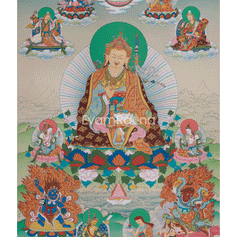
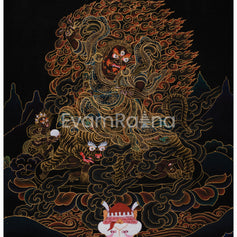
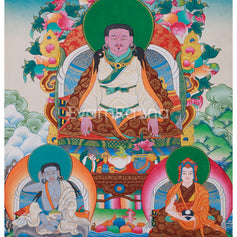
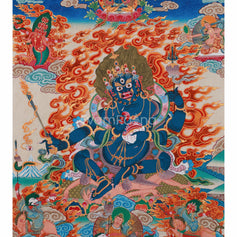
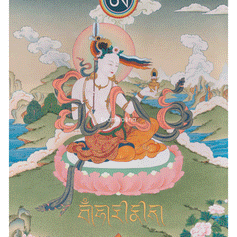
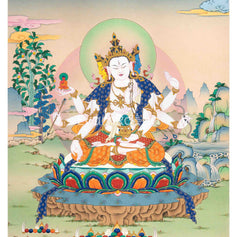
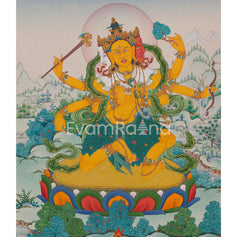
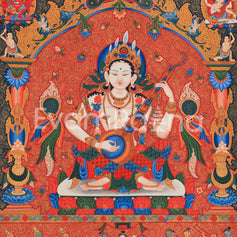
The Damaru in Deity Iconography: Who Holds the Sacred Drum?

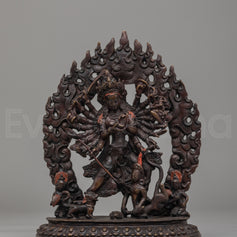
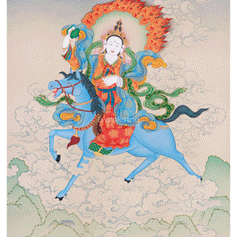
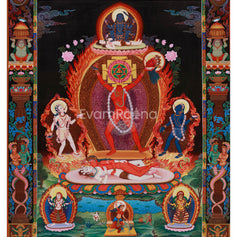
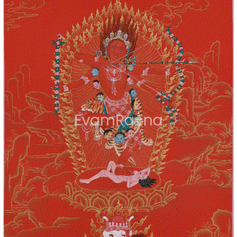
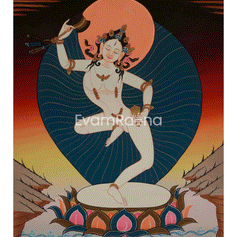
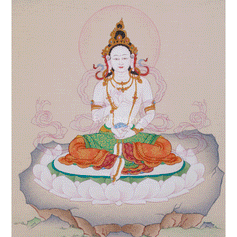
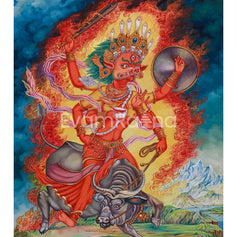
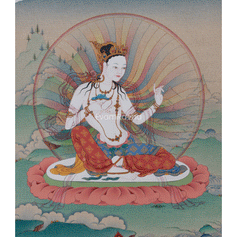
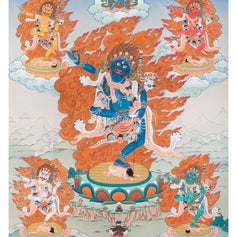
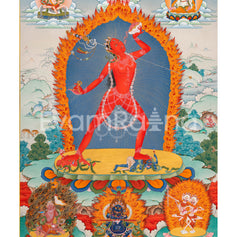
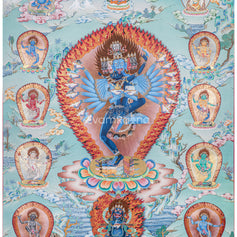
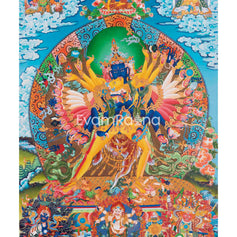
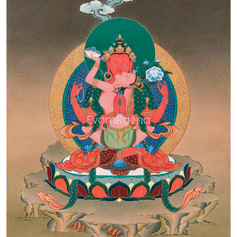
Across the vast landscape of Vajrayana iconography, thangka paintings, and statues, the damaru appears in the hands of deities representing a wide spectrum of spiritual qualities and functions. In each case, the instrument communicates something essential about the deity's enlightened activity.
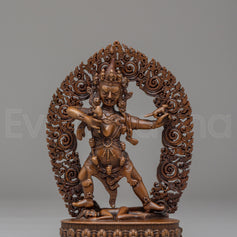
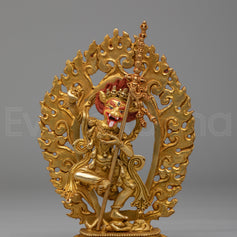
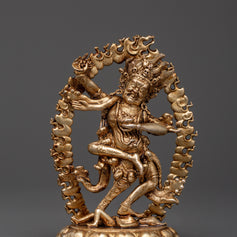
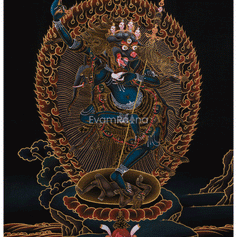
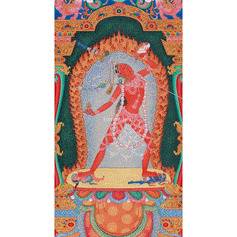
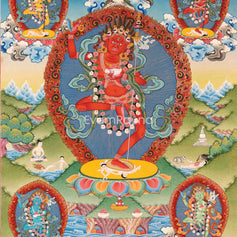
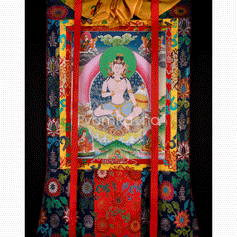
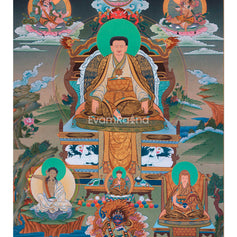
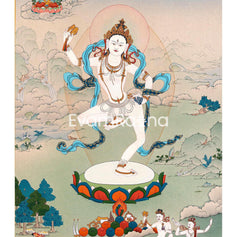
Machig Labdron, the great Tibetan yogini and founder of the Chöd lineage, is characteristically depicted in dance posture, sounding a large Chod damaru in her right hand while her left rings a bell. Her damaru is the instrument of ego-liberation, its sound calling all dakinis to witness and participate in the practice of self-offering.
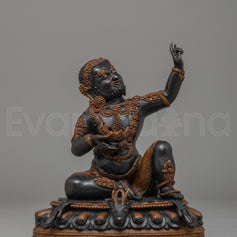
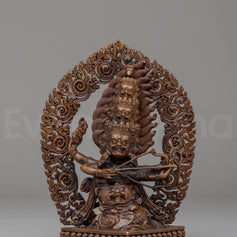
Padampa Sangye, the Indian mahasiddha who transmitted the Chod teachings to Tibet, carries a damaru in his right hand alongside a thighbone trumpet (kangling) in his left, a pairing that represents the inseparability of bliss and emptiness, sound and silence, in the highest Tantric view.
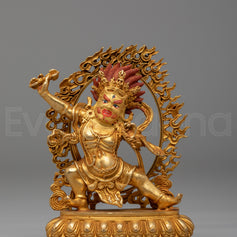
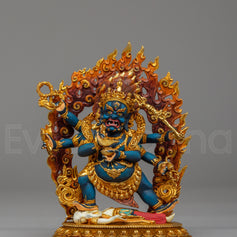
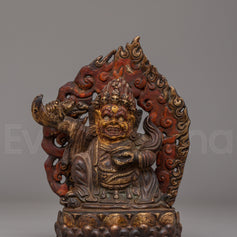
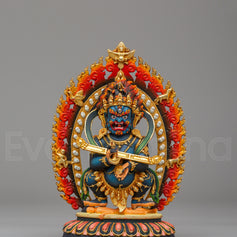
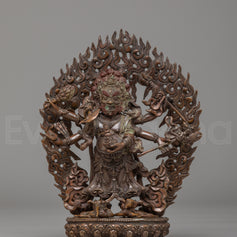
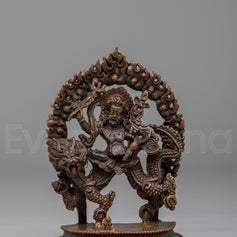
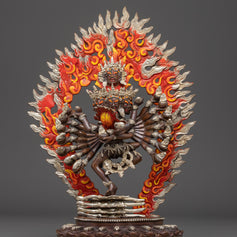
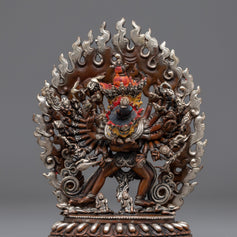
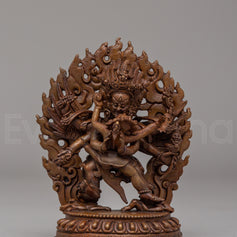
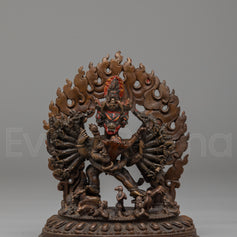
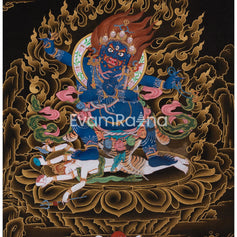
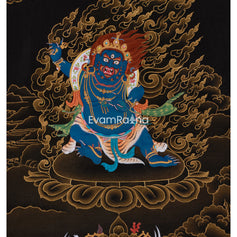
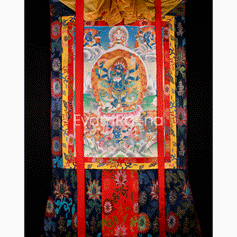
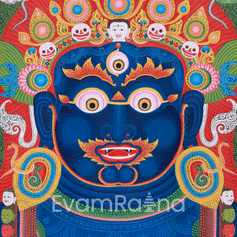
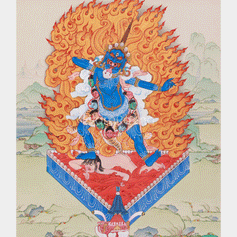
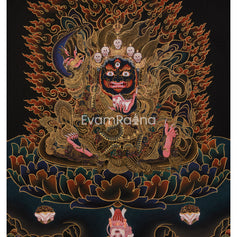
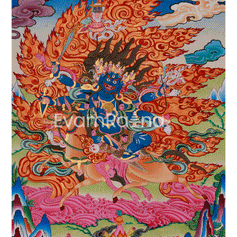
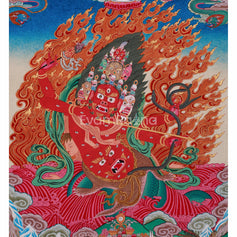
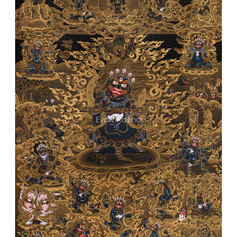
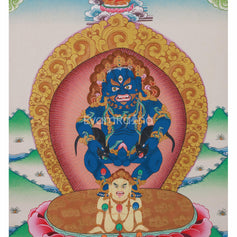
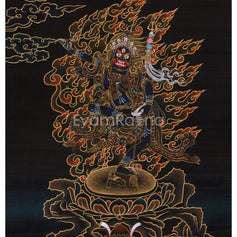
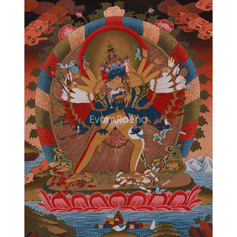
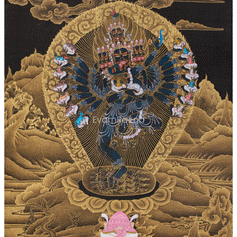
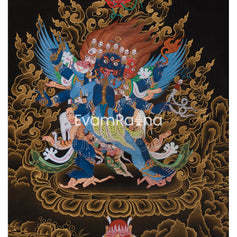
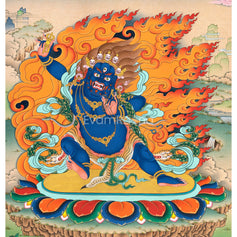
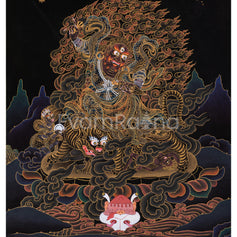
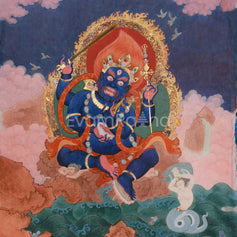
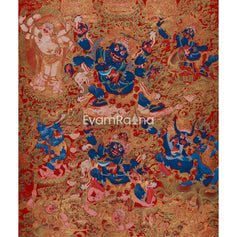
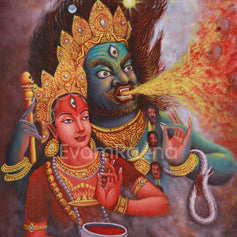
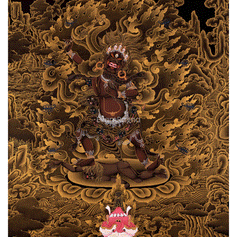
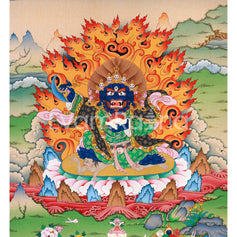
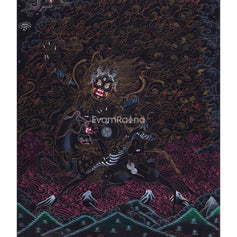
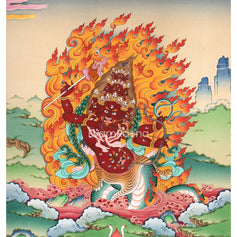
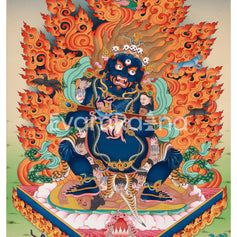
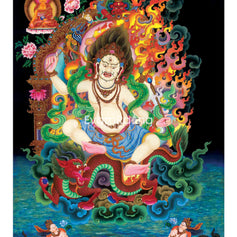
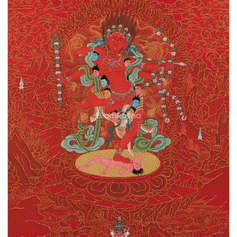
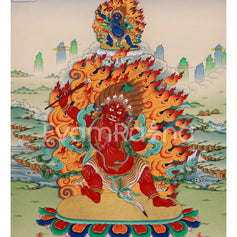
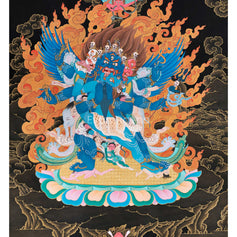
Six-Armed Mahakala, one of the most powerful Dharma protectors in the Vajrayana pantheon, wields the damaru as an emblem of the union of compassion and emptiness, his wrathful form expressing the fierce commitment to liberate sentient beings from suffering through whatever means necessary.
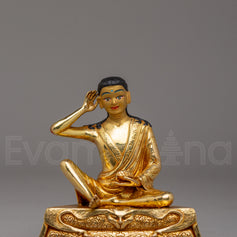
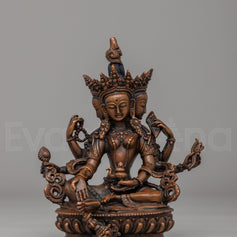
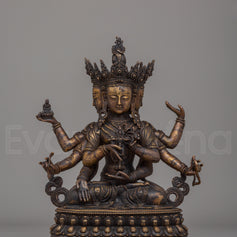
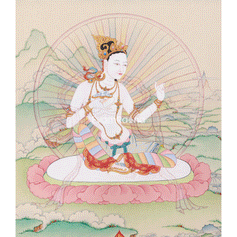
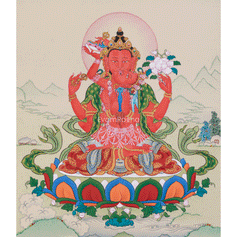
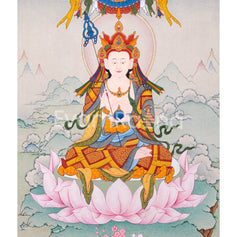
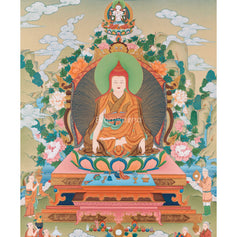
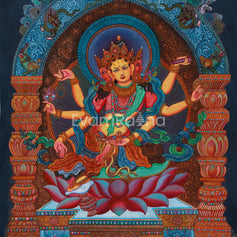
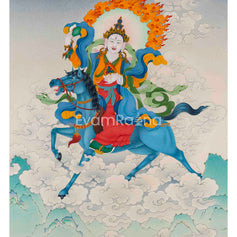
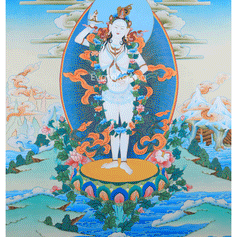
Niguma, the accomplished yogini and lineage holder of the Shangpa Kagyu tradition, holds the damaru to symbolize the direct transmission of inner Tantric teachings, a sound-transmission that bypasses the conceptual mind and strikes the nature of awareness directly.
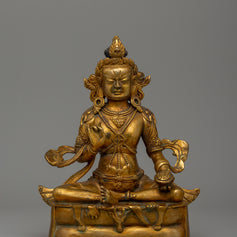
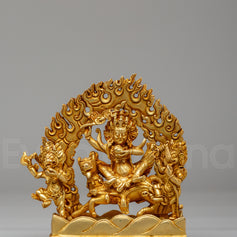
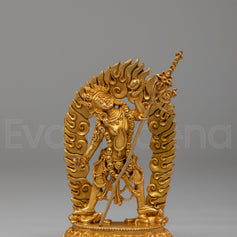
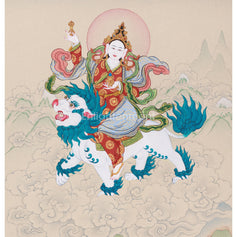
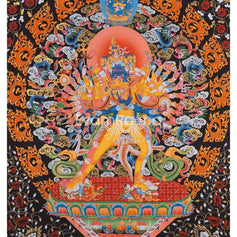
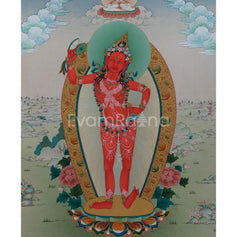
Achi Tsogyal, recognized as an emanation of Vajrayoginī and protector of the Drikung Kagyu lineage, is shown with the damaru as a symbol of her capacity to generate enlightened activity continuously throughout all realms.
Across all these figures, a consistent pattern holds: the damaru is held in the right hand, understood in Tantric symbolism as the "method" or "male" hand, while the bell is typically held in the left or "wisdom" hand. This consistent assignment is not arbitrary but reflects the cosmological pairing at the heart of Vajrayana practice.
Conclusion:
The damaru has resonated across five thousand years and vast regions of Tantric civilization, from the ancient plains of India to the Himalayan monasteries and beyond. It symbolizes the union of opposites: male and female, wisdom and method, form and emptiness, reminding us that these dualities are not separate but aspects of one unified awareness. The damaru’s hourglass shape represents the meeting point of these forces, and its rhythmic sound cuts through the veil of ordinary perception, inviting enlightened beings to draw near and guiding practitioners toward deeper awareness.
The damaru’s beat, as said, is the heartbeat of enlightened consciousness, echoing across time and space. Whether in ancient temples, the practice halls of modern meditators, or in the hands of Tantric practitioners, it serves as a profound reminder that all things, including sound, arise and dissolve in the open sky of awareness. The damaru embodies the essence of spiritual development, guiding all sentient beings toward enlightenment, as its resonating rhythm demonstrates the inseparable connection between bliss, emptiness, and the pure essence of existence.


