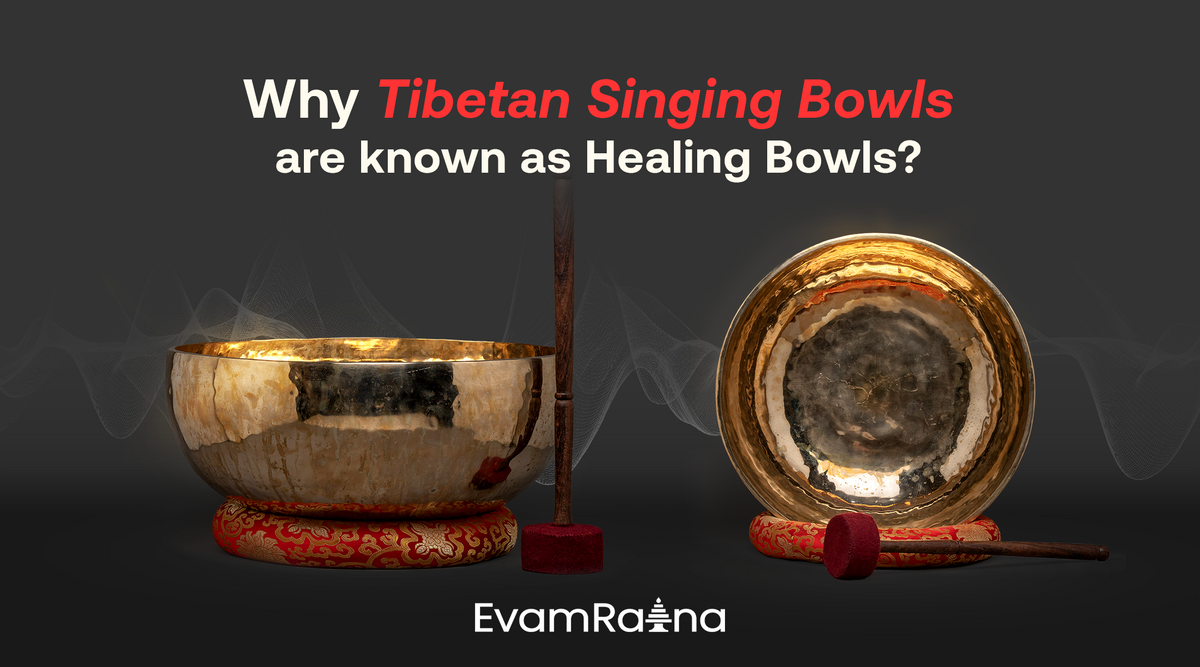
Why Tibetan Bowls Are Considered Powerful Healing Tools?
From the peaceful landscapes of Himalayan monasteries and modern wellness centers all over the globe, Tibetan singing bowls have become associated with relaxation, spirituality, and holistic healing. What then makes these ancient instruments so sacred? Are they musical instruments, or are they really health and wellness-promoting?
In the blog, we will delve deeper into the cultural significance of the Tibetan singing bowl and its association with healing, drawing on modern scientific insights.
What Are Tibetan Singing Bowls?

Essentially, Singing bowls are metal objects, most commonly bowl-shaped bells, which create resonant sounds when hit or rubbed against a mallet. The bowls are traditionally made of alloys of metals like copper, tin, and occasionally a bit of silver or iron, creating deep and prolonged sounds that invite listening, reflection & wellness.
Although the name suggests it, the history and origins of Tibetan singing bowls are complicated and controversial. There are traditions that associate them with the pre-Buddhist Himalayan cultures, and others observe their connection to the Buddhist practices.
Eventually, these instruments were transmitted to other regions - Nepal and Northern India into Tibet and ultimately to Western wellness communities, particularly in the late 20th century.
A Brief History: From Ritual to Wellness Staple
Ancient Beginnings
It is believed that metal bowl like the singing bowls, were in use much earlier, even before they were widely used in spiritual circles. Himalayan metal crafts date back to some evidence centuries ago, and were initially used either ritually or as daily tools.
Since Buddhism expanded along the Himalayas, instruments that created lasting sounds started to be found in the meditation and ritual areas. Bells and bowls were utilized in chanting and contemplation by monks, and their sound was used to enhance concentration and transition to meditative states.
Revitalization and Internationalization

Sound Bath
By: yogacommonstudio.com
The introduction of Tibetan bowls as a healing instrument into the world is a somewhat emerging trend, which has gained popularity in the West since the 1970s, with the rising popularity of meditation, yoga, and sound therapy.
These singing bowls were taken by teachers and wellness practitioners to yoga studios and therapeutic settings where they are frequently referred to as a means of relaxing the mind and harmonizing energy.
The Science Behind the Vibrations of Signing Bowls

By: luuckk.com
A lot of traditional healing arguments concerning singing bowls revolve around their vibration, the notion that sound frequencies can have an effect on mental, emotional, and even physical health. But do there exist quantifiable effects?
Mood and Relaxation
A remarkable observational study published in the Journal of Evidence-based Complementary and Alternative Medicine investigated the impact of sound meditation on Tibetan bowls on mood, tension, and well-being. The respondents had greatly decreased tension, anxiety, anger, and depressed mood, and also improved feelings of spiritual well-being, following the listening to bowl meditations.
This is in harmony with more extensive studies that suggest meditation, which includes Tibetan singing bowl sessions, has the potential to induce a relaxation response, a physiological state that is the opposite of stress, where the blood pressure, heart rate, and cortisol levels all decrease.
Physiological and Neurological Effects:
The developing studies also indicate the possible impact of sound interventions on the nervous system:
Heart rate and variability: According to some studies, exposure to singing bowl sounds improves heart rate variability (a measure of greater stress resilience).
Brainwave activity: Preliminary evidence exists that when you listen to the vibrations of resonant bowls, your brain might be induced to change to theta or delta rhythms - states of deep relaxation and meditation.
Anxiety and sleep: Systematic reviews indicate that sound bowl therapy could potentially benefit some individuals by enhancing their sleep, mood, and emotional control, and that large, more rigorous studies are still necessary.
Although more conclusive studies are being conducted, these results are used to understand why practitioners believe Tibetan bowls are not only musical instruments but also the tools that can assist in soothing the mind and promoting the mind-body relationship.
The Healing Mechanism: Why Sound Matters

To understand why Tibetan bowls are considered a healing instrument, we need to appreciate the influence of sound on us and its impact on the physiological and psychological levels.
Vibration and the Body
All the sounds we hear are vibrations. When a singing bowl sounds, it produces sound waves that gently stimulate the auditory system and neurological pathways. To most listeners, this translates into:
- Mental slowing and focus
- Reduced muscle tension
- The parasympathetic nervous system (which promotes rest-and-digest activities) is calmed.
- Improved levels of contemplation or meditation
Sound therapy proponents usually refer to this as a balancing of energy, with regular tones helping to align breathing, heartbeats, and brainwave patterns.
Meditative and Mindful Effects

By: SheCodes.io
Tibetan singing bowls are used extensively in meditation because they provide the mind with something tangible to focus on, helping one achieve stillness and mindfulness.
Mindfulness practitioners explain that the addition of bowls as a part of the meditation process can assist in the reduction of the mental chatter that preoccupies the minds of a meditator, particularly beginners.
How are the Tibetan Singing Bowls used today?
Tibetan bowls have long been used in contemporary wellness practices rather than as mere decorative relics. They appear in:
- Sound bathing and sound healing
- Yoga and meditation studios
- Stress-alleviation and mental health workshops
- Sleep and relaxation activities
- Complementary therapy centers and holistic centers
Singing Bowls in such contexts are played in series, in many cases, accompanied by guided breathing or visualization, which form immersive sound spaces where relaxation and introspection are facilitated.
Dissociating Facts and Anecdotes
There is a need to recognize the scientific potential and the weaknesses in the existing research.
Although the research demonstrates some promising outcomes with tension and anxiety reduction and well-being improvement, researchers refer to the fact that numerous studies are not large randomized controlled trials but small or observational ones. Stricter studies must be conducted to clearly measure the physiological curative impacts.
The psychological benefits, which are consistently reported, particularly the stress and mood, are positive incentives for why the experiences of Tibetan bow sounds are significant to people all over the world and are said to be very relaxing.
Perceived Benefits by Practitioners and Listeners
A large number of individuals who practice with Singing bowls, be it in group classes or in their own practices, note:
- Deep relaxation
- Better sleep quality
- Increased concentration and meditation levels
- An emotional balance and grounding
These effects are so compelling that they can become daily self-care habits of many users even after some unanswered questions about them remain open.
Conclusion: Why are signing bowls called Healing Tools?
The Tibetan singing bowls have travelled out of ancient spiritual situations to new wellness environments where the striking tones of the bowls have remained in the human mind and captivated. Although their primitive application might have been more ritualistic or meditative, modern research and the spread of experiential evidence assist in putting their reputation for healing into perspective.
Out of the scientifically viewed mood-enhancing capabilities, relaxation effects, and possibly the physiological modulation of the instrument to their traditional role in the contemplative practice, Tibetan singing bowls provide a distinct point of intersection of culture, sound, and wellness.
Be it as antique tools of religious profundity or as contemporary sound health instruments, their healing powers have to do with a single fact, which is:
"Sound, when carefully designed, can form an environment of tranquility, intimacy, and inner harmony."