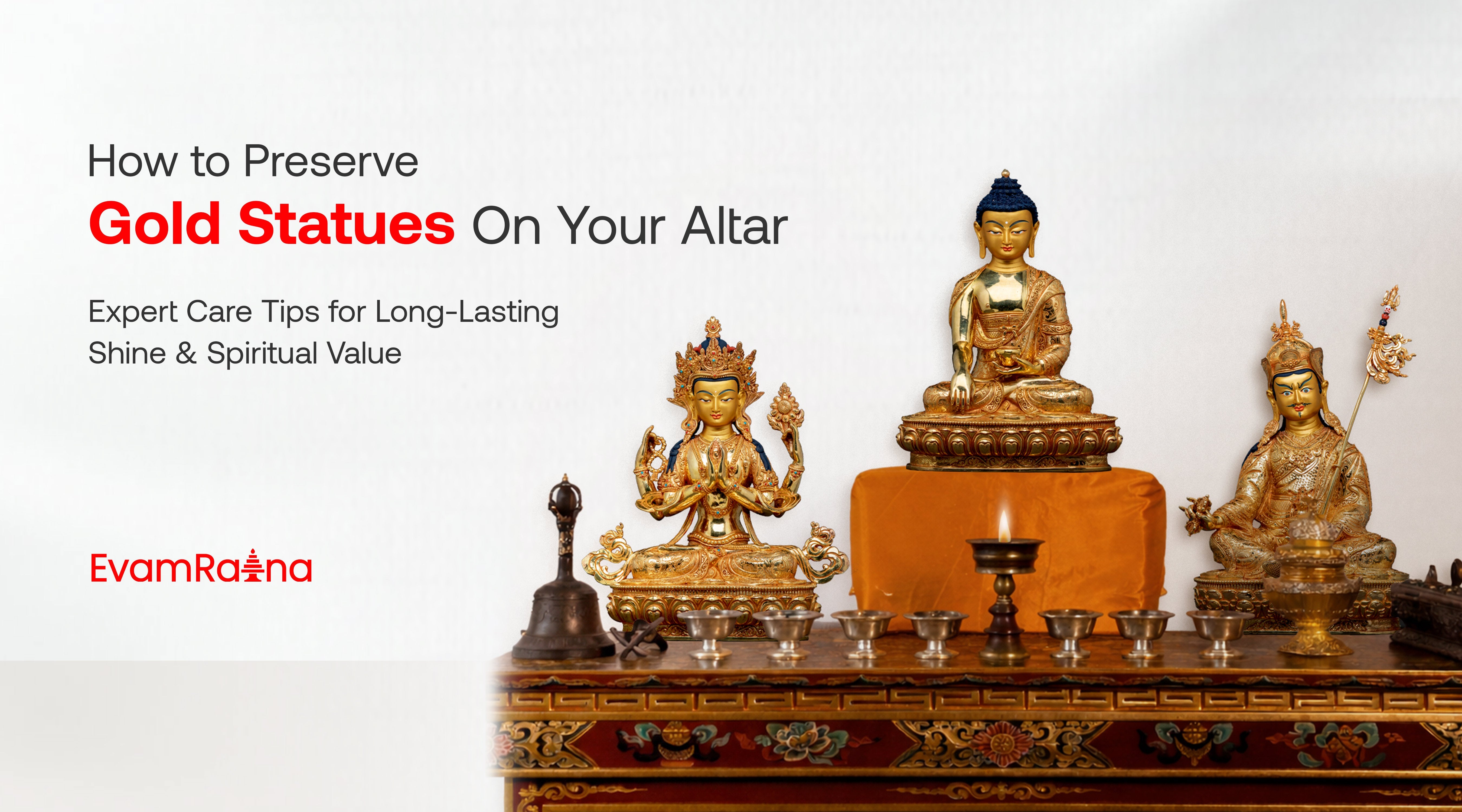
Best Practices for Cleaning Gold Statues: Protecting Altar Statues from Light, Heat, and Humidity
Bringing a sacred gold statue into your home is often a moment of immense joy, devotion, and spiritual connection. Whether it is a 24K gold-plated deity or a gilded masterpiece, these items are spiritual treasures and works of art that deserve deep respect and proper attention.
However, statues require special care due to their delicate gold, silver, or copper coating. Gold statues, especially those used in altars, are typically crafted using delicate layers of gold leaf, gold plating, or gilding applied over base materials such as copper or brass. Proper maintenance will help statues preserve their brilliance and detail and extend their durability.
Introduction: Essential Care Guide for Gold Statues

To properly preserve something, you need to understand how sensitive it is. After that, maintaining a stable environment is essential, ideally with moderate humidity levels, minimal direct sunlight, and protection from heat sources such as lamps, incense burners, or radiators. Gentle cleaning practices are equally important. Experts say that you should use soft, dry microfiber cloths or natural brushes to get rid of dust without damaging the gold layer. They don't recommend using harsh chemicals or rough materials.
Also, being careful with how you handle things is very important. Oils and moisture from hands can affect gilded surfaces over time, so statues should be handled minimally and with clean, dry hands. For more intricate or antique pieces, periodic inspection and consultation with a professional conservator can help address early signs of wear or structural issues.
By taking care of your gold statues every day with respect and using the right preservation methods, you can keep their physical beauty and shine while also honoring their spiritual essence. If you treat them right, these sacred things can inspire and uplift for generations to come.
Step-by-Step Process for Preserving a Gold Statue
Here is a practical, step-by-step process based on those professional conservation principles:
Identify the Material and Condition

(Photo From Garland Magazine)
Begin by identifying whether your statue is solid gold, gold-plated, or gilded over a base material like copper or brass. Many religious statues are made up of more than one part, so damage can happen not only on the surface but also underneath. Check for signs of wear, like flaking, fading, or exposed base metal.
Choose a Stable Environment
Place the statue in a controlled setting:
-
Keep humidity moderate (ideally around 40–55%). It helps to prevent the statue from getting damaged, losing its shine, or getting lost.
-
Don't let direct sunlight hit the gilded layers, as this can damage them over time. To keep statues safe from UV rays, humidity, and heat, display them inside in stable, temperate places, like glass cabinets.
-
Maintain consistent temperature (avoid rapid fluctuations), a stable environment for a gold gilded statue, and keep the temperature at 20 - 22 degree celsius.
Heritage conservation bodies stress that environmental stability is one of the most important factors in preventing long-term deterioration.
Protect from Heat and Pollutants
Keep statues away from:
-
Incense smoke buildup: It is a significant concern for the long-term preservation of gold-gilded statues. Keep statues away from places where thick smoke is coming from. Make sure there is good airflow so that smoke doesn't build up directly on the statue's face and body.
-
Oil lamps: Keep gold statues away from oil lamps to prevent damage from soot accumulation, excessive heat, and possible fire hazards.
-
Kitchen fumes or dust-heavy areas: Keep gold statues away from kitchen fumes, dust-heavy areas, and high humidity to prevent oxidation, tarnish, and the accumulation of sticky grease residue.
Soot and particles in the air can land on gold surfaces and make them dull over time or react with metals underneath them.
Use Gentle, Dry Cleaning Methods
 Cleaning consistently is the best way to keep dirt and grime from building up in the statue. You should clean your statue at least once a week. This easy habit keeps dust from building up on the surface over time. Routine cleaning should be as little but consistent as possible:
-
Use a soft microfiber cloth or natural bristle brush
-
Gently remove dust without applying pressure
-
Avoid water, polishes, or chemical cleaners
Museum guidelines consistently warn that harsh or liquid cleaning can damage delicate gold leaf or plating.
Limit Exposure Through Rotational Display
If the statue is part of a display or altar:
- Rotate its exposure periodically.
- Cover or store it when not in active use.
- This reduces cumulative exposure to light, dust, and environmental factors.
Use Safe Storage Materials
If storing the statue:
- Wrap it in acid-free tissue or unbleached cotton cloth.
- Avoid plastic that can trap moisture.
- Store in a padded, stable container.
- Archival-quality materials help prevent chemical reactions and physical damage.
Monitor Regularly
Inspect the statue every few months for:
- Surface dullness.
- Cracks or lifting of gold layers.
- Corrosion on the exposed base metal.
- Early detection allows for preventive action before damage worsens.
Seek Professional Conservation When Needed
If you notice structural damage, flaking gilding, or corrosion:
- Consult a trained conservator experienced with gilded objects.
- Avoid DIY repairs or repainting.
- Professional conservation balances technical restoration with cultural and spiritual respect.
Handle with Care

When moving or adjusting the statue:
-
To keep oils from doing permanent damage, wash your hands or wear cotton gloves.
-
Hold from the base rather than the delicate features. Use both hands to support the statue from the bottom; never pull or lift the statue by its delicate parts.
-
Use Protective Displays: Put gold statues in closed glass cabinets to keep dust from building up and to keep people from touching them without permission.
-
Oils and moisture from skin can slowly damage gold surfaces and cause the metals underneath to deteriorate.
Practice Respectful Daily Care
Finally, preservation is not only technical but also intentional:
- Keep the altar clean and dust-free.
- Avoid overcrowding objects.
- Maintain a calm, stable environment.
- Consistent, mindful care ensures both the physical integrity and the spiritual value of the statue are preserved.
Why You Should Never Touch the Statue's Face
This is the most important rule for statues that are gold-plated or gilded. The face of a statue is often its most sensitive area, frequently gilded with a thicker or more delicate layer of 24K gold to provide a scratch-free, radiant surface.
- Avoid Bare Hands: Never touch the statue's face with bare hands. Your skin's natural oils and sweat can leave marks on the gold, scratch it, or make the gilding fade over time.
- No Rubbing: Never rub the face aggressively, as this can damage the thin layer of gold.
The Spiritual and Cultural Importance of Proper Statue Care
Taking care of statues properly is a deep act of respect and devotion that has spiritual and cultural significance. Many cultures see these statues as spiritual treasures and works of art that should be treated with great respect.
Honoring the Divine Energy and Artistic Intent

Every sacred statue is often the result of immense labor and purest motivation, specifically handcrafted to aid a practitioner in their spiritual journey. By maintaining the statue’s physical shine, you are directly honoring the dedication of the artist and the spiritual purpose for which the icon was created. When a statue has no concern, it can lose its shine, diminishing the joy and excitement originally intended for the sacred space it occupies.
Care as a Spiritual Practice
The act of preservation aligns with spiritual discipline in several ways:
Consecration and Sanctity: Monks formally consecrate many statues, making them sacred items. Keeping the area around a consecrated statue clean and free of dust is one way to protect its sacredness.
Traditional Placement: Traditionally, these icons are usually placed high on altars, where they are often protected by glass frames to keep them clean. This high placement shows the spiritual hierarchy and the need to protect the divine from things like dust and moisture that are harmful to the statue.
Mindful Maintenance: The need to be gentle, like not using bare hands on a gilded face to avoid smudging, encourages a state of mindfulness and care that is similar to spiritual devotion.
Preserving a Legacy for Generations
In cultural contexts, such as Indian or Himalayan traditions, metal art holds significant cultural weight. Taking care of these spiritual tools properly will keep them in good shape for generations, letting the divine energy and historical artistry live on. The sources say that the Buddhas are "delighted" when people give them gifts and prayers. One of the best ways to help that connection is to give them a well-kept, beautiful physical form.
In the end, taking care of and respecting a statue is a physical expression of one's inner spiritual values, connecting the material and the divine.