Among the Tibetan Vajrayana Buddhist rituals, the objects, which hold great significance, are frequently utilized in order to express deep teachings and empower the ritualists. One of the significant ritual tools used is an arrow called Dadar, or the longevity arrow, or Tsedar (ཚེ་དར་). In the Tibetan language, it is also called Mda' Dar. In this blog, we will delve into the iconography and symbolism of the Dadar or Longevity Arrow, as well as how it is used culturally and ritually in Vajrayana Buddhism.
What is the Dadar?
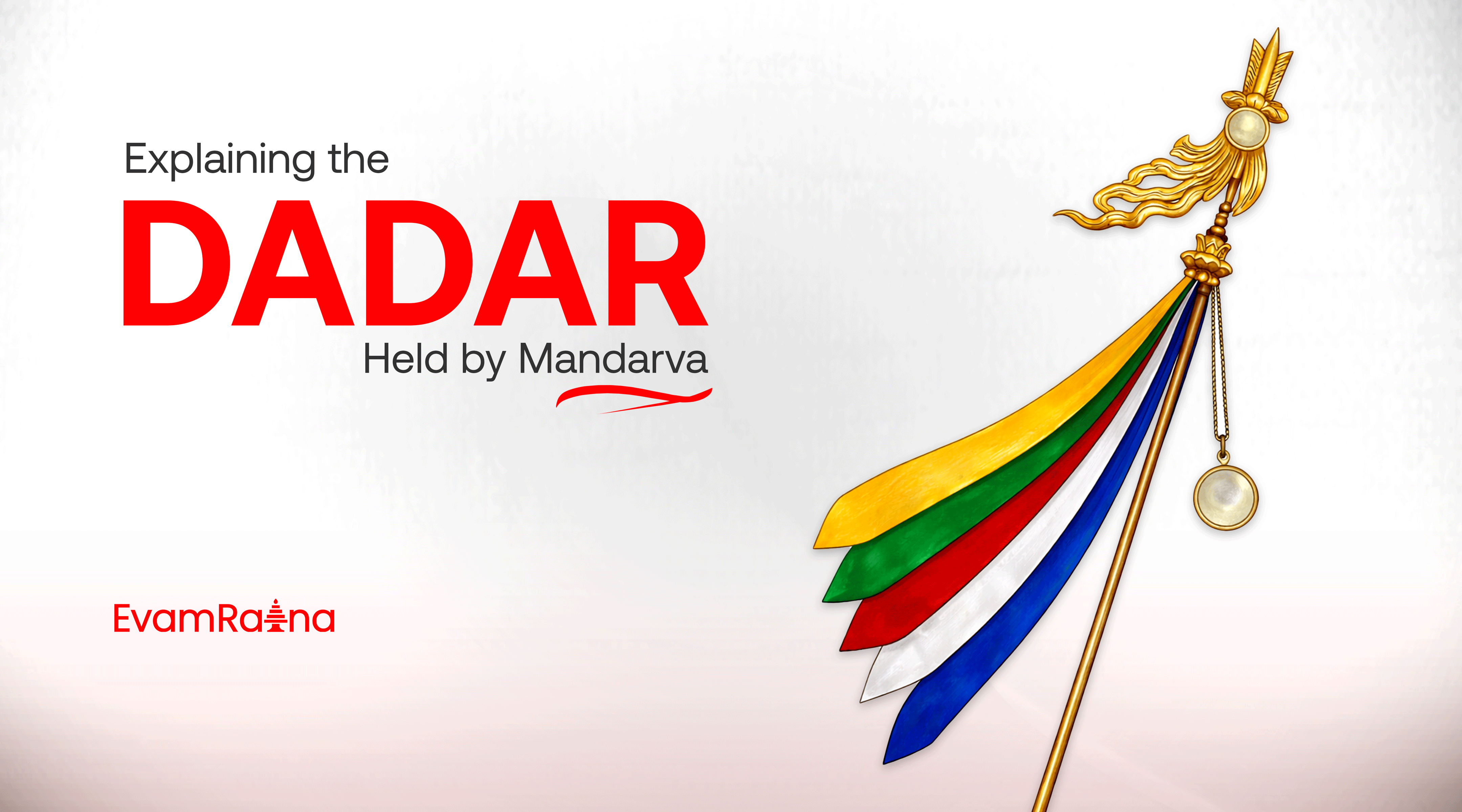
The word Dadar ( Similarly: མདའ་དར་), which translates to arrow flag, is a ceremonial arrow. There are numerous variations of dadar in Buddhism, but the most traditional and relevant dadar is usually adorned with silk ribbons, beads, and jewels, feathers, and mirrors. It is applied in numerous rituals, particularly those that focus on longevity (Tshewang) and the acquisition of wealth (Tshegug Yangug).
The Dadar is our life energy; it is life itself, the very spirit of life. It is said to be a way of remembering and replenishing the dimensions of our energy that can be ruined, lost, or stolen. In the Tibetan tradition, it is an effective tool for invoking blessings of prosperity, health, and long life.
Mandarva and The Dadar:

Mandarva, the Consort of Guru Rinpoche, in almost every iconographic art, is depicted with a Dadar in her right hand, which signifies her spiritual and transformational powers. If we attempt to decipher her iconographic significance, it becomes evident that her iconographic elements are associated with longevity, for example, her immortal vase of nectar in her left hand, and her pure white hue.
The Dadar is an essential instrument in the long-life practices dedicated to Mandarava. It helps restore and enhance the energy that sustains life, preventing the depletion or destruction of one’s vitality. Through the Dadar, practitioners can connect with Mandarava’s energy and invoke her blessings of immortality and spiritual power.
So, to emphasize that pure essence, the dadar on her right hand complements her iconographic elements well.
Iconography & Symbolism of the Longevity Arrow:

The Dadar is not just a ritual object but an embodiment of profound spiritual qualities. Each element of the Dadar carries deep significance:
The Stick: Representing the "Yab" aspect, the stick symbolizes the firm, methodical aspect of our being, grounded in form and physical existence. It is typically made from bamboo, chosen for its lightness and flexibility, and measures about 60 to 70 cm in length. The stick's five joints or knots, when present, symbolize the five primary chakras within the body, reflecting the spiritual centers of energy.
The Silk Threads: These colorful threads represent the "Yum" aspect, the feminine energy, which is light and fluid, symbolizing wisdom (Sherab) and vitality. The threads correspond to the five elements: white for water, yellow for earth, red for fire, green for air, and blue for space. Also, in some texts, they represent the Five Dhyani Buddhas. These elements govern the forces of nature and are believed to be essential to maintaining balance and harmony in life.
The Melong (Mirror): Tied near the top of the Dadar, the mirror represents our ancient potential, reflecting the true nature of our being. The mirror’s reflective surface symbolizes clarity, wisdom, and the ability to perceive beyond ordinary experience.
The Jewels and Beads: Representing concentrations of energy, the jewels and beads adorning the Dadar embody the power to focus and amplify one’s life force and protective energy.
The Five Arrowheads: It is made of iron or bamboo, and typically five are present. Our product is of a different variation, so it only has one arrowhead, but it should consist of five traditionally.
The five heads of the arrow represent the Five Families of Buddha. In Tibetan traditions, each prong is adorned with three steering feathers from the wings of a vulture.
Ritual Uses of the Dadar

The Dadar is taught, a symbol of empowerment and a method for invoking blessings in rituals. At ceremonies, Lamas or Rinpoches blow the Dadar, and the scarves swirl like the flakes of their dust of good luck and prosperity that the universe bestows upon them. The Dadar is also laid tenderly on the heads of the worshipers, which is a sign of the passing of vitality, protection, and spiritual power.
It is possible to invoke the blessings of different deities, such as Amitayus, the Buddha of longevity, and Mandarava, the Immortal Dakini, whose Mandala is allegedly strongly related to the symbolism of the Dadar. The Dadar is also widely associated with the protective power of the Dakinis, feminine spiritual creatures that are the protectors of wisdom and power in Tibetan Buddhism.
Ceremonial Use of the Dadar
A famous use of this ritual item is its symbolic use in Tibetan marriages to hook the collar of the bride-to-be and pull her away from her female companions. The arrow represents the male symbol, representing the groom’s capturing of the bride. An arrow wrapped in a white silk scarf is also touched on the bride’s forehead during the ceremony.
Source: Robert Beer's The Handbook of Tibetan Buddhist Symbols
Verses on the Dadar of Mipham Jamyang Namgyal

༈མདའ་དར་རྟེན་འབྲེལ་ཀུན་འཛོམས་འདི།
།གནས་མཆོག་རྣམས་ཀྱི་སྨྱུག་མ་ལ།
།མདའ་མགོ་ལྔ་ཚོམ་ལྡན་པ་འདི།
།རྒྱལ་བ་རིགས་ལྔའི་མཚོན་བྱེད་ཡིན།
།དུག་ལྔ་གནོན་པའི་རྟེན་འབྲེལ་ཡོད། །
Mipham Jamyang Namgyal, the famous Tibetan scholar master, has given a poetic account of the symbolism of the dadar in his works. In his poems, he clarifies that the Dadar, which is a bamboo creation painted with five heads, represents the five Buddha families. These families symbolize the virtues of wisdom, mercy, and means. It is believed that the Dadar has propitious circumstances, and can be used to suppress the five poisons and guard the door of the person doing them.
Conclusion: The Power of the Dadar
Conclusively, the Dadar is not just a ritual flag, but a mighty ritual tool, which represents the spirit of life, life-span, and spiritual guard. The Dadar is used in sacred activities, and, given its complex symbolism, it serves as a reminder that life can be impermanent and that we should care for preserving our life force. The Dadar, whether it is given in the long-life practices of Mandarava or in the blessings given by Rinpoches, provides a physical contact with the divine, bringing the spirit of longevity and spiritual power into the lives of those who perform the practices of this ritual.
This interpretation of the symbolism and meaning of the Dadar causes the practitioners to remember the significance of good physical and spiritual health, and the possibility of transformation inherent in all of us. The Swirling of the Threads of the Dadar as it flies across the air, welcomes us to the cosmic being of longevity, wisdom, and prosperity by visualizing the life force that keeps us alive.