



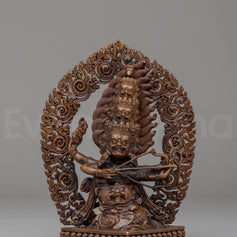
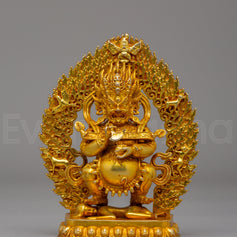
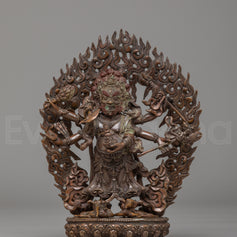
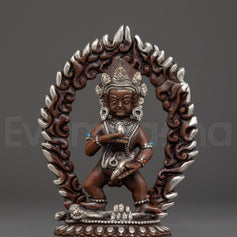





















































Himalayan Phurba Ritual Object | Symbol of Protection and Transformation

100% AUTHENTIC

HANDMADE

FREE SHIPPING
Couldn't load pickup availability
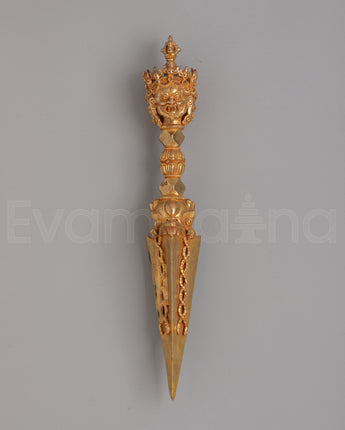
Sacred Altar Phurba | Tibetan Vajrayana Ritual Dagger
------------------------------------------------
Size: 27.5cm(Height) x 4cm(Length) x 5cm(Width)
Weight: 0.63 kg
Materials Mercury Gold Plated on Copper
------------------------------------------------
About Our Product
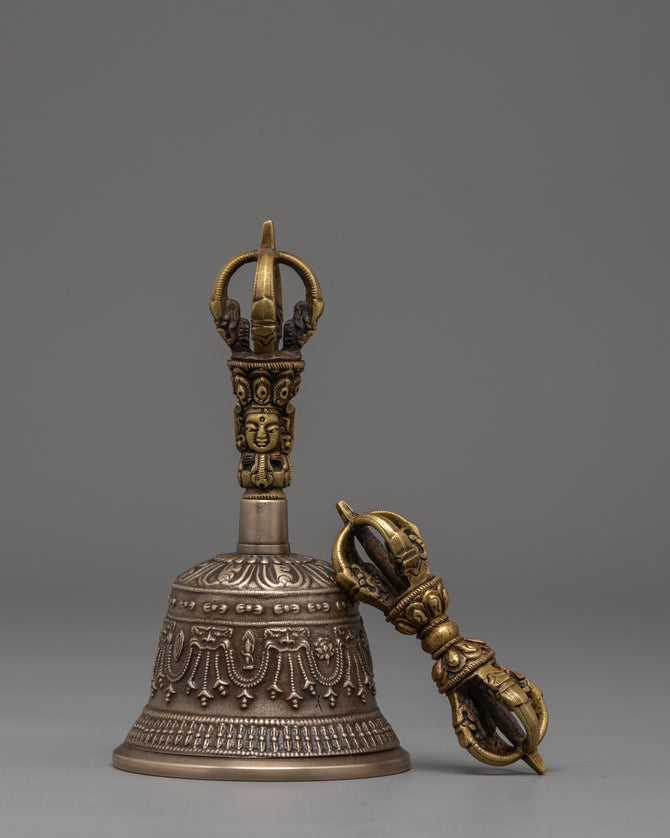
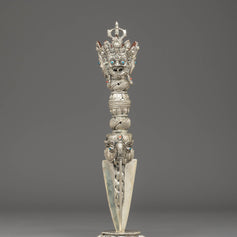
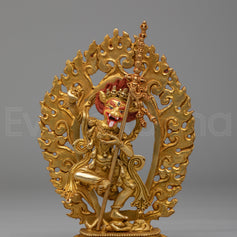
This Himalayan Phurba Ritual Object is a traditional Vajrayana Buddhist ritual dagger crafted from a copper body with a gold plated finish. Measuring 27.5 cm in height, 4 cm in length, and 5 cm in width, with a weight of 0.63 kg, this sacred ritual object carries a powerful spiritual presence for Buddhist altars, shrine rooms, meditation spaces, and ritual collections. The Phurba, also known as a Kila, is a symbolic tool associated with protection, purification, and the transformation of obstacles on the spiritual path.
The Phurba features an intricately carved wrathful deity face at the upper section, an ornate handle, and a pointed three-sided blade representing the ability to cut through ignorance, negativity, and harmful influences. The detailed crown, sacred expressions, and decorative elements highlight the traditional Himalayan craftsmanship, while the gold plated copper surface enhances the spiritual and artistic beauty of this ritual dagger.
In Vajrayana Buddhist practice, the Phurba is used in ceremonies connected with protection, purification, and overcoming inner and outer obstacles. It symbolizes the stable power of enlightened wisdom that subdues negativity while maintaining compassion and awareness. Displayed on an altar or within a sacred collection, this gold plated Phurba becomes a meaningful reminder of spiritual strength, transformation, protection, and devotion.
Introduction To The Phurba :
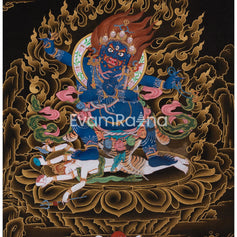
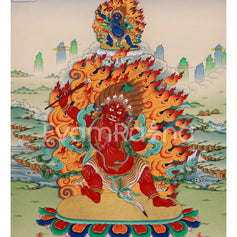
The ceremonial dagger (Sanskrit: Kila; Tibetan: phurba) is essential for expelling evil and is considered particularly effective in neutralizing the forces obstructing Tantric Buddhist practice. It has ancient origins, first appearing in the Indian Rig Veda as the core blade of the vajra used by Indra to destroy the primordial cosmic snake Vritra. Kila, derived from Sanskrit, was most likely associated with Vedic sacrifices. Meditation on the Vajrakila Tantra, an early Indian scripture first promoted in Tibet in the eighth century by Padmasambhava, one of the founding teachers of Tibetan Buddhism, is used to invoke the three-headed Vajrakila Buddha.