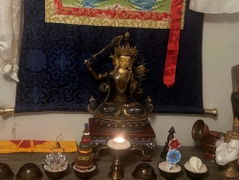
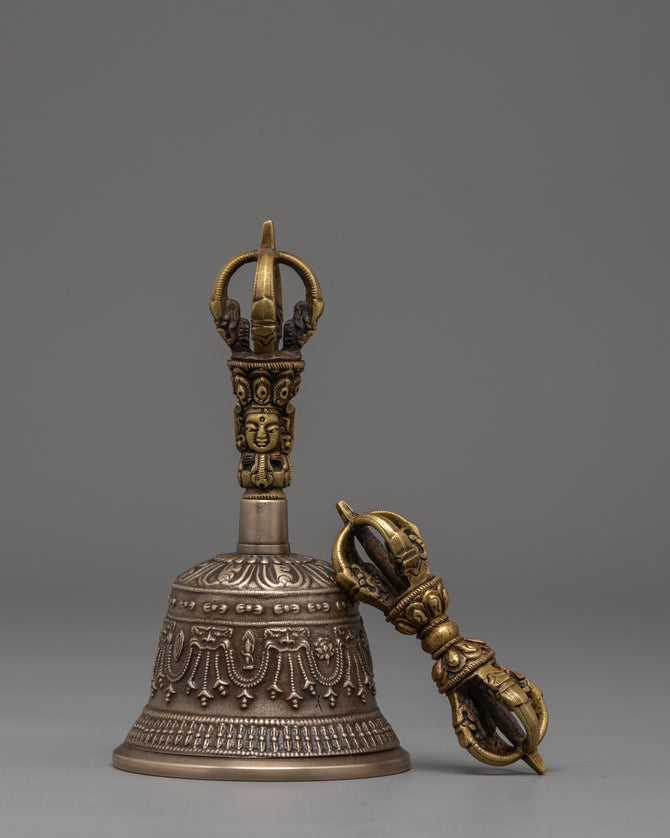
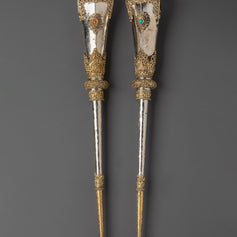
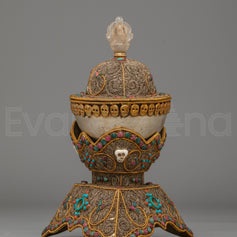
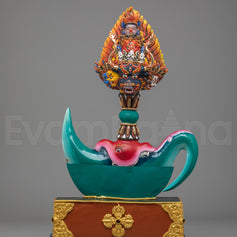
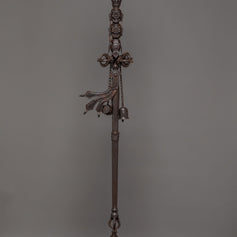
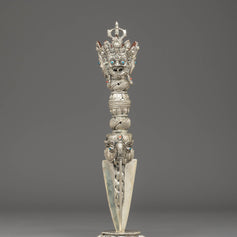
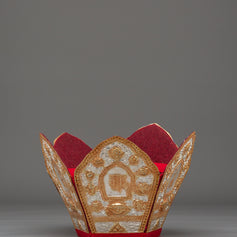
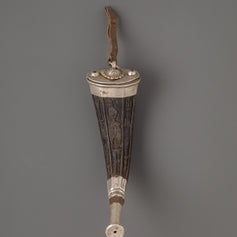
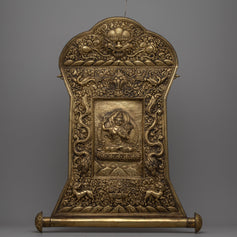


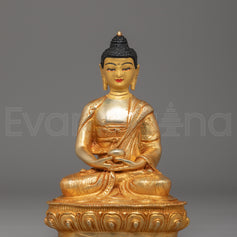
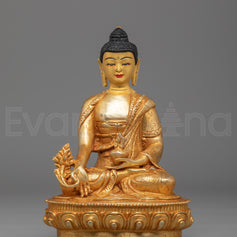
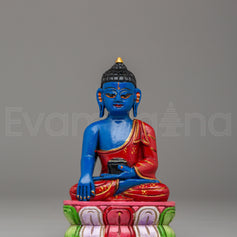
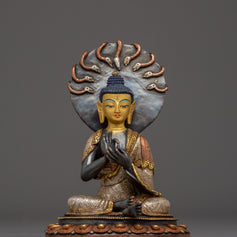
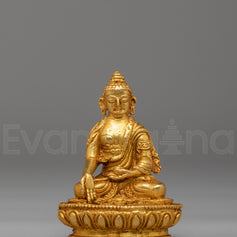

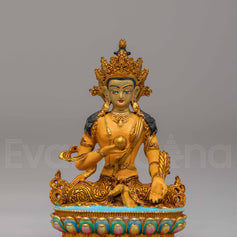
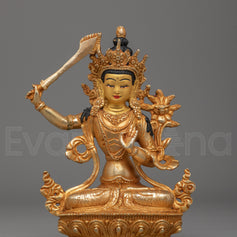
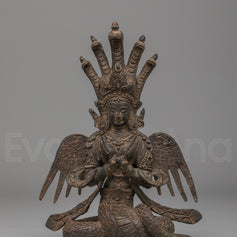
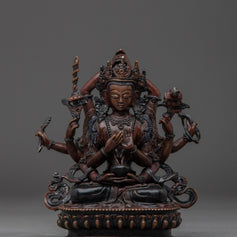
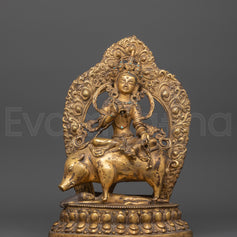
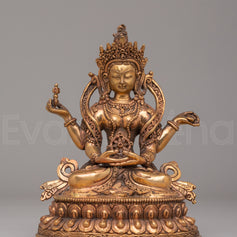
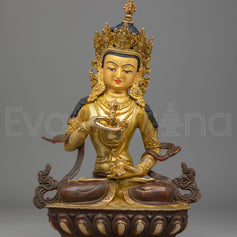
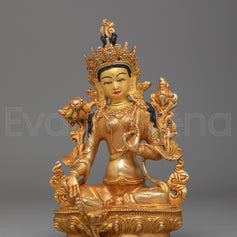
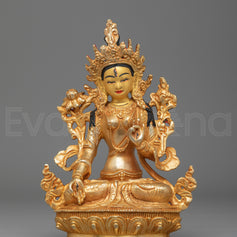
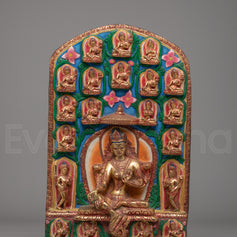
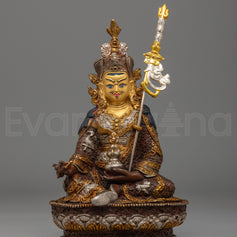
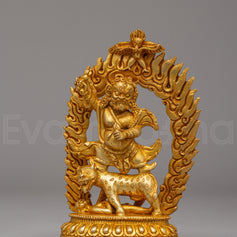
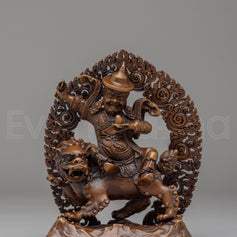
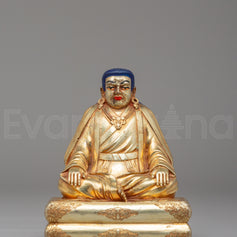
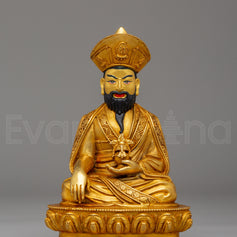
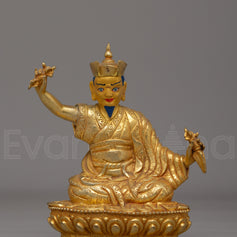
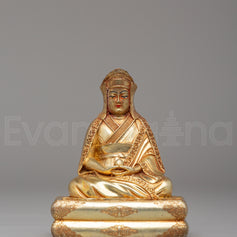
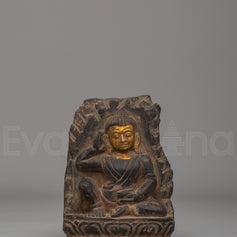
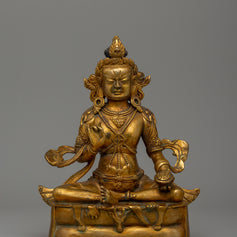
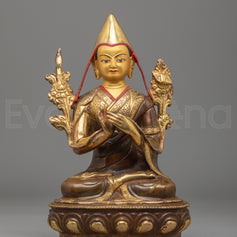
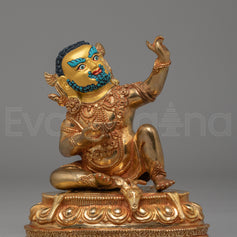
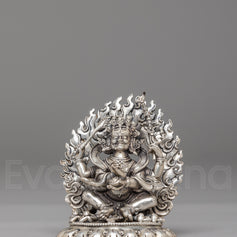
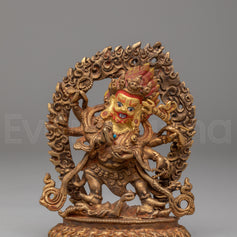
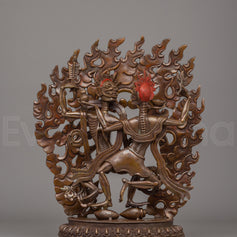
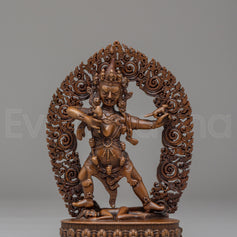
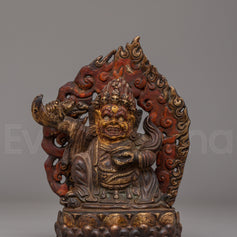
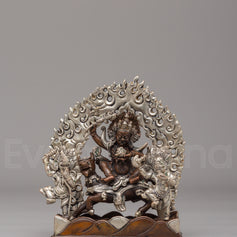
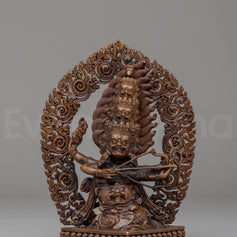
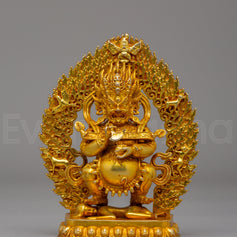
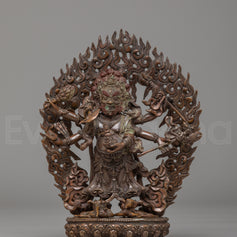
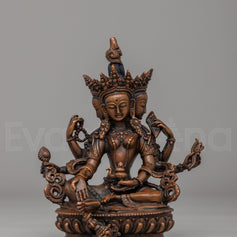
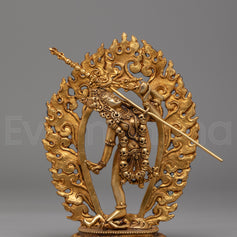
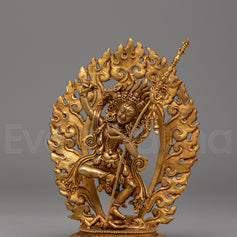
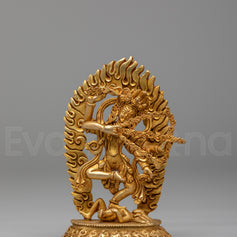
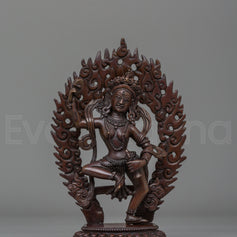
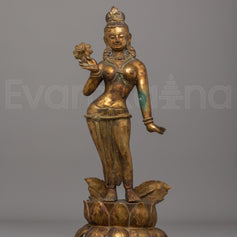
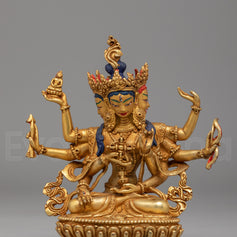
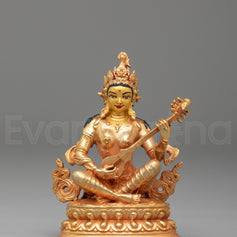
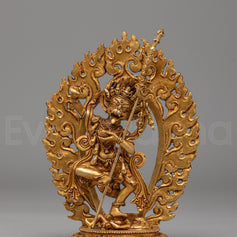
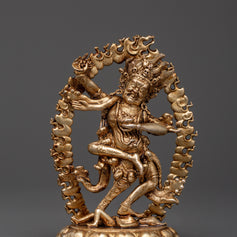
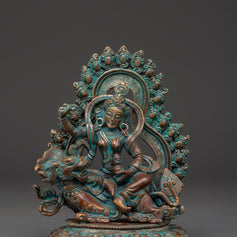
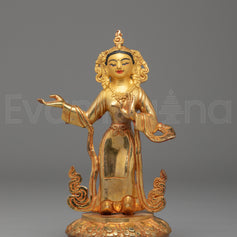
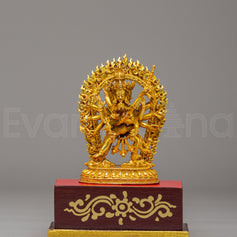

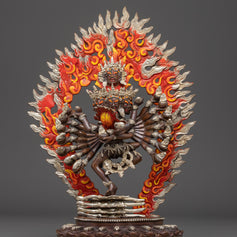
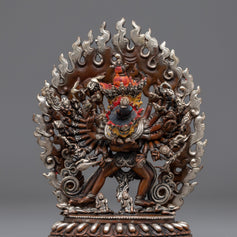
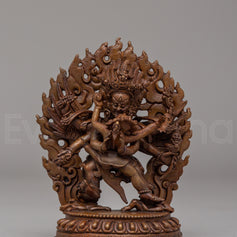
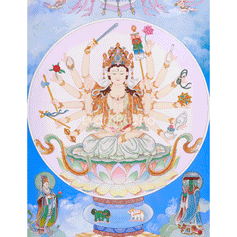
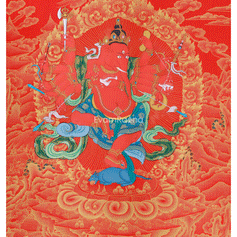
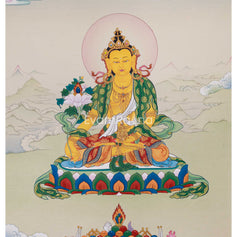
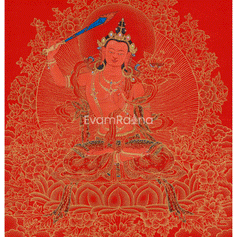
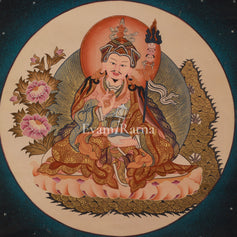
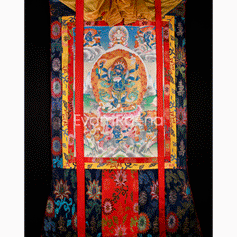
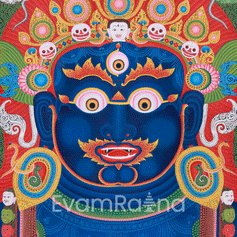
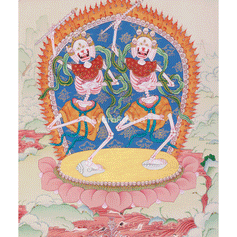
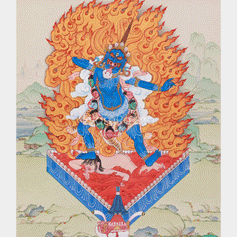
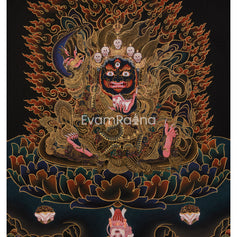
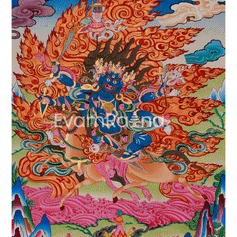
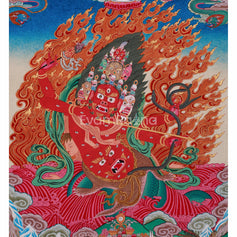
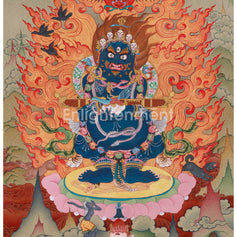
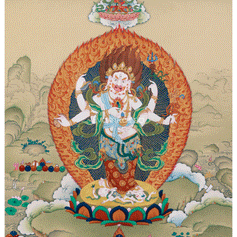
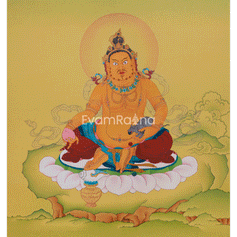
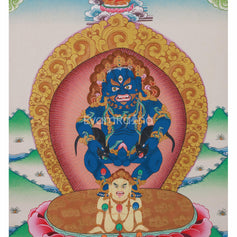
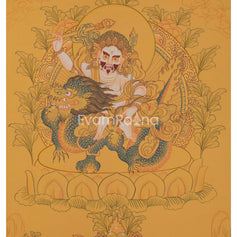
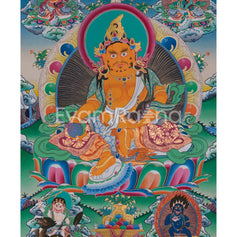
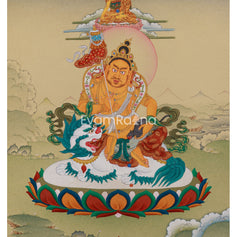
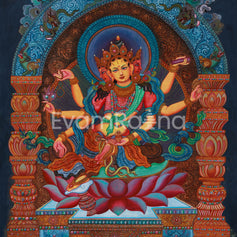
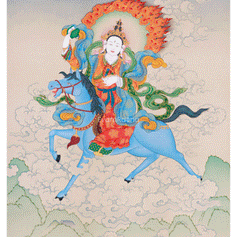
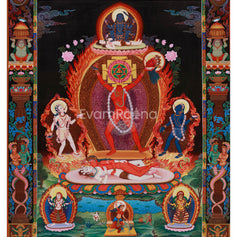
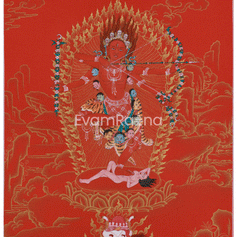
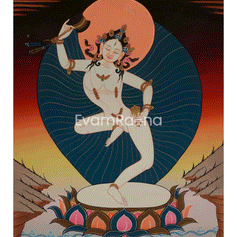
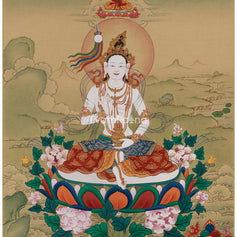
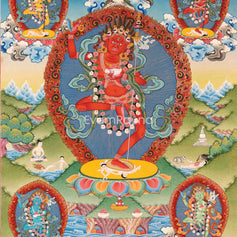
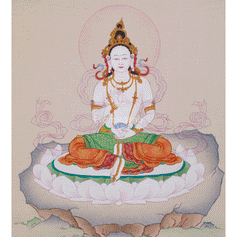
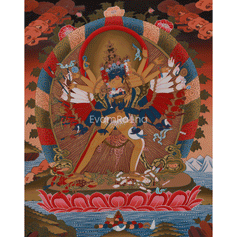
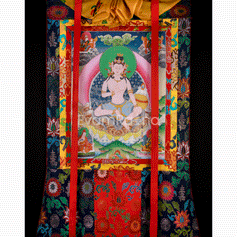
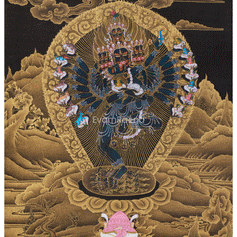
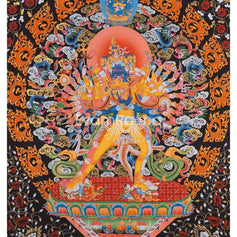
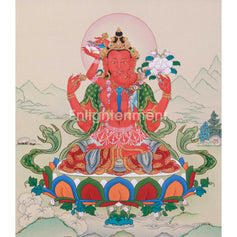
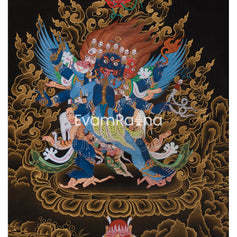



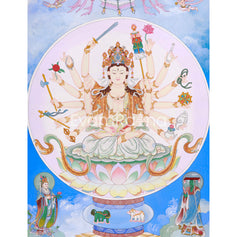
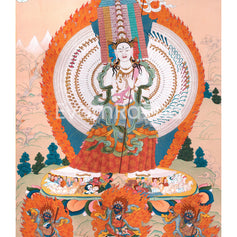
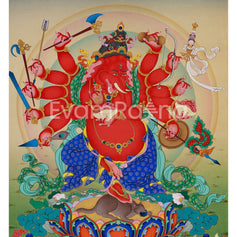
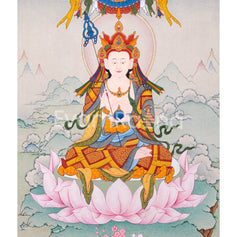
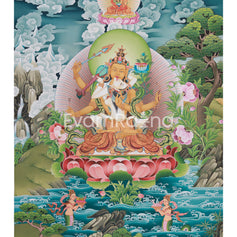
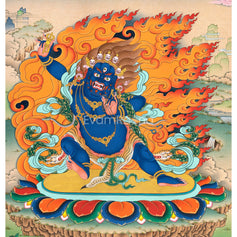
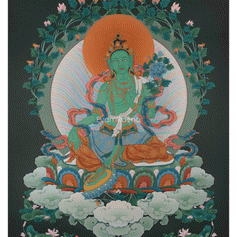
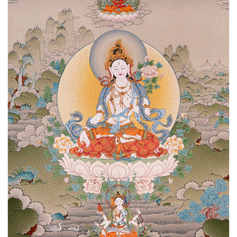
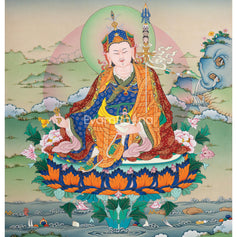
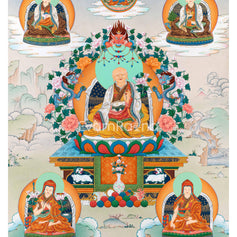
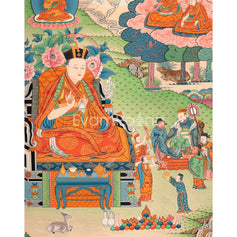
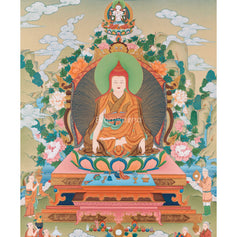
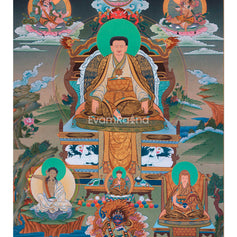
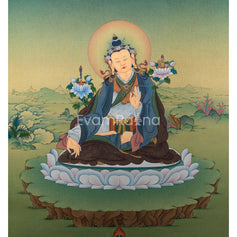
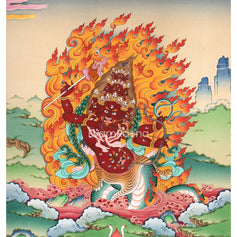
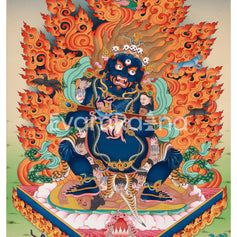
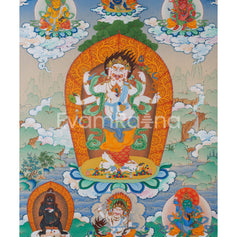
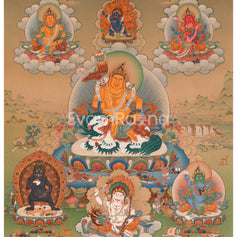
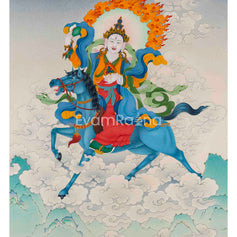
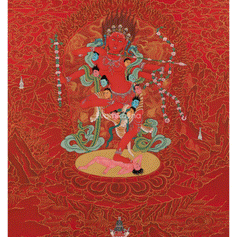
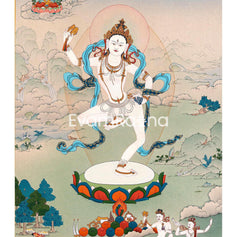
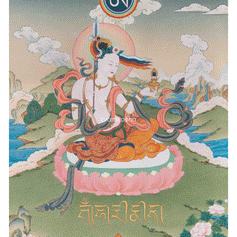
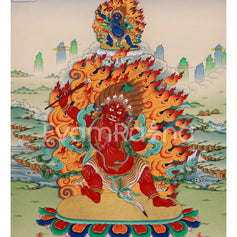
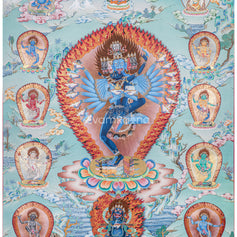
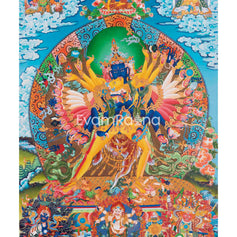
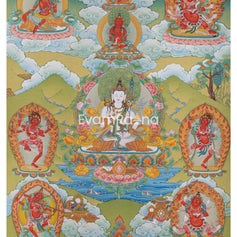
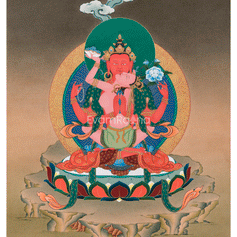
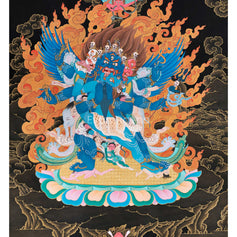
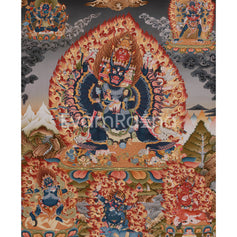



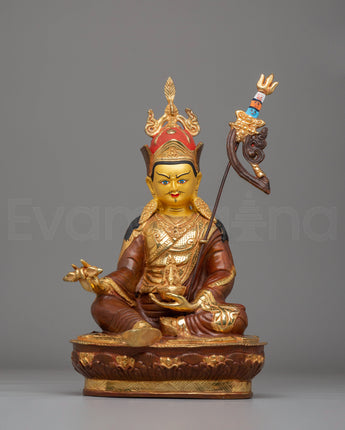


The Guru Rinpoche statue is rich in symbolic iconography, each element representing his profound teachings and spiritual power. In his right hand, he holds a Vajra, symbolizing indestructible truth and the unshakable power of enlightenment. His left hand holds a Kalasha, a sacred vessel of immortality and abundance, representing the nourishment of the body and spirit. The Khattvanga, a staff held in his other hand, signifies his mastery over worldly and spiritual realms, symbolizing the unity of wisdom and compassion. The lotus base on which Guru Rinpoche sits represents purity, as the lotus rises from the mud untouched by it, much like the path of enlightenment. His hat, often depicted as a scholar’s cap, symbolizes his role as a spiritual teacher and master of tantric wisdom. Together, these elements capture the essence of Guru Rinpoche’s profound wisdom and spiritual guidance.
Introduction To Guru Rinpoche :
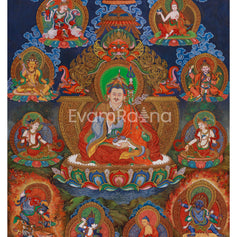
Guru Rinpoche was an instrumental figure in Tibetan Buddhism. In Tibetan Buddhism, Padmasambhava's teachings are said to have an oral lineage (kama) and a lineage of the hidden treasure texts (termas). He is said to appear in visionary encounters to tertöns, and his form is visualized during guru yoga practice, particularly in the Nyingma school. He is revered by Buddhists in Tibet, Nepal, Bhutan, India's Himalayan states, and other countries around the world.