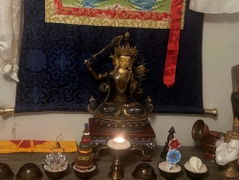
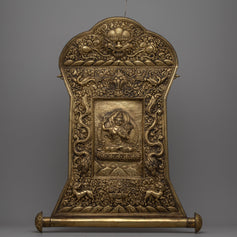


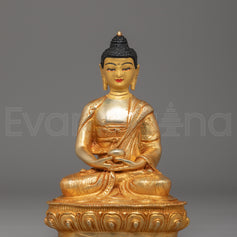
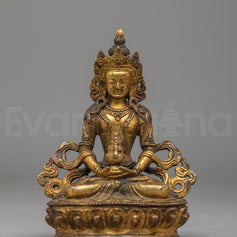
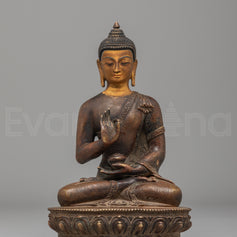
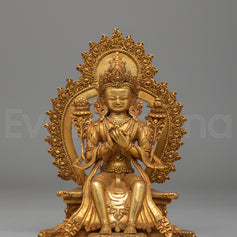
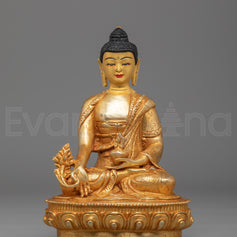
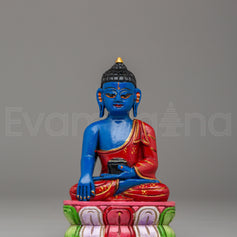
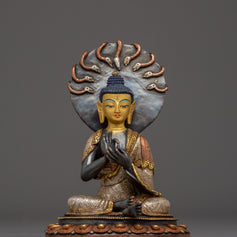
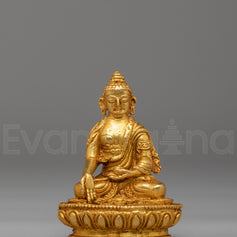
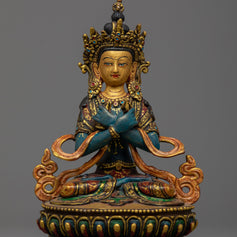

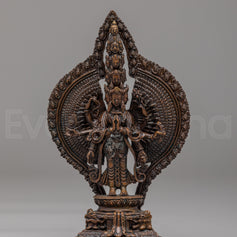
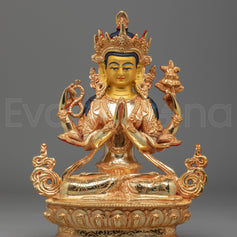
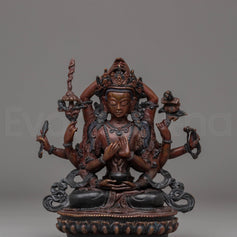
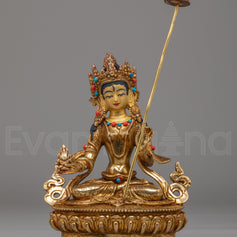
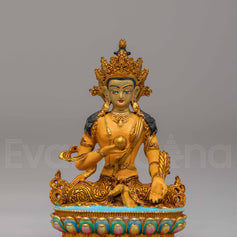
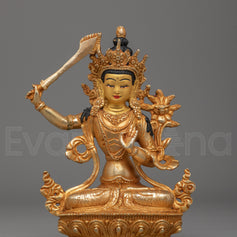
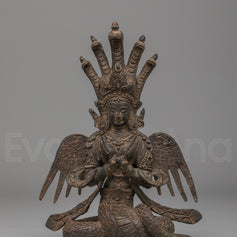
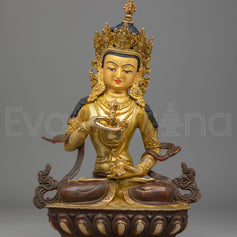
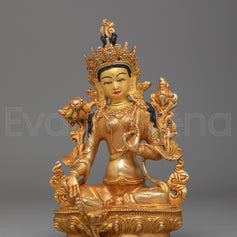
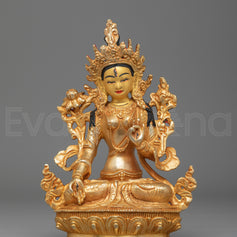
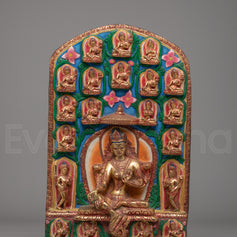
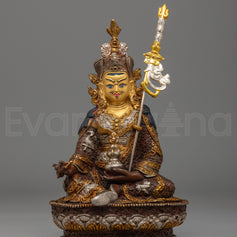
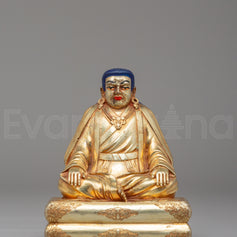
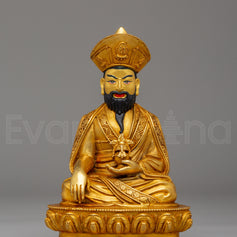
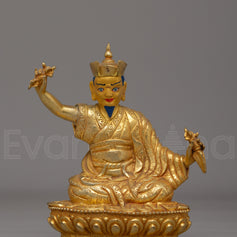
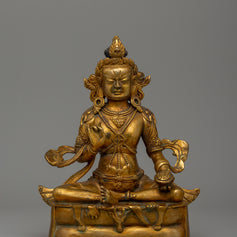
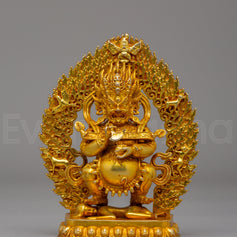
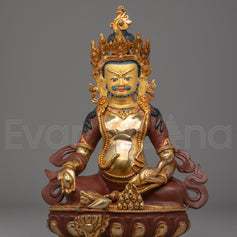
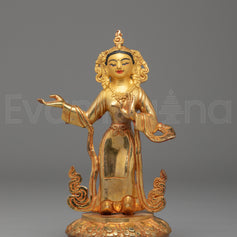

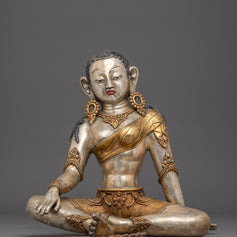
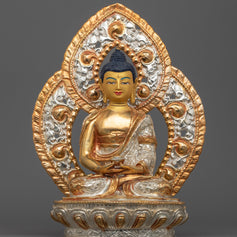
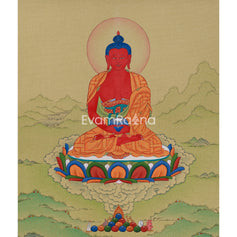
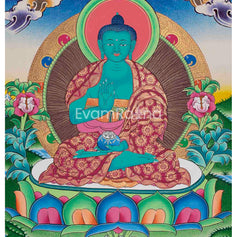
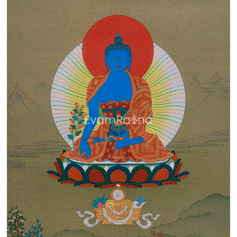
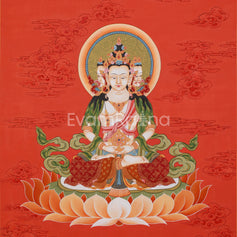
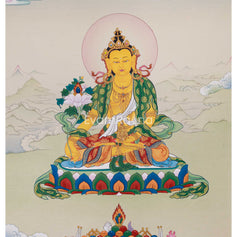
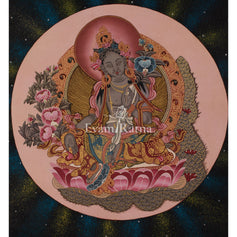
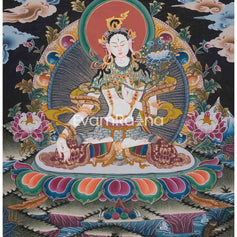
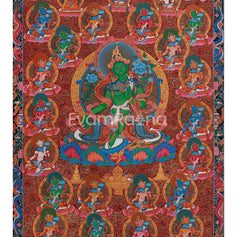
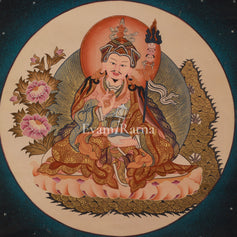
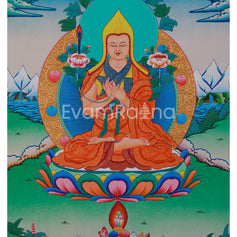
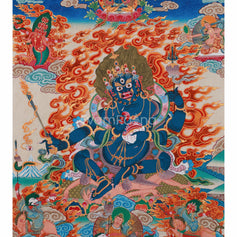
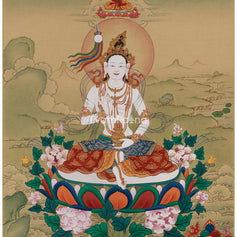
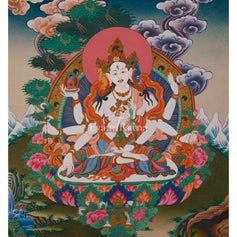
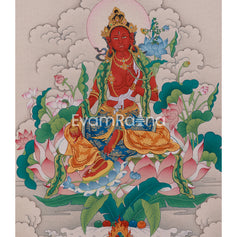
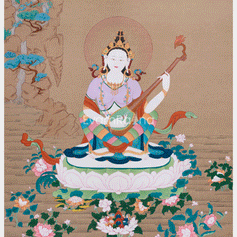
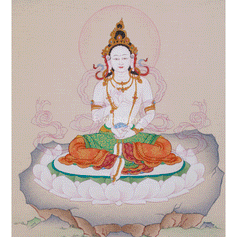
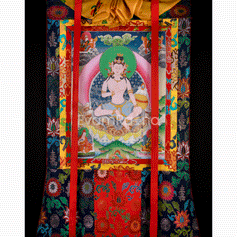



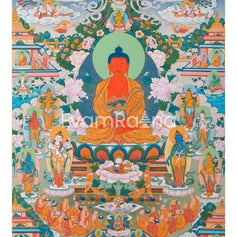
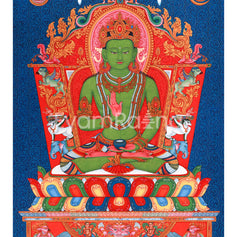
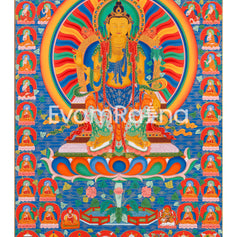
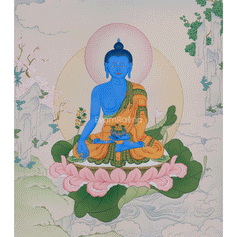
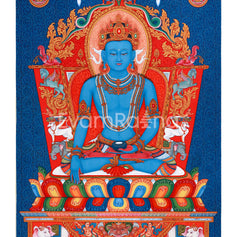
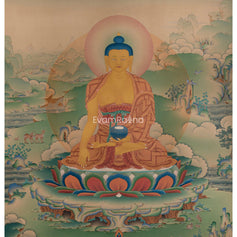
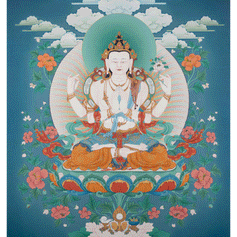
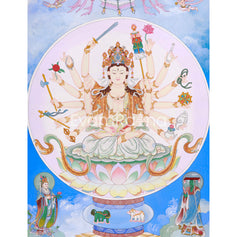
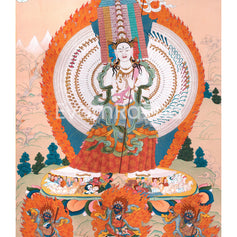
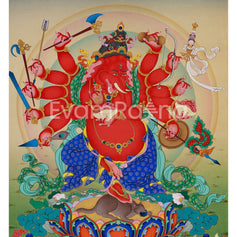
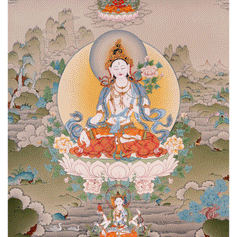
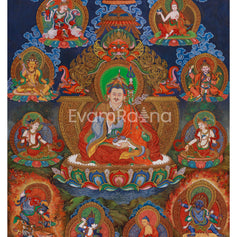
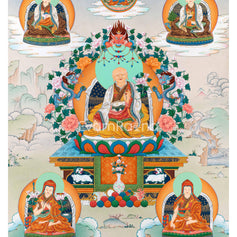
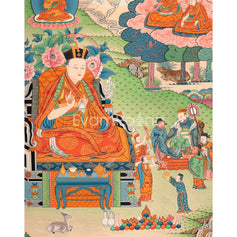
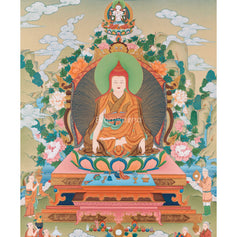
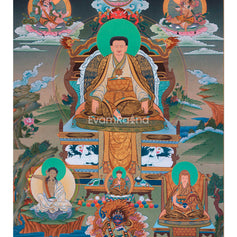
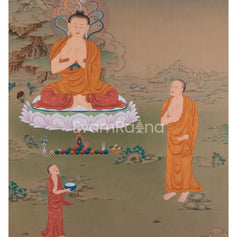
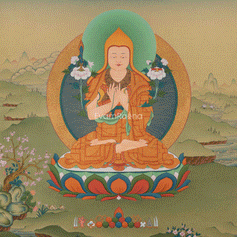
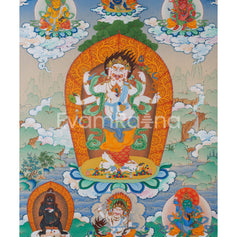
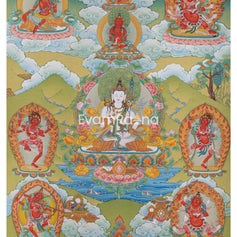
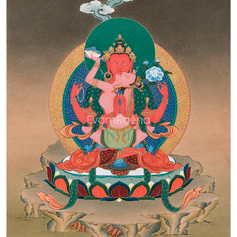
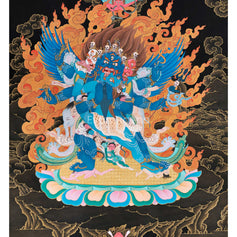
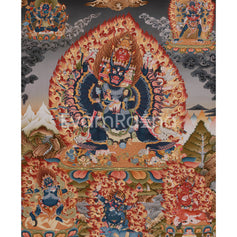


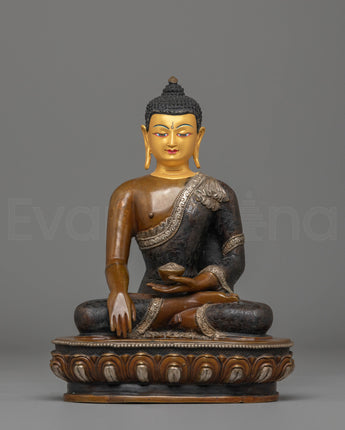


The Shakyamuni Buddha is depicted with his right hand in the Bhumisparsha Mudra, symbolizing the moment of enlightenment when he touched the Earth to witness his awakening. His left hand holds an alms bowl, representing his renunciation and devotion to the path of simplicity. The ushnisha, or crown-like topknot, signifies his wisdom and spiritual knowledge. Resting on a lotus base, the Buddha represents purity, rising above worldly attachments. Dressed in monastic robes, he embodies humility and the path of enlightenment.
Introduction to Shakyamuni Buddha :
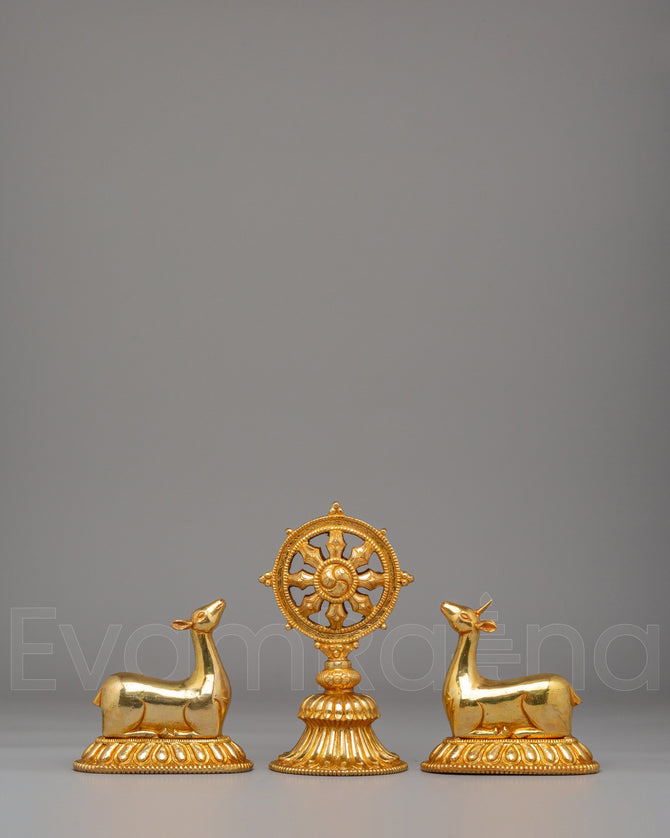
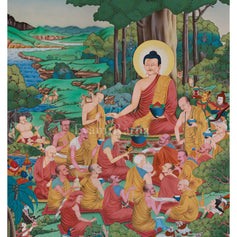
Siddhartha Gautama was raised as a king following the wishes of his royal father and was born the crown prince of the mighty Shakya Kingdom. When he was about 29, he learned of people's immense suffering. He renounced his palatial lifestyle, lavish clothing, and fortune to discover the source of the anguish and find a cure. After over six years of study, self-denial, and tremendous concentration, he finally achieved his objective. He had attained nirvana (a Buddha). He then asserted that he had visited a deer park outside Varanasi, India's Sarnath (Benares).