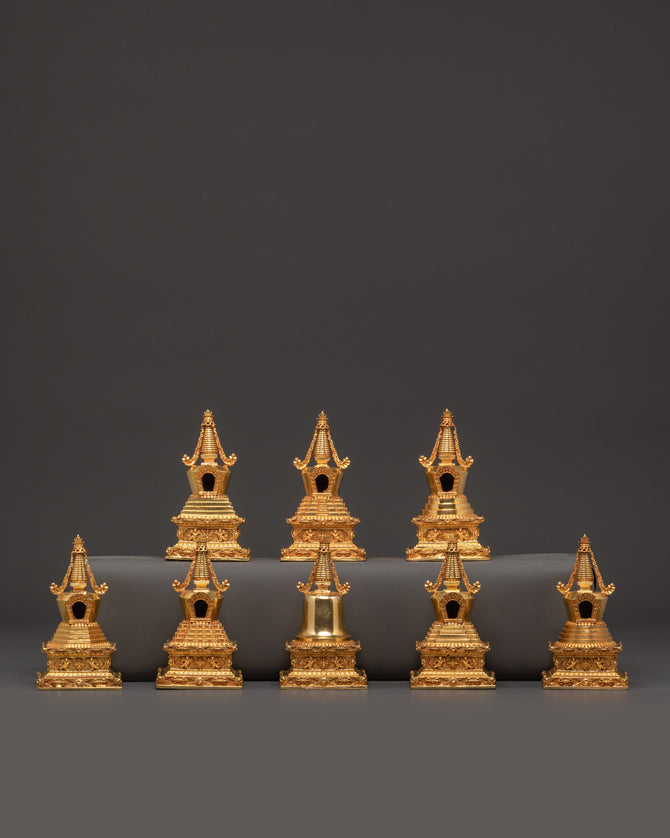

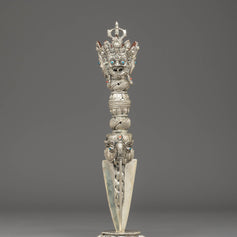












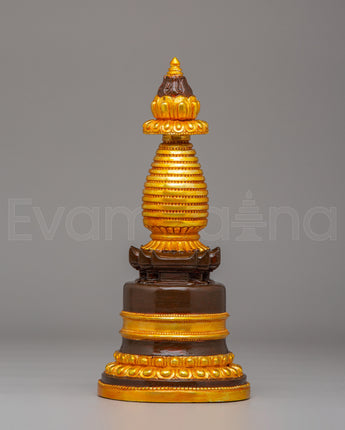


Traditional Buddhist Kadampa Stupa | Symbol of Enlightenment

100% AUTHENTIC

HANDMADE

FREE SHIPPING
Couldn't load pickup availability
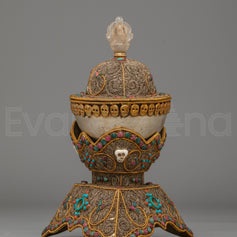
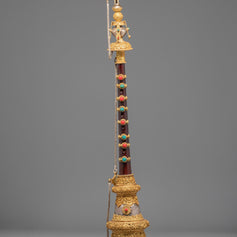
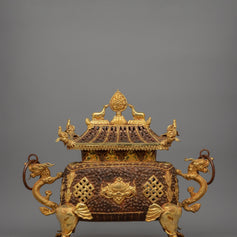
Handmade Kadampa Stupa | A Sacred Tibetan Buddhist Shrine for Meditation and Rituals
------------------------------------------------
Size: 22cm(Height) x 10.5cm(Length) x 10.5cm(Width)
Weight: 1.3 kg
Materials: Oxidized Copper, Electro Gold Plated
------------------------------------------------
About Our Product
The Traditional Buddhist Kadampa Stupa is a beautifully crafted symbol of the Buddha’s teachings, designed to bring sacred energy into your home or meditation space. Standing at 22cm in height and made from oxidized copper with electro gold plating, this stupa is an embodiment of stability, wisdom, and enlightenment. The stupa’s multi-tiered structure represents the path to enlightenment, while the golden accents highlight its sacred nature, making it a perfect centerpiece for your altar or spiritual practice area.
Intricately designed, the Kadampa Stupa features detailed layers that reflect the Buddha’s teachings of spiritual growth, purity, and compassion. The golden top of the stupa symbolizes the Buddha’s teachings, while the base is adorned with meticulous layers representing the foundation of wisdom. The electro gold plating gives the stupa a divine finish, enhancing its beauty and reinforcing its sacred symbolism. This stupa is not only a decorative piece but a powerful spiritual tool for meditation and reflection.
The Traditional Buddhist Kadampa Stupa serves as a reminder of the path to enlightenment. Its symbolism encourages practitioners to deepen their connection to Buddhist teachings, promoting mindfulness, peace, and spiritual awakening. Display this stupa on your altar, meditation space, or in your home to invite blessings, spiritual protection, and wisdom into your life. With its rich symbolism and stunning craftsmanship, it is a perfect addition to any sacred space.
Introduction of Kadampa Stupa
Prior to Buddhism, great teachers were traditionally interred in mounds. While some were cremated, others were occasionally buried in a seated, meditative posture, covered by an earth mound. Consequently, the domed shape of the stupa evolved to represent a person seated in meditation, mirroring the Buddha's posture when he attained Enlightenment and understood the Four Noble Truths. The stupa's base symbolizes his crossed legs in meditation, the middle portion represents the Buddha’s body, and the top of the mound, from which a pole rises surrounded by a small fence, signifies his head. Before human images of the Buddha were created, reliefs often depicted practitioners demonstrating devotion to a stupa.