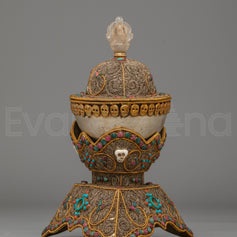











Stupa of Great Miracles | Tibetan Buddhist Stupa

100% AUTHENTIC

HANDMADE

FREE SHIPPING
Couldn't load pickup availability
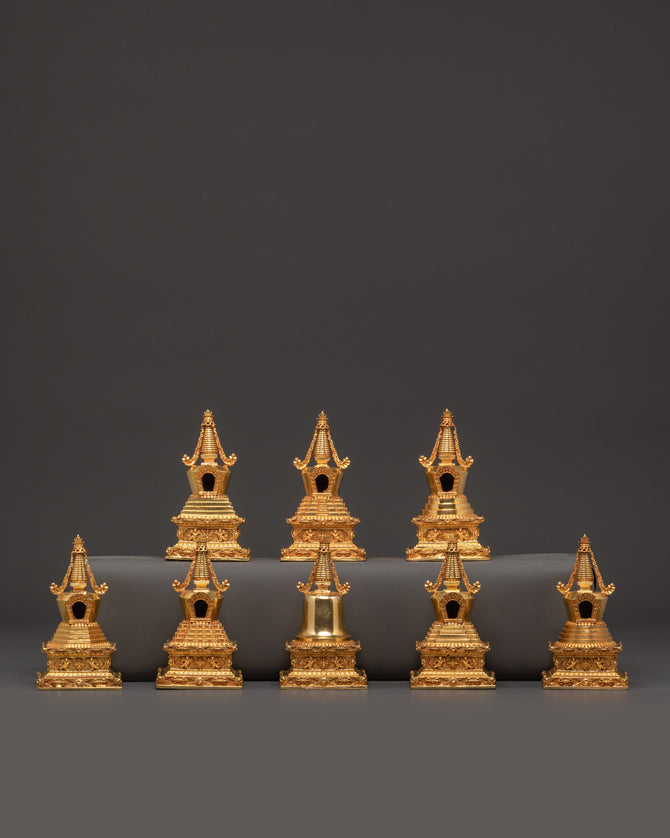
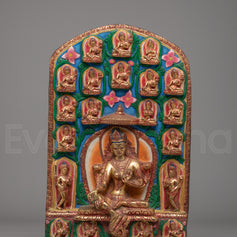
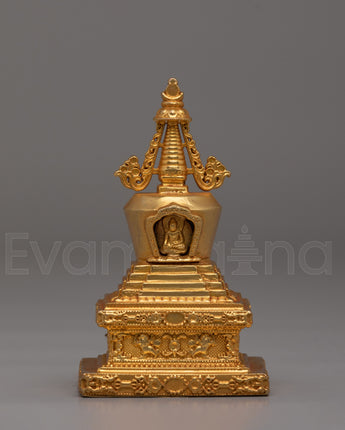
Handcrafted Stupa of Great Miracles for Spiritual Healing
------------------------------------------------
Size: 10.5cm(Height) x 6cm(Length) x 6cm(Width)
Weight: 0.23 kg
Materials: Copper Body, Gold Plated
------------------------------------------------
About Our Product
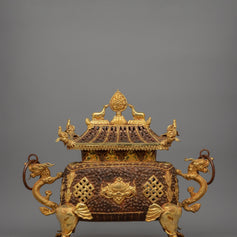
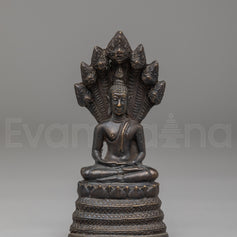
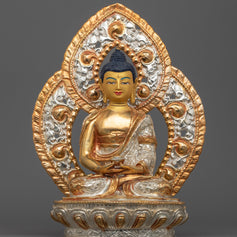
The Stupa of Great Miracles is a beautiful representation of one of the most revered stupas in Tibetan Buddhism. Crafted from a solid copper body with a radiant gold-plated finish, this stupa features a small Buddha figure inside, symbolizing the miraculous powers of the Buddha. Known for its connection to the Buddha's great miracles, this stupa embodies the virtues of wisdom, enlightenment, and compassion. Its intricate detailing, with beautiful golden accents, makes it a striking and meaningful addition to any sacred space.
The Stupa of Great Miracles is designed to symbolize the Buddha’s teachings, particularly the miracles that occurred in his life, showing the power of compassion and wisdom. The Buddha seated within the stupa represents peace and spiritual power, while the gold-plated surface enhances the sacred energy of the piece. This stupa is ideal for those seeking spiritual growth and enlightenment, serving as a focal point for meditation and spiritual reflection.
With a height of 10.5 cm, the Stupa of Great Miracles is the perfect size for altars, meditation tables, or as a decorative centerpiece in your home. Its intricate design and powerful symbolism make it a great choice for anyone practicing Tibetan Buddhism or those who admire the teachings of the Buddha. This stupa not only offers a connection to spiritual practice but also serves as a symbol of miracles and divine power.
Introduction of Stupa of Great Miracles
Before Buddhism, great teachers were buried in mounds. Some were cremated, but sometimes they were buried in a seated, meditative position. The mound of earth covered them up. Thus, the domed shape of the stupa came to represent a person seated in meditation, much as the Buddha was when he achieved Enlightenment and knowledge of the Four Noble Truths. The base of the stupa represents his crossed legs as he sat in a meditative pose. The middle portion is the Buddha's body, and the top of the mound, where a pole rises from the apex surrounded by a small fence, represents his head. Before images of the human Buddha were created, reliefs often depicted practitioners demonstrating devotion to a stupa.