





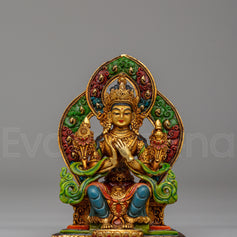
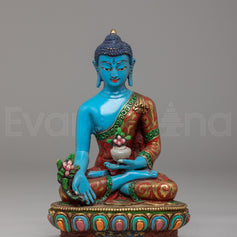
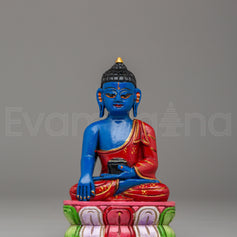
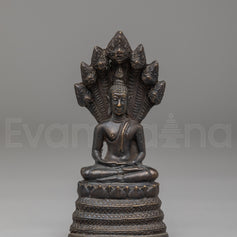
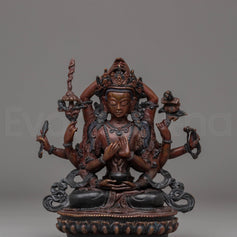
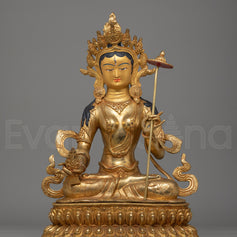
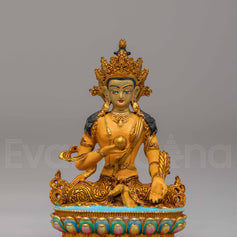
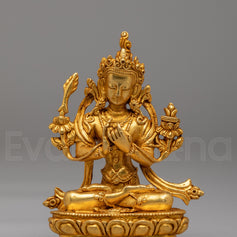
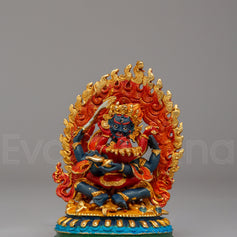
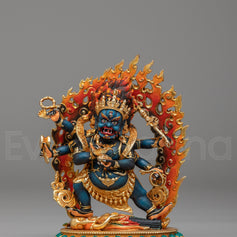
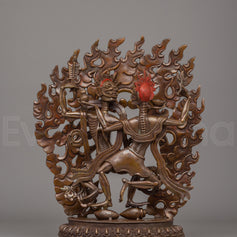
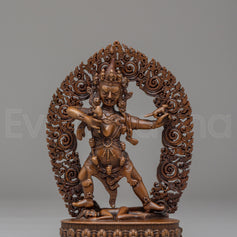









Handmade Sacred Enlightenment Stupa | Gold Plated Buddhist Decor

100% AUTHENTIC

HANDMADE

FREE SHIPPING
Couldn't load pickup availability
------------------------------------------------
Size: 30cm(Height) x 15.5cm(Length) x 15.5cm(Width)
Weight: 2.74 kg
Materials: Copper Body, Gold Plated, Gemstone: Coral, Turquoise
------------------------------------------------
About Our Product
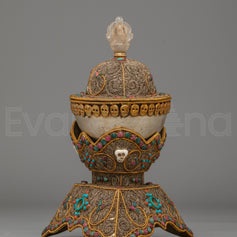
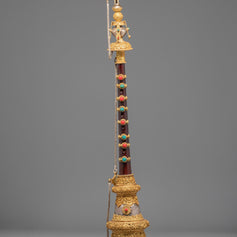
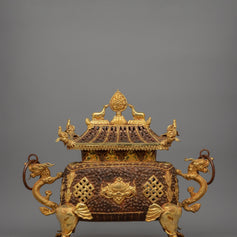
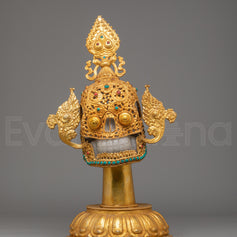
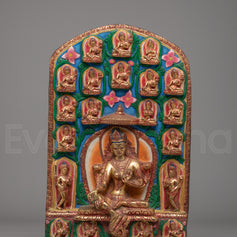
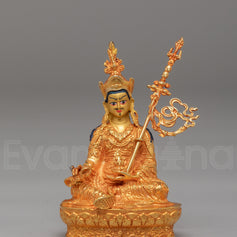
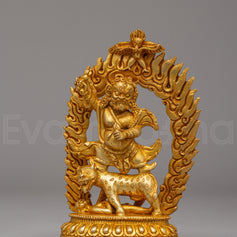
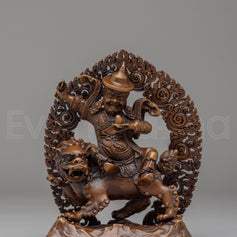
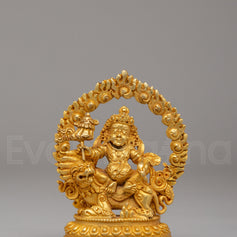
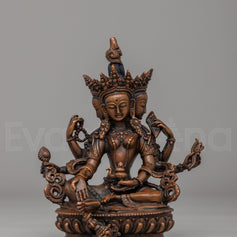
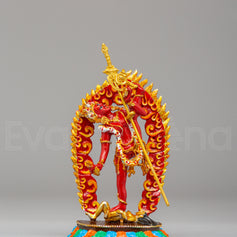
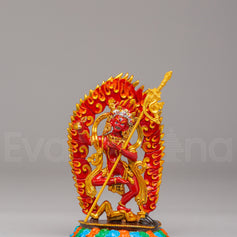
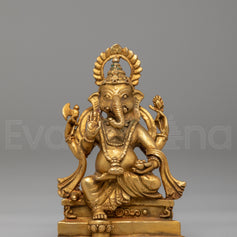
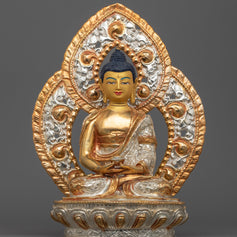
This Handmade Sacred Enlightenment Stupa is crafted from a copper body with radiant gold plating and accented with coral and turquoise gemstones. Measuring 30cm in height with a 15.5cm base and weighing 2.74kg, it presents a graceful ritual form for Buddhist altar decor, meditation rooms, shrine spaces, and sacred home interiors.
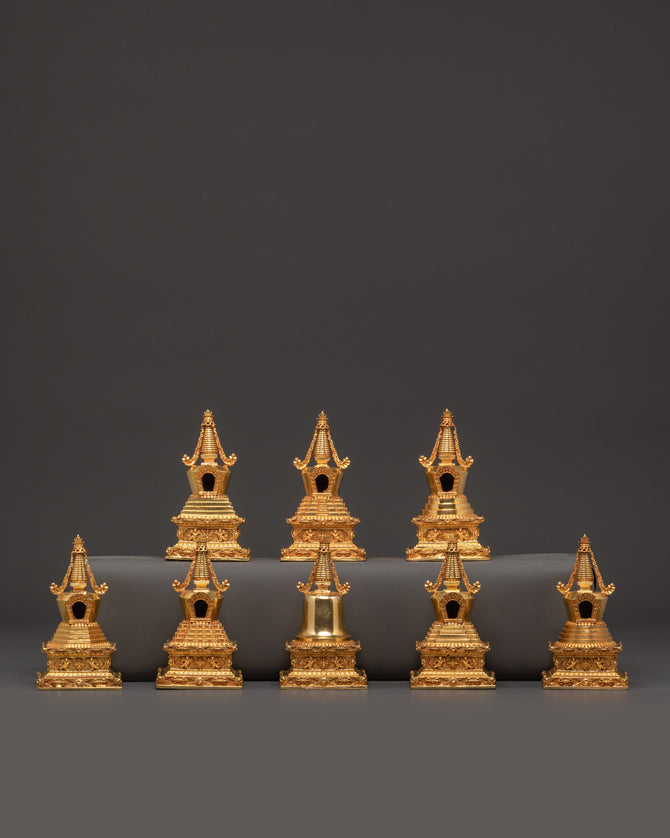
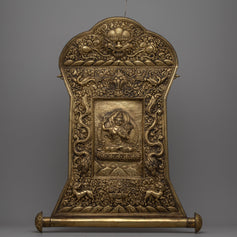
The stupa features a tiered base, ornate floral patterns, gemstone inlays, and a central enlightened figure framed within the front niche. Its elevated spire, flowing side ornaments, and detailed symbolic motifs reflect traditional Himalayan craftsmanship. The coral and turquoise accents add sacred color meaning, often associated with vitality, healing, protection, and spiritual balance.
In Buddhist tradition, a stupa represents the awakened mind, the path to enlightenment, and the presence of peace. This sacred enlightenment stupa can serve as a meaningful meditation support, altar offering, or spiritual decor piece, inspiring clarity, devotion, compassion, and calm awareness in any sacred space.
Introduction of Enlightenment Stupa
Prior to Buddhism, great teachers were often interred in mounds. While some were cremated, others were occasionally buried in a seated, meditative position, with earth covering them. Consequently, the domed shape of the stupa came to represent a person seated in meditation, much like the Buddha when he attained Enlightenment and knowledge of the Four Noble Truths. The base of the stupa symbolizes his crossed legs in a meditative pose, the middle portion represents the Buddha's body, and the top of the mound, from which a pole rises surrounded by a small fence, signifies his head. Before human images of the Buddha were created, reliefs frequently depicted practitioners showing devotion to a stupa.