


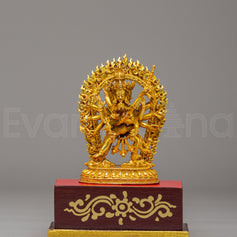
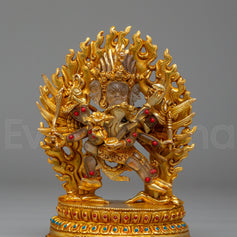
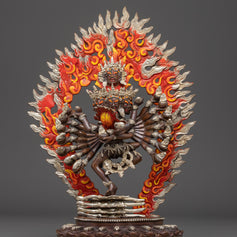
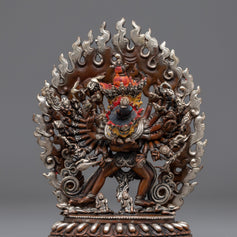






Handcrafted Tibetan Lotus Blossom Stupa | Sacred Spiritual Decor for Altar

100% AUTHENTIC

HANDMADE

FREE SHIPPING
Couldn't load pickup availability
Handcrafted Tibetan Lotus Blossom Stupa | Stupa for Meditation
------------------------------------------------
Size: 24cm(Height) x 12.5cm(Length) x 12.5cm(Width)
Weight: 1.75 kg
Materials: Gemstone: Coral, Turquoise, Gold Plated, Oxidized Copper Body
------------------------------------------------
About Our Product
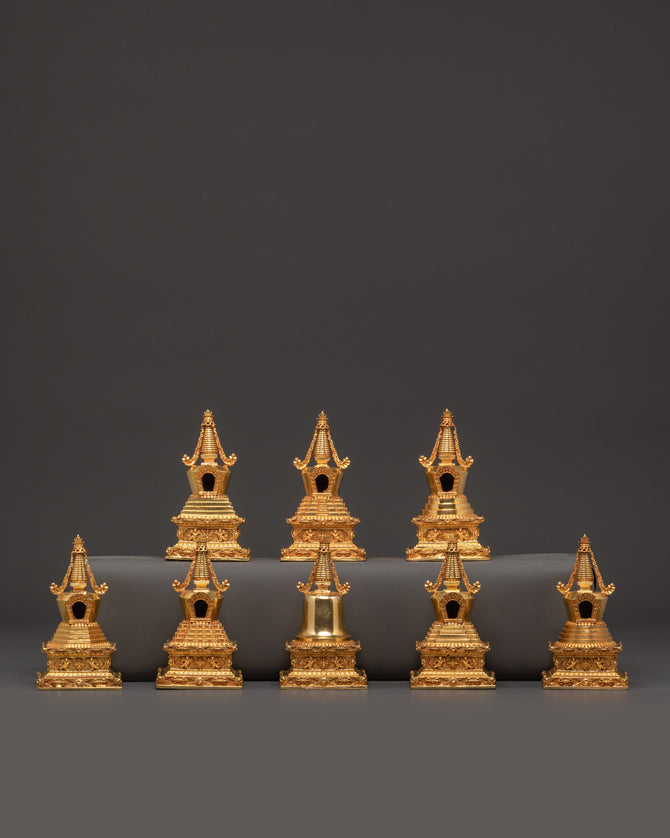
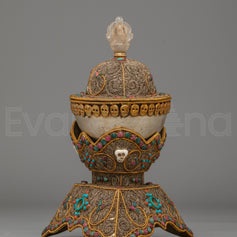
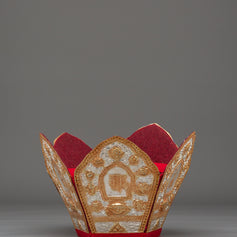
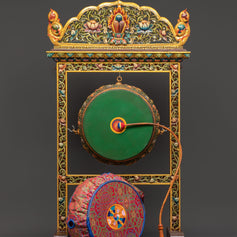
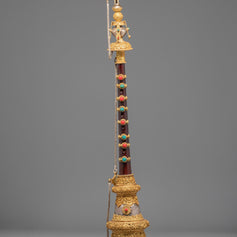
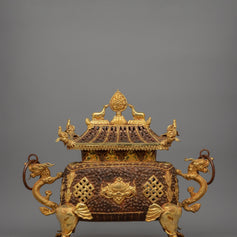
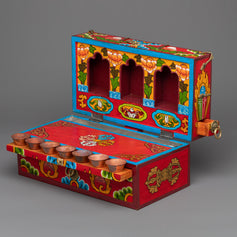
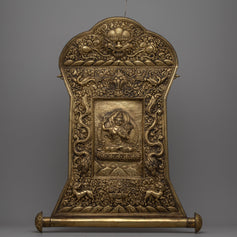
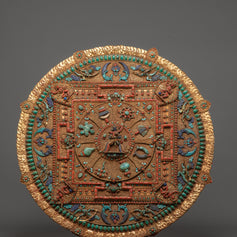
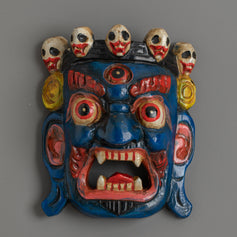
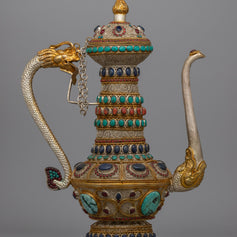
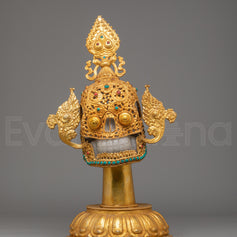
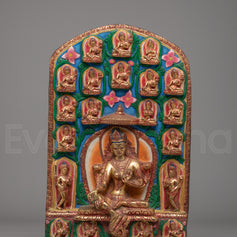
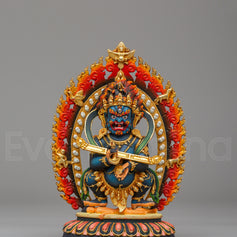
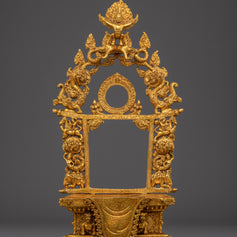
This Handcrafted Tibetan Lotus Blossom Stupa brings sacred beauty, devotional presence, and peaceful energy to a Buddhist altar, meditation room, or spiritual shrine. Measuring 24cm in height, 12.5cm in length, and 12.5cm in width, this 1.75 kg stupa is made with an oxidized copper body, gold plated details, and vibrant coral and turquoise gemstones. Its tiered lotus base, ornate borders, central Buddha niche, and crowned spire reflect the refined artistry of traditional Tibetan Buddhist craftsmanship.
The lotus blossom stupa is a meaningful symbol of purity, awakening, and the path toward enlightenment, rising from earthly experience into spiritual clarity. Coral and turquoise embellishments add sacred color and are often associated with protection, balance, vitality, and healing energy. The gold plated motifs highlight the layered structure, while the oxidized copper finish gives the piece a deep, revered appearance suited for offerings, mantra practice, and quiet reflection.
Carefully created with intricate surface patterns, gemstone accents, and a graceful architectural form, this Buddhist stupa serves as a powerful focal point for peace and contemplation. It can be displayed as Tibetan altar decor, a Buddhist reliquary stupa, sacred shrine art, or a thoughtful spiritual gift for practitioners and collectors. Its presence encourages mindfulness, compassion, enlightenment, and a serene atmosphere in any sacred space.
Introduction of Lotus Blossom Stupa
Prior to Buddhism, great teachers were interred in mounds. While some were cremated, others were occasionally buried in a seated, meditative posture, covered by an earth mound. Consequently, the domed shape of the stupa came to symbolize a person in meditation, mirroring the Buddha's posture when he attained Enlightenment and understood the Four Noble Truths. The stupa's base represents his crossed legs in a meditative pose, the middle portion signifies the Buddha’s body, and the top of the mound, featuring a pole rising from its apex encircled by a small fence, represents his head. Before human images of the Buddha were created, reliefs often depicted practitioners demonstrating devotion to a stupa.