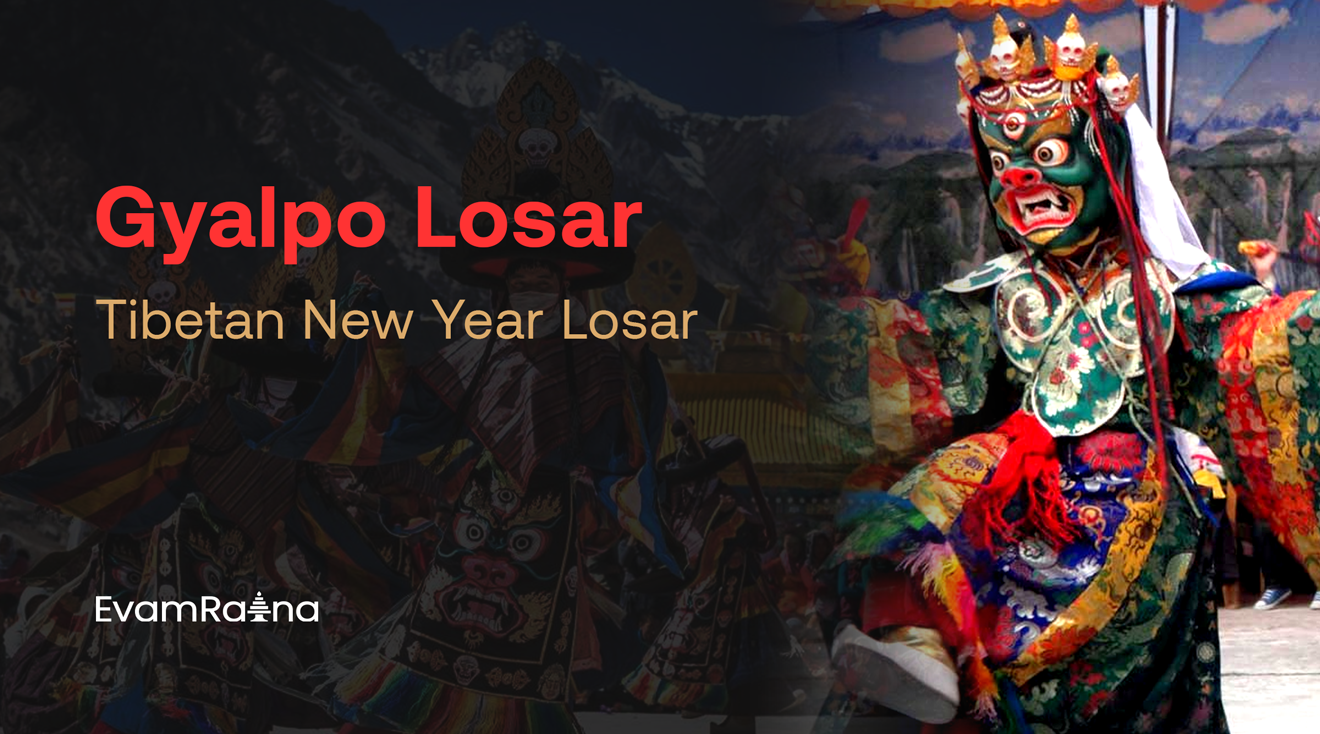
Introduction: What is Gyalpo Losar?
The most significant and widely celebrated event in the Tibetan cultural calendar is Gyalpo Losar, which falls in the year 2153 (Tibetan Calendar) and marks the King's New Year. Rooted in centuries-old traditions predating Buddhism, Losar has also been influenced by Buddhist practices. This celebration represents a temporal and spiritual turning point for the Tibetan people. Gyalpo Losar is based on the Tibetan lunar calendar and typically occurs in February or early March each year.
Losar is more than a festive occasion; it is a deep-rooted cultural tradition. To the Tibetans scattered across the Himalayan nation and in exile communities worldwide, it is a period of reviving faith, nurturing family ties, and reasserting the self. Houses are cleansed, monasteries are filled with hymns, prayer flags are lifted to the wind, and communities are in mutual feast. It is a celebration that easily merges with spirituality, festivity, symbolism, and hardiness.
The Significance: A 15-Day Celebration of Renewal

By: DCnepal
The Gyalpo Losar is a fifteen-day festival, the first three days being the most significant. Monasteries hold ceremonies in Tibet and among diasporic communities, and cultural performances, prayer sessions, and feasts preserve Tibetan culture.
Losar is particularly significant for Tibetans living outside their homeland. In India and Nepal, it reflects continuity - a strong claim that culture, language, and spiritual heritage survive even in the face of displacement. It turns out to be a celebration and a silent form of resistance, a statement that identity is not lost.
The core idea of Losar is purification, gratitude, compassion, and hope.
Origins of Gyalpo Lhosar:
Gyalpo Lhosar, the Tibetan New Year celebrated by Sherpa, Tamang, and Bhutia communities, originated in ancient pre-Buddhist Bon traditions, in which it was observed as a winter and later a spring festival to honor nature spirits and local deities. It was formalized during the reign of the Ninth Tibetan king, Pudekungyal.
The Preparations: Setting the Stage
Preparations for Losar begin several days before the New Year. The ceremonies held before the festival are as important as the celebration itself.
The “Guthuk” Tradition: A Symbolic Farewell to the Old Year
During the 29th day of the last lunar month, families gather to enjoy Guthuk, a special soup of noodles commonly referred to as the nine-ingredient soup. This is a playful and symbolic meal.
Inside a dough, various items are hidden. Laughter and teasing follow when the symbolic item is discovered by family members. Guthuk is a collective expression of character traits - a light-hearted acknowledgment of flaws and an entry into a new year.
There is also a symbolic cleansing in the ritual. After the meal, a small effigy made from dough is passed around to absorb negative energies and is then discarded or burned, signifying the release of the past year’s misfortunes.
Spiritual Spring Cleaning: Elimination of Negative Energy
Before Losar, cleaning is not only practical but also sacred. The households are well swept and washed to eliminate the physical dust and the metaphysical negativity. Old offerings are swept away, and incense is lit as a way of cleansing up the place.
This ritual symbolizes the release of accumulated impediments, resentments, and suffering. According to Tibetan tradition, it is customary to keep the house clean at the beginning of the New Year to welcome clarity, prosperity, and good fortune.
The Three Major Days of Celebrating
Day 1: Lama Losar- Honoring the Guru
On the first day of Losar, families visit monasteries to honor spiritual teachers by offering khatas (ceremonial scarves), lighting butter lamps, and receiving blessings from the lamas.
This day underscores the importance of the guru-disciple relationship in Tibetan Buddhism, characterized by respect, contemplation, and prayer.
A traditional, homemade beverage called "Chang" or "Changkol" is also served on this day.
Day 2: Gyalpo Losar -The king’s Celebration

By: nepaliculturalhouse.com
The official celebration of the New Year is on the second day. Previously linked to royal meetings, it is now community-oriented.
Individuals wear traditional clothes, interact with relatives and friends, wish them a happy Losar, and eat festive food. The neighborhoods are united through cultural events featuring traditional music and dance.
Day 3: Choe-Kyong Losar – Worshipping Guarding Deities

The third day is dedicated to Choe-Kyong, the Dharma protectors. New prayer flags, which are called Tarshing, are raised by families and usually on rooftops or hillsides.
The colorful flags, printed with sacred mantras and symbols, are said to disseminate blessings whenever they flutter in the wind. Offerings are made outdoors to find protection, wellness, and prosperity for the coming year.
Losar Altar (Derkha): An Exhibit of Generosity

By: Dickeydol Recipe
Families make a Losar altar, usually known as a Derga, covered with symbolic offerings:
- Khapse (deep-fried pastries)
- Fresh fruits
- Butter sculptures
- Incense and candles
- A box of Chema of roasted barley flour and butter
The home has an altar as a point of worship. It is the expression of appreciation of the blessings of the past and hopes of the prosperity of the future.
How to Set Up a Sacred Shrine (Dherka) for Gyalpo Losar:

By: Sukhasiddhi.org
Prepare Your Space:
Set Up the Main Altar:
Buddha Statue/Image:

Offerings:
Droso-Chemar (Grain Offering):
Butter Sculptures:
Khapse (Fried Cookies):
Wheat Grass:
Representation of the Head of Sheep:
Sweet Treats and Fruit:
Ceremonial Items:
Tea and incense:

Incense Burner
Make Aspiration Prayers:
Light New Candles:
Wear Traditional Clothes:
Repeat the prayers and meditate:
Rituals, Food, and Symbols

Khapse: The Art of Tibetan Fried Pastries
Khapse are decorative pastries, which are deep-fried and prepared during Losar. They are twisted into complex shapes that symbolize auspicious omens and are placed at the center of the Losar altar, as well as handed to visitors.
They are usually prepared communally, thereby reinforcing family relationships.
Changkal: A Toast to the New Year
Changkol is a warm, fermented rice beverage used in Losar festivities. Mildly alcoholic and relaxing, it represents partying and togetherness.
Sharing Changkol portrays hospitality and goodwill.
Eight Auspicious Symbols

The Eight Auspicious Symbols (Ashtamangala) are very common during Losar and used in the decoration of altars and homes:
- The Endless Knot - Interconnection of all things
- The Lotus - Purity
- The Victory Banner - Victory over Maras
- The Parasol - Protection
- The Conch Shell - Transmission of Buddhist Teachings
- The Golden Fish - Abundance
- The Treasure Vase - Wealth & Treasures of Dharma
- The Dharma Wheel - The Teachings of Buddha
These signs welcome peace, knowledge, security, and well-being in the New Year.
Where to Experience Gyalpo Losar:
Losar is a festive celebration in Lhasa, where pilgrims gather at the Potala Palace and the Jokhang Temple to offer prayers and light butter lamps.
Dharamshala, the headquarters of the Tibetan government-in-exile, is a place where Losar events are vibrant, marked by spirituality and cultural pride. Tibetan communities in Kathmandu, particularly around Boudhanath Stupa, hold prayer ceremonies and communal celebrations.
Local societies all over the world

By: Ratopati
Losar meetings, cultural events, and prayer services are organized by the Tibetan associations and Buddhist centers worldwide. Being there will be a purposeful experience of enjoying the festival in a respectable manner.
Common Greetings: How to Say “Happy New Year.”
Tashi Delek - A general blessing that brings good fortune and good luck.
Losar Tashi Delek - In particular, Happy New Year.
Overall, these greetings are typically followed by the presentation of a white ceremonial scarf, called a khata.
Conclusion: The Message of Renewal
Gyalpo Losar is a festival that symbolizes revitalization, spirituality, family, and community. It encourages individuals to reflect on the past year, forgive themselves, cultivate gratitude, and look forward to the future.
For Tibetans around the world, Losar is not just the turning of a calendar page; it is a reaffirmation of faith, identity, and continuity. Losar embodies the strength found in the prayer flags fluttering in the mountain breeze, the shared bowls of Guthuk, the laughter at hidden dough-ball tricks, and the solemn chants in monasteries.
Each Year, it offers a fresh beginning
Losar Tashi Delek.
Reference & Further Reading: