


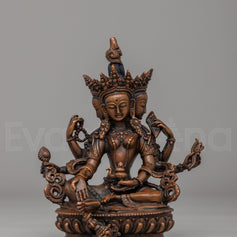
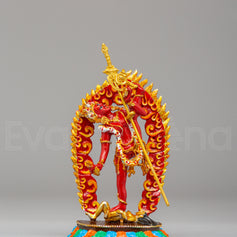
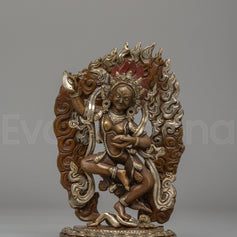
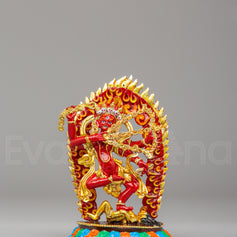
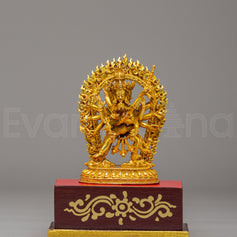
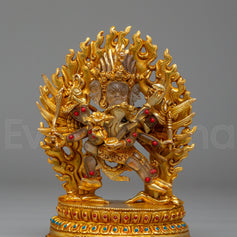
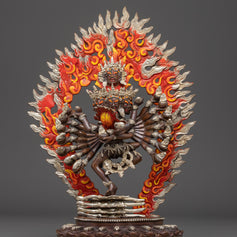
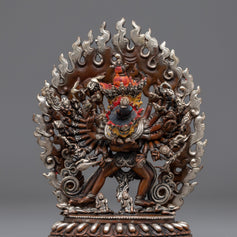





The Royal Tutelary Deity of Nepal's Kathmandu Valley
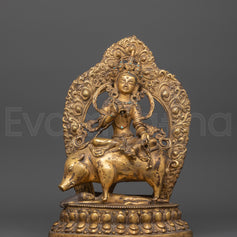
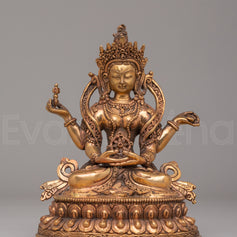
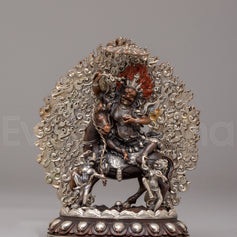
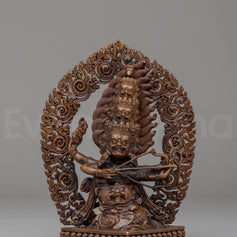
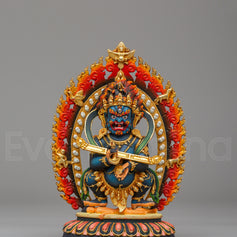
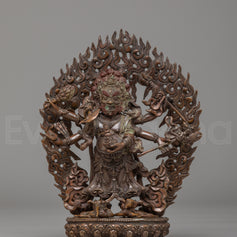
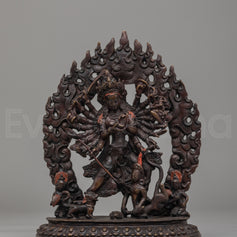
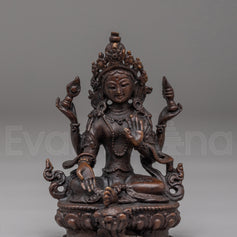
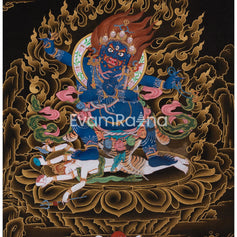
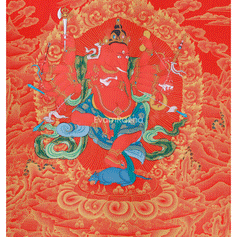
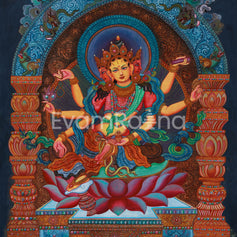
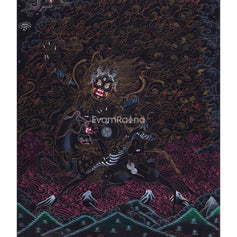
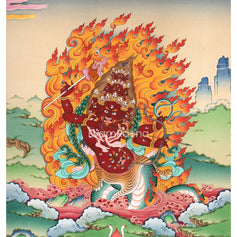
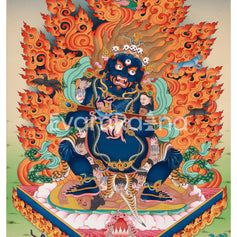
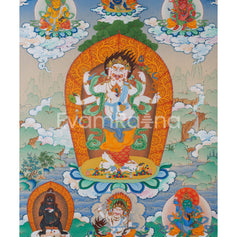
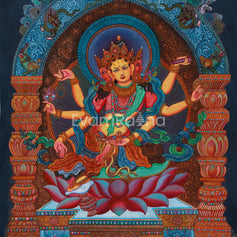
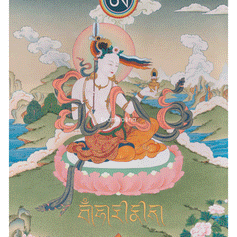
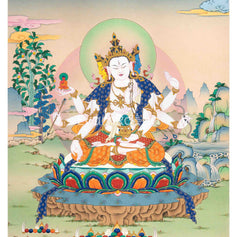
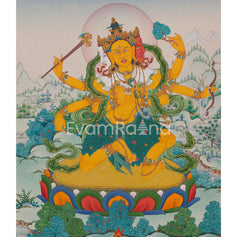
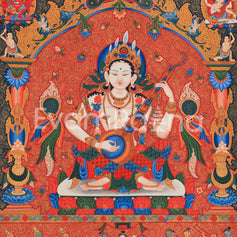
In Nepal's Kathmandu Valley, the goddess Taleju Bhawani has been a significant deity for nearly a thousand years. Revered as a fierce manifestation of the Hindu goddess Durga and embodying Shakti, the divine feminine energy, she is affectionately referred to as Taleju Maju (Mother Taleju) by her devotees. Taleju Bhawani served as the royal tutelary deity of the Malla dynasty, symbolizing political legitimacy and royal power. Her influence extends into Newar culture and Tantric Hinduism, where she is celebrated as a guardian who bestows victory in battle, success in governance, and spiritual liberation. The Taleju Temple in Kathmandu Durbar Square, her principal shrine, remains a culturally and historically vital site, overlooking the ancient royal palace complex and embodying the valley's sacred heritage.
The Origin of the Name Taleju

The name Taleju carries layers of linguistic and spiritual meaning. Scholars believe the name may derive from the goddess Tripura Sundari, one of the ten Mahavidyas (great wisdom goddesses) in Tantric Hinduism, or it may represent a tantric manifestation of Durga.
In different historical and cultural contexts, the goddess has been referred to by multiple names:
- Tulasi/Tulaja: a name pointing to her connection with the famous Tulja Bhawani Temple in Tuljapur, Maharashtra, India
- Talagu: an older Newar variant of the name
- Taleju Bhavani/Taleju Bhawani: the most commonly used form today
- Candika, Ambika, Durga, Bhavani: epithets used by King Pratap Malla in his devotional poem Sarvaparadhastotra
This multiplicity of names reflects the goddess's deeply layered identity; she is simultaneously a local Newar deity, a pan-Hindu goddess, and a Tantric power deity whose true nature, as scholars note, remains deliberately veiled in sacred secrecy.
Taleju Bhawani and the Malla Dynasty

(Image from Termatree)
The Malla dynasty, which ruled the Kathmandu Valley from the 12th to the 18th century, is deeply intertwined with the worship of Goddess Taleju Bhawani, regarded as their ishta devata (personal deity) and a source of divine power and legitimacy. King Jayasthiti Malla (r. 1382–1395 CE) solidified this connection by marrying the granddaughter of the last Karnataki ruler, establishing a lineage link to the Karnataki dynasty and its associated reverence for Taleju. An inscription from 1382 CE officially recognized Taleju as the royal deity, delineating specific rituals for her worship, marking one of the earliest documented acknowledgments of her significance in the valley.
As the Malla kingdom fragmented into three distinct city-states, Kathmandu (Kantipur), Patan (Lalitpur), and Bhaktapur (Bhadgaon), each city erected its own Taleju temple, thereby embedding the goddess at the heart of royal authority in all three regions. This led to her being distinctly referred to as the "Goddess of the Three Cities." The devotion to Taleju was so profound that it was deemed a grave transgression to construct any structure that exceeded the height of her temples. Consequently, the three Taleju temples were constructed to ensure uniformity in their height, humorously implying that the goddess could easily navigate between them in flight.
The Three Sacred Taleju Temples in Kathmandu Valley
The Taleju Temples represent significant cultural and architectural landmarks within the Kathmandu Valley, each distinguished by unique characteristics and historical significance.
1. Taleju Temple, Kathmandu Durbar Square (The Most Famous)

(Image from Nepal Minute)
Built in 1564 CE by King Mahendra Malla, this is the most prominent of the three temples. Standing at an impressive height of 35 meters, it towers over the northeast corner of Kathmandu Durbar Square in pagoda style, perched atop a 12-stage plinth symbolic of the cosmic hierarchy. The temple's structure itself is inspired by the geometric form of the Shri Yantra. It is open to the public only once a year, on the ninth day of Dashain (Maha Navami).
2. Taleju Temple, Bhaktapur Durbar Square (The Oldest and Most Mysterious)

As the oldest of the three Taleju temples, the one in Bhaktapur features a distinctive five-story roof, recognized as the tallest pagoda in Nepal. This temple is the most mysterious and is a center of complex tantric rites. The inner sanctum is closed to the general public year-round. It only opens once a year for devotees, specifically on Mahanawami, the ninth day of the Dashain festival. Its Golden Gate (Sun Dhoka) is adorned with exquisite gilt-copper carvings, representing one of Nepal’s paramount masterpieces in art.
3. Taleju Temple, Patan Durbar Square (The Most Restricted)

The Patan Taleju temple is accessible to almost no one; only the hereditary temple priest may enter for daily prayers. It commands the highest position in the city, rising above the three palaces of the old Patan kingdom. A second shrine to Taleju in Patan is accessed through the inner courtyard of Mul Chowk, the royal courtyard of the old palace.
Architecture of the Taleju Temple in Kathmandu Durbar Square
The Taleju Temple in Kathmandu is a masterpiece of Newar pagoda architecture. Key architectural features include:
- Three-tiered pagoda roof with elaborately carved eaves and gilded finials
- 12-stage plinth representing the layers of the universe and spiritual ascent
- Four main decorative gateways, each guarded by stone lions
- Golden statues of the ten-armed goddess inside the inner sanctum
- Elaborately carved wooden windows and torana (ornamental arches above doorways)
- The overall layout is modeled on the Shri Yantra, the sacred geometric diagram believed to embody the goddess herself
The temple's inner sanctum houses shrines dedicated to both Taleju Bhawani and Kumari Devi, the living goddess, a pairing that underscores the profound theological link between the two. Construction reportedly took 46 years to complete, a testament to the extraordinary devotion and craftsmanship poured into its creation.
The Mystical Legend of King Jaya Prakash Malla and Taleju Goddess

Among the many stories surrounding Taleju Bhawani, none is more captivating than the legend of King Jaya Prakash Malla, the last king of Kantipur (Kathmandu).
According to the most popular version of the legend, Taleju Bhawani would visit the king every midnight in the form of a beautiful woman. Together they would play tripasa, a traditional dice game, and the goddess would counsel the king on matters of state, warfare, and governance. However, she set one unbreakable condition: their meetings must remain completely secret. As the Malla kingdom weakened under pressure from the expanding Gorkha forces, King Jaya Prakash Malla shared his fears with the goddess. She confirmed what he already feared, his reign was coming to an end.
Then one fateful night, the king's queen grew suspicious of his midnight absences. She followed him to the Taleju temple and secretly watched as her husband played dice with the goddess. Taleju immediately sensed the queen's presence. Furious at the broken covenant of secrecy, she vanished, vowing never to meet the king in physical form again. The heartbroken king begged for her return. Eventually, the goddess appeared in his dream and told him she would henceforth reside in the body of a young virgin girl, the Kumari, so that he could continue to seek her counsel and blessings. From then on, the very foundation of Nepal's extraordinary Kumari tradition was born.
Taleju Bhawani (Kumari): The Living Goddess Tradition

One of the most remarkable aspects of Goddess Taleju Bhawani's legacy is her direct connection to the Kumari, Nepal's celebrated living goddess tradition, unique in the world. The Royal Kumari of Kathmandu is considered the living human incarnation of Taleju Bhawani. She is selected from the Newar Shakya or Vajracharya Buddhist caste, between the ages of three and five, and must meet 32 specific physical attributes, including a neck like a conch shell, a voice like a duck's, and thighs resembling an elephant's.
The selection process culminates in a ritual ordeal in which the candidate must display complete fearlessness in a dark room amid the sacrifice of buffaloes. Only then is she recognized as the vessel of Taleju's divine spirit.
Once selected, the Kumari:
- Resides in the Kumari Ghar (House of the Living Goddess) in Basantapur
- Is worshipped by devotees throughout the year
- Visits the Taleju Temple every year on Mahanavami during Dashain
- Plays a central role in Indra Jatra, when she blesses the head of state from her chariot
- Communicates with Taleju through dreams
Her tenure ends upon reaching puberty (at first menstruation), after which a new Kumari is selected. A 2008 Supreme Court ruling mandated that former Kumaris must receive education and state support after completing their divine role. The Kumari tradition beautifully bridges Hinduism and Buddhism; the goddess is Hindu, but she incarnates in the body of a young girl, a harmony that speaks to the unique spiritual fabric of Nepal.
Taleju Bhawani After the Malla Era

When Prithvi Narayan Shah, the Gorkha king who unified Nepal, conquered the three kingdoms of the Kathmandu Valley in 1768-69 CE, he did not abandon the worship of Taleju Bhawani. Despite the Shahs being Gorkha rulers rather than Newar Mallas, the new dynasty recognized the immense spiritual and political significance of the goddess. Prithvi Narayan Shah continued the tradition of worshipping Taleju and the Kumari, legitimizing his rule through the same divine sanction that had empowered the Malla kings. The story of Prithvi Narayan Shah first receiving tika (blessing) from the Royal Kumari, and then declaring that the Kumari festival should continue, is one of the most cited stories of royal-divine sanction in Nepali history.
Even during the Rana oligarchy (1846–1951), the powerful Rana prime ministers displayed profound reverence for Taleju Bhawani. This devotion continued unbroken through the Shah dynasty until Nepal became a federal democratic republic in 2008, when the monarchy was formally abolished.
Today, even without a king, the Taleju Temple continues to function, the Kumari tradition continues, and hundreds of thousands of devotees continue to line up at Dashain to pay homage to the goddess. Taleju Bhawani endures, not as a royal relic, but as a living, breathing presence in the heart of Kathmandu.
Cultural Significance of Taleju Bhawani in Newar Society

For the Newar people, the indigenous inhabitants of the Kathmandu Valley and among Nepal's most artistically and culturally sophisticated communities, Taleju Bhawani is not merely a historical goddess. She is the living center of their spiritual universe.
In Newar Tantric practice, Taleju is considered the urdhvamnaya-sakti, the supreme power residing in the highest energy centers of the human body. The extraordinary art and architecture of the Malla period, the carved temples, the exquisite paubhas (scroll paintings), and the golden gateways were all created in her honor and under her divine mandate. A famous 17th-century paubha (1669 CE) depicts King Pratap Malla performing the Tuladaan ceremony, being weighed against precious metals offered to Taleju, the earliest known paubha to document a specific historical event. In the Newar pantheon, Taleju is the only deity consistently linked with royalty across all dynasties and all three cities of the valley. Her worship represents a rare and beautiful synthesis of Hindu and Buddhist traditions, of royal ritual and everyday devotion, of ancient Tantric secrecy and vibrant public festival, a synthesis that defines the unique spiritual character of Nepal's Kathmandu Valley.
Conclusion:
Taleju Bhawani, the royal tutelary deity of Nepal's Kathmandu Valley, remains a living symbol of spiritual power, cultural heritage, and Tantric tradition. From her temples in Kathmandu, Bhaktapur, and Patan to the revered Kumari tradition, she continues to bridge Hinduism and Buddhism while inspiring devotion, art, and architecture across centuries. Upholding the legacy of the Malla kings and the enduring faith of the Newar people, Taleju embodies divine authority, protection, and blessings for all devotees. Her presence in rituals, festivals, and daily worship ensures that her sacred influence thrives in the modern era, making Taleju Bhawani a cornerstone of Nepal’s spiritual and cultural identity.


