










Spiritual Significance of Dharmadhatu at Temples and Stupas in Buddhist Teachings
The concept of Dharmadhatu is the most important part of Buddhist symbolism and architecture. The Dharmadhatu is often called the "truth domain" or "ultimate reality." It represents the pure, limitless nature of existence that transcends illusions, duality, and the conditioned world. In the context of stupas and temples, this "heart" of reality transcends an abstract philosophical concept; it represents an actual architectural experience that guides the practitioner toward enlightenment.
The Essence of Dharmadhatu: The Ultimate Foundation

One of the most important ideas in Buddhist philosophy is the Dharmadhatu, which is the clear space of the mind, which is the place of origin of enlightenment. It is characterized as a "spiritual matrix" of all phenomena, representing an infinite domain defined by truth, clarity, and peace. It represents a pure, unchanging reality that exists beyond the obscurations of illusion, duality, and conditioned experience.
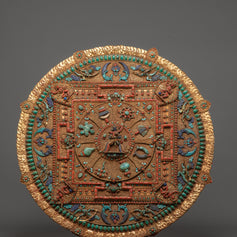
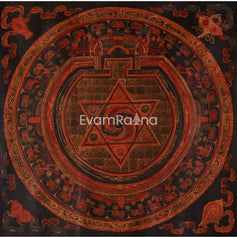
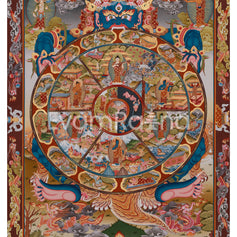
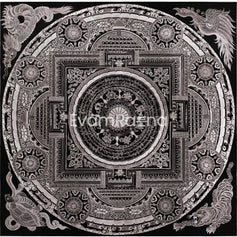
The Dharmadhatu is symbolically depicted as a circle or the cosmic wheel as it represents the infinity, oneness, and interdependence of everything. It is the pure area of the mind, where enlightenment may be generated, relieved of the mess of conceptuality and shadow mind. Some Buddhist traditions draw parallels between the Dharmadhatu and the state attained through Nirvana, a state beyond suffering, ignorance, and ego. Ultimately, it is the spiritual basis of all things, which is the infinite field of being that is marked by naturally arising thoughts of truth, clarity, and peace that arise naturally.
In Mahayana Buddhism, as noted in the Gaganaganjapariprccha, the Dharmadhatu is described as the "place of the absolute truth." It is neither a place of birth nor death, neither a physical "place" nor a "non-place"; it is the primordial expanse of all dharmas (phenomena).
In Vajrayana or Tantric Buddhism, the term "chos dbyings" (the Tibetan equivalent) refers to the sphere or realm in which one who has attained the ultimate resides. This is contrasted sharply with the sensory fields that comprise samsara, the cycle of suffering. The Dharmadhatu is often equated with emptiness (Sunyata) or the Dharmakaya (the truth body of the Buddha) and refers to the spiritual knowledge or wisdom attained upon reaching Buddhahood.
Historical Architectural Landmarks: Dharmadhatu, Stupa, and Temples

(Image from Bauddha Vihar Sangha)
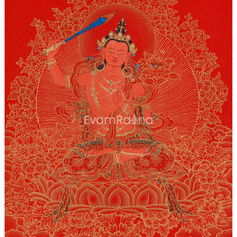
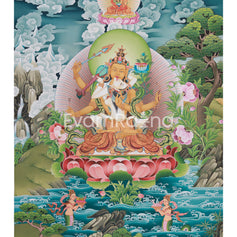
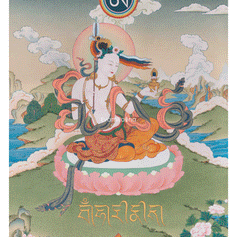
According to the Buddhist mythology, the relationship between the Dharmadhatu and the Stupa is at the basis of the formation of holy sites. The legend tells that the Bodhisattva Manjushri created the Swayambhu Stupa specifically to protect the "self-arisen, primordial Dharmadhatu". By covering this ultimate light with the structure of a stupa, the monument became the physical protector of absolute reality. In this context, the Stupa represents the enlightened mind of the Buddha, acting as a reliquary that links the Buddha’s physical presence to the cosmic truth of the Dharmadhatu.
The physical manifestation of these concepts can be traced through specific historical periods and sites, particularly in the Kathmandu Valley:
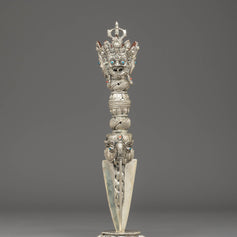
- 12th Century (Patan): The Yasodhara Mahavihar (Bubahal), one of the largest monasteries in Patan, was built in the 12th century and features a central representation of the Dharmadhatu layered atop a metal Vajra. Similarly, the Hiranya Varna Mahavihar (Golden Temple) dates back to this era, utilizing circular architectural arrangements to express the infinite nature of the Dharmadhatu.
- 17th Century (King Pratap Malla): A significant historical development occurred in 1678 when the Nepali King Pratap Malla made major additions to the Swayambhunath Stupa. He installed the massive, gilded Vajra atop a Dharmadhatu mandala base at the head of the eastern 365-step stairway. This base is notably engraved with twelve animals representing the astrological cycle, symbolizing that the entire cosmos is contained within the Dharma.
For centuries, these integrated symbols have appeared in monasteries, holy art, and scriptural traditions across the Himalayan region, continuing to promote the ideas of peace, protection, and spiritual awakening.
Dharmadhatu’s Spiritual Relevance to Stupas and Temples
The Dharmadhatu is a central concept in Buddhist architecture and theology, serving as the "spiritual matrix of all phenomena" and the ultimate nature of reality. In the context of stupas and temples, it represents the unconditioned space of the mind from which enlightenment arises, described as being pure, limitless, and free from the obscurations of illusion or duality.
The Stupa as a Protector of the Dharmadhatu

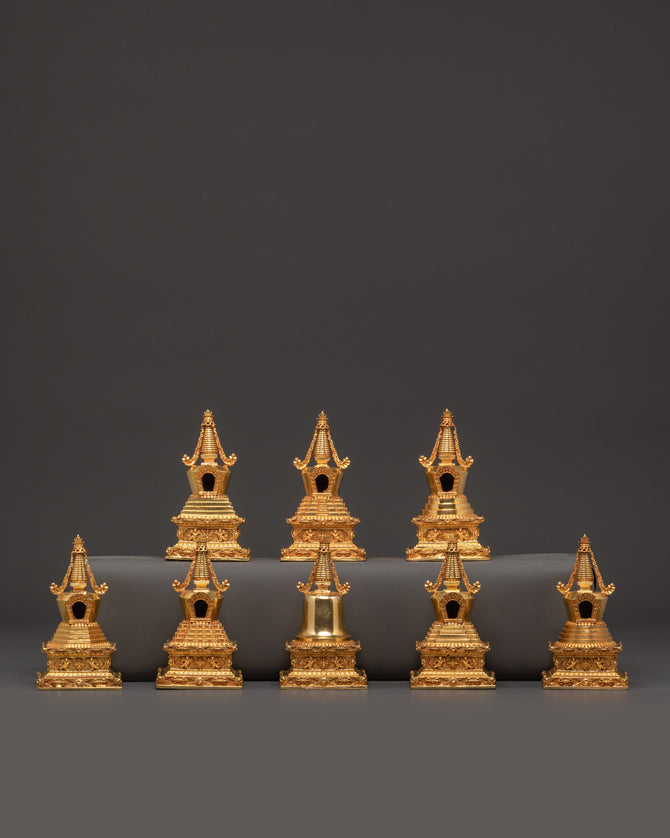
Stupas are sacred embodiments of the Dharma, symbolizing the Buddha’s teachings, merit, and the awakened mind. Walking around (circumambulating) a stupa is a practice connecting body, speech, and mind with the Dharma, situating practitioners in a sacred space of reflection and devotion. It is a physical manifestation of the enlightened mind of the Buddha. It serves as a container for relics (sarira-dhatu) and connects the tangible presence of the Buddha to the cosmic, ultimate truth of the Dharmadhatu.
According to Buddhist legend, the Bodhisattva Manjushri created the Swayambhu stupa specifically to protect the self-arisen, primordial Dharmadhatu. By covering this ultimate light with the stupa structure, the monument acts as a guardian of truth, bestowing blessings on pilgrims and warding off negative forces.
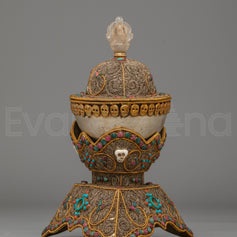
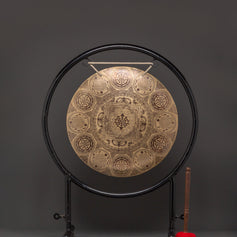
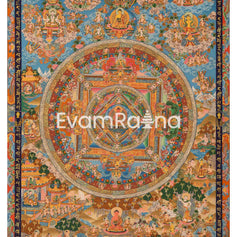
A stupa or temple functions as a physical and symbolic representation of dharmadhātu itself, a place where practitioners directly encounter the qualities of awakened awareness (non‑dual truth, compassion, wisdom). In temple architecture, the Dharmadhatu is frequently represented as a mandala or a circular, lotus-carved stone base, symbolizing the "sphere of true reality" or emptiness.
This combination teaches practitioners that the enlightened state (symbolized by the Stupa) is achieved only by integrating ultimate, empty reality with active, compassionate wisdom. Wisdom without action is considered incomplete, while action without wisdom leads to confusion.
Living Symbols in Sacred Sites
The spiritual relevance of the Dharmadhatu is physically manifested in several prominent Newar Buddhist sites:
- Swayambhunath Stupa: At the top of the eastern staircase, a massive gilded Vajra rests on a Dharmadhatu mandala. The base features engravings of twelve animals representing the astrological cycle, signifying that the entire cosmos is contained within the Dharma. This site serves as the starting point for clockwise circumambulations (kora).
- Hiranya Varna Mahavihar (Golden Temple): A Vajra is placed at the center of the complex on a mandala-shaped platform. The circular arrangements of the temple architecture itself express the infinite nature of truth.
- Yasodhara Mahavihar (Bubahal): This monastery features a circular design symbolizing ultimate truth layered over a metal Vajra, representing indestructible wisdom and protection for the ritual life of the community.
Iconographic Significance
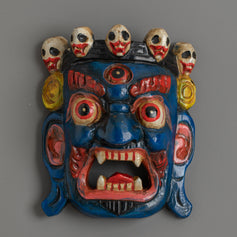
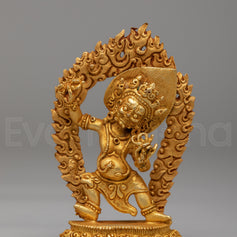
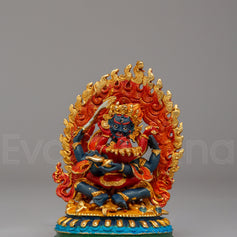
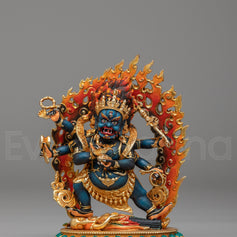
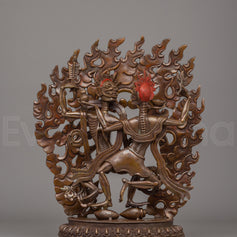
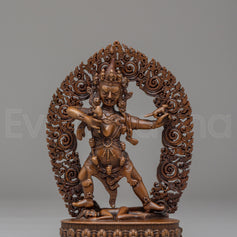
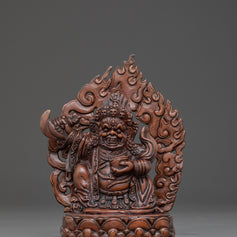
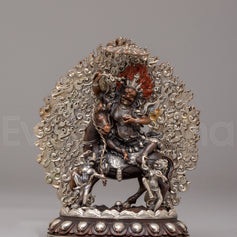
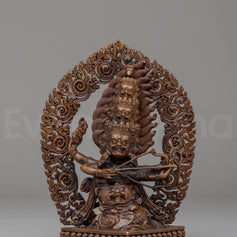
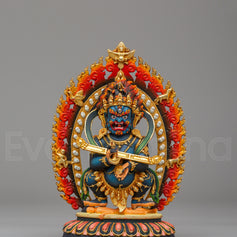
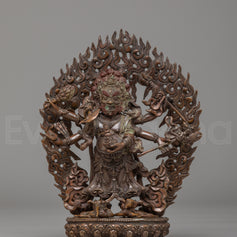
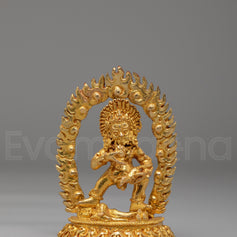
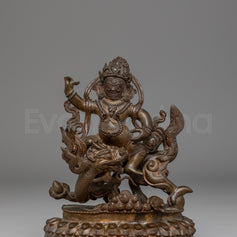
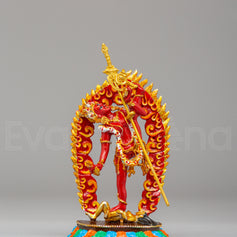
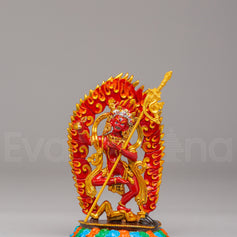
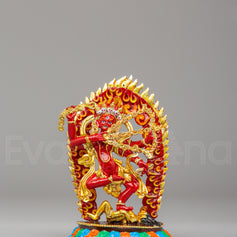
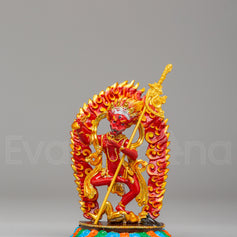
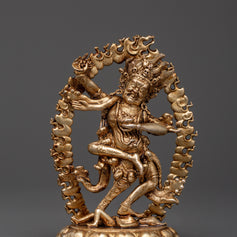
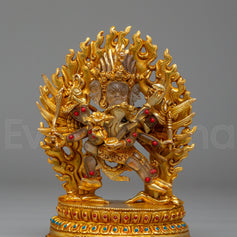
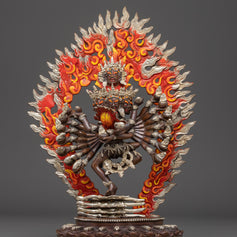
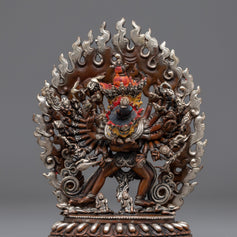
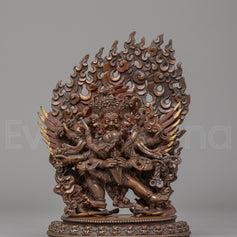
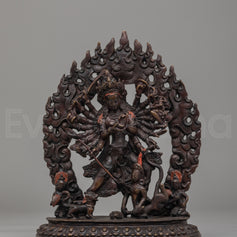
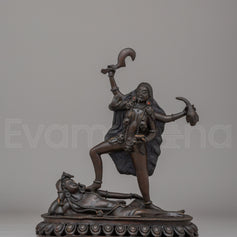
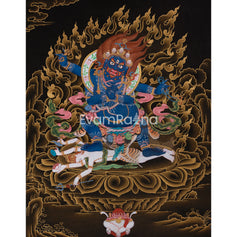
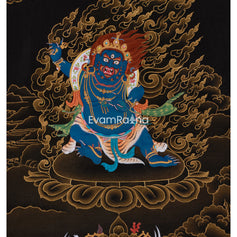
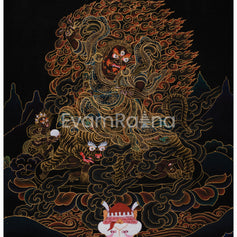
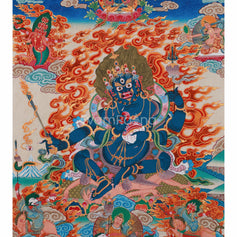
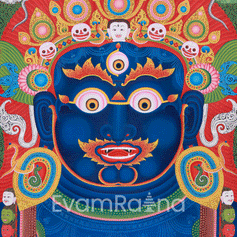
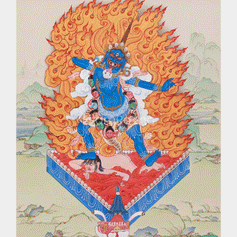
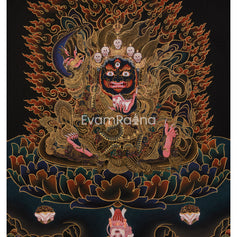
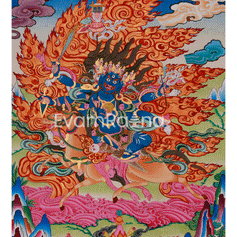
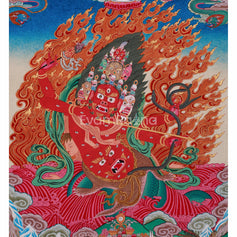
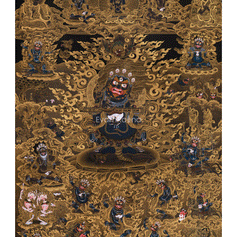
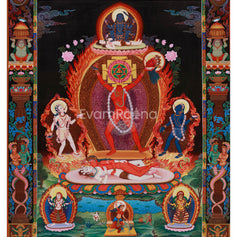
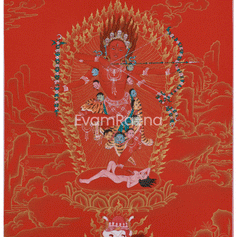
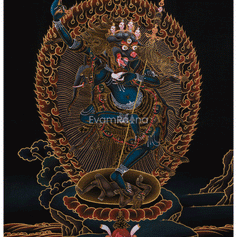
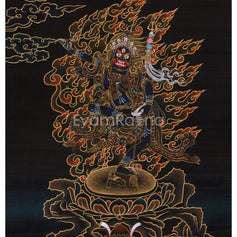
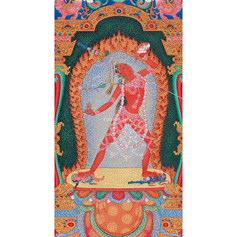
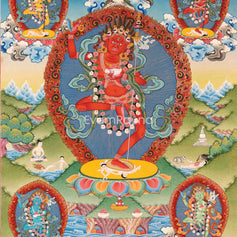
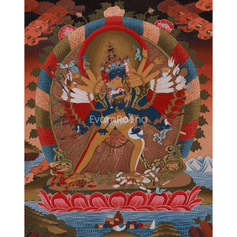
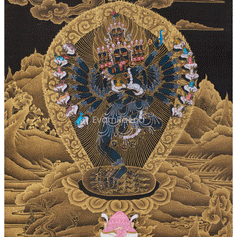
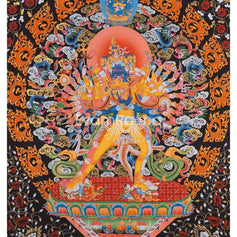
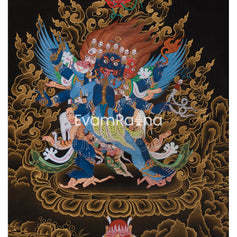
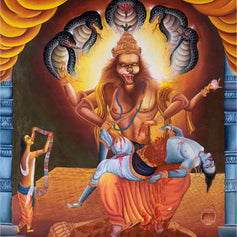
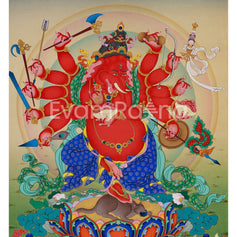
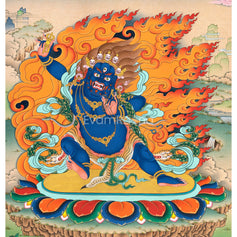
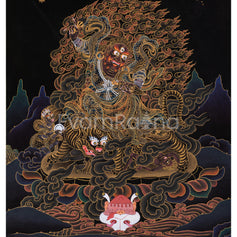
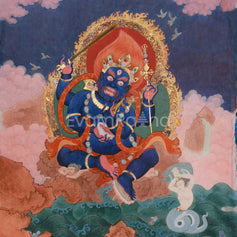
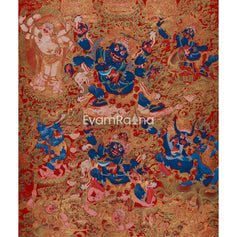
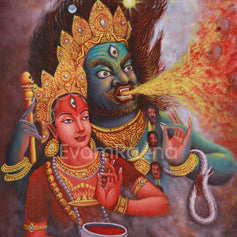
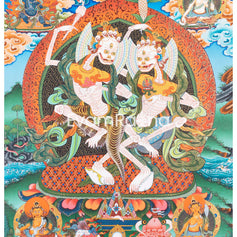
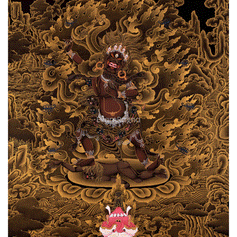
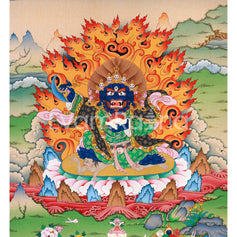
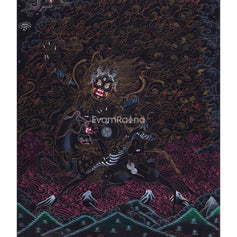
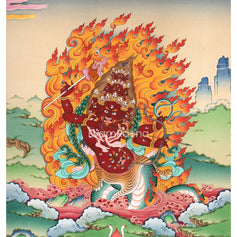
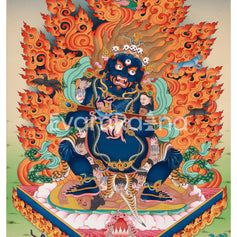
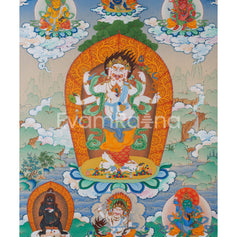
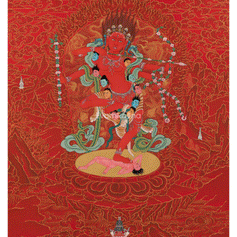
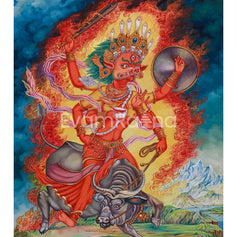
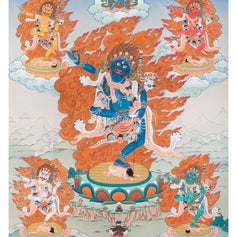
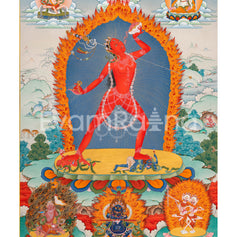
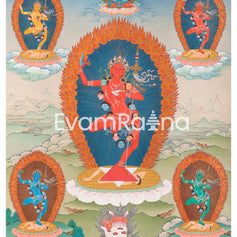
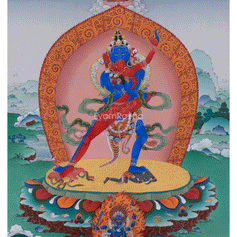
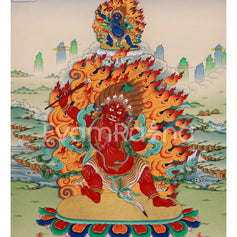
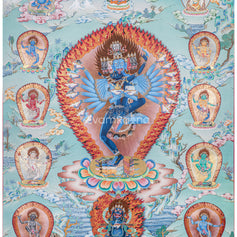
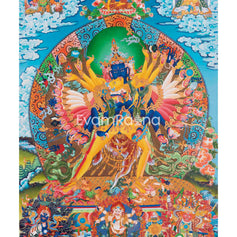
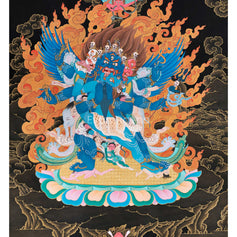
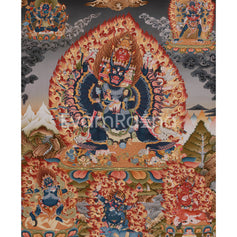
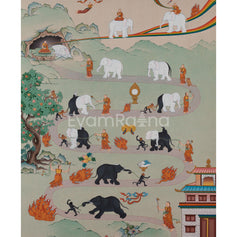
The relevance of the Dharmadhatu extends into the iconography of wrathful deities housed in temples. These deities are said to abide in the "immovable sphere of dharmadhatu," representing the absolute reality of the Buddha mind. Their attire often includes a freshly flayed elephant skin, which symbolizes the "expanse of reality" (Dharmadhatu) and the deity’s triumph over the "elephant of ignorance".
In contemporary practice, the Dharmadhatu remains a "transdisciplinary reference" for those seeking mental clarity and emotional stability, reminding practitioners that true power originates from understanding the nature of reality.
Spiritual Connection Between Dharmadhatu and Stupa

-
The highest realm or the ground of all phenomena is Dharmadhatu, a spiritual field where existence, consciousness, and experience are in union without duality.
-
A stupa or temple is an embodiment of this realm, both physically and symbolically, both to be reminded of the awakening of the Buddha, to be used as a place of meditation practice, and to be a sacred field that allows a direct experience of the Dharma.
Thus, the spiritual connection is that dharmadhātu is the essence toward which practice aims, and stupas andtemples establish and inspire that awareness within lived experience.
Read More About: Dharmadhatu with Vajra: Symbols of Peace and Protection
Conclusion
Dharmadhatu, the idea of Buddhist philosophy, represents the most fundamental aspect of reality, the unconditioned space beyond duality, illusion, and the discontinuous nature of the experience of perception. It represents a simple, interdependent condition of being where the line separating things becomes blurred and the essence of things is evident. In the symbolic and architectural design of the stupas and temples, the Dharmadhatu is no longer merely a philosophical principle but a concrete and sensual being that helps take the practitioners to a further level of understanding.
Dharmadhatu's Buddhist sacred architecture, particularly in the stupas, manifests in a tangible form. The Kathmandu Valley structures, such as Swayambhunath, Hiranya Varna Mahavihar, and Yasodhara Mahavihar, reflect the infinite, cyclic nature of ultimate reality physically. Stupas, or temples, like Swayambhunath, Hiranya Varna Mahavihar, and Yasodhara Mahavihar in the Kathmandu Valley, physically mirror the infinite, cyclical nature of ultimate reality. Their designs, from mandala bases to symbolic engravings, are reminders that enlightenment arises through integration of insight and compassionate action. In this way, stupas and temples serve as both monuments of sacred truth and as living spiritual spaces in which people experience and learn the essence of the Dharmadhatu.


