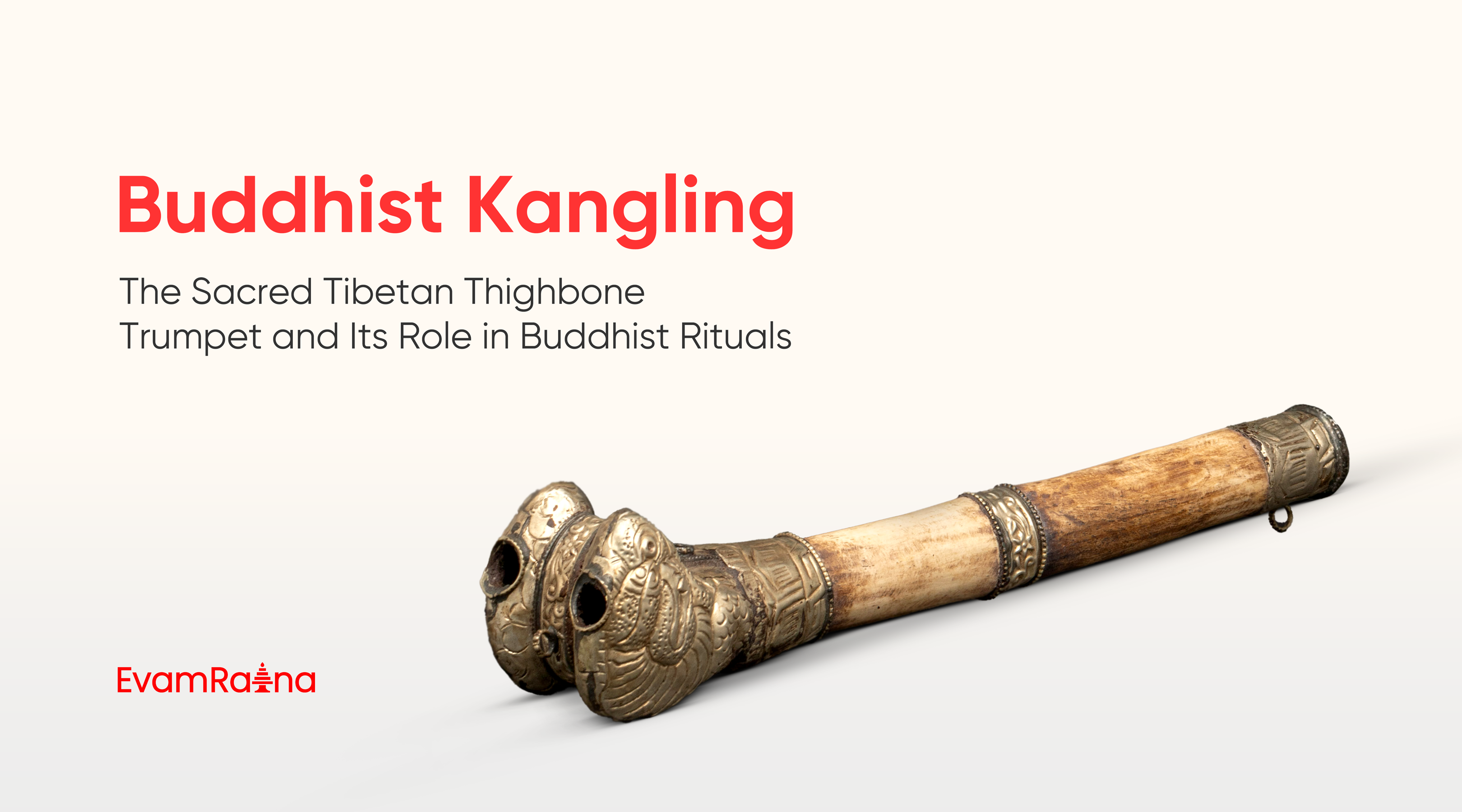
Kangling in Chöd Tradition: How Tibetan Yogins Use the Sacred Thighbone Trumpet in Meditation
The Kangling is a ceremonial trumpet that was traditionally made from a human femur. However, modern forms are sometimes made from metal or yak bone. Tantric practitioners and wrathful deities used this instrument in the past. In Chöd rituals, it is an important tool for facing the ego and calling spirits with compassion. People think that its sound can control elemental forces like the weather and subdue demons. This represents a spiritual victory over the material world. The trumpet's effectiveness is often linked to the circumstances of the bone donor's death and is often played with a hand drum. These sacred objects came from ancient India and moved to the Himalayas. They are still very important in monastic ceremonies and shamanic exorcisms.
What is Buddhist Kangling?

The Buddhist Kangling or sacred Tibetan thighbone trumpet is a crucial ceremonial trumpet in Buddhist tantric practices, especially in Chöd rituals. Kangling is translated as "leg" (kang) or "flute" (ling), Kangling (rkang-gling). Kangling is also known as a bone trumpet. A trumpet fashioned from a human thigh bone is called a "chöd kangling." Through the fearless gesture of playing the kangling, motivated by compassion, the practitioner of Tantric Chöd calls forth hungry spirits and demons to satisfy their hunger and ease their suffering.
As a sacred tool, its haunting resonance is regarded as pleasing to wrathful deities, such as Red Mahakala and Troma Nagmo, while serving as a powerful ritual invocation that assumes a prominent role in musical offerings. This sound is believed to possess inherent spiritual power, capable of being terrifying to evil spirits and unhinging the influence of malignant entities during rituals of exorcism or weather control. By summoning hungry spirits and demons so that their sufferings may be relieved through compassion, the practitioner utilizes the instrument to bridge the physical realm with a state of profound spiritual realization.
History & Origin of Kangling

The Kangling originated approximately 1,500 years ago within the tantric charnel ground of India. It was initially used by Shaivite and Buddhist yogins and yoginis who lived as wandering ascetics near charnel grounds, wore bone ornaments, and utilized unique ritual implements like human skull cups. According to the sources, these sacred objects were valued both for their profound symbolic meaning and their inherent spiritual power.
Tantric Buddhism, and the Kangling with it, began arriving in Tibet and Bhutan around 800 A.D., becoming established in these Himalayan regions over the following century. While it appeared in the great monasteries of the time, it became most prominently associated with Chöd Buddhist rituals, which are traditionally performed outdoors. In these practices, the instrument is used as a gesture of fearlessness to summon spirits and "cut off the ego". Historically, the deity’s possession of a thighbone trumpet symbolizes victory over the three realms. It is specifically carried by protective deities such as Red Mahakala and the wrathful goddess Troma Nagmo, who acts as the protectress of the charnel grounds.
Sacred Craftsmanship of The Kangling
The sacred craftsmanship of the Kangling is based on the idea that the material's physical history directly affects how well it works spiritually. Traditionally, the instrument is made from a human femur, which is thought to be the best material for controlling spirits and elementals. To turn the bone into a ritual trumpet, it involves precise modifications:
The Bore: The marrow canal of the thighbone serves as the instrument's natural hollow bore.
The Mouth: The ball-joint end of the femur is partially sawn off to create either a wide single or double mouth for the trumpet.
Metalwork and Adornment: The mouthpiece is often held in place with wire or a metal ferrule. Some versions of the trumpet have a decorative metal casing on the mouth, and some have a chain that hangs down so that they can be used more easily during outdoor Chöd rituals.
Alternative Materials
- Animal Bones: The femur of a yak is a common substitute, as is the femur of a tiger (stag gling), which is believed to embody the powerful qualities of the animal.

- Monastic Bronze: For use in formal monastic ceremonies, the Kangling may be fashioned from bronze, cast specifically in the form of a human thighbone.
Bhutan is still a major source for these sacred ritual tools today. It keeps alive the old ways of making things that began in India's tantric crucible fifteen hundred years ago.
Whether fashioned from human bone, tiger bone (stag gling), or bronze, the Kangling remains a physical embodiment of the tantric charnel ground of India, where practitioners embraced the macabre to realize the profound.
Guardians and Goddesses: The Deities Who Hold the Thighbone
The Kangling is a powerful ritual tool that connects the physical and spiritual worlds. The following is an explanation of its role, from its divine guardians to its modern-day significance. The Kangling is a special feature of a small number of deities, even though many individuals use it:
- Red Mahakala: This protector deity carries the thighbone trumpet to symbolize victory over the three realms.
- Troma Nagmo: In her Chöd aspect, this wrathful goddess serves as the "protectress of the charnel grounds" and is depicted with the instrument to signify her authority over these sacred spaces.

Symbolism of Sound: In the assembly of ritual offerings, the sound of the Kangling is dualistic; it is pleasing to wrathful deities but terrifying to evil spirits.
Kangling in Chöd: Ritual and Meditation
In the Chöd tradition, which emerged from the "tantric crucible" of India roughly 1,500 years ago, the Kangling is a primary tool for transformation.
- Cutting Off the Ego: The instrument is played as a "skillful method" to sever the ego and dismantle self-clinging, which is the root of suffering.
- A Call of Compassion: The sound is scary, but the yogins and yoginis are moved by compassion. They play the instrument as a sign of bravery to reach out to hungry spirits and demons. They do not want to cause harm to them; they just want to feed them and make them feel free from suffering.
- The Outdoor Ritual: Chöd is usually done outside, often in charnel grounds, to make the person doing it face their fears directly and understand that everything is impermanent.
Beyond the Monastery: Exorcism and Weather Control
Outside of formal monastic meditation, the Kangling is a tool of power for Tibetan shamans (sngags pa):
- The Shamanic Connection: Shamans use the trumpet's sound to break the powers of evil spirits that possess a person's personality.
- Controlling Weather: It is used to control nagas and the gods of the weather in the area. The instrument can control the elements by holding back or letting loose thunder, wind, hail, and rain.
Modern Significance and Uses of Bone Trumpet

The effectiveness of the Kangling has historically been associated with the spiritual significance of the bone. Even though it comes from death, it is often used as a tool for compassion, impermanence, and cutting off the ego. In modern practice, it is often a reminder of death.
- Offering with Compassion: The sound is meant to call on demons and spirits. The practitioner, out of compassion, offers their own body as a feast to these beings to satisfy their hunger and ease their pain.
- Symbolism of Impermanence: The symbolism of impermanence is a clear and direct reminder of death that helps practitioners accept the fact that physical life is temporary and let go of their attachment to their bodies.
- Summoning and Subjugation: It is used to reach out to wrathful deities and protectors or to control evil spirits, acting as a "wrathful instrument" to get rid of problems.
- Modern Adaptations: Traditional bone trumpets are very valuable, but it's hard to get human bones, so people now use other materials like wood, copper, or resin (plastic).
- Symbolic Value in Modern Art: Kanglings are sometimes used as decorations in Buddhist homes or shrines. They stand for overcoming fear and being dedicated to spiritual practice.
Conclusion:
The Kangling, a musical bone instrument; it has a lot of meaning and spiritual significance in Tibetan Buddhist practices, especially in the Chöd tradition. Traditionally made from a human femur, the Kangling is a powerful tool for meditation, exorcism, and spiritual change. It helps individuals face their fears and the fact that life is not permanent by calling on spirits, cutting off the ego, and calling on compassion. People think that the Kangling's haunting sound can control elemental forces, keep evil spirits away from practitioners, and help with exorcism and weather control rituals.
The Kangling's sacred craftsmanship shows how deeply connected the material and spiritual worlds are. Even though modern versions use different materials, the Kangling is still a tool for getting over fear, accepting change, and changing one's mind. It still plays a big part in Tibetan monastic ceremonies, shamanic rituals, and modern spiritual practices. It stands for winning over the ego and finding a way to compassion, humility, and spiritual freedom.