

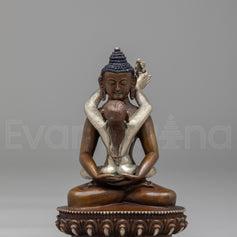
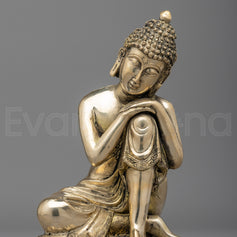
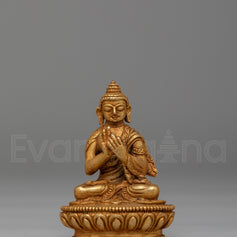
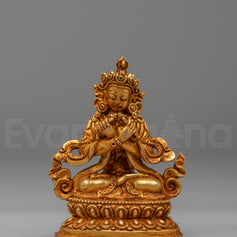

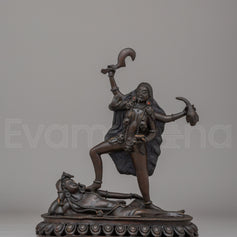
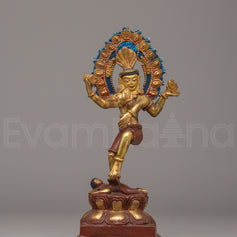
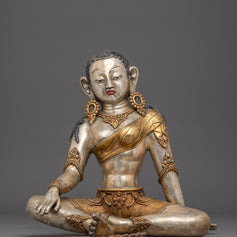
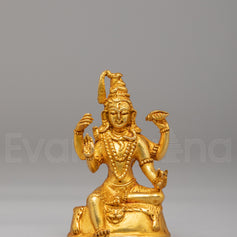


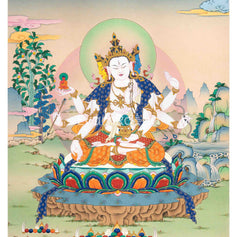
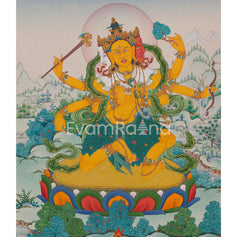
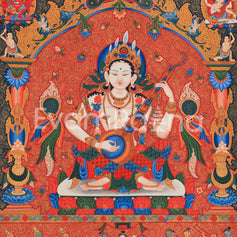
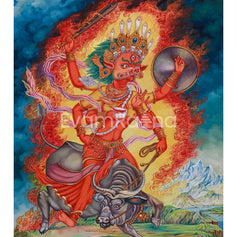


Buddha in Nepalese Buddhist Art: Meaning, Iconography & Sacred Crafts
Buddha art and craft are one of the most enduring and expressive visual languages in world culture, known as a living bridge between spiritual teachings and the enlightened qualities of Buddha. For over two and a half millennia, the image of the Buddha has been one of the most universally recognized and spiritually powerful symbols on earth. From the gilded altars of Himalayan monasteries to the meditation corners of modern homes, his presence speaks a silent language of peace, wisdom, and awakening.
Buddha: The Meaning Behind the Name

The word "Buddha" comes from the Sanskrit root budh, meaning "to awaken" or "to know." A Buddha is an Awakened One, a being who has fully realized the nature of reality and liberated himself from the cycle of suffering and rebirth (samsara).
The historical Buddha, Siddhartha Gautama, was born around the 5th century BCE in Lumbini, in present-day Nepal. A prince who renounced his palace life in search of truth, he attained enlightenment under the Bodhi tree in Bodh Gaya after years of meditation and ascetic practice. From that moment, he became Shakyamuni Buddha, the sage of the Shakya clan, and spent the rest of his life teaching the Dharma (the path to liberation).
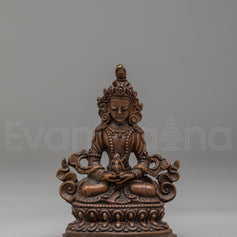
In Mahayana Buddhism, which is deeply rooted in Nepal and Tibet, the concept of Buddha expands beyond the historical figure. There are Five Dhyani Buddhas (also called Pancha Buddhas), cosmic manifestations of enlightenment, each representing a different aspect of awakened consciousness: Vairochana, Akshobhya, Ratnasambhava, Amitabha, and Amoghasiddhi.
Nepal: Heart of Buddhist Art and Iconic Craftsmanship
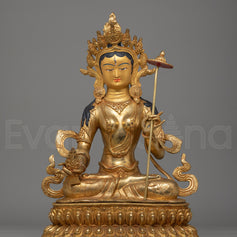
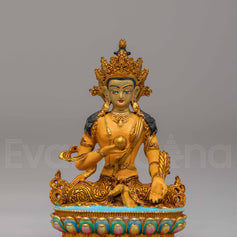
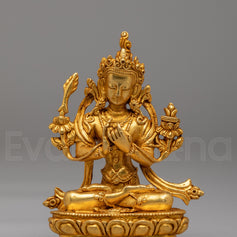
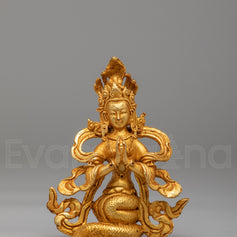
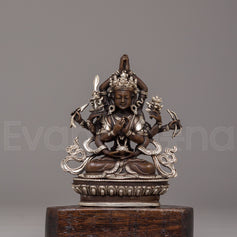
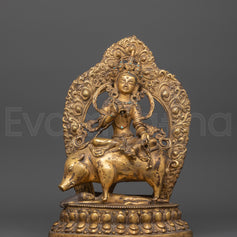
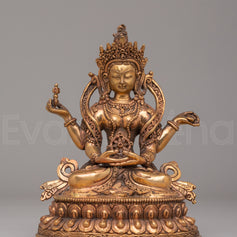
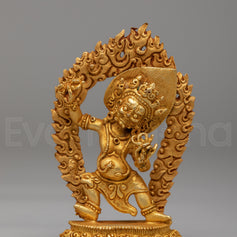
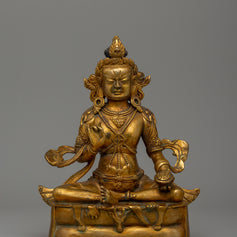
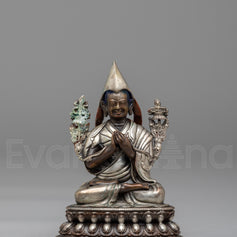
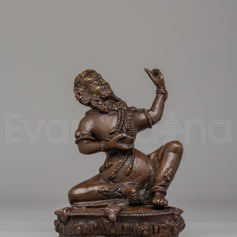
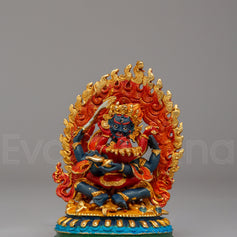
Nepal holds a uniquely sacred place in the Buddhist world, as the birthplace of Siddhartha Gautama and a living center of Buddhist art traditions passed down through generations of Newar artisans in the Kathmandu Valley. Every piece, whether painted, cast, or carved, is a sacred dharma object made by following strict iconographic guidelines, often accompanied by prayers and rituals during creation. These crafts serve as supports for meditation, devotion, and the transmission of Buddhist teachings.
Kathmandu Valley is recognized as one of the sacred centres of Buddhist art, where spiritual meaning and artistic craftsmanship merged into a rich visual tradition that has influenced Himalayan and Tibetan Buddhist iconography for centuries. The Licchavi period (ca. 5th - 8th century CE) is often regarded as the golden age of Nepali Buddhist sculpture and painting, producing exquisitely detailed icons of the Buddha and bodhisattvas that remain benchmarks of sacred artistry.
Newar artists of Nepal developed refined techniques in lost‑wax casting, bronze and copper casting, stone carving, and thangka (paubha) painting, ensuring that each representation of Buddha is visually beautiful and spiritually resonant. These images were used in temples, home altars, and ritual contexts and were often consecrated through mantra recitation and ritual blessing to render them living embodiments of the Dharma.
It was through Nepali artisans and royal patronage that Buddhist art spread into Tibet in the 7th century and beyond, influencing monastery art, sculpture styles, and thangka painting across the Himalayan region. Today, Nepali Himalayan art remains prized for its spiritual depth, technical mastery, and cultural continuity.
Buddha in Nepalese Buddhist Art and Crafts
Nepal has been a living center of Buddhist art and craftsmanship for over a millennium, where devotion, ritual, and artistic tradition have fused into some of the most spiritually resonant works in the Himalayan world. From the earliest sculptures unearthed in the Kathmandu Valley to the richly adorned copper and bronze Buddhas of later periods, Nepal’s Buddhist art reflects a deeply rooted spiritual culture that expresses Buddhist ideals in tangible, transcendent form. The calm serenity, balanced proportions, and ritual gestures (mudras) found in Nepalese Buddhist thangkas express compassion, teaching, meditation, or liberation, inviting practitioners to reflect on and emulate these enlightened qualities.
Iconography and Sacred Features of Buddha

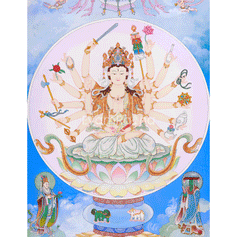
Buddhist art follows a precise visual language called iconography, a system of symbols that communicates spiritual meaning through physical form. When artists in Nepal carve a statue or paint a Thangka, every detail is intentional.
Here are the key features you'll encounter in nearly every representation of Buddha:
The Ushnisha
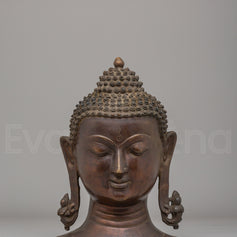
A cranial protuberance or topknot on the crown of the head, symbolizing supreme wisdom and enlightenment. In art, it often appears as a rounded dome or elongated flame shape.
The Urna
A circular mark or dot between the eyebrows, representing the third eye of spiritual vision, the ability to perceive truth beyond the physical world.
The Long Earlobes
Stretched earlobes recall Siddhartha's royal past, when he wore heavy jeweled earrings. They now symbolize renunciation of worldly wealth and openness to hearing the Dharma.
The Mudras (Hand Gestures)
Among the most expressive elements of Buddha iconography. Common mudras include:
-
Dhyana Mudra: both hands resting in the lap, palms up, symbolizing meditation
-
Bhumisparsha Mudra: right hand touching the earth, recalling the moment of enlightenment
-
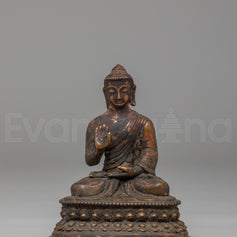
Abhaya Mudra: right hand raised, palm outward, symbolizing protection and fearlessness
-
Dharmachakra Mudra: both hands at the chest, fingers forming a wheel, symbolizing the turning of the wheel of Dharma
The Robe and Posture
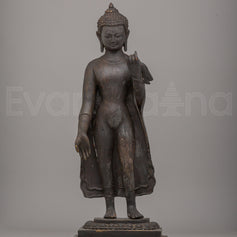
Buddha is typically depicted in a simple monk's robe (kashaya), symbolizing simplicity and non-attachment. He is most often seated in lotus position (Padmasana), representing meditative stability, though standing and reclining forms also exist.
Facial Expression
Serene, slightly downcast eyes, a gentle half-smile, an expression that conveys neither withdrawal from the world nor attachment to it. Pure equanimity.
The Halo and Mandorla
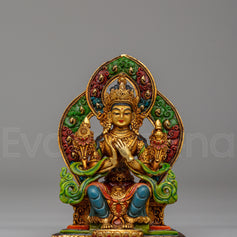
A circular halo (prabhamandala) around the head represents divine radiance and an enlightened mind. A full-body aureole (mandorla) appears in more elaborate compositions.
Buddha Thangka Paintings: Sacred Scrolls of Enlightenment
A Thangka (also spelled Tangka or Thanka) is a traditional Tibeto-Nepalese scroll painting, typically rendered on cotton or silk canvas using mineral pigments, gold, and sometimes precious stones. The word comes from the Tibetan thang yig, meaning "written on flat surface." Thangkas depicting the Buddha are among the most spiritually significant and visually intricate art forms in the Himalayan world. Thangkas play a crucial role in Vajrayana initiation ceremonies, advanced meditative practices, and the teachings on conscious dying, as outlined in the Bardo Thodol, also known as the Tibetan Book of the Dead.
Buddha in Paubha: The Ancient Newari Tradition

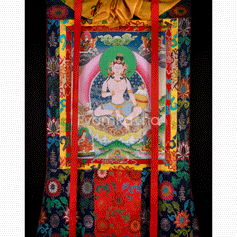
Paubha, also known as Beri or Newari painting, is a sacred painting tradition created by the Newar people of the Kathmandu Valley. It is, in fact, the mother of all Himalayan scroll painting. Thangka painting traces its origins back to the 7th century when it was introduced by the Newaris of Nepal.
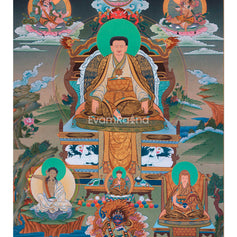
A Paubha depicts deities, mandalas, or monuments, and is used to help practitioners in meditation. The traditional painters of Paubhas are the Chitrakar caste, known as Pun in Nepal Bhasa. Visually, Paubha is unlike any other Himalayan painting style. Renowned for their fine line work, earthy colors, and extensive spiritual meanings, Paubhas seamlessly blend the traditions of Hinduism and Buddhism into a distinctive and recognizable Newari style. Where Tibetan Thangkas often employ dramatic backgrounds of swirling color and elaborate celestial landscapes, Paubha compositions tend toward a more flat, frontal, and hieratic arrangement, the central figure of the Buddha placed with absolute stillness at the center of a rigidly symmetrical field.
The Buddha in Paubha is painted with extraordinary precision. His body adheres to strict iconometric grids derived from ancient Indian canonical texts (Pratimalakshan and Silpasastra). His form is warm-toned, outlined in precise black line work, and surrounded by symmetrically arranged secondary figures, bodhisattvas, offering goddesses, lotus flowers, all rendered in a palette of deep reds, rich golds, earthy oranges, and mineral blues that have remained essentially unchanged for centuries.
Buddha in Karma Gadri Thangka: Spaciousness and the Breath of Mountains
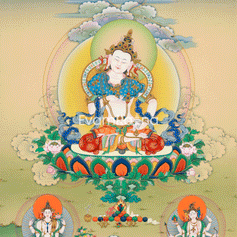
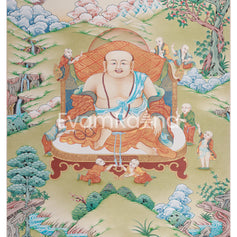
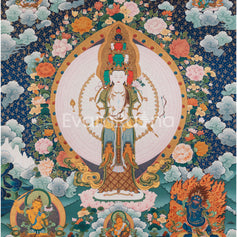
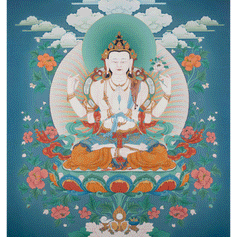
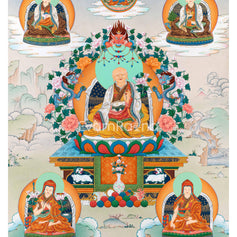
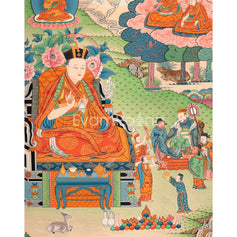
The Karma Gadri (karma sgar bris) tradition is one of the most celebrated styles of Tibetan-Himalayan Thangka painting, renowned for its expansive landscapes, subtle shading, and spacious compositions. The Karma Gadri style flourished under the artistic vision of the 8th Karmapa, Mikyo Dorje (1507–1554), who encouraged artists to merge aspects from Tibetan, Chinese, and Nepalese artistic traditions, resulting in a completely new aesthetic that differed from earlier dense and heavily ornate Thangka forms.
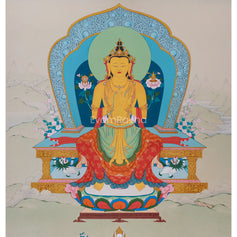
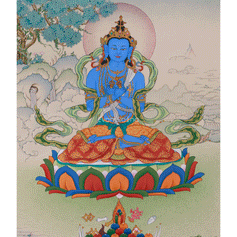
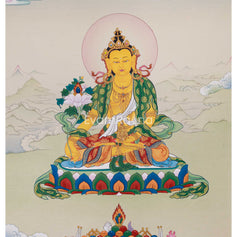
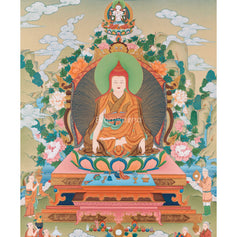
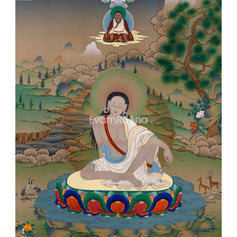
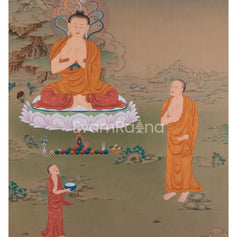
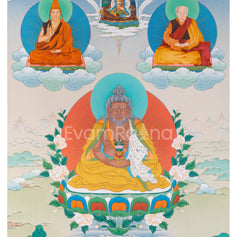
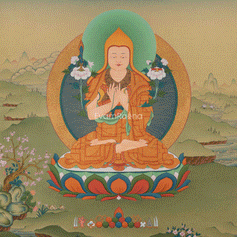
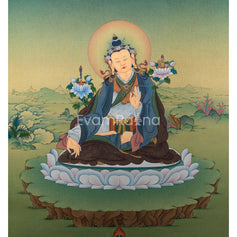
Karma Gadri is instantly recognizable by its wide horizons, snow-clad mountains, open valleys, and misty atmospheric depth. These landscapes are not merely decorative but are a visual metaphor for Mahamudra, the Kagyu meditation on the nature of mind. In a Karma Gadri Buddha Thangka, the figure of the Buddha breathes differently than in any other style. He does not sit against a dense, jeweled backdrop or a flat gold field. Instead, he is placed within a vast, luminous landscape, mountains recede into blue mist behind him, clouds drift in open sky, rivers wind through valleys rendered with the sensitivity of Chinese ink painting. The Buddha himself is painted with elegance and refined simplicity, allowing the central figure to radiate through minimalism rather than ornate detail.
Key features of Karma Gadri include proportions and forms based on Indian canons, landscape and composition derived from Tibetan traditions, and techniques incorporating Chinese shading, colors, and textures. Unlike more ornate styles, Karma Gadri emphasizes simplicity and clarity, with a focus on harmony between figures and their natural surroundings.
The Most Depicted Forms of Buddha in Thangka Paintings
Across all Thangka styles, certain forms of Buddha appear again and again. Each carries its own iconography, its own spiritual function, and its own distinctive visual presence.
(Below Depicted Forms of Thangka are Karma Gadri Thangka)
Shakyamuni Buddha:

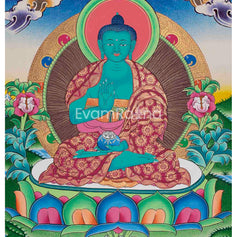
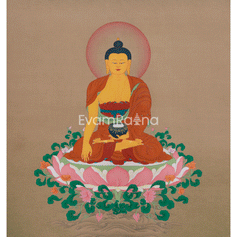
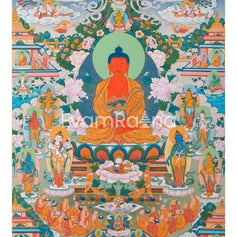
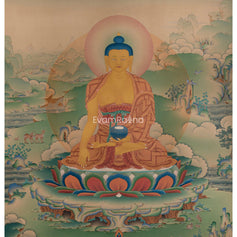
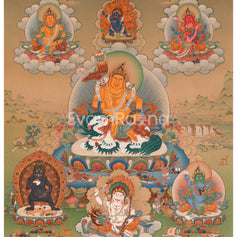
In Nepalese Thangka tradition, Shakyamuni Buddha is depicted with serene majesty, seated gracefully in the full lotus posture atop a luminous lotus throne. His right hand gently touches the earth in the Bhumisparsha Mudra, calling the earth to witness his awakening, while his left hand rests in his lap, holding an alms bowl that symbolizes compassion and renunciation. Rendered in the delicate Karma Gadri style, this depiction balances intricate detail with spacious landscapes, allowing the figure’s calm presence to radiate throughout the canvas. Natural Lhasa stone pigments and touches of genuine 24K gold illuminate his form, highlighting the warm, meditative glow that has defined centuries of Nepalese Buddhist art, inviting reflection, devotion, and spiritual contemplation.
Medicine Buddha (Sangye Menla):

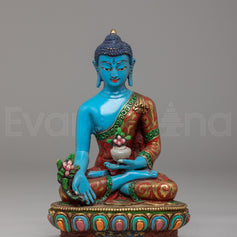
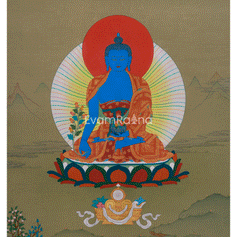
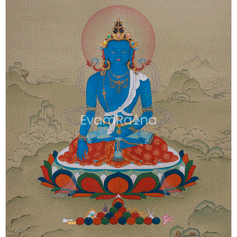
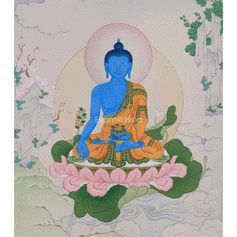
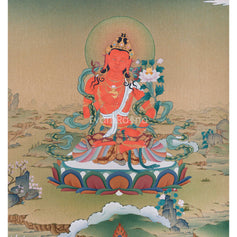
Medicine Buddha, also known as Bhaisajyaguru, is revered as the healing deity of Tibetan Buddhism, embodying both physical and spiritual well-being. Depicted with a serene expression and a lapis lazuli blue body symbolizing purity and wisdom, he holds a bowl of healing nectar in his left hand and a Myrobalan medicinal herb in his right, representing his power to cure illness and suffering. His monastic robes reflect his devotion to the spiritual path and detachment from worldly concerns, while his lotus seat signifies spiritual growth, purity, and mastery over pain. The thangka radiates compassion and healing energy, invites peace, positive energy, and a sense of spiritual calm, making it an ideal focal point for meditation, shrine display, or sacred home spaces.
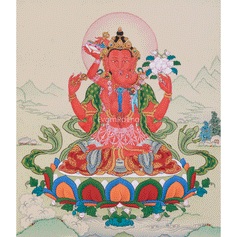
Amitabha Buddha:

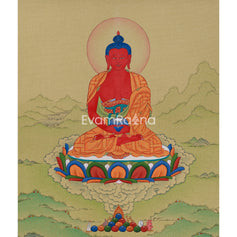
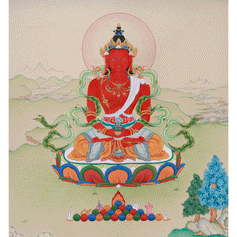
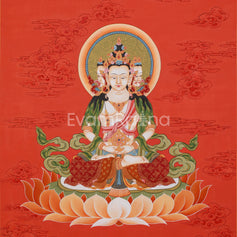
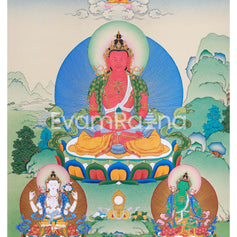
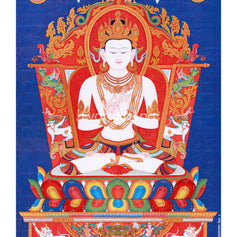
Amitabha, whose name means “Boundless Light” in Sanskrit, is a central figure in Mahayana Buddhism, venerated across Nepal, Tibet, China, Japan, and Korea. In Thangka depictions, he appears in deep red, symbolizing infinite compassion, seated in the Dhyana Mudra with a lotus-flower alms bowl that embodies purity and spiritual grace. His Western Pure Land, Sukhavati, is illustrated as a celestial paradise adorned with jeweled trees, flowing waters, and heavenly beings. According to Mahayana teachings, sincere invocation of Amitabha at the time of death allows passage to Sukhavati, a realm that supports the attainment of enlightenment. For this reason, Amitabha Thangkas hold special significance in rituals for death, rebirth, and Phowa, the transference of consciousness, making them both spiritually profound and visually inspiring.
The Five Dhyani Buddhas:

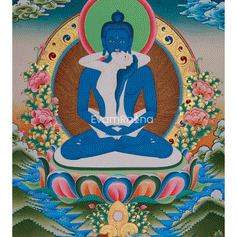
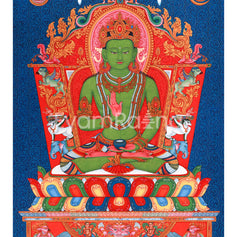
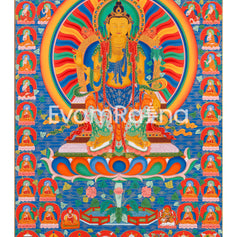
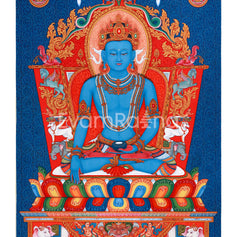
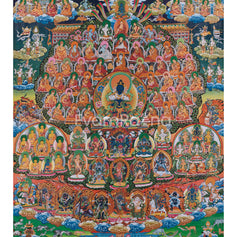
The Five Dhyani Buddhas, also known as the Pancha Buddhas or Five Meditation Buddhas, are central figures in Vajrayana Buddhist art, representing primordial manifestations of enlightened consciousness rather than historical entities. They embody five aspects of enlightened thought, forming a comprehensive map of enlightenment where each negative trait of the unawakened mind corresponds to a specific Buddha's wisdom. In Thangka paintings, they are typically arranged in a mandala formation: Vairochana (white, center) symbolizes Dharmadhatu wisdom; Akshobhya (blue, east) transforms anger into mirror-like wisdom; Ratnasambhava (gold-yellow, south) changes pride into equanimity; Amitabha (red, west) converts desire into discriminating wisdom; and Amoghasiddhi (green, north) transfigures jealousy into all-accomplishing wisdom. Each Buddha is linked to unique attributes including a hand gesture, consort, animal throne, sacred syllable (bija mantra), and a skandha, which represents one of the five aggregates of human experience.
Read More About Thangka: A Timeless Blend of Spiritual and Artistic Brilliance
Buddha Statues: Spiritual Symbolism in Nepal
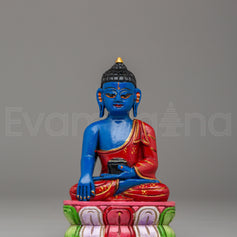
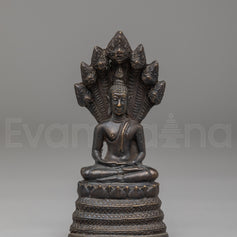
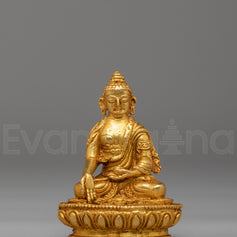
For over a thousand years, Nepalese sculptors, especially the Newar artisans of the Kathmandu Valley, have crafted some of the most exquisite Buddhist statues in the world. Renowned for their skill, these artists combine spiritual devotion with technical mastery, creating works that are both visually stunning and imbued with sacred meaning. Their statues are not merely decorative; each form, gesture, and material carries layers of symbolism, making them essential in meditation, ritual, and altar practices. The artistry of Nepalese Buddha statues reflects centuries of tradition, cultural reverence, and the pursuit of spiritual clarity.
Common Forms of Buddha Statues
Shakyamuni Buddha: The Awakened One

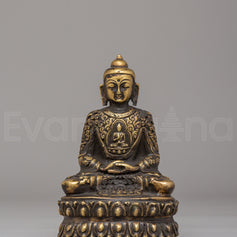
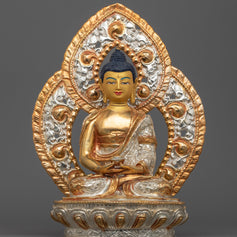
Shakyamuni Buddha statues represent Siddhartha Gautama, the historical founder of Buddhism whose life embodies the path to awakening. In Nepalese and Himalayan art, he is usually shown seated in a serene lotus posture with tranquil features that reflect inner peace and mindfulness. When depicted in Bhumisparsha Mudra (right hand touching the earth), this posture captures the pivotal moment under the Bodhi tree when he called the Earth to witness his attainment of enlightenment, a powerful reminder of his triumph over illusion and attachment. In other depictions, he may be shown with hands in Dhyana Mudra (meditation gesture), expressing profound concentration and spiritual stability that arise through meditative discipline. His image is a visual embodiment of wisdom, compassion, and the proven path toward liberation.
The Newborn Buddha: A Spiritual Beginning

The Newborn Buddha statue celebrates the miraculous birth of Siddhartha Gautama in Lumbini. Traditional iconography shows the infant Buddha with one hand pointing to the sky and the other to the earth, symbolizing his destined greatness and the profound impact his life would have on all beings. This depiction is rooted in ancient Buddhist narratives that describe how he took seven steps immediately after birth and declared his purpose, a symbolic affirmation that his existence was entwined from the start with enlightenment and compassion. Such statues remind devotees of the Buddha’s origin story and the spiritual promise inherent in every life.
Siddhartha Gautama with a Swan: A Symbol of Compassion and Protection

This evocative statue theme portrays the young Prince Siddhartha Gautama in an act of tender care toward a wounded swan, a story rooted in Buddhist lore that illustrates the origins of his deep empathy for all sentient beings. While still a prince in Kapilavastu, Siddhartha reportedly encountered a swan that had been struck by an arrow during a hunt. Moved by the creature’s suffering, he gently removed the arrow, tended to its wounds, and comforted the bird rather than ignoring it or giving it back to the huntsman who shot it. This compassionate gesture is remembered as one of his first teachings on the sanctity of life and the ethical responsibility to protect and aid those in pain. In this sculptural depiction, the swan often symbolizes purity, grace, and the soul’s inherent beauty, while Siddhartha’s caring posture embodies his blossoming compassion and protection of life, qualities that later defined his path toward awakening and the core of his teachings on karuna (compassion).
Siddhartha's Renunciation: The Great Departure

Statues depicting Siddhartha’s renunciation capture the formative moment when the young prince left palace life, familial affluence, and worldly comforts to seek the truth about suffering and liberation. This form symbolizes courage, detachment, and the earnest commitment to pursue awakening, virtues central to Buddhist teaching. Viewing this statue encourages reflection on the courage required to turn away from habitual attachments and step onto the spiritual path.
Fasting Buddha (Asceticism): Discipline and Insight

The Fasting Buddha statue represents a profound chapter in the Buddha’s quest for enlightenment during his years of ascetic practice. In this form, Siddhartha’s body may appear emaciated, revealing the intensity of the austerities that he underwent in efforts to transcend worldly existence. The depiction is not meant to glorify physical hardship but to illustrate the depth of his commitment to understanding suffering and the limits of self-mortification. This poignant image reminds practitioners that spiritual insight often arises not from indulgence or denial, but from disciplined awareness and compassionate perseverance through life’s challenges.
Reclining Buddha (Parinirvana): The Final Liberation

The Reclining Buddha statue depicts the Buddha in his final moments before entering Parinirvana, the ultimate release from the cycle of birth, death, and rebirth. He is typically shown lying on his right side with a serene expression, embodying calm detachment and perfected wisdom. This posture symbolizes the impermanence of existence and points to the profound peace that comes with complete liberation from suffering. In Nepalese and Himalayan Buddhist contexts, these statues serve as contemplative reminders of the transient nature of life and the value of spiritual practice that leads to freedom.
Read More About How Authentic Nepalese Statues are Made in Nepal: The Lost-Wax Metal Casting Process
Buddha Masks in Nepalese Craft Tradition

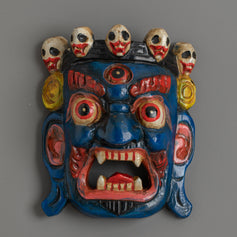
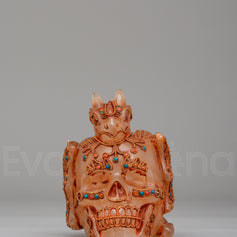
Masks hold a profound place in Nepalese and Tibetan Buddhist culture. Traditionally used in Cham dance, a sacred masked dance performed by monks during festivals, Buddha masks are among the most spiritually potent and artistically striking objects in the Himalayan tradition.
A Buddha mask typically features:
- A serene, golden or gilded face
- Half-closed eyes suggesting deep meditation
- The Urna mark on the forehead
- An Ushnisha or elaborate crown
- Ornamental flame or lotus motifs surrounding the face
Unlike demon or Dharma protector masks (which can be fierce and terrifying), Buddha masks carry expressions of profound calm and compassion, an embodiment of the enlightened mind made tangible.
Beyond Ritual: Masks as Sacred Decor

In recent decades, Nepalese Buddha masks have found a place far beyond monastery walls and festival grounds. Collectors, interior designers, practitioners, and travelers bring them home, to meditation rooms, yoga studios, home altars, galleries, and living spaces around the world. Hung on a wall, a Buddha mask carries the same essential quality it possessed in the monastery courtyard: that extraordinary face, looking at nothing and everything, radiating something that has no name in ordinary language.
In Buddhist household tradition, a mask is placed above eye level, never below, in a clean, dedicated space, treated with the same respect as a statue or Thangka. It may be offered incense, a lamp, flowers. It need not be a religious object in the strict sense to carry spiritual presence. The craftsman's intention, the iconographic precision, the devotional care that went into its making, all of this is held within the object itself, available to anyone who sits quietly before it.
Read More About Unmasking the Divine: The Religious Significance of Masks in Tibetan Buddhism
Buddha Wall Hangings: Sacred Art for Home and Altar
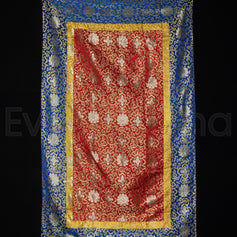
Buddha wall hangings represent one of the most accessible and versatile expressions of Buddhist art. From embroidered silk to hand-painted canvas, from woven Tibetan textile to appliquéd Thangka-style panels, they carry the spiritual presence of the Buddha into living spaces, meditation rooms, yoga studios, and personal altars.
Metal Thangka Wall Hangings

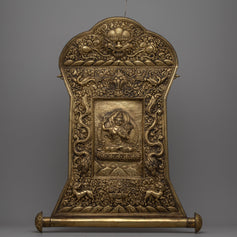
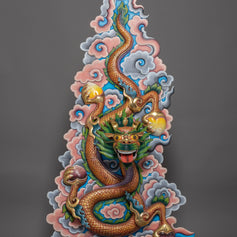
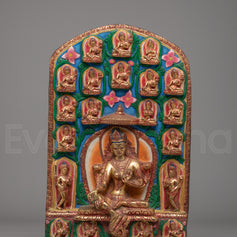
Metal Thangka Wall Hangings are a fusion of Newar smiths' metalwork and Thangka painting traditions, crafted from copper or brass relief panels using techniques like repousse and gilding. These three-dimensional representations often depict Buddha in various forms, such as Shakyamuni seated on a lotus throne, with details in raised metal including the Ushnisha, Urna, flowing robe, and Bhumisparsha Mudra. Each piece is finished with brocade silk borders and hanging rods, combining two significant Nepali craft traditions into a powerful object. Unlike painted Thangkas, Metal Thangkas do not fade and require less conservation, making them ideal for long-term display in homes or institutions due to their permanence and luminosity.
The Shakyamuni Buddha Mandala

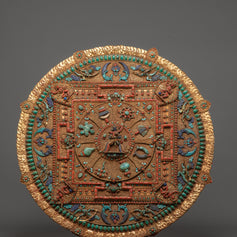
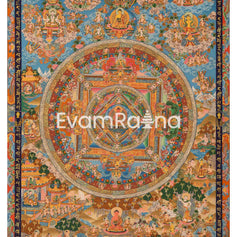
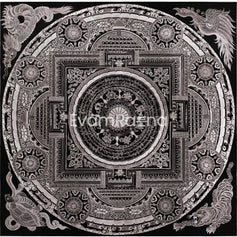
One of the most significant Buddha wall hangings is the Shakyamuni Buddha Life Mandala. It visually narrates the key events of Shakyamuni's life and previous lives (Jataka tales) in a sacred circle format. From the tranquil central figure of the Buddha, observers can explore milestones such as his birth at Lumbini, princely life, encounters with the Four Sights, Great Renunciation, ascetic practices, meditation under the Bodhi tree, enlightenment, teachings in Sarnath, and Parinirvana at Kushinagar. This artwork serves as a painted scripture for practitioners and enhances meditation spaces by embodying the complete journey to awakening.
Shakyamuni Buddha surrounded by Auspicious Symbols

This composition features Shakyamuni Buddha at its center, surrounded by the Eight Auspicious Symbols (Ashtamangala), which represent various blessings such as protection and abundance. This creates a protective field signifying auspiciousness. Additionally, the Tibetan Zodiac (Lo Gyur) is integrated, showcasing the twelve animal signs, emphasizing the Buddha's role as the unwavering center in the cycle of time. The artwork functions as a calendar, a protective talisman for the new year, and a meditation aid.
Shakyamuni Buddha Wooden Wall Hanging

The wooden Buddha wall hanging represents one of Nepal's most enduring and texturally distinctive craft traditions. Carved from seasoned hardwoods, sal, teak, or walnut by craftsmen in the Kathmandu Valley and the hill regions, these panels depict the Buddha in either low relief or high relief, sometimes inlaid with semi-precious stones and gilded with gold leaf.
The aesthetic is fundamentally different from the painted or metal traditions. Wood carries warmth, grain, and a quality of age that metal and canvas cannot replicate. A gilded wooden Buddha wall hanging aged with natural oils and the patina of years becomes an object of extraordinary presence, the gold and wood working together to create something simultaneously ancient and intimate. These pieces are particularly suited to home meditation spaces where a warm, organic quality is desired over the formal luminosity of metal or the decorative richness of silk-mounted paintings.
Read More About Complete Guide to the Mandala Offering Practice: A Preliminary Practice for Accumulating Merit in Tibetan Buddhism
Conclusion:
Nepalese Buddha art exemplifies a rich legacy of devotion, skill, and spiritual depth spanning centuries. It features serene figures like Shakyamuni, the compassionate Medicine Buddha, and the radiant Amitabha, each encapsulating deep spiritual messages. These artworks, crafted by Newar artisans through techniques such as lost-wax casting, stone carving, and Thangka painting, blend stunning visuals with spiritual significance. Every element, from the Ushnisha and Urna to hand gestures and lotus thrones, reflects enlightenment, compassion, and wisdom. Thangkas, whether in the Paubha or Karma Gadri style, function as aids for meditation, tools for rituals, and expressions of devotion. Statues made from gilded materials, panchaloha, or stone bring the Buddha into homes and sacred spaces, and even masks and wall hangings embody the same serene essence. Nepalese Buddhist art seamlessly integrates symbolic meaning with aesthetic beauty, promoting mindfulness and self-reflection. These creations transcend mere decoration, representing living embodiments of the Dharma, and serve to connect viewers with historical traditions and the path of enlightenment. Ultimately, Nepalese Buddha art serves as a bridge between the temporal and the sacred, fostering inspiration, contemplation, and inner peace for all who engage with it.


